


On 28 February 2026, the armed forces of the United States and Israel launched a joint military campaign against Iran. The American component was conducted under the name “Operation Epic Fury”; the Iranian strikes that followed targeted Israel, American forces and targets located in the six states of the Gulf Cooperation Council (GCC). These monarchies were directly exposed to the war and defended their territory. The GCC, however, as an organisation, did not form a homogeneous co-belligerent bloc alongside Washington and Israel[1]. The theater of war thus regionalised more quickly than the political status of the actors have become homogenised.
The contrast is striking. On 28 April, GCC leaders were still calling for greater military integration and for the completion of the joint ballistic missile warning system to be accelerated[2]. Three weeks later, on 19 May, the US command stated that the fighting had validated, on a full scale and under real-world conditions, a combined air and missile defense network that the region had been practicing for several years without having yet fully deployed it in combat[3]. Both observations can be true at the same time. Linking national centres, sharing alerts and coordinating engagements does not amount to entrusting a single regional authority with the power to deploy forces, allocate scarce interceptors or decide on escalation. Above all, the war has highlighted the gap between achieving a common defensive effect and collective governance of the resources that made it possible.
Layer-by-layer integration
This approach is not the result of a recent shift. As early as the 1950s, American thinking on defence in the Middle-East sought to secure facilities, access and practical cooperation without entering into widespread formal alliances that might provoke local political resistance. According to this analysis, the diversity of sovereign states and perceptions of the threat meant that functional cooperation was sometimes more feasible than a restrictive regional organisation[4]. Following the Iranian Revolution, this approach took on a directly operational dimension. In the early 1980s, the US posture combined regional facilities, warning and command capabilities, pre-positioned assets and rapid deployment forces; plans were already being drawn up for an integrated regional network designed to support US projection in the Gulf[5].
The GCC has layered its own institutions onto this external framework. The Common Defence Agreement signed in Manama in December 2000 establishes the principle that an attack on one member is an attack on all. The first phase of the Hizam al-Taawun project – the “belt of cooperation” – linked the air force and air defence operations centres from late 2001 onwards. In December 2013, the Supreme Council also decided to establish a Unified Military Command[6]. It would, therefore, be inaccurate to describe the GCC as lacking collective defense or joint military institutions.
This legal and institutional framework must be distinguished from an integrated command structure. An obligation of solidarity specifies who is to be defended; it does not, in itself, determine who holds the real-time authority to deploy a weapons system, to choose between multiple targets, or to transfer resources from one territory to another. The distinction becomes crucial in air defence, where the time between detection, decision-making and engagement can be very short, and where the deployment of a costly interceptor may reduce the protection available against the next wave of attacks. Collective law and operational integration may therefore progress at different rates.
However, their existence never entailed a merger of military structures. Hizam al-Taawun provided secure communications between national centres without, at that stage, constituting a fully integrated air defense system. Resistance also stemmed from intra-Gulf politics: several small monarchies feared that military centralisation would institutionalize Saudi dominance. The diversity of weapons suppliers was partly driven by the same calculation. Whilst it complicated the standardisation and interoperability, it distributed security ties amongst several external powers and served as a form of diplomatic assurance[7]. What may appear sub-optimal in terms of military effectiveness may therefore remain rational in terms of sovereignty and the management of dependencies.
Washington has long operated within this constraint. In 2009, the head of CENTCOM described multi-bilateralism, as the approach of linking bilateral cooperation agreements to achieve multilateral effects, particularly in the areas of shared early warning, air and missile defence, and a common operational picture. This approach built on earlier initiatives and was followed by the Abu Dhabi Integrated Air and Missile Defence Centre and subsequently by the commitments made at the 2015 Camp David summit[8]. The model did not suppress national chains of command or bilateral agreements; rather, it sought to make their interfaces sufficiently compatible to enable joint action.
2025-2026: from connecting the centres to combat readiness
The decisions taken in September 2025 reveal what still needed to be consolidated on the eve of the war. Following the Israeli attack on Qatar, the Joint Defence Council ordered an increase in intelligence-sharing through the Unified Military Command, the transmission of air situation reports to all operations centres, the acceleration of the joint ballistic missile warning system, the updating of defence plans, and the organisation of exercises between air operations centres and air defence forces[9]. Integration was therefore neither non-existent nor complete: it was progressing function by function.
On 12 January 2026, the opening in Al-Udeid of the Middle Eastern Air Defense-Combined Defense Operation Cell (MEAD-CDOC), based within the Combined Air Operations Center (CAOC), added a multinational hub to this network. CENTCOM assigned it tasks relating to coordination, exercise planning, crisis response, information sharing and alerts. The wider CAOC at that time brought together representatives from seventeen countries; this does not mean that seventeen states were members of the new unit[10]. The arrangement served to link the centres more closely without absorbing them into a single structure.
The war put these mechanisms through a test that exercises could not provide. In its May report, CENTCOM stated that it had deployed American teams to partner Patriot units to improve alert status, availability and deconfliction of engagements. At the same time, the MEAD-CDOC linked the CAOC to the national centres. The command credits the entire architecture with the interception of more than 6,000 attack drones and more than 1,500 ballistic missiles directed against American forces, Israel and Arab partners[11]. These figures come from one party to the conflict and cover the entire theatre of operations: they do not allow for the calculation of the GCC’s specific performance, nor do they enable each interception to be attributed to a specific detection-decision-fire chain.
Independent analyses nevertheless confirm the intensity of the defensive effort. By mid-March, the Arab Gulf States had already deployed hundreds of interceptors and used up a significant proportion of their long-range stockpiles[12]. By 19 March, more than 4,000 Iranian projectiles had been fired at the six GCC states. Only a small proportion reached their intended targets, but several high-value military, energy, industrial, port and civilian infrastructure sites were nonetheless damaged[13]. A high interception rate therefore does not guarantee strategic immunity: a few successful penetrations may be sufficient when the targets hit are critical, while a successful defence may itself create a constraint through the rapid consumption of scarce munitions. Three issues must therefore be considered separately: the proportion of threats intercepted, the value of damage averted and the system’s ability to maintain the same level of protection as the duration of the conflict erodes its stocks.
What is included — and what cannot be taken for granted
The term “integration” thus encompasses realities of varying scope. Agreements, commands, units and exercises first and foremost form an institutional framework. When separate actors are able to share alerts, intelligence leads and air situations data relatively quickly, an information layer is added to this framework. The operational threshold is crossed when sensors, command centres and interception assets belonging to different chains of command contribute to the same defensive function. Another stage begins when states delegate or pre-authorise decisions concerning the use of the forces, allocation of scarce resources, engagement priorities or the acceptance of political risk. Public sources provide solid documentation of the first three levels; they do not allow for the establishment of an equivalent level of integration of authority.
There is a political rationale behind this separation. Sharing radar data or an alert improves the understanding of the threat without immediately depriving a government of its capabilities. The stakes change when coordination involves the deployment of a scarce interceptor, prioritising a military base over energy infrastructure, or accepting the risk of escalation. Integration then ceases to be only technical: it distributes costs, vulnerabilities and responsibilities amongst states. The obstacle cannot therefore be reduced to a lack of interoperability. It also relates to the political cost of delegation when joint decisions become materially and strategically binding.
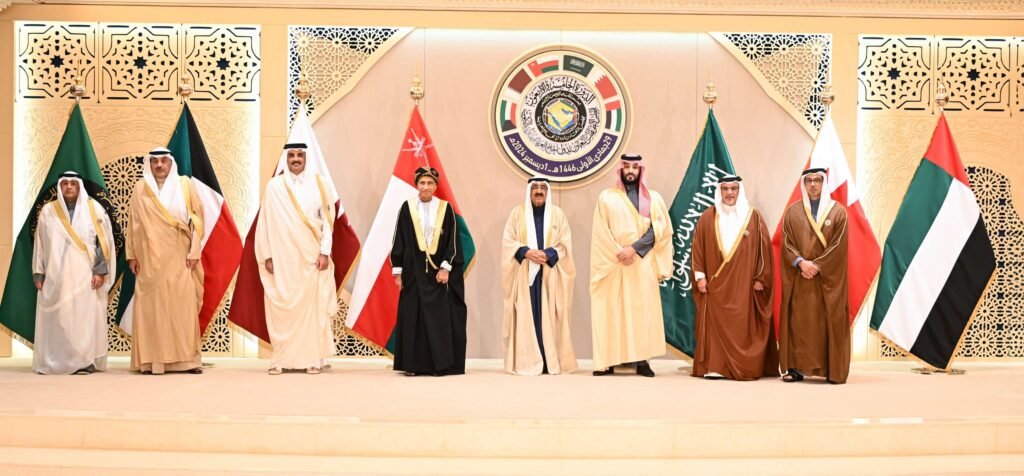
Open data leaves a substantial margin of uncertainty in this regard. It does not allow us to reconstruct, on a mission-by-mission basis, the exact chain of command over national batteries, any transnational pre-authorisations, the existence and scope of common rules of engagement, or the allocation of national stockpiles. The absence of documentation does not prove the absence of procedures. It prohibits only two reverse shortcuts: presenting the observed interoperability as evidence of supranational command, or reducing the war to six isolated national defences. The statement of 28 April provides a more reliable point of reference: following the main operations, GCC leaders praised the performance of their forces while calling for further integration and the completion of the joint ballistic missile alert system[14]. The system had produced results without having reached the end of its development.
Dependency move forward critical functions
This observation also alters the issue of autonomy. Interoperability with a protective power increases the capacity that can be utilised immediately: national access gains access to a wider architecture for early warning, command, data and support than a small state could replicate on its own. But dependence does not necessarily disappear; it simply shifts location. National property of a battery or a radar is of little significance if the alert system, data fusion, certain software, maintenance, spare parts or the replacement of interceptors still rely on external functions that are difficult to replace.
Distinguishing between sensitivity and vulnerability helps to refine the test. A costly disruption only becomes strategically restrictive if adaptation remains difficult following a change in policy. Therefore, vulnerability depends on the available alternatives and their cost, in terms of both time and money[15]. Applied to the defence of the Gulf, this criteria means that simply counting the number of suppliers is insufficient. An alternative system is only a real substitute if it can be integrated into the chains of command, supported logistically, and operated by trained personnel who are available before the missing capability compromises the campaign.
The post-war period has brought this depth of the system to the fore. The Gulf States are seeking to rebuild their stocks while global demand remains high and the most complex production capabilities continue to be subject to production delays, industrial bottlenecks and constraints relating to labour or materials. The delivery of a new system does not solve the problem: it must still be integrated into the armed forces, training programmes established and doctrines adapted[16]. Robustness is therefore not measured solely by the number of projectiles destroyed during the first salvos. It depends on the ability to repair, resupply, replace and redeploy quickly enough to ensure that the network remains militarily operational.
The 2026 US-Israeli-Iran war thus produced neither a supranational Gulf alliance nor a return to six parallel structures. It revealed a hybrid architecture in which national capabilities, GCC institutions, bilateral relations and US theatre functions combine though their degree of integration varies. Its strength lies precisely in this modularity: different sovereign states can contribute to the same defensive outcome. Its vulnerability becomes apparent when certain critical functions remain concentrated or are difficult to replace. The decisive question is therefore no longer whether the Gulf is “integrated”. It is a matter of determining who controls each essential function, how long that function can be sustained under heavy strain, and at what cost it can be replaced when a supplier, a stockpile or a command centre becomes unavailable.
Notes
[1] U.S. Central Command, « U.S. Forces Launch Operation Epic Fury », Public Release, 28 février 2026, https://www.centcom.mil/MEDIA/PUBLIC-RELEASES/Article/4418396/us-forces-launch-operation-epic-fury/ ; Israel Defense Forces, « Press Briefing by IDF Spokesperson BG Effie Defrin, February 28, 2026 », 28 février 2026, https://www.idf.il/en/mini-sites/israel-at-war/briefings-by-idf-spokesperson-bg-effie-defrin/february-26-press-briefings/press-briefing-by-idf-spokesperson-bg-effie-defrin-february-28-2026/ ; Ellen Clarke, Noor Hammad et Asna Wajid, « Mapping the damage: Iranian strikes on the GCC », International Institute for Strategic Studies, 27 March 2026, https://www.iiss.org/online-analysis/online-analysis/2026/03/mapping-the-damage-iranian-strikes-on-the-gcc/.
[2] Secrétariat général du Conseil de coopération du Golfe, « Media Statement by HE GCCSG on the Occasion of the 19th Consultative Meeting of Their Majesties and Highnesses, the Leaders of the Cooperation Council States », 28 April 2026, particularly the concluding passage calling for intensified military integration and the accelerated completion of the ballistic missile warning system. https://www.gcc-sg.org/en/MediaCenter/News/Pages/news2026-4-28-5.aspx.
[3] U.S. Central Command, « Statement from Adm. Brad Cooper before the House Committee on Armed Services on the Posture of U.S. Central Command », 19 May 2026, section « Capitalizing on Partner Contributions to Regional Air Defense », https://www.centcom.mil/ABOUT-US/POSTURE-STATEMENT/. The figures and the assessment that the network was validated are explicitly presented here as institutional claims by CENTCOM.
[4] John C. Campbell, Defense of the Middle East: Problems of American Policy, revised edition, New York, Harper & Brothers for the Council on Foreign Relations, 1960, p. 231.
[5] Bruce R. Kuniholm, « A Political/Military Strategy for the Persian Gulf and Southwest Asia », in Samuel F. Wells Jr. et Mark A. Bruzonsky (dir.), Security in the Middle East: Regional Change and Great Power Strategies, Boulder, Westview Press, 1987, pp. 313-314.
[6] Gulf Cooperation Council, General Secretariat, The GCC: Process and Achievements, 8th ed., Riyadh, 2014, p. 33 for the Common Defence Agreement and the principle that an attack against one member constitutes an attack against all; p. 35 for the decision to establish the Unified Military Command in December 2013; p. 36 for the Cooperation Belt (Hizam al-Taawun), approved in 1997, with its first phase becoming operational at the end of 2001, https://gcc-sg.org/en/MediaCenter/DigitalLibrary/Documents/7161447306380.pdf.
[7] Matteo Legrenzi, The GCC and the International Relations of the Gulf: Diplomacy, Security and Economic Coordination in a Changing Middle East, Londres, I.B. Tauris, 2011, p. 76 For supplier diversification, the logic of “insurance,” and the incomplete integration of Hizam al-Taawun; p. 77 for the constraints of trust and concerns over Saudi hegemony.
[8] Jean-Loup Samaan, New Military Strategies in the Gulf: The Mirage of Autonomy in Saudi Arabia, the UAE and Qatar, Londres, I.B. Tauris, 2023, p. 146 pour le multi-bilateralism décrit en 2009 ; p. 147 pour les initiatives américaines de défense aérienne et antimissile et le centre intégré d’Abou Dhabi.
[9] Gulf Cooperation Council, Joint Defence Council, “Statement of the Extraordinary Session of the Joint Defence Council,” Doha, 18 September 2025, Decisions 1–5: intelligence sharing through the Unified Military Command, transmission of the air situation picture, acceleration of ballistic missile alert mechanisms, updates to defence plans, and joint exercises, https://www.gcc-sg.org/en/MediaCenter/News/Pages/news2025-9-18-5.aspx.
[10] U.S. Central Command, « U.S., Regional Partners Open New Air Defense Operations Cell in Qatar », Public Release 20260113-01, 13 janvier 2026. The statement specifies that the cell was established on 12 January and is located within the CAOC, while the seventeen national representatives mentioned are part of the broader CAOC structure.https://www.centcom.mil/MEDIA/PUBLIC-RELEASES/Article/4376614/us-regional-partners-open-new-air-defense-operations-cell-in-qatar/.
[11] U.S. Central Command, « Statement from Adm. Brad Cooper before the House Committee on Armed Services on the Posture of U.S. Central Command », 19 May 2026, section « Capitalizing on Partner Contributions to Regional Air Defense », https://www.centcom.mil/ABOUT-US/POSTURE-STATEMENT/. The total of more than 6,000 drones and more than 1,500 ballistic missiles refers to the broader theatre architecture and threats directed against US forces, Israel, and Arab partners; it does not constitute a figure specific to the GCC.
[12] Albert Vidal Ribe, « Defending the skies of the Arab Gulf states », International Institute for Strategic Studies, 18 March 2026, https://www.iiss.org/online-analysis/online-analysis/2026/03/defending-the-skies-of-the-arab-gulf-states/.
[13] Ellen Clarke, Noor Hammad et Asna Wajid, « Mapping the damage: Iranian strikes on the GCC », International Institute for Strategic Studies, 27 March 2026, https://www.iiss.org/online-analysis/online-analysis/2026/03/mapping-the-damage-iranian-strikes-on-the-gcc/.
[14] Secrétariat général du Conseil de coopération du Golfe, « Media Statement by HE GCCSG on the Occasion of the 19th Consultative Meeting of Their Majesties and Highnesses, the Leaders of the Cooperation Council States », 28 April 2026, notamment le passage final demandant d’intensifier l’intégration militaire et d’accélérer l’achèvement du système d’alerte contre les missiles balistiques, https://www.gcc-sg.org/en/MediaCenter/News/Pages/news2026-4-28-5.aspx.
[15] Robert O. Keohane et Joseph S. Nye Jr., Power and Interdependence, 4e éd., Boston, Longman, 2012, p. 11 sur le rôle des alternatives et du coût d’adaptation ; p. 13 sur le coût des substituts en temps comme en argent.
[16] Albert Vidal Ribe, « Challenge for the Gulf states: rearming after the war », International Institute for Strategic Studies, 12 May 2026, https://www.iiss.org/online-analysis/online-analysis/2026/05/challenge-for-the-gulf-states-rearming-after-the-war/.