ANALYSIS

Read Our Latest Article

The Middle East and North Africa : Structural Recompositions 

Martin Raymond Willy Mbog Ibock

The Middle East and North Africa : Structural Recompositions 

The Middle East and North Africa are undergoing strategic fragmentation, as declining traditional hegemonies and shifting alliances reshape regional power dynamics. Despite economic growth, the region faces structural challenges, including debt, inequality, youth unemployment, hydrocarbon dependence and climate pressures. Digitalisation creates opportunities but also expands surveillance, while ongoing conflicts and the absence of stable regional governance reinforce uncertainty. Fragmentation has become the defining feature of a fragile but emerging regional order.

Read More

CATEGORIES

Why language and not borders? Understanding post-integration frustration in Rojava

October 21, 2026

Wisam Sedeeq

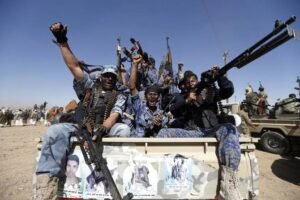
After 14 years of de facto self-governance, the Democratic Autonomous Administration of North and East Syria (DAANES) and the Syrian Democratic Forces (SDF) signed an agreement on 30 January to integrate their institutions into the Syrian state and incorporate the SDF into the Syrian army as brigades, effectively dissolving the DAANES, at least formally.

Egypt and the Saudi-Houthi crisis in Bab al-Mandab

October 15, 2026

Hichem Karoui

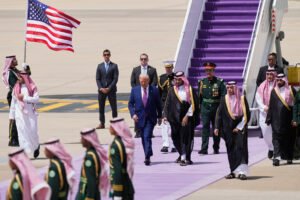
The crisis presents Cairo with a strategic dilemma: Egypt cannot accept that a hostile force should wield lasting coercive power at the southern entrance to the Red Sea, but it must avoid being drawn into a new ground war in Yemen. Egypt’s most likely course of action will therefore combine political and intelligence solidarity with Riyadh, a naval and air force build-up in the Red Sea, and the protection of the Suez Canal and the SUMED oil pipeline, whilst showing extreme reluctance towards a ground campaign aimed at recapturing the Yemeni interior.

The Next Ceuta Is Not in Morocco. It Is Being Forged in Tunisia

October 13, 2026

Saif Eddine Ghobr

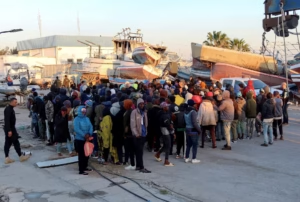
This analysis examines the nexus between democratic backsliding, socio-economic vulnerabilities, and migration dynamics across the Central Mediterranean. Grounded in the Tunisian case, it advances the hypothesis that the erosion of institutional corrective mechanisms can transform social frustration into political disengagement and, subsequently, into an aspiration to migrate. Through Hirschman’s distinction between Voice and Exit, migration is viewed not only as an economic response, but as a possible form of exit when avenues for political transformation appear limited. The analysis subsequently examines European border externalisation and its inherent strategic paradox: containment may reduce migratory flows without necessarily addressing the roots that sustain them. In this context, a future migration shock could crystallise into a European political event, offering further political capital to far-right parties. The objective is not to forecast a new Ceuta, but rather to isolate the causal mechanism capable of precipitating it.

Turkish Nationalism and the Kurdish Settlement Process Launched in October 2024

October 6, 2026

Jean Marcou

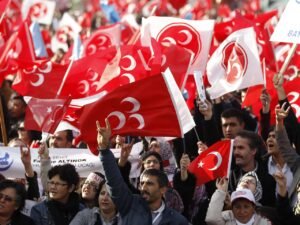
The article examines why Turkey’s current Kurdish settlement process, launched in October 2024, has so far encountered relatively limited opposition from Turkish nationalist forces. It traces the evolution of Turkish nationalism, from the hardline positions of the 1990s to the more fragmented nationalist landscape of today, and explores the unexpected role played by MHP leader Devlet Bahçeli in initiating the process. The article argues that, while ultra-nationalist opposition remains present, Turkish nationalism is no longer a unified political force, creating space for a new approach to the Kurdish question.

MOST VIEWED