ANALYSIS

Read Our Latest Article

Syria: The Disarmament of the Kurds, or the End of Rojava Era 

Loÿs de Pampelonne

Syria: The Disarmament of the Kurds, or the End of Rojava Era 

This article examines the content of the compromise reached between Damascus and the Syrian Kurds, its implication for the regional balance – Turkey, the United-States, Israel, and the peace process with the PKK – and places it within the long-term context of the Kurdish question, comparing it to the far more institutionalised but as fragile trajectory of  Iraqi Kurdistan, whose structural vulnerability, despite thirty years of constitutional autonomy, has been highlighted by Adel Bakawan. Finally, this article considers what the end of the Rojava era might mean for the future of the Kurdish national movement as a whole. 
Read More

CATEGORIES

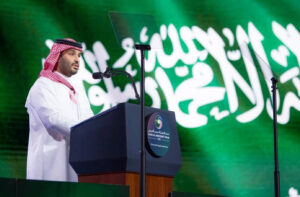
Saudi Arabia’s Position in Light of Geopolitical Transformations in the Middle East

May 28, 2025

Ihsan al-Shammari

In this article, Ihsan Al-Shammari analyses Saudi Arabia’s geopolitical rise in a changing Middle East. Driven by Vision 2030 and the strategy of Mohammed bin Salman, Saudi diplomacy adopts a proactive approach focused on partnerships, mediation, and openness.

From Palace to Forests: What Has Happened to Assad’s Army?

May 23, 2025

Hussam Hammoud

In December 2024, the fall of Bashar al-Assad’s regime marked a major shift in Syria. New authorities set up reconciliation centers for former security personnel; while some complied, others joined armed groups. The reappointment of former regime figures has also sparked criticism from parts of civil society.

In the wake of the announcement of the dissolution of the Kurdistan Workers’ Party, what does the future hold for the “Kurdish question” in the Middle East?

May 21, 2025

EISMENA Staff

The 12th Congress of the Kurdistan Workers Party (PKK) formalised the dissolution of the armed group that has been at war with the Turkish state since 1984. This Congress is part of the timeline of a negotiation process between the Turkish state and Abdullah Öcalan, with the involvement of the pro-Kurdish DEM party, which specifically aimed at the dissolution of the PKK. On February 25, 2025, the PKK’s founder issued a “Call for Peace and Democratic Society” to demand the group’s dissolution. The consequences of this dissolution will be significant — both on the Turkish political scene, on the transnational Kurdish movement, and on certain regional geopolitical balances.

The Decades-Long Antagonistic Psychology of Iran and Israel

May 3, 2025

Mohammad Salami

This article explores the long-standing and increasingly hostile relationship between Iran and Israel, shaped by over four decades of competition, conflict, and ideological confrontation.

MOST VIEWED

Rojava: The Final Hours of a Revolution?

Dida Faridoon is one of the few journalists to have attended the meeting of Rojava’s political representatives held in Qamishli on August 29, 2026, with Mazlum Abdi and Ilham Ahmed among the participants. Reading her account, the meeting appears to have been a moment of truth. Away from the cameras, a difficult and at times painful debate unfolded among Kurdish leaders confronted with an existential question: what will remain of Rojava, the Syrian Democratic Forces, and the political and social achievements built over more than a decade? Through Dida Faridoon’s exceptional first-hand account, EISMENA offers access to the discussions behind closed doors, as well as to interviews she personally conducted with several senior figures about the future of Rojava, the SDF, and the Women’s Protection Units (YPJ).

Read More