ANALYSIS

Read Our Latest Article

The Switzerland of the Middle East? Jordan’s Manufactured Stability and the Illusion of Reform

Alice Filiberto

The Switzerland of the Middle East? Jordan’s Manufactured Stability and the Illusion of Reform

Jordan is often called the “Switzerland of the Middle East”: a constitutional monarchy that has projected an image of moderation and reform while its neighbours have been consumed by civil war, regime collapse and insurgency. This article argues that this stability has not been earned through genuine political reform or democratic accountability, but manufactured through authoritarian control. What looks like a progressive state is, on closer examination, a carefully managed authoritarian order in which the appearance of reform functions as a technology of control. Two mechanisms sustain this manufactured stability. The first is the historic alliance between the Hashemite monarchy and Transjordan’s tribal structures, which transformed pre-existing tribal authority into an instrument of regime reproduction while relegating the Palestinian-origin majority to economic rather than political inclusion. The second is the regime’s management of political liberalisation, which Daniel Brumberg describes as “liberalised autocracy”: a durable equilibrium in which controlled openings serve to consolidate, rather than challenge, authoritarian rule.
Read More

ARTICLES

Syria: The Disarmament of the Kurds, or the End of Rojava Era 

September 16, 2026

Loÿs de Pampelonne

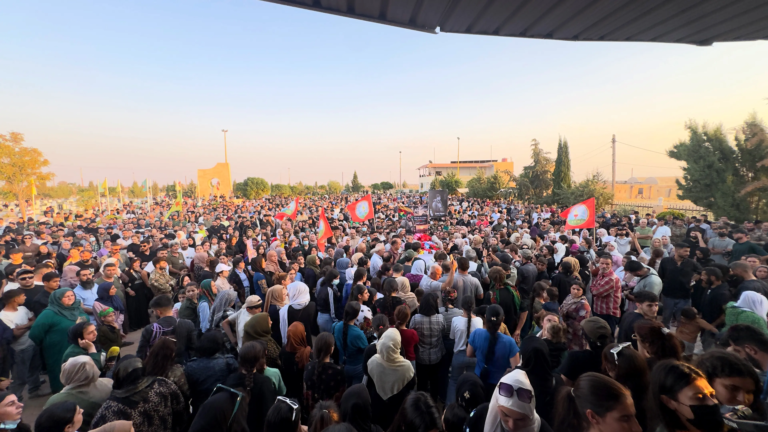
This article examines the content of the compromise reached between Damascus and the Syrian Kurds, its implication for the regional balance – Turkey, the United-States, Israel, and the peace process with the PKK – and places it within the long-term context of the Kurdish question, comparing it to the far more institutionalised but as fragile trajectory of  Iraqi Kurdistan, whose structural vulnerability, despite thirty years of constitutional autonomy, has been highlighted by Adel Bakawan. Finally, this article considers what the end of the Rojava era might mean for the future of the Kurdish national movement as a whole. 

Rojava: The Final Hours of a Revolution?

September 14, 2026

Dida Faridoon

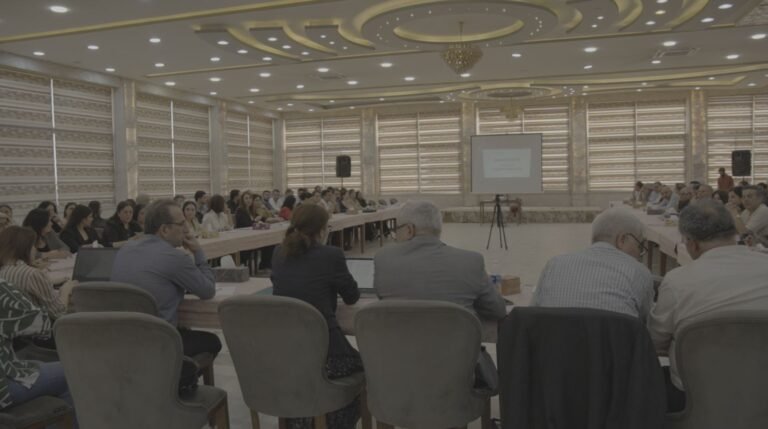
Dida Faridoon is one of the few journalists to have attended the meeting of Rojava’s political representatives held in Qamishli on August 29, 2026, with Mazlum Abdi and Ilham Ahmed among the participants. Reading her account, the meeting appears to have been a moment of truth. Away from the cameras, a difficult and at times painful debate unfolded among Kurdish leaders confronted with an existential question: what will remain of Rojava, the Syrian Democratic Forces, and the political and social achievements built over more than a decade? Through Dida Faridoon’s exceptional first-hand account, EISMENA offers access to the discussions behind closed doors, as well as to interviews she personally conducted with several senior figures about the future of Rojava, the SDF, and the Women’s Protection Units (YPJ).

Ali al-Taher: a Ridge Becoming a Military and Political Lock at the South of Lebanon 

September 8, 2026

Alexandre Aoun

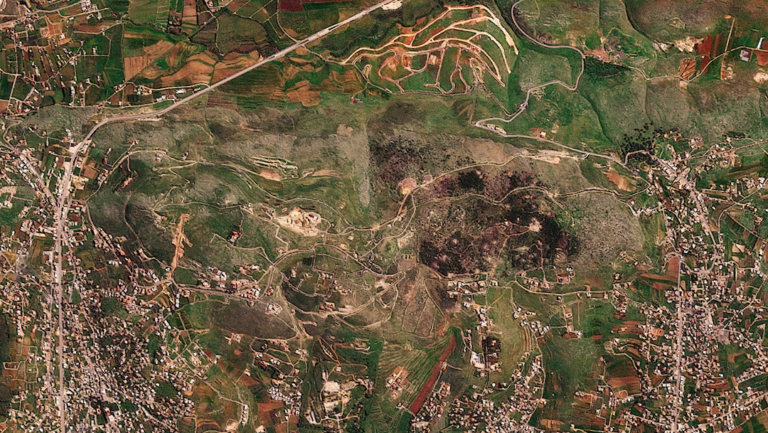
Alexandre Aoun is specialist in non-state movements and the transformation taking place in the Arab world, in this article he takes us behind the scenes of what is unfolding in Ali al-Taher. Based in Lebanon, where he experiences the consequences of this war on a daily basis, our researcher provides a particular insightful framework for understanding the military, political and geopolitical dimensions of the battle unfolding around Ali al-Taher.