

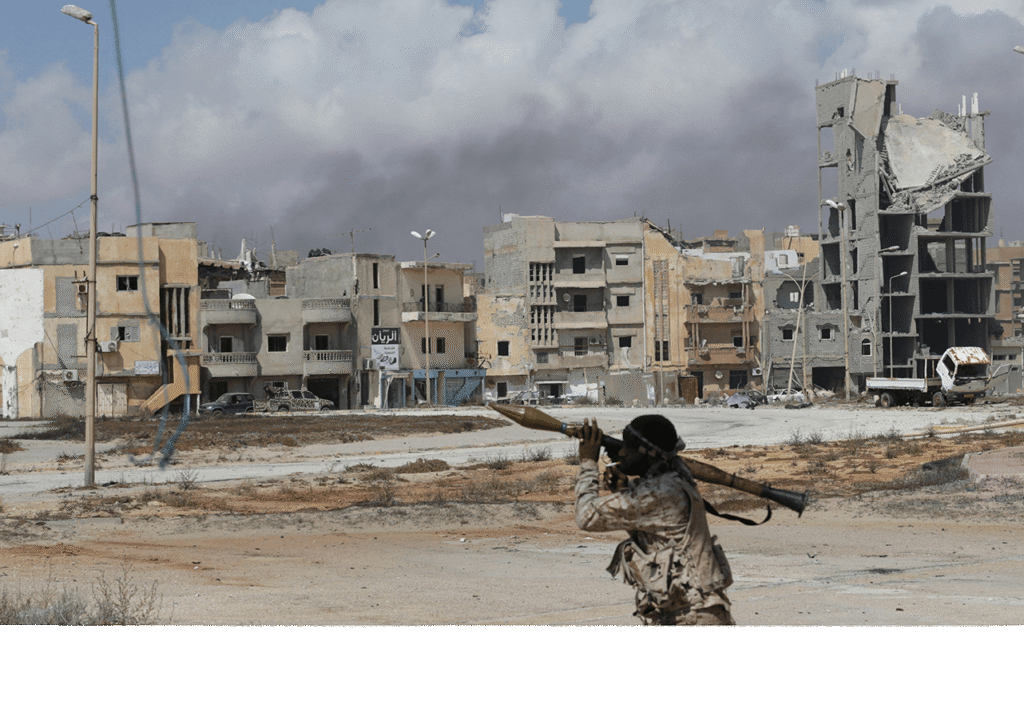

In the Middle East and in North Africa, the power dynamics inherited from the 20th century are dissolving. The region is not simply becoming destabilised: it is being reshaped along fault lines that defy conventional analytical framework. The argument presented here is that the Middle East and North Africa (MENA) region is currently serving as a global laboratory for strategic fragmentation[1]. New actors are emerging, borders are becoming blurred, and issues of security, economy and climate are intertwining[2]. The regional order that is emerging is not non-existent: it has simply taken on a new form.
Geopolitical Fragmentation: a Multipolar Order Without Governance
Three converging dynamics characterize this structural fragmentation.
First, the erosion of traditional hegemonies. The United States, long the architect of regional security, now acts as a pragmatic actor: it manages specific crises rather than building an order. China is proceeding cautiously, favoring economic partnerships over security commitments. Russia, weakened by the war in Ukraine, is scaling back its footprint in Syria and the Mediterranean[3]. Furthermore, regional middle powers are practicing a systematic “hedging” between Washington and Beijing[4]. Egypt, Qatar, Saudi Arabia and the UAE are no longer content to simply purchase American security. They are diversifying their partnerships, investing in their own capacities, and projecting influence beyond their borders. Security is ceasing to be a public good provided by a hegemonic power and is instead becoming a patchwork of unstable bilateral transactions[5].
Finally, conflicts are proliferating in various forms and across different theaters. The war in Gaza sent shockwaves spreading from Lebanon to Yemen, and from Syria to Iran. The brief direct confrontation between Israel and Iran in June 2025 demonstrated how quickly a localised conflict can escalate into a regional one. Even more significant was the collapse of the Syrian regime in December 2025, which reshuffled the deck, weakened the Iranian axis, and created a vacuum that Turkey, Israel and the Gulf monarchies are attempting to fill in[6].
And yet, fragmentation does not mean chaos. It produces ad hoc arrangements, fragile cease-fire, and precarious balances that depend less on institutions than on power dynamics. There is no European-style Concert of Nations here, but rather localised balances of terror[7].
Economies of Volatility: Between Resilience and Structural Vulnerability
The regional economic paradox is striking: growth that withstands geopolitical shocks, yet remains vulnerable to external volatilities. The World Bank projects regional growth at 2.8% in 2025 and 3,3% in 2026, driven by a recovery in oil exports and domestic demands in importing countries. The IMF is more optimistic, forecasting 3.3% in 2025, and 3.7% in 2026[8]. This resilience masks deep disparities. The Gulf Cooperation Council (GCC) countries possess credible policy frameworks, substantial financial reserves, and ambitious non-oil investment programs. Saudi Arabia is redirecting capitals toward artificial intelligence, logistics, and minerals. The Emirates is consolidating its position as a trade and technology hub. In contrast, importing oil countries (Egypt, Jordan, Morocco, and Tunisia) are grappling with high debt, constrained financing, and trade disruptions.
The price per barrel remains a critical variable. OPEP, whose influence is waning, must absorb a production surplus of 2 million barrels per day in 2026, driven by non-OPEP output[9]. The cartel therefore has less margin to support prices, which weighs on oil budgets and, by extension, on economies dependent on transfers from the Gulf.
More concerning still, the region remains the most unequal in the world. The standard of living in wealthy Gulf states reaches approximately 45% of the American level; while that of the region’s developing countries ranges from 12 to 19%. This inequality fuels social tensions and stifles inclusive growth. Youth unemployment, projected to reach 24.2% in 2025, looks like a ticking time bomb[10].
The population bomb and the employment crisis: a youth in search of meaning
The region is home to one of the youngest populations in the world. In GCC countries, 15-34-year-olds account for 38.2% of the population, approximately 23.5 million people as of 2025. This youth represents both an opportunity and a challenge. Women labor field participation — the lowest in the world, with one in five women active in the workforce — offers significant growth potential: according to the World Bank, removing barriers to women’s employment could boost GDP per capita by 20% to 30% in Egypt, Jordan, and Pakistan.
However, the democratic equation does not explain everything. The real problem is the mismatch between the education systems and the market needs, compounded by a sluggish private sector. The World Bank report “Shifting Gears”[11] notes that labor productivity is declining in many countries, few firms are investing or innovating, and a gap separates a small formal sector from a vast informal sector[12].
This has given rise to a generation of unemployed graduates — connected young urbanites who are nonetheless economically excluded — creating a fertile ground for mobilisation. The massive and unexpected Iranian protests of 2025 reflect this tension between rising aspirations and stagnant opportunities. The stability of authoritarian regimes will depend on their ability to absorb this youth into productive employment and to meet their expectations for dignity and participation[13].
Climatic Change As a Threat Multiplier
The region is on the front line in front of global warming. Temperatures there are rising twice as fast as than the global average, and 2024 was the hottest year on record. In the Levan and part of North Africa, summers regularly exceed 50°C, straining electricity networks and threatening health. The number of natural disasters has almost tripled since the 1980s, with considerable economic losses[14].
What sets the region apart is that climate acts as a threat multiplier, exacerbating existing vulnerabilities. Water scarcity is intensifying in an area that includes some of the world’s most water-poor countries[15]. This scarcity, combined with land degradation, is driving people to leave. Climate-induced migration — the scale of which is not yet fully measured — is thus becoming a security issue for the entire region. The region is also a key player in the energy transition. By 2025, it had installed 12.2 GW of solar capacity. Its cumulative renewable capacity reached 43.7% GW, a 44% increase in a year. Gulf countries are investing in clean energy. The objective is to diversify their economies and maintain their hold on global markets as the world reduces emissions. Conflicts and geopolitical tensions make cooperation more difficult[16].
The Digital Revolution: New Spaces, New Powers
Digital transformation is reshaping the balance of power. The mobile communications sector is projected to reach $470 billion by 2030, with 5G networks accounting for 48% of connections. Between 2025 and 2030, regional companies are investing an average of 10% of their revenue in digital technologies, with Saudi Arabia, Qatar and the UAE ranking among the global leaders in the adoption of AI, cloud, and 5G[17].
The effects are ambivalent. On the one hand, new economic opportunities, better public services, increased connection to the global economy. On the other, strengthened surveillance capabilities for authoritarian regimes that control civic space and repress dissent. The region has become a laboratory for “authoritarian digital governance”, that is, the same technologies that liberate are used to monitor.
This ambivalence is reflected in the protest movements. In Iran, Iraq, Lebanon or Algeria, demonstrators use social media to organise, escape censorship and disseminate their demands. Yet, these very networks are infiltrated and monitored. The digital realm has become a battleground for civil societies, states and regional powers — an information war that knows no borders[18].
The Realignment of Alliances: Towards a Fragmented Regionalism
Faced with these challenges, states are seeking new frameworks for collective action. The resurgence of multilateral diplomacy — evident in Arab efforts to end the war in Gaza and in mediation attempts — reflects a growing awareness. However, this multilateralism remains fragile due to inter-states rivalries, divergent interests, and the absence of robust institutional mechanisms[19].
Turkey, Iran, Saudi Arabia and the UAE project their rivalries into the region’s fragmented spaces (Syria, Iraq, Yemen, Libya), support non-state actors, and create competing spheres of influence. The result is a fragmented regionalism, in which alliances shift according to circumstances never producing a stable order.
The European Union, historically engaged in the Mediterranean and the Maghreb, is seeing its influence erode in the face of a proliferation of actors and its own internal crisis. China is advancing its economic interests while steering clear of security rivalries, favoring bilateral approaches to multilateral ones. The United States oscillates between selective engagement and partial withdrawal, leaving its regional allies with greater leeway, but also greater responsibilities[20].
Conclusion: Conceptualising Fragmentation as an Order
The region is not in a state of disorder; it is undergoing a process of reconfiguration. The forces that shaped the regional order since 1945 —American hegemony, the centrality of the Israeli-Arab conflict, and oil rents as a regulatory mechanism— are fading, giving way to new dynamics: multipolarity, conflicts with shifting geometries, economy driven by volatility, diffuse mobilisations, an uncertain energy transition, and an ambivalent digital transformation.
The result is neither stability nor chaos, but a fragmented order: contradictory logics coexist, without any mechanism for collective regulation. The region has become a laboratory for the tensions coursing through the international system — between interdependence and fragmentation, authoritarianism and democratic aspirations, energy transition and reliance on hydrocarbons, and digital connectivity and political control[21].
Conceptualising the region requires abandoning the analytical frameworks inherited from the Cold War and the post-colonial era. The question is not longer to identify “what is not working” in a region supposedly deviating from western norms of modernity, but rather to grasp the inherent dynamics of a space in constant flux — where states, societies and non-state actors ceaselessly negotiate the terms of an order yet to be invented. Fragmentation is not a pathology to be cured: it is the structural condition within which the region will shape its future[22].
Notes
[1] Institute for Economics and Peace, Global Peace Index 2026: Special Supplement – Global Conflict Systems, ReliefWeb, 12 juin 2026, https://reliefweb.int/report/world/global-conflict-systems-global-peace-index-2026-special-supplement, (Consulté, le 10 septembre 2026).
[2] IFRI, (Replay) Afrique du Nord et Moyen-Orient : perspectives 2025, 15 janvier 2025.
[3] Adar, Sinem, Muriel Asseburg, Hamidreza Azizi, Margarete Klein et Guido Steinberg, The Fall of the Assad Regime: Regional and International Power Shifts, SWP Comment n° 9/2025, Berlin : Stiftung Wissenschaft und Politik, 25 février 2025, https://doi.org/10.18449/2025C09, (Consulté, le 10 septembre 2026) .
[4] Sur le « hedging » des puissances moyennes régionales, voir IFRI, op. cit.
[5] G7, G7 Leaders’ statement on recent developments between Israel and Iran, Kananaskis, 17 juin 2025, https://ec.europa.eu/commission/presscorner/detail/en/statement_25_1523, (Consulté, le 10 septembre 2026) ; AIEA, Accord de garanties TNP avec la République islamique d’Iran, Rapport du Directeur général au Conseil des gouverneurs, GOV/2025/25, Vienne, 31 mai 2025.
[6] SWP, op. cit.
[7] IEP, op. cit.
[8] FMI, Regional Economic Outlook: Middle East and Central Asia – Resilience amid Uncertainty: Will it Last?, octobre 2025.
[9] Forbes, « OPEC+ Hits Pause As Global Oil Surpluses Threaten 2026 Prices », 1er décembre 2025.
[10] Phenix Center for Economic and Informatics Studies, Youth Unemployment in Arab States Is the Highest in the World, Amman, 16 août 2026, https://phenixcenter.net/en/activity-details/554, (Consulté, le 11 septembre 2026) ; Organisation internationale du travail, Global Employment Trends for Youth 2026, Genève : OIT, 2026.
[11] Banque mondiale, Shifting Gears: The Private Sector as an Engine of Growth in the Middle East and North Africa, MENA Economic Update, avril 2025.
[12] Ibid.
[13] International Crisis Group, Iran: Protests and Repression, 2025.
[14] Organisation météorologique mondiale, State of the Climate in the Arab Region 2024, décembre 2025.
[15] Dii Desert Energy, Renewables, Hydrogen and Energy Storage Developments in the MENA Region, janvier 2026.
[16] AIE, World Energy Outlook 2025, Paris, 2025.
[17] GSMA, Mobile Economy MENA 2025, novembre 2025.
[18] Tahrir Institute for Middle East Policy, Open Government: Emancipation for Some, Exclusion for Others, mai 2025.
[19] Sur le multilatéralisme arabe et les médiations, voir IFRI, op. cit.
[20] IFRI, op. cit.
[21] Ibid.
[22] Ibid.