


Military Escalation Exposes Saudi Vulnerabilities
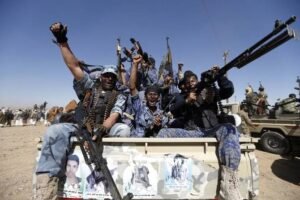
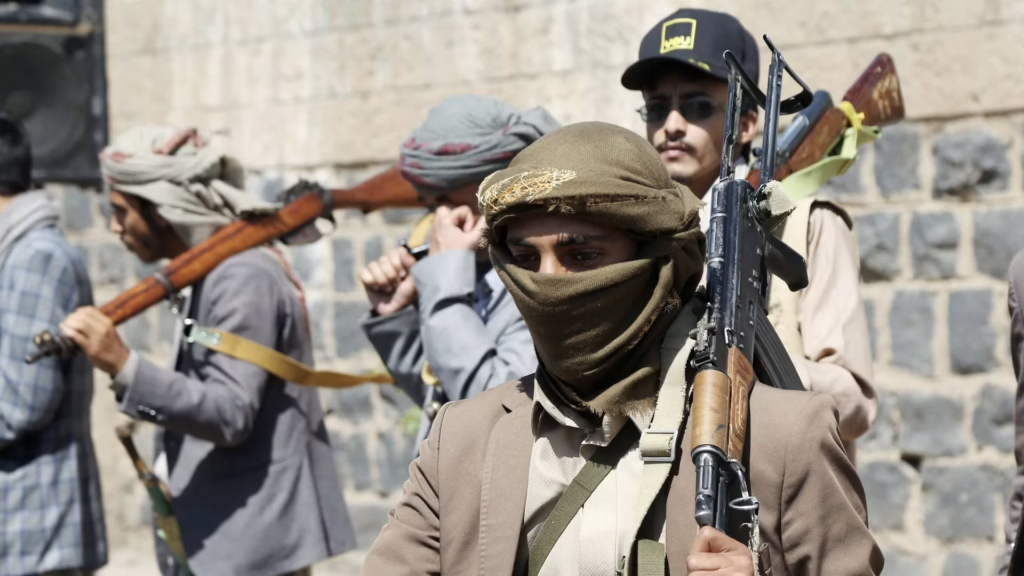
On 10 and 11 October, attacks claimed by the Houthis targeted King Khalid International Airport in Riyadh. The death toll from the first attack reached 13, with more than 300 people injured, according to reports published following revisions to the initial figures. A further attack the following day killed one person and injured eleven others. The strikes disrupted air traffic and heightened concerns over the security of the Kingdom’s civilian infrastructure.
The scale of the damage highlights the limitations of Saudi air defences against attacks combining drones and missiles. Despite substantial military investment and advanced interception capabilities, the proliferation of attack vectors makes it increasingly difficult to protect an extensive territory whose strategic infrastructure is widely dispersed. The Houthis thus possess an asymmetric means of exerting pressure: imposing security, economic and political costs on Riyadh that are disproportionate to the resources deployed.
On 13 October, the confrontation extended to energy facilities. Following a warning to civilians, the Saudi-led coalition struck the al-Sabaha oil station west of Sanaa, as well as other infrastructure associated with the storage and transportation of hydrocarbons in Houthi-controlled areas. The coalition maintains that these facilities contribute to the movement’s military capabilities, particularly its drone and missile operations. The authorities of the Yemen Petroleum Company, for their part, stated that the al-Sabaha site held no oil stocks at the time of the strike.
Houthi reprisals also targeted Saudi facilities. Aramco’s headquarters in Dhahran was hit on 13 October, triggering a limited fire. According to Saudi authorities, there were no casualties. These exchanges confirm that the confrontation is expanding to infrastructure whose security is essential to the Kingdom’s economic functioning.
International Support Is Real but Limited to Defending Saudi Territory
In response to the escalation, Riyadh is seeking to consolidate its security partnerships. The activation of the Mecca Defence Pact, signed in August 2026 with Turkey and Pakistan, represents an important political signal. On 5 October, the three states announced the implementation of their collective defence commitments and preparations to deploy military assets to Saudi Arabia.
Nevertheless, the alliance’s operational scope must be distinguished from its political commitment. Ankara has explicitly ruled out participation in offensive operations on Yemeni territory. Its support is expected to focus primarily on air defence capabilities, equipment and technical assistance. Pakistan’s position similarly reflects a commitment to defending the Kingdom, without any clearly established engagement in a ground or air campaign against Houthi positions in Yemen.
Western partners are adopting a comparable posture. France has announced the deployment of military personnel, radars and defence systems to Yanbu, a major oil terminal on the Red Sea. This contribution is intended to protect Saudi infrastructure against aerial attacks, rather than participate in bombings in Yemen.
The American position, however, remains the principal strategic uncertainty. Washington has so far refused to join Saudi offensive operations directly, despite requests from Riyadh. Donald Trump has nevertheless stated that he is considering American participation following the deadly strikes against the capital’s airport. This potential shift must be viewed in the context of the confrontation with Iran: intervention against the Houthis could open a new front at a time when the objectives and consequences of the war with Tehran remain uncertain.
A Conflict Whose Stakes Extend Beyond the Saudi Border
The current escalation is part of a broader realignment of the balance of power in Yemen. Following several years of relative calm, fighting has resumed with an offensive by government forces backed by Riyadh and Houthi advances along the country’s western coastline.
Control of the territories bordering the Red Sea and of the Bab el-Mandeb Strait is a central issue. This maritime route is essential to international trade and Saudi energy exports. On the ground, government forces have announced advances in Marib Governorate, including the capture of commanding positions around strategically important areas. These gains do not, however, amount to a lasting reversal of the balance of power. The Houthis retain significant offensive capabilities and continue to operate across several regions.
In Taiz, intensifying fighting and the severing of supply routes have raised fears that the city could once again be encircled. More than one million people live there. According to information reported on 13 October, shelling killed five civilians and injured at least seventeen others within 24 hours. The energy dimension is also decisive. The governorates of Marib and Shabwa, in the east of the country, contain oil and gas resources and occupy a strategic position within Yemen’s territorial balance of power. Control over infrastructure and supply routes therefore represents a military, economic and political lever for the various parties.
At the regional level, the threat to Bab el-Mandeb has intensified concerns over the security of commercial and energy flows. Finally, the resumption of hostilities is worsening an already critical humanitarian situation. Fighting around Taiz and Marib, access restrictions and supply disruptions are directly affecting civilian populations. Humanitarian organisations report growing pressure on healthcare facilities and increasing difficulties in delivering aid.
Outlook
In the short term, the risk of intensified strikes remains high. The attacks on Riyadh and Dhahran, followed by the retaliation against Yemeni oil facilities, have established a cycle of reprisals that could spread to other strategic infrastructure. Meanwhile, continued ground operations around Marib and Taiz could increase pressure on the Houthis, without guaranteeing that they will lose ground.
Riyadh’s objective is now to restore its deterrence capabilities without becoming bogged down in another military campaign. American caution and the predominantly defensive nature of its partners’ support limit the prospects for a broader international intervention. A unilateral intensification of strikes could further damage Yemeni infrastructure and fuel Houthi reprisals, while de-escalation would require Saudi Arabia to safeguard its security interests and freedom of navigation.
The central challenge will therefore be Saudi Arabia’s ability to contain the Houthi threat without turning the resumption of hostilities into a prolonged regional war. Protecting energy infrastructure, securing Bab el-Mandeb and maintaining stability in Yemeni territory are now closely interconnected objectives.
Website Links
[3] https://www.theseus.fi/bitstream/handle/10024/753333/Khoshnaw_Yara.pdf?sequence=2&isAllowed=y
[4] https://www.aljazeera.com/news/2026/1/14/mapping-who-controls-what-in-yemen-in-2026
[5] https://carnegieendowment.org/posts/2020/01/the-saudi-yemeni-militarized-borderland
[6] https://www.brookings.edu/articles/who-are-the-houthis-and-why-are-we-at-war-with-them/
[7] https://www.un.org/depts/los/LEGISLATIONANDTREATIES/PDFFILES/TREATIES/YEM-SAU2000IBT.PDF
[8] https://www.washingtoninstitute.org/policy-analysis/saudi-arabias-war-houthis-old-borders-new-lines
[9] https://scholarship.law.unc.edu/cgi/viewcontent.cgi?article=2073&context=ncilj
[10] https://ecfr.eu/publication/war_and_pieces_political_divides_in_southern_yemen/
[11] https://ecfr.eu/special/yemen/
[13] https://peacemaker.un.org/fr/node/9395
[14] https://arabcenterdc.org/resource/saudi-arabias-strategic-dilemma-in-the-iran-war/
[15] https://www.cfr.org/global-conflict-tracker/conflict/war-yemen
[16] https://www.csis.org/analysis/how-does-saudi-arabia-see-war-iran
[17] https://www.europeaninterest.eu/saudi-arabia-and-the-war-against-iran/
[18] https://edition.cnn.com/2026/07/29/middleeast/saudi-arabia-iran-iraq-yemen-war-houthis-intl
[20] https://legrandcontinent.eu/fr/2026/05/17/golfe-disruption/
[21] https://trfjournal.cdfaindia.org/index.php/trfjournal/en/article/view/115/36
[24] https://agsi.org/analysis/mohammed-bin-salman-is-the-future-of-saudi-arabia/
[25] https://mondoweiss.net/2026/02/inside-saudi-arabias-regional-realignment/