


Firepower Is Not Victory
“Destroying Iran” can mean four very different things: disabling its nuclear programme, degrading its armed forces, overthrowing its government, or subduing its territory and people. American firepower has achieved something like the second, attempted the third, and never seriously contemplated the fourth. Iran is a country of 1.65 million square kilometres and roughly 90 million people — more than twice Afghanistan’s territory and more than double its population — wrapped in mountainous terrain that has always favoured defenders. The lesson of Vietnam and Afghanistan is not that air power is useless or that limited strikes must fail. It is that unmatched firepower does not, by itself, produce political submission: the gap between winning the battle and controlling the outcome is where great powers have repeatedly exhausted themselves.
The 2026 war has demonstrated that gap in real time. The United States has fired more than 1,000 Tomahawk cruise missiles, devastated Iran’s navy and destroyed much of its radar capability — yet attacks on commercial shipping reached their highest level since the war began in early October[1]. Afzal Ashraf, a former senior Royal Air Force officer now at Loughborough University, put it precisely: the US has “enormous military capability that Iran can’t match,” but it has not achieved the outcomes Washington wants — and a renewed bombing campaign would “actually achieve a lot less” than earlier strikes, because Iran’s remaining weapons are fewer but far better concealed[2].
The deeper problem is arithmetic. Each cheap Iranian drone or missile can force the United States to fire an interceptor costing a million dollars or more, and Washington is, in Ashraf’s words, “running out of missiles for its own defence[3]”. Even the decapitation strike failed to produce the collapse its architects expected: the state declared 40 days of mourning, activated its succession machinery, and kept fighting. Iran’s nationalism should not be confused with universal support for its government; the regime’s resilience is a fact about institutions and geography, not a claim about the feelings of 90 million people. Trump himself has ruled out nuclear weapons and US ground troops[4]. This rules out the two instruments that subduing a country would most plausibly require; what that exclusion reveals about his private understanding is inference, not evidence.
The Allies Pay the Price
The prediction that America’s smaller Gulf allies would pay the price of another aggression has already materialised. Iranian and Houthi missile and drone attacks have struck all six Gulf Cooperation Council states since February, with the UAE, Bahrain and Kuwait most heavily targeted; before the April ceasefire, Iran concentrated fire on the UAE “to a far greater extent than on any other GCC state” and more than on any country in the region, Israel included[5]. Analysts count thousands of missiles and drones launched at Gulf military and civilian targets[6] since February 28. The countries hosting the American bases turned out to be hostages. Al Udeid in Qatar, the largest US base in the Middle East with roughly 10,000 US personnel before the war, and Camp Arifjan in Kuwait, 120 – 140 miles from Iran, sit inside what analysts call the “tyranny of geography”: missiles fired from western Iran reach Gulf targets in five minutes or less[7]. Iranian missiles and drones have repeatedly struck US installations across the region, forcing commanders to disperse and empty bases, and American casualties are rising[8]. Even Saudi Arabia’s East-West pipeline—the kingdom’s main bypass for the strait—was temporarily shut on 11 September 2026 after drone attacks launched from Iraq[9], while the Houthis extended the war to the Bab el-Mandeb and struck at the very heart of Saudi Arabia.
The damage inflicted on the Gulf states’ security model runs deep: the US guarantee has proved to be an illusion. These same states are being pushed towards Israel, as if the latter had succeeded in protecting Bahrain and the United Arab Emirates, signatories to the Abraham Accords.
The Oil and Gas Nightmare
On energy, the nightmare is not a risk scenario; it is the current situation. The International Energy Agency has called the war “the largest supply disruption in the history of the global oil market[10]”: an average loss of around 14 million barrels per day in the war’s early months — roughly 14 percent of global supply — compared with about 1 million barrels per day after Russia invaded Ukraine[11]. The Strait of Hormuz carried some 20 million barrels per day — a fifth of world oil and about 20 percent of global LNG[12]. From roughly 125 large vessels a day before the war, traffic collapsed; even with US Navy escorts, Gulf oil flows excluding Iran’s own recovered to only 81 percent of pre-war levels in September before Iran’s new tactics drove them down again — to 2.9 million barrels on October 11 alone, with 15 attacks on ships recorded between October 6 and 14[13]. Brent futures have traded above $100 since the summer — near $105 a barrel in mid-October, roughly 70 percent above their level a year earlier[14]. Iranian officials say the goal is precisely to “frustrate efforts by the United States and its allies to bring down global oil prices” through the American election, with one vowing “complete closure soon[15]”.
Europe’s Winter
The European consequences are visible in the monthly statistics. In September, inflation accelerated in Germany to 3.3 percent (its fastest since December 2023), in France to 3.0 percent (its highest since February 2024) and in Italy to 4.2 percent, with diesel prices hitting record highs across the eurozone as Gulf fuel shipments slowed[16]. European gas prices have surged to their highest level in almost four years, with worryingly low storage heading into winter and Goldman Sachs expecting €70 per megawatt-hour in the fourth quarter[17].
France enters the winter with public debt at 119 percent of GDP and consumer spending falling[18]. Despite this, the French government has announced a reduction in the price of diesel at the pump, thanks to the release of strategic reserves. Britain’s July inflation climbed to 2.9 percent on energy bills; diesel has passed £2 a litre; households face a possible 20 percent bill increase in January, and the IMF warns that higher energy prices and rates will weigh on UK growth[19]. Spain has so far defied the trend — 0.7 percent quarterly growth in the second quarter, with forecasters still projecting above 2 percent for the year — though the energy shock has pushed its projected inflation to 3.6 percent[20]. And this lands on a continent that had already lost more than a million industrial jobs between 2019 and 2023, with Germany shedding another 143,000 in 2025[21]. The nightmare is real — a cumulative squeeze layered on top of the Ukraine crisis, not a single collapse.
Trump’s Options on Iran After the Midterms
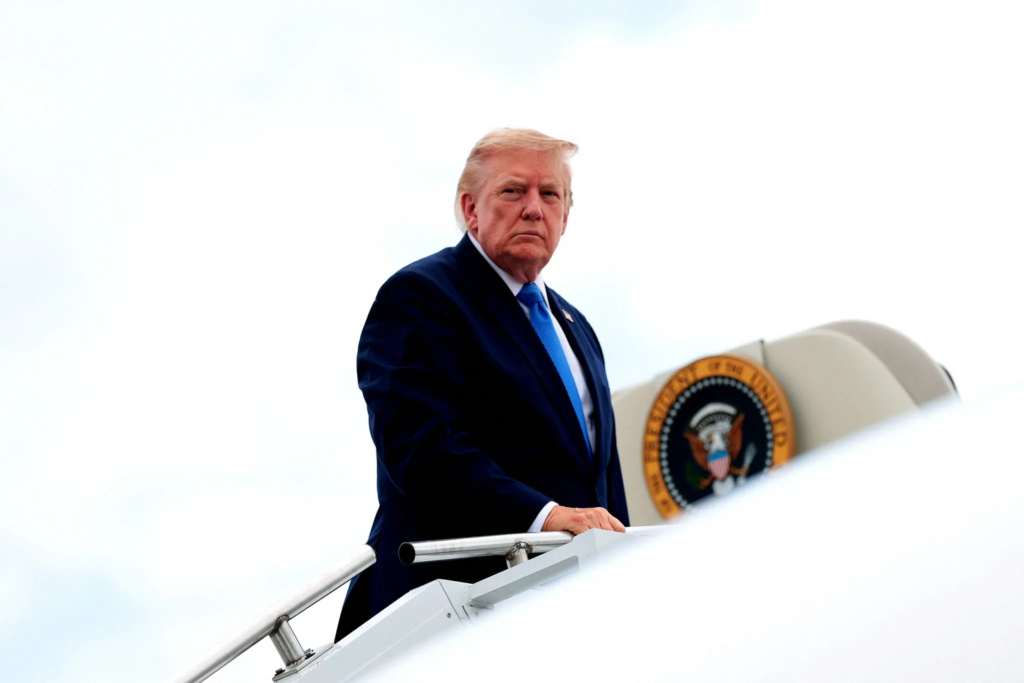
Democrats swept Congress on November 3 — 54 Senate seats and a House majority of at least 240 — and Trump conceded “a part of it was Iran”. His options now:
The deal. Iran’s seven-step plan — US lifts the blockade, sanctions relief, frozen assets, ceasefire; Iran reopens Hormuz — is unchanged, but Tehran now says it could be implemented in two days rather than a week[22]. Talks continue via Qatari and Omani mediators after Doha ended without a breakthrough; Trump signals progress, and Vance wants a “negotiated settlement[23]”. Iran is already easing pressure by exempting Indian, Chinese, Iraqi, and Qatari ships from Hormuz restrictions[24].
Escalation. Trump declined to rule out resuming combat operations and, on November 6, warned the US may have to “destroy the rest of Iran,” after meeting with his national security team on resuming operations[25]. MOAB strike plans remain ready, and Rapidan’s Bob McNally expects resumed military action within days, warning of an oil spike[26]. US forces already struck Qeshm Island overnight as a “defensive measure[27]”.
Muddle through. Keep the deliberately quiet blockade-and-escort campaign while talks drag[28].
The constraint: a weakened president facing a Democratic Congress “able to constrain his military options,” giving him greater incentive to deal. The signals point both ways: diplomatic language coexists with “destroy” rhetoric. Watch whether the two-day plan gets an American reply — or the bombers fly.
Conclusion
Is Trump aware that he cannot destroy Iran? The distinction matters: American military superiority can devastate Iran without guaranteeing surrender, regime change, or a durable political settlement — and the past eight months have demonstrated exactly that gap. His statements suggest recognition of some of the costs- electoral, financial, and military; they do not establish how fully he understands the risks, or whether he believes additional pressure can still overcome them. Is he aware that the Gulf allies and Europe are paying the price? The evidence reaches his desk daily, from struck bases to a central bank tightening into a war-driven energy shock. Will he stop after the midterms brought a Democrat majority back to Congress? A defeated Trump may reach for the deal Iran has already sketched; he may equally refuse any ending that looks like defeat. He may still find the escalation option already prepared and waiting — new strike plans, including the largest conventional bomb in the American arsenal, drawn up for use. The decisive question is whether Washington accepts a feasible negotiated settlement or continues coercion in the belief that escalation can remain controlled. Vietnam and Afghanistan illuminate the limits of military power; they cannot predict the outcome of this war. For the people of the Middle East, the nightmare may not be over.
Notes
[1] Parisa Hafezi, Jonathan Saul, Phil Stewart. L’Iran change de tactique pour intensifier ses attaques contre le transport maritime avant le scrutin américain, selon des responsables. 14 octobre (Reuters).
https://www.reuters.com/world/middle-east/iran-shifting-tactics-step-up-attacks-shipping-before-us-vote-officials-say-2026-10-14/
[2] Nils Adler. Impasse entre les États-Unis et l’Iran : quelles sont les prochaines options militaires de Trump ? 15 oct. 2026. Al Jazeera.
https://www.aljazeera.com/news/2026/10/15/us-iran-stalemate-what-are-trumps-next-military-options
[3] Ibid.
[4] Lim Hui Jie. Trump affirme qu’il n’utilisera pas d’armes nucléaires et n’enverra pas de troupes terrestres en Iran. 16 octobre 2026. CNBC.
https://www.cnbc.com/2026/10/16/us-iran-war-trump-hormuz.html
[5] Giorgio Cafiero. Entre dissuasion et diplomatie : le dilemme du Golfe face à l’Iran de l’après-guerre. The New Arab. 15 juillet 2026. https://www.newarab.com/analysis/gulfs-post-war-balancing-act-iran
[6] Giorgio Cafiero. Les monarchies arabes du Golfe naviguent dans le chaos d’une nouvelle ère. ICDI. 18 avril 2026.
https://dialogueinitiatives.org/gulf-arab-monarchies-navigate-chaos-in-a-new-era/
[7] Elliott Abrams. L’augmentation du nombre de victimes américaines dans la guerre contre l’Iran devrait conduire à repenser le déploiement des bases au Moyen-Orient. CFR. 21 juillet 2026. https://www.cfr.org/articles/rising-u-s-casualties-in-the-iran-war-should-force-a-rethink-of-middle-east-bases
[8] Kelly A. Grieco. Après l’Iran, Washington a besoin d’une nouvelle stratégie de déploiement. Foreign Policy Magazine. 14 octobre 2026. https://foreignpolicy.com/2026/10/14/iran-war-us-military-base-strategy-allies-defense/
[9] L’extension du conflit vers le détroit de Bab el-Mandeb date de l’offensive houthie de septembre 2026, qui leur a permis de contrôler plusieurs positions stratégiques autour du détroit.
«Saudi Arabia condemns drone attack from Iraq after East-West Pipeline shut as precaution » Arab News. September 11, 2026. https://arab.news/w34b6
[10] IEA (2026), Oil Market Report – March 2026, IEA, Paris https://www.iea.org/reports/oil-market-report-march-2026
Voir aussi: Dmitry Zhdannikov, Robert Harvey, Ahmad Ghaddar. Le monde absorbe la perte historique d’approvisionnement en pétrole due à la guerre en Iran, mais l’épuisement des stocks comporte des risques. Reuters. 6 juillet 2026.
https://www.reuters.com/business/energy/world-absorbs-historic-iran-war-oil-supply-loss-depleted-stocks-bring-risks-2026-07-06/
[11] Lea Demuth, Ana-Simona Manu et Arthur Stalla-Bourdillon. Choc énergétique : pourquoi les prix du pétrole et du gaz ont moins augmenté que prévu. Banque centrale européenne. 27 juillet 2026. https://www.ecb.europa.eu/press/blog/date/2026/html/ecb.blog20260727~1212bdb8f9.en.html
[12] Nils Adler. 15 octobre 2026. Al Jazeera. Op. cit.
[13] Trading Economics : https://tradingeconomics.com/commodity/brent-crude-oil
[14] Parisa Hafezi, Jonathan Saul, Phil Stewart. « L’Iran change de tactique pour intensifier ses attaques contre le transport maritime avant les élections américaines », selon des responsables. Reuters, 14 octobre 2026.
https://www.reuters.com/world/middle-east/iran-shifting-tactics-step-up-attacks-shipping-before-us-vote-officials-say-2026-10-14/
[15] Les coûts énergétiques provoquent une flambée de l’inflation dans toute l’Europe. France 24. 30/09/2026. https://www.france24.com/en/live-news/20260930-energy-costs-spark-inflation-surge-across-europe
[16] Giulia Petroni. L’Europe aborde l’hiver avec de faibles réserves de gaz et des approvisionnements incertains en provenance du Golfe. WSJ. 13 octobre 2026. https://www.wsj.com/finance/commodities-futures/europe-heads-into-winter-with-low-gas-reserves-uncertain-gulf-supplies-78cd3507
[17] France 24. 30/09/2026. Op. cit.
[18] UK Finance. Revue économique mensuelle – 6 octobre 2026. https://www.ukfinance.org.uk/data-and-research/economic-insight/monthly-economic-review-october-2026
[19] L’économie espagnole tient bon face à la crise énergétique.
Caixa Bank Research. 14 septembre 2026. https://www.caixabankresearch.com/en/economics-markets/recent-developments/spanish-economy-holds-firm-amid-energy-onslaught
[20] Martin Vladimirov. La transition énergétique européenne est désormais une course à la sécurité économique. Reuters. 29 juillet 2026.
https://www.reuters.com/commentary/reuters-open-interest/europes-energy-transition-is-now-an-economic-security-race-martin-vladimirov-2026-07-29/
[21] L’Iran affirme que les contacts en vue de mettre fin à la guerre se poursuivent après la fin des négociations, qui n’ont pas abouti à une percée. Par Reuters. 2 novembre 2026. https://www.reuters.com/world/middle-east/iranians-have-left-doha-talks-draft-proposal-us-deal-being-circulated-official-2026-11-02/
[22] Trump laisse entrevoir des progrès sur l’accord avec l’Iran alors que Téhéran presse pour un cessez-le-feu plus rapide. Rédaction d’Al Jazeera et AP.
Lundi 2 novembre 2026. https://www.yahoo.com/news/politics/articles/iran-pushing-accelerated-plan-ceasefire-184926865.html
[23] Nils Adler. « Pourquoi l’Iran exempte-t-il l’Inde, la Chine, le Qatar et l’Irak des restrictions sur le détroit d’Ormuz ? » Al Jazeera. 6 novembre 2026. https://www.aljazeera.com/news/2026/11/6/why-is-iran-exempting-india-china-qatar-iraq-from-hormuz-restrictions
[24] Parisa Hafezi et Jana Choukeir. « L’Iran et les États-Unis restent très éloignés d’un accord ; Trump se dit prêt mais ne se précipite pas pour lancer des frappes ». REUTERS. 3 novembre 2026. https://www.reuters.com/world/middle-east/irans-foreign-minister-says-talks-with-saudi-arabia-are-ongoing-yemen-fighting-2026-11-03/
[25] Lim Hui Jie. « La recrudescence des tensions entre les États-Unis et l’Iran pourrait faire grimper le prix du pétrole au-delà des 100 dollars : Rapidan Energy ». CNBC. 6 novembre 2026. https://www.cnbc.com/2026/11/06/us-iran-war-trump-hormuz-oil-midterms.html
[26] Priyanka Salve. « Les États-Unis frappent l’île de Qeshm en Iran alors que Vance espère un “règlement négocié” avec Téhéran ». CNBC. 2 novembre 2026. https://www.cnbc.com/2026/11/03/iran-us-vance-trump-strikes.html
[27] Ibid.