


The early hours of Thursday, 12 November 2026, were anything but ordinary in Khan Younis, in the southern Gaza Strip. Residents of the Austrian neighbourhood and the area surrounding Nasser Medical Complex awoke to the sound of two powerful explosions following an Israeli strike on the surgical department in the Yassin Building, within the complex. The scene brought back memories of the successive attacks on hospitals and healthcare facilities since the outbreak of the war in October 2023. In those moments, the bombing was not merely an attack on a concrete building or a medical facility. It was another blow to what remained of the population’s ability to seek refuge in institutions dedicated to treatment and survival, at a time when Gaza’s healthcare system is facing one of its most severe crises as a result of continued destruction, the blockade, and shortages of medicines, medical supplies and fuel.
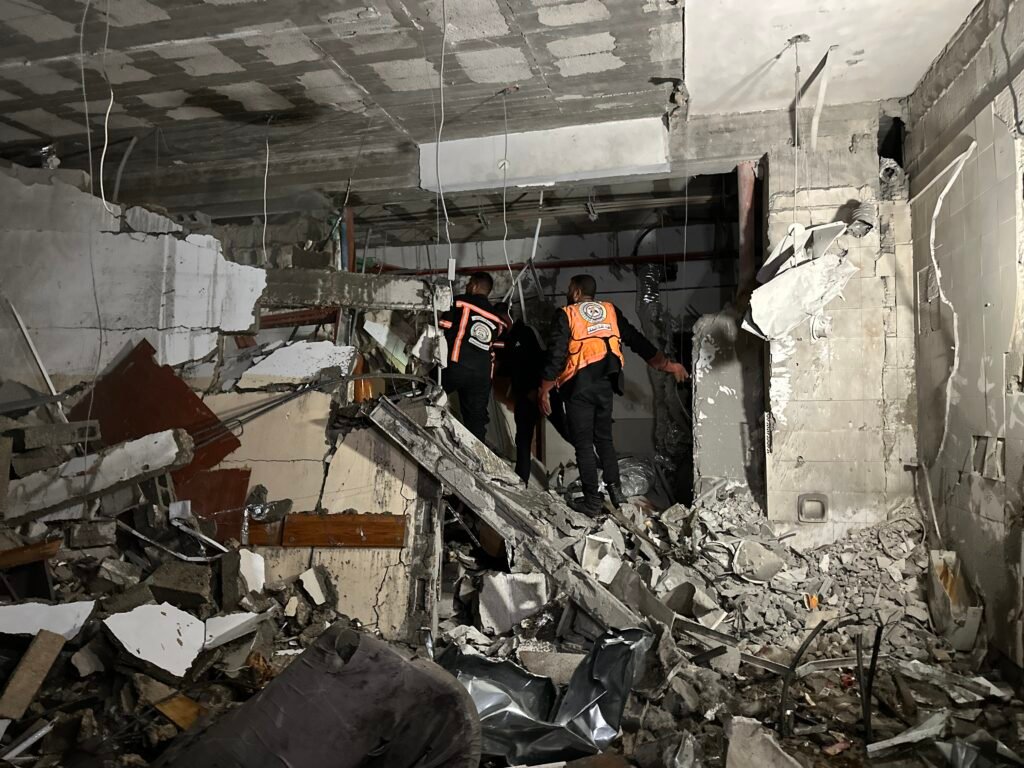
At around 12:27 a.m., I was inside my tent in the Austrian neighbourhood, adjacent to the complex, when a powerful missile explosion shook the area and jolted me awake. It did not take me long to realise that a strike had occurred nearby. I immediately got up and headed towards the hospital to find out what had happened. A few minutes later, the picture became clear: Nasser Medical Complex had been struck by two Israeli missiles targeting the surgical department in the Yassin Building, one of the complex’s main structures. The strikes caused extensive damage to the building’s second floor. One of the missiles penetrated three concrete walls before exploding.
The scene was devastating. Security personnel, paramedics, nurses and doctors were rushing in every direction, attempting to evacuate victims and transport the wounded, while ambulance sirens mingled with the screams of patients and their companions and calls for the missing. The hospital was neither empty nor out of service. It was crowded with patients, wounded people and their companions awaiting treatment. Some were lying in hospital beds; others were unable to move or leave their places. This made the impact of the attack all the more devastating and reduced the chances of survival for those inside.
A Hospital Turned into a Scene of Death
When I arrived, I initially tried to gather my thoughts and compose myself in the face of the horrific scene. My journalistic duty required me to document what had happened and convey the reality to the world, but the human shock was greater than I could easily comprehend. Initially, restrictions were imposed on filming, before we were eventually allowed to document the scenes and transmit images from the site of the attack. Security personnel were trying to keep journalists away from exposed areas for fear that they might face further danger, particularly as the complex’s memory remained burdened by an attack approximately a year earlier, when five journalists, along with a photographer working on contract for Reuters, were killed in successive Israeli strikes.
That memory was far from my mind as I once again stood before a medical building under bombardment, watching paramedics pull the wounded and the dead from beneath the rubble. I continued working, taking photographs and recording footage of the wounded, those killed and their families. I also collected testimonies from paramedics, Civil Defence teams and patients in an attempt to reconstruct the sequence of events and document the extent of the destruction inflicted on the site.
When we entered the targeted area, the building looked as though it had been struck by a powerful earthquake: collapsed walls, scattered concrete blocks, blood in several places and destroyed medical equipment. Meanwhile, people were searching through the rubble for what remained of the victims’ bodies.
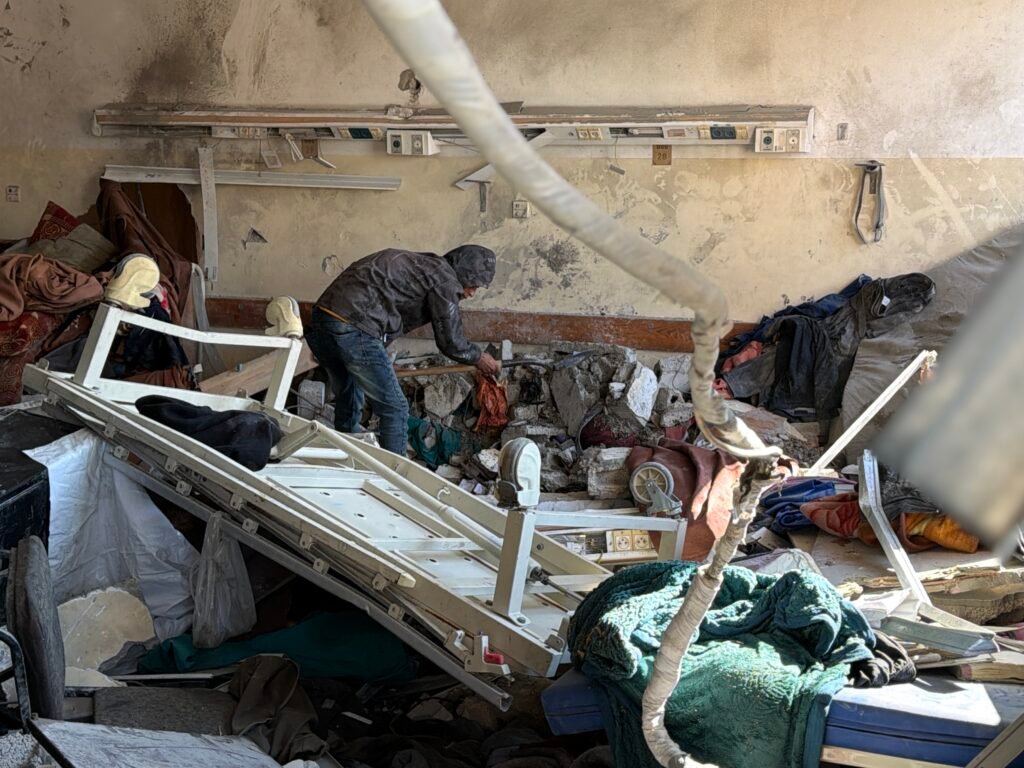
For me, this was no longer simply journalistic material whose details I was trying to establish. I found myself taking part in searching and digging for victims, driven by a human instinct that took precedence over any professional consideration. A journalist carrying a camera is not detached from the tragedy they document; they are human beings living through its details and affected by them. At around 5:30 a.m., I completed the first round of my fieldwork, gathered the recorded material and sent it to my employer. I then went to sleep for approximately two hours before returning to the complex that morning.
The scene was even more devastating in daylight. The building I had entered just hours earlier to conduct interviews and document patients’ suffering had been reduced to a pile of rubble and destruction. I made my way to the complex’s morgue, where relatives of the victims were arriving to identify their children and family members, amid scenes of shock, tears and disbelief. According to the figures announced by the complex’s director, the death toll had risen to six, including a doctor and a child with special needs, while 28 others had sustained injuries of varying severity. These figures reflect the scale of the danger facing patients and healthcare workers inside medical facilities.
Sultan Abu Maghsib: When the Search for Treatment Becomes a Fear of Death
Among the personal stories that revealed another dimension of this tragedy was that of Sultan Abu Maghsib. He had never expected that the days he spent waiting inside Nasser Medical Complex would turn into another ordeal of fear and anxiety. He had been accompanying his elderly father, Atiya, aged 77, as he awaited further treatment and surgery that the family had been waiting for for some time. Sultan and his father had spent more than ten days in the hospital, hoping that the father would regain his health through the completion of previous surgical procedures. But the two Israeli missiles that struck the building shattered that hope, turning the place they had come to in search of recovery into a source of danger threatening their lives and those of other patients.
Sultan recounts how the explosion violently shook the building, shattering glass and sending dust through corridors and rooms, amid the screams of patients and their companions, who had been caught off guard while lying in their beds. The consequences of the bombing were not limited to injuries and physical destruction. The elevators stopped functioning and parts of the staircases were damaged, making it more difficult to evacuate the wounded and move them to safe locations, particularly elderly patients and those unable to move independently. For Sultan, the loss extended beyond the terror he experienced during the bombing. It also affected his father’s medical future, as the surgery they had been waiting for became impossible due to the extensive damage to the building, medical equipment and medical records.
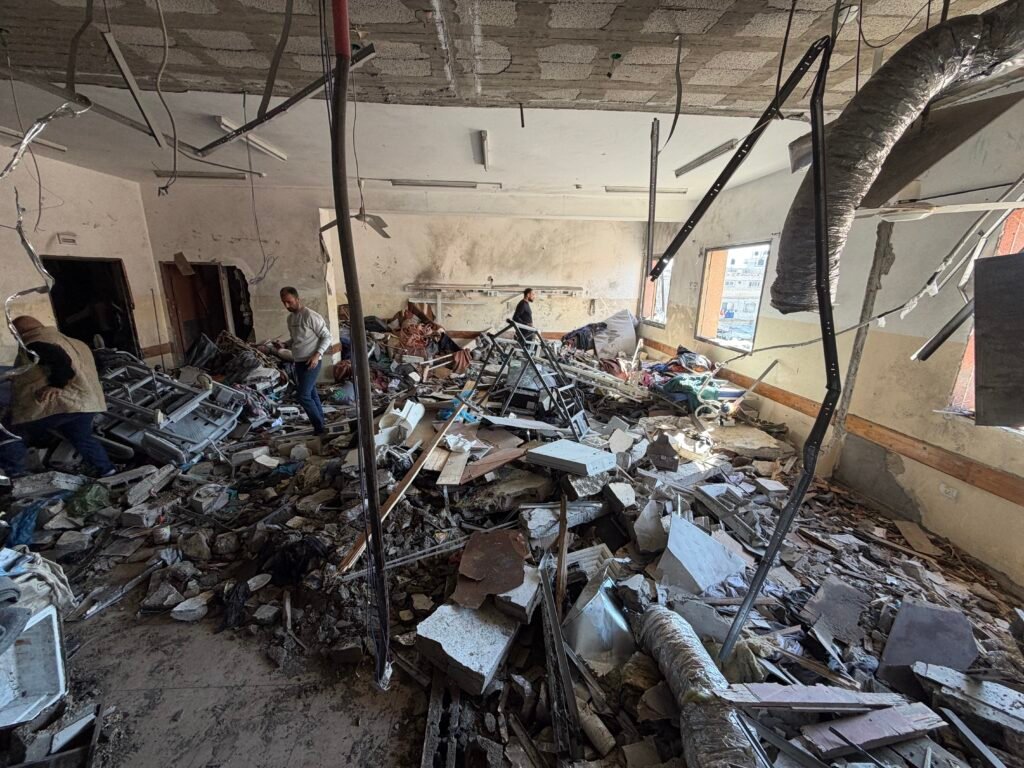
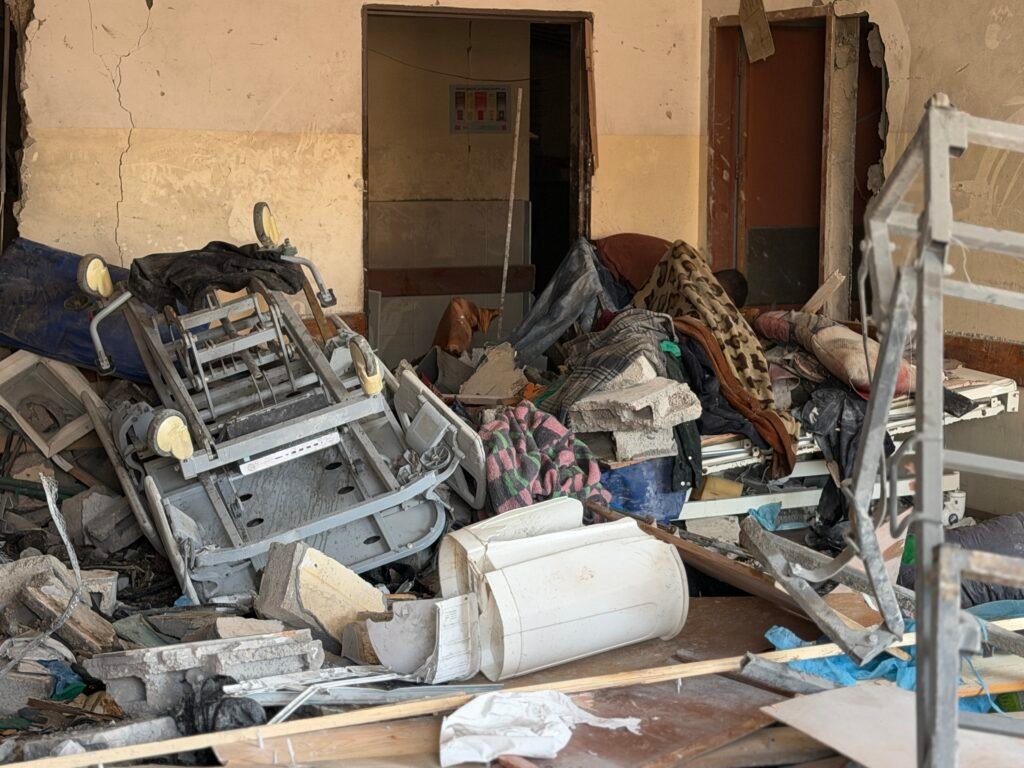
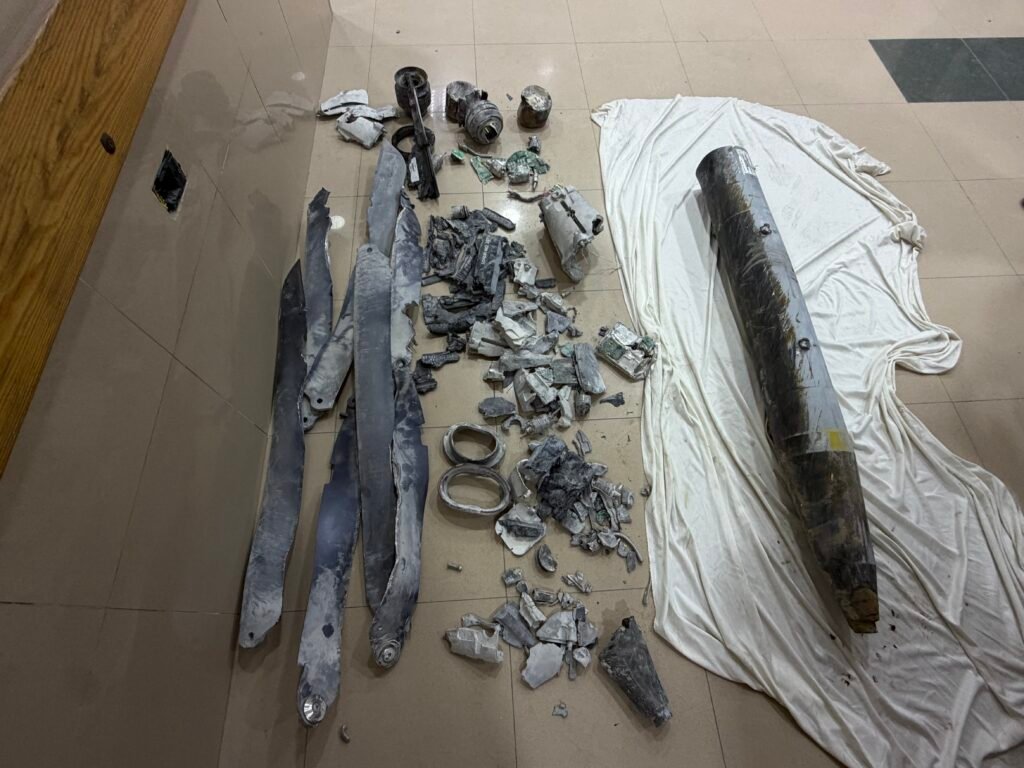
Photo taken by Mohammed Salama
Thus, a journey in search of recovery turned into a confrontation with the unknown. The father, who had entered the hospital hoping to continue his treatment, now faced the prospect of having his necessary medical intervention postponed. His son was left with a difficult question: where could he take his father for treatment, given that other hospitals were themselves struggling to accommodate patients? Abu Maghsib’s experience reveals a dimension of the tragedy no less serious than the number of those killed and wounded. It concerns patients who do not die directly as a result of the bombing but nevertheless pay for it with their health and lives because surgeries are suspended, equipment is destroyed and they are forced to leave their places of treatment under extraordinary circumstances.
An attack on a hospital does not end when the explosion subsides. It marks the beginning of prolonged suffering for patients who lose their treatment appointments, see their surgeries postponed and find their lives dependent on the availability of an alternative facility and medical resources that may not exist in the first place.
Maryam Abu Hatab: Where Can Palestinians Find a Safe Haven?
Near the targeted building, Maryam Abu Hatab, a resident of Khan Younis, was trying to come to terms with the bombing and its consequences. She recalled the tragedy of a relative who had been injured when a wall of the family’s destroyed home collapsed on him while he was helping to prepare a tent to shelter family members. He was pronounced dead the following morning. This story encapsulates the harsh trajectory of suffering endured by Palestinians in the Gaza Strip. Death is no longer confined to a single location, nor is it limited to areas of active confrontation or sites directly targeted by bombardment. It now follows people from destroyed homes to displacement tents, and even to the hospitals to which they turn in search of treatment.
The family, having lost its home and been forced to seek temporary shelter, found that the tent offered insufficient protection against the dangers posed by structurally weakened buildings and rubble. Nor did their injured relative survive after the wall collapsed on him. With deep bitterness, Maryam questions where Palestinians can find safety if their homes have been destroyed, their tents remain exposed to danger, and hospitals themselves can no longer provide the protection that patients and the wounded should be entitled to expect. Her testimony reflects a crisis that extends beyond the immediate casualties of bombardment to encompass the collapse of the very notion of human security in the Gaza Strip. Residents no longer have a guaranteed place of refuge when danger intensifies. Repeated displacement has become a transition from one form of suffering to another.
This case also demonstrates that the consequences of war cannot be measured solely by the number of casualties announced by health authorities. They also include families who have lost their homes and livelihoods, people living under the threat of buildings at risk of collapse, and patients awaiting treatment in an environment lacking even the most basic safety conditions.
The Doctor and His Patient: Death Unites Those Whom Treatment Had Brought Together
During a press conference held by the director of Nasser Medical Complex, Dr Ahmed Abdel Khaleq Al-Farra, at approximately 11 a.m., further distressing details emerged concerning the victims and the circumstances surrounding the attack. Al-Farra stated that the Israeli bombardment targeted the complex with two missiles. One exploded, while the other failed to detonate. He indicated that, in his assessment, the explosion of the second missile would have resulted in a considerably higher number of deaths and injuries, potentially causing an even greater massacre.
He confirmed that the toll stood at six people killed and 28 injured. Among those killed was Dr Rizq, aged 52, whom he described as a member of the medical staff who had never hesitated to serve patients and had continued carrying out his medical duties despite the extremely difficult conditions facing the complex. One of the most distressing details in the director’s testimony was that a patient whom the doctor had previously operated on was killed alongside him at the same moment. It was a scene that encapsulated a cruel human paradox: a doctor who had come to the hospital to save lives and a patient who had sought treatment and recovery were brought together by medicine in life, only to be united by the bombing in death. Al-Farra stressed that the attack took place without any prior warning being issued to the complex’s administration or the healthcare institutions operating there. He considered the incident another episode in a series of attacks against the healthcare system, noting that this was the seventh time Nasser Medical Complex had been targeted.
This testimony is particularly significant because it comes from the management of the medical facility, which witnessed the extent of the damage and losses firsthand. It indicates that the presence of patients and medical personnel inside the building did not prevent the attack, nor were any evacuation procedures or warnings issued beforehand, according to the director’s account.
Repeated Attacks on an Exhausted Healthcare System
The bombing of Nasser Medical Complex cannot be understood as an isolated incident, separate from the broader context in which healthcare institutions across the Gaza Strip have been operating since October 2023. Israeli attacks have targeted several hospitals and medical complexes, including Kamal Adwan Hospital, the Indonesian Hospital, Al-Aqsa Martyrs Hospital and Nasser Medical Complex, which has been repeatedly struck. Al-Ahli Arab Baptist Hospital also witnessed a deadly massacre in October 2023, which resulted, according to the figures announced at the time, in approximately 470 Palestinians being killed following the bombardment of its courtyard.
These attacks have taken place amid the continuous deterioration of the healthcare system’s capacity to function. Medical facilities have been destroyed or damaged, several healthcare institutions have been forced out of service, and shortages of medicines, medical consumables and fuel have intensified. All this comes on top of the enormous pressure generated by the number of injured people and patients requiring urgent medical intervention. The danger of targeting hospitals lies in the fact that its consequences do not stop at the building being struck. They extend throughout the entire healthcare system. Every department forced to suspend operations reduces the system’s capacity to receive patients; every damaged piece of equipment deprives injured people of an opportunity to receive treatment; and every doctor killed represents the loss of medical expertise that society needs most during its darkest moments.
Attacks on medical facilities also instil fear among patients and their families, undermine their confidence in places that are supposed to provide them with a safe haven, and place medical personnel before extremely difficult choices: whether to continue working in an environment fraught with danger or attempt to protect themselves and their patients. At Nasser Medical Complex, these consequences are particularly severe given its central role in providing healthcare services to residents of the southern Gaza Strip, especially as many other facilities have become increasingly unable to accommodate the growing numbers of injured people and patients.
Consequently, the loss of a surgical department or the disabling of part of a medical building does not simply mean losing a treatment facility. It means reducing the capacity to perform operations, postponing medical interventions, increasing pressure on the remaining departments and placing additional burdens on medical teams already working under extraordinary circumstances.
International Law and the Protection of Hospitals: An Undiminished Responsibility
From a legal perspective, the bombing of the surgical department at Nasser Medical Complex raises serious questions about compliance with the rules of international humanitarian law, which grant special protection to civilian hospitals, medical personnel, patients and the wounded during armed conflicts. The Geneva Conventions and the customary rules of international humanitarian law require medical facilities to be respected and protected and prohibit attacks against them. They also oblige parties to a conflict to distinguish between military objectives and civilian objects and to take the necessary precautions to avoid harming civilians.
Hospitals do not lose their legal protection simply because wounded or sick combatants are present inside them. Such protection may only be withdrawn under specific circumstances and subject to strict conditions. These require evidence that the facility is being used to commit acts harmful to the enemy outside its humanitarian function. They also require that a prior warning be issued and sufficient time be granted whenever circumstances permit. In the incident reported by the director of Nasser Medical Complex, his confirmation that the administration had received no prior warning, combined with the presence of patients and wounded people inside the building, calls for an independent and transparent international investigation into the circumstances of the attack, the nature of the target and the extent to which the principles of distinction, proportionality and precaution were respected.
The loss of life among patients and healthcare workers, together with the damage inflicted on the surgical department, also makes it essential to document the evidence, testimonies and physical traces of the bombardment. This would enable the relevant international bodies to assess the incident and establish legal responsibility. The protection of hospitals must not remain confined to the provisions of conventions and agreements that exist only on paper, while patients and doctors continue to pay for attacks with their lives and bodies, without effective international measures to ensure respect for that protection and accountability for those responsible for violating it.
Beyond the Bombing: Undermining the Foundations of Life
What happened at Nasser Medical Complex reflects one aspect of the broader humanitarian reality facing residents of the Gaza Strip. The consequences of bombardment, the blockade, displacement, poverty and the collapse of essential services are intertwined, producing a crisis that cannot be treated as a series of unrelated incidents. The patient unable to find a hospital bed, the child deprived of a chance to survive, the family searching for shelter among the rubble and the doctor continuing to work under bombardment are all victims of a protracted crisis whose consequences have gone beyond material losses to threaten the very foundations of life.
After years of war, the challenge is no longer limited to providing treatment for newly injured people. It now also involves rehabilitating patients whose medical care has been interrupted, restoring suspended healthcare services, providing medicines, equipment and fuel, and rebuilding hospitals that have been damaged or forced out of service. Continued restrictions on the entry of medical necessities and humanitarian supplies further increase the danger posed by any new attack. Alternatives are no longer sufficiently available, and the remaining healthcare facilities may be unable to accommodate additional waves of casualties and patients.
Under these circumstances, ensuring the effective protection of hospitals, facilitating the entry of medical supplies and fuel, and enabling healthcare personnel to carry out their work have become urgent humanitarian necessities, not demands that can be postponed until the end of the war.
Conclusion: Where Do Patients Go When Hospitals Are Bombed?
After hours of documenting events and conducting fieldwork at Nasser Medical Complex, images of destruction, blood and the faces of the victims’ relatives remained etched in my mind. So too did the unanswered questions of the patients we had met. Sultan Abu Maghsib remains preoccupied with his elderly father’s fate and how he will be able to continue his treatment after the surgery he had waited so long for was disrupted. Maryam Abu Hatab continues to wonder where Palestinians can find safety, now that the tragedy has spread from destroyed homes to displacement tents and, ultimately, to hospitals. Between their experiences lie the stories of dozens of patients, wounded people and families who have found themselves confronted with a reality more brutal than they can bear.
As for Dr Rizq, who had spent years serving patients, his professional journey came to an end inside the very place where he had devoted himself to saving the lives of others. A patient on whom he had performed surgery was killed alongside him. The attack on Nasser Medical Complex represents more than another loss for Gaza’s healthcare sector. It exposes the depth of the humanitarian catastrophe endured by Palestinians in Gaza and raises a question that goes beyond this particular incident: if a hospital, with everything it represents in terms of protection, treatment and survival, is no longer spared from bombardment, where can patients, the wounded and civilians find a safe haven?
In Gaza, the search for medical treatment has become a daily battle. Reaching a hospital is now fraught with danger, while survival is no longer guaranteed even for those who manage to reach its beds.
In the face of these continuing incidents, the response must go beyond condemning the bombing or expressing sorrow over the loss of life. It requires serious international action to ensure the protection of civilians and medical facilities, hold those responsible for violations accountable, and lift the restrictions preventing humanitarian aid and medical supplies from reaching the Strip. Gaza does not simply need hospitals made up of walls and medical equipment. It needs genuine guarantees to protect those inside them, restore patients’ right to treatment, enable doctors to save lives and ensure that Palestinians have the right to a place where they do not have to fear death while searching for survival.