
⚠️ URGENT!!!

Author

To cite this article: “⚠️ URGENT!!!” by EISMENA, EISMENA, 11/08/2026, [https://eismena.com/news/%e2%9a%a0%ef%b8%8f-urgent/].

The information and opinion contained in the articles on the EISMENA website are solely those of the author(s) and do not engage the responsibility of the institute.

Share this article

The War Trump Dreams To Win

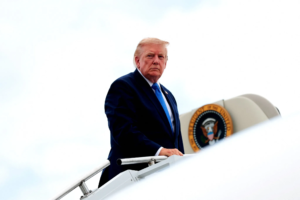
On 28 February 2026, the United States and Israel launched what Trump described as ‘major combat operations’ against Iran, and the initial strikes killed Ayatollah Ali Khamenei himself, along with several high-ranking commanders. This campaign was explicitly aimed at overthrowing the Islamic Republic. Seven months later, the war is described as a ‘stalemate’: the US Navy has devastated the Iranian fleet and destroyed much of its radar coverage, but Iran continues to carry out raids on the waterway through which a fifth of the world’s oil passes, and both sides are vying for control of it. The question on the minds of millions of people across the Middle East and as far afield as Europe is whether Donald Trump understands that no American weapon can wipe out or destroy Iran.
Read More »

Rewarded Either Way: Morocco, the EU and the Paradox of Border Externalisation after Ceuta

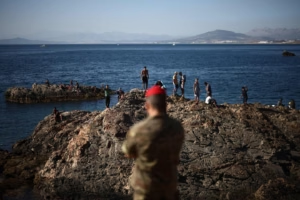
The July 2026 Ceuta crisis, during which an estimated 72,000 people crossed the border from Morocco, exposed a paradox in the EU’s externalisation of migration management. Relying on transit states to limit crossings also gives those states bargaining power. This article examines EU–Morocco cooperation and competing explanations for the crisis, from structural pressures and failures of anticipation to the possible instrumentalisation of migration flows. Both interpretations point to the same vulnerability: the EU’s dependence on Moroccan cooperation. The article situates Ceuta within a broader policy model by examining the European response and comparing Morocco with Tunisia. It concludes that externalisation does not guarantee containment and that the pursuit of greater control may deepen the EU’s reliance on transit states.

Read More »

Jurf al-Sakhar: Ali al-Zaidi faces the military and economic power of Kata’ib Hezbollah

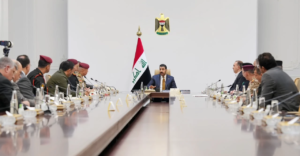
In an interview with Kurdistan 24, on November 16, 2026, Dr. Adel Bakawan, Director of the European Institute for Studies on the Middle East and North Africa (EISMENA), described Jurf al-Sakhar as one of the first tests of credibility facing Iraqi Prime Minister Ali al-Zaidi’s gouvernement. Beyond the question of the return of approximately 129,000 people displaced since 2014, the research portrays a territory under the effective control of Kata’ib Hezbollah, where military infrastructure, clandestine prisons and parallel economic activities would constitute major obstacles to the exercise of state authority. His analysis highlights the gap between the Prime Minister’s constitutional powers and the balance of power underpinning Iraq’s political system.

Read More »

Related Articles

The War Trump Dreams To Win

Hichem Karoui

Rewarded Either Way: Morocco, the EU and the Paradox of Border Externalisation after Ceuta

Amelia Aguirrezabal Ortega

Jurf al-Sakhar: Ali al-Zaidi faces the military and economic power of Kata’ib Hezbollah

Adel Bakawan

From the Algiers Doctrine to the Madama Forward Operating Position: Anatomy of a Strategic Realignment in the Sahel

Imen Chaanbi

In Lebanon, the End of a Sense of Superiority? The Shiite Community Facing Hezbollah’s Decline

Lyna Ouandjeli

Could Coalition Withdrawal Increase or Reduce Threats to Iraqi Kurdistan?

Wladimir van Wilgenburg