


Algeria and the Redefinition of Its Strategic Depth
The Sahelo-Saharan region is undergoing a strategic realignment that now extends beyond the sole framework of the fight against armed groups. The withdrawal of Western forces from several Sahelian theatres, the emergence of new military alliances and the weakening of traditional regional cooperation mechanisms have profoundly altered the balance of power. In this context, Algeria is asserting itself as a major military power in the Maghreb and an essential actor in Sahelian mediation. Its geographical proximity directly exposes it to the security repercussions of the crises affecting its southern borders.
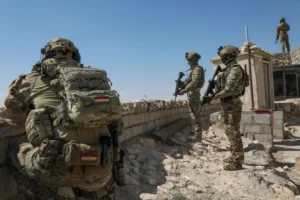
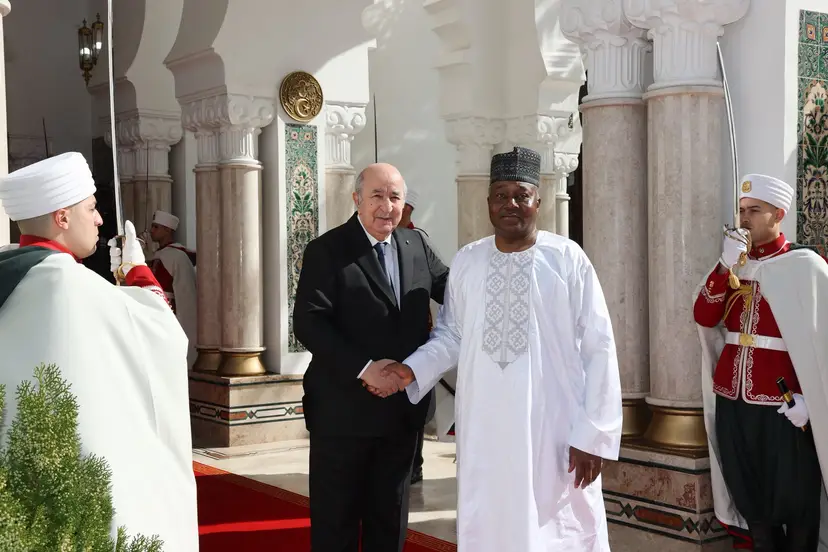
Algiers’ decision to authorise the deployment of units of the People’s National Army (ANP) to Niger, announced on 26 October 2026, represents a turning point in this development. Approved on 25 October by both chambers of Parliament, in accordance with Article 91 of the Constitution, as amended by the 2020 revision governing the deployment of troops abroad, and subsequently formalised by President Abdelmadjid Tebboune, this decision was taken at the request of the Nigerien authorities. Its official purpose is to protect the energy and economic interests shared by the two countries. The stakes, however, extend beyond the evolution of Algeria’s military doctrine alone. They reflect a redefinition of Algiers’ projection of power: rather than limiting the protection of its interests to the strict defence of its borders, Algeria is gradually seeking to operate within the regional spaces where threats to its security, infrastructure and economic interests take shape.
This evolution raises a central question: is Algeria moving from a doctrine of strategic restraint towards a more proactive approach to securing its regional environment? In this respect, Madama, in north-eastern Niger, offers a particularly revealing case. Its geographical position, the dynamics of the Libyan Fezzan and the presence of Algerian energy interests in northern Niger give this development implications that extend far beyond the bilateral framework.
From Non-Interference to the Securing of the Strategic Periphery
Algeria’s defence doctrine has historically been built around national sovereignty, non-interference and the preservation of strategic autonomy. The experience of the War of Independence, the role of the ANP in state-building and the threats facing the country’s territory have all contributed to a preference for national defence, border control and the political settlement of crises. This orientation has never meant a lack of interest in regional crises. Algiers has notably invested in diplomatic conflict-resolution mechanisms in Mali and developed security cooperation arrangements with its neighbours. Its preference, however, has been to contain threats upstream through intelligence, border surveillance and mediation, rather than to deploy its forces directly abroad.
The decision concerning Niger introduces a qualitative shift. It does not mean abandoning the traditional principles of Algerian diplomacy, but rather broadening the range of instruments available to defend its interests. The distinction is fundamental: non-interference remains a guiding political principle, while the protection of national interests may justify targeted external intervention within a strict bilateral and constitutional framework. The events of summer 2026 had already signalled this shift. On 30 August, at the request of the Nigerien authorities and following an attempted destabilisation in Niamey, four Algerian Su-30 fighter aircraft, accompanied by a transport aircraft and a tanker aircraft, landed in the Nigerien capital. This operation, officially presented as a support mission for the Nigerien army, already demonstrated a level of military cooperation extending beyond conventional training and intelligence-sharing mechanisms.
The parliamentary vote in October marked a further step by activating the constitutional framework governing the ANP’s deployment abroad. Nevertheless, it is important to distinguish between parliamentary authorisation, the presidential decision, reported military movements and the actual establishment of a lasting presence. These stages are not equivalent and do not, in themselves, make it possible to conclude that Algerian forces have established a permanent presence in Niger. For Algiers, Niger represents a priority neighbouring country. Porous borders, trafficking, the movement of armed groups and the consequences of Libya’s fragmentation directly affect the security of southern Algeria. The objective is therefore less to control Nigerien territory than to prevent the emergence of uncontrolled spaces that could become sanctuaries or corridors for destabilisation.
Algeria’s strategic depth can thus no longer be understood solely in reactive and territorial terms. It is increasingly incorporating the border areas of neighbouring states into a broader national security architecture. This development is based on a logic of prevention: operating as close as possible to the areas through which threats move in order to prevent them from approaching Algerian borders.
Madama and the Fezzan: Milestones in a New Operational Geography
Madama occupies a particularly sensitive position in north-eastern Niger, in the immediate vicinity of the Libyan border. In a desert environment characterised by vast distances, limited infrastructure and the mobility of cross-border networks, a military forward operating position offers significant surveillance, intelligence-gathering and logistical support capabilities. The site also carries considerable historical and symbolic significance. Occupied by the French army between 2015 and 2023 as part of Operation Barkhane, it was integrated into a surveillance and counter-jihadist architecture across the Sahelo-Saharan region. Its potential use by Algeria would illustrate a redistribution of security responsibilities in a region where Western partners have significantly scaled back their presence.
Madama primarily offers operational advantages. A temporary or permanent deployment could facilitate the monitoring of routes connecting northern Niger to southern Libya, improve intelligence flows and strengthen the capacity to respond to movements by armed groups and smuggling networks. It would also make it possible to better coordinate operations with Nigerien forces, particularly in areas where distances and logistical constraints complicate interventions from urban centres. Current developments nevertheless require a rigorous distinction between strategic hypotheses and operational realities. On 25 October, General Ibro Amadou, Chief of Staff to Nigerien President Abdourahamane Tiani, visited Madama. On 30 October, a convoy of Algerian military vehicles was reported in the Arlit region, heading towards Agadez. On 2 November, a Nigerien government source indicated that Algerian military personnel could carry out occasional missions in Madama, without this necessarily implying the establishment of a permanent presence.
At the same time, an event gave this cooperation a tangible logistical dimension. On 1 November, Nigerien authorities received 1.65 million litres of fuel from Algeria in Agadez, transported by 53 fuel tankers. The convoy travelled along the trans-Sahelian route via Assamaka and Arlit under an escort arrangement. These developments demonstrate a genuine intensification of cooperation between Algiers and Niamey, but they do not confirm the establishment of a permanent Algerian contingent in Madama. The number of personnel, the precise mandate and the arrangements for any potential deployment remain to be clarified. Caution is necessary, since political authorisation for an external engagement does not constitute proof of a lasting deployment on the ground.
If a deployment were to materialise, it would provide Algiers with additional anticipatory capabilities, facilitate surveillance of the routes connecting Niger to Libya and reduce response times. Madama would then become an anchor point for bilateral cooperation and a symbol of the region’s security transformation. The significance of this development would be all the greater given that it would take place at a site formerly integrated into the French military apparatus. This prospect takes on its full meaning when considered in conjunction with the situation in the Libyan Fezzan. Libya’s institutional fragmentation, rivalries between factions and the entrenchment of informal networks have transformed this region into an arena of competition. The advance of forces associated with Field Marshal Khalifa Haftar in border areas represents a source of concern for Algiers, which seeks to neutralise any space from which threats could be projected towards its borders.
The Fezzan thus represents an essential extension of Algeria’s strategic depth. The dynamics unfolding there directly influence Niger’s security and, consequently, that of southern Algeria. Madama could therefore become a privileged observation point overlooking this area of circulation, without necessarily implying that Algiers intends to become directly involved in Libya’s internal rivalries.
The Energy, Infrastructure and Security Stakes of Algeria’s Engagement
The energy dimension constitutes one of the key drivers of this strategic redefinition. Algeria’s interests in Niger encompass political stability, oil exploration conducted by Sonatrach and prospects for regional energy integration. Securing Niger’s environment is therefore not solely a military concern: it also involves protecting investments and projects that could strengthen Algeria’s economic and geopolitical position. The Kafra oil block, in the Agadez region, illustrates this commitment. In September 2026, Niger’s Minister of Petroleum indicated that proven and probable (2P) reserves were estimated at approximately 255 million barrels, while also referring to prospective potential of around 2.5 billion barrels for the northern part of the block. This distinction is important. Indeed, 2P reserves correspond to estimated recoverable volumes with a reasonable degree of confidence, whereas prospective resources refer to potential volumes that remain subject to geological, technical and economic uncertainties. They therefore cannot be considered established reserves.
For Sonatrach, its presence in Niger represents an opportunity to diversify its upstream activities and consolidate its presence in Africa. It also places Algerian-Nigerien cooperation within a long-term economic relationship, for which political and security stability constitutes an essential condition.
The Trans-Saharan Gas Pipeline (TSGP) project further reinforces this interdependence. Designed to transport Nigerian gas to Europe via Niger and Algeria, the project could consolidate Algeria’s role as an energy corridor between sub-Saharan Africa and European markets. An important milestone was reportedly reached on 3 June 2026 with the approval of the final report of the updated feasibility study, followed the next day by the official launch of construction work on the Algerian section in Aoulef, in the wilaya of Adrar. The realisation of the gas pipeline nevertheless remains dependent on several factors: financing, coordination between the states involved, technical implementation conditions and the security of the territories it crosses. In this respect, Niger occupies a central position. Any lasting deterioration in the security situation could undermine the project’s prospects and increase the costs associated with its implementation.
Securing energy corridors and infrastructure therefore constitutes a shared interest for Algiers and Niamey. However, it would be reductive to limit Algeria’s military engagement solely to the protection of oil fields or industrial projects. It forms part of a broader equation combining territorial sovereignty, investment protection, control over cross-border flows and the consolidation of geopolitical influence. Energy therefore emerges as a structuring factor in Algeria’s projection of power. It helps explain why Algiers attaches growing importance to stability in northern Niger, while giving its cooperation with Niamey a dimension that extends beyond the military sphere alone.
A Reshaping Sahelian Security Architecture and the Russian Factor
Algeria’s engagement is taking place against a profoundly transformed diplomatic and military landscape. The creation of the Alliance of Sahel States (AES), bringing together Mali, Niger and Burkina Faso, has formalised a major geopolitical break with previous regional arrangements. It has been accompanied by closer security ties with Moscow, which has progressively strengthened its presence in several countries across the region. For Algiers, this realignment presents both opportunities and constraints. The willingness of Sahelian states to diversify their partnerships could encourage the development of regional cooperation based more heavily on African actors. In this respect, Algeria possesses significant advantages: geographical proximity, military capabilities, intelligence experience and a diplomatic tradition of mediation.
However, the closer relations between certain AES states and Russia also raise questions. Algiers seeks to preserve its strategic autonomy and prevent its southern neighbourhood from becoming an arena of confrontation between external powers. Its position therefore reflects caution towards competing influences, without systematically opposing the sovereign choices of its partners. The relationship with Niamey represents a particular challenge. Deepening bilateral cooperation could allow Algeria to strengthen its role in the security of the central Sahel, but this requires close coordination with the Nigerien authorities. Any external military presence must be clearly defined, accepted and governed by cooperation mechanisms in order to avoid political misunderstandings or tensions with other regional actors.
In the wake of France’s withdrawal, Algiers is not necessarily seeking to replicate Western military arrangements. Its approach appears instead to favour targeted cooperation based on the needs expressed by partner states and the protection of shared interests. This strategy would allow it to consolidate its influence without relinquishing its diplomatic autonomy. The difficulty, however, lies in the coexistence of several security logics. The AES authorities seek to assert their sovereignty and diversify their alliances. Russia, for its part, is seeking to strengthen its foothold in the region, while Western partners aim to preserve their economic and security interests. Algeria, meanwhile, is striving to prevent any destabilisation of its borders while preserving its strategic autonomy. Algiers’ ability to maintain a balance between these different actors will constitute one of the main tests of its new posture.
Three Forward-Looking Scenarios Towards 2030
In light of the current trajectory, three scenarios can be envisaged.
First scenario: strengthened and controlled bilateral cooperation
Algeria’s engagement remains strictly governed by bilateral agreements focused on intelligence, logistics, training and infrastructure protection. Madama is used occasionally or as part of a light deployment, in coordination with Niamey. This scenario presupposes lasting political commitment from both governments, clearly defined mandates and improved operational coordination. It would allow Algiers to strengthen its strategic depth without exposing itself to a prolonged military presence.
Second scenario: pragmatic coexistence with third-party powers
Algeria develops autonomous cooperation with Niger while maintaining functional relations with Western partners and avoiding open confrontation with Russia. This configuration is based on a pragmatic division of roles and mutual recognition of each actor’s interests. It could help contain cross-border trafficking and preserve a degree of regional stability. However, it remains dependent on the ability of the powers concerned to prevent their rivalries from translating into tensions on the ground.
Third scenario: increased competition and security fragmentation
In the absence of interstate coordination, a lasting Algerian presence in Madama could be perceived as intrusive by certain actors or become a target for armed groups. Rivalries for influence between external powers and disagreements between regional partners would then exacerbate instability. This scenario would undermine Nigerien sovereignty, increase risks for deployed personnel and jeopardise the security of energy investments. The emergence of any one of these scenarios will depend primarily on the ability of Algiers and Niamey to establish a stable political and operational framework, but also on developments in Libya and the AES countries.
Geopolitical Implications for Europe and Future Prospects
For Paris and the European Union, the emergence of Algeria’s new posture makes it necessary to rethink the balance of power in the Sahel. The withdrawal of French forces and the questioning of traditional security partnerships have opened up a space in which regional powers are now seeking to play a greater role. Algeria appears to be an actor capable of contributing to the stabilisation of certain border areas, particularly through its military capabilities, intelligence experience and relations with the Nigerien authorities. This development does not, however, mean that Algerian and European interests systematically converge. Algiers retains an autonomous conception of its foreign policy and seeks to avoid alignment with the strategies of external powers. Nevertheless, securing trans-Saharan routes, combating trafficking and ensuring the stability of energy infrastructure are areas in which shared interests may emerge.
For Europe, the challenge is therefore to acknowledge the growing influence of regional actors and adapt its cooperation instruments accordingly. An exclusively military approach cannot be sufficient. Lasting stabilisation of the Sahel also requires political and economic responses, stronger institutions, cross-border cooperation and consideration of local dynamics. The decision to authorise the deployment of ANP units to Niger marks an important shift in Algeria’s strategic posture. It does not necessarily reflect an abandonment of the doctrine of non-interference, but rather its adaptation to a regional environment in which security threats, economic interests and energy-related stakes are increasingly interconnected.
Madama embodies this transformation. Its potential use would provide Algiers with additional surveillance and operational cooperation capabilities in an area directly connected to the dynamics of the Libyan Fezzan. However, the available information does not currently make it possible to conclude that Algerian forces have established a permanent presence at the site. The distinction between political authorisation, reported military movements and a lasting presence remains essential.
Beyond Madama, Sonatrach’s investments in Kafra, the prospects for the Trans-Saharan Gas Pipeline and the security of regional corridors reveal a broader strategy. Algeria is seeking to turn its geographical proximity into a lever of influence and to protect its interests by acting more directly in the spaces where threats take shape.
Algiers’ challenge will now be to reconcile this strategic projection with respect for neighbouring states’ sovereignty, the preservation of its diplomatic autonomy and the management of rivalries between external powers. It is under these conditions that the redefinition of its strategic depth can translate into a lasting strengthening of its regional role.
Notes
[1] Security context in the Sahel. United Nations Office on Drugs and Crime (UNODC), Migrant Smuggling in the Sahel.
https://www.unodc.org/documents/data-and-analysis/tocta_sahel/TOCTA_Sahel_Smuggling_of_Migrants_Fr.pdf
[2] Official announcement of the Algerian deployment to Niger. Algeria Press Service (APS), “The President of the Republic Decides to Send ANP Units to the Republic of Niger”, 26 October 2026.
https://www.aps.dz/fr/presidence-news/mvpepe6e-le-president-de-la-republique-decide-d-envoyer-des-unites-de-l-anp-en-republique-du-niger
[3] Planned deployment and the Madama hypothesis. Reuters, “Algeria to deploy army units to Niger to protect energy and economic interests”, 26 October 2026.
https://www.reuters.com/world/africa/algeria-president-deploy-army-units-niger-protect-energy-economic-interests-2026-10-26/
And
Associated Press, “Algeria to send troops to Niger in first foreign deployment in over 50 years”, 26 October 2026.
https://apnews.com/article/d44b4d7a17cfc4a355376f2fffab0349
[4] Algerian military doctrine and non-intervention policy. For further background, consult the documents and analyses published by the Institute for Strategic Research of the Military Academy (IRSEM).
https://www.irsem.fr/
[5] Constitutional basis for the deployment of forces abroad. People’s Democratic Republic of Algeria, Constitution, Article 91, Official Gazette of the People’s Democratic Republic of Algeria, No. 82, 30 December 2020.
https://joradp.dz/TRV/FConsti.pdf
And
Algerian Constitutional Court, constitutional texts and institutional documents.
https://cour-constitutionnelle.dz/
[6] Regional instability and cross-border threats. United Nations, West Africa and the Sahel regional portal.
https://www.un.org/africarenewal/
And
UNODC, Migrant Smuggling in the Sahel.
https://www.unodc.org/documents/data-and-analysis/tocta_sahel/TOCTA_Sahel_Smuggling_of_Migrants_Fr.pdf
[7] French presence in the Sahel and the context surrounding Madama. French Ministry of the Armed Forces, dossiers and archives on external operations.
https://www.defense.gouv.fr/
And
For the context surrounding the 2026 announcement: Le Monde, “In Algeria, Parliament Authorises the Deployment of Military Units to Niger”, 25 October 2026.
https://www.lemonde.fr/afrique/article/2026/10/25/en-algerie-le-parlement-autorise-l-envoi-d-unites-militaires-au-niger_6800111_3212.html
[8] Political fragmentation and trafficking in Libya and the Sahel.
United Nations Security Council, Panel of Experts on Libya, reports and official documents.
https://www.un.org/securitycouncil/sanctions/1970/panel-of-experts/reports
[9] Algerian energy interests in Niger and the Kafra block.
Reuters, “Algeria to deploy army units to Niger to protect energy and economic interests”, 26 October 2026.
https://www.reuters.com/world/africa/algeria-president-deploy-army-units-niger-protect-energy-economic-interests-2026-10-26/
Sonatrach, institutional website and information on the group’s activities.
https://sonatrach.com/
[10] Nigeria–Niger–Algeria Trans-Saharan Gas Pipeline project. Sonatrach, institutional information on energy projects and international partnerships.
https://sonatrach.com/
And
Nigerian National Petroleum Company (NNPC).
https://www.nnpcgroup.com/
[11] Migration and human security in the Sahel. International Organization for Migration (IOM), Migration Routes Across the Sahel, January–June 2024.
https://dtm.iom.int/sites/g/files/tmzbdl1461/files/reports/Routes%20AOC-Sahel_Juin%202024.pdf
And
UNODC, Migrant Smuggling in the Sahel.
https://www.unodc.org/documents/data-and-analysis/tocta_sahel/TOCTA_Sahel_Smuggling_of_Migrants_Fr.pdf