
Introduction
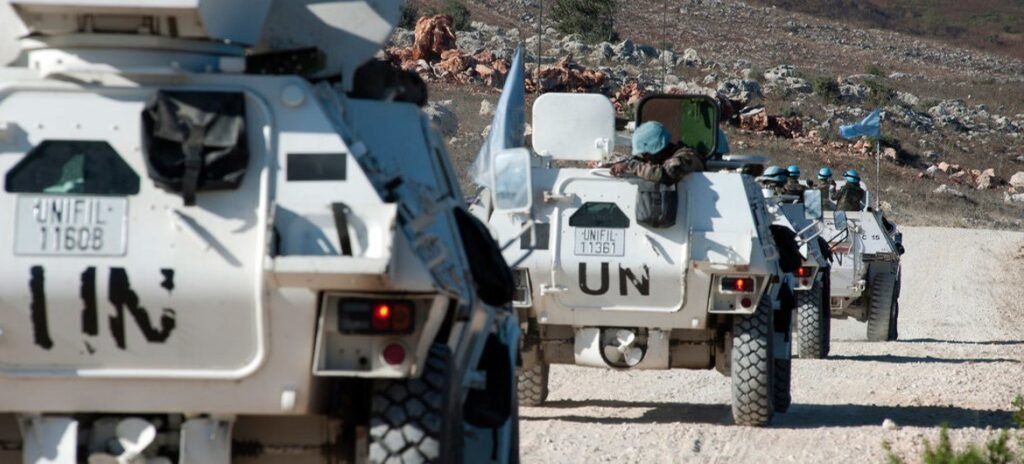
The presence of the UNIFIL constitutes one of the few international mechanisms maintaining a continuous institutional presence in southern Lebanon, a region where state authority has historically been contested and where security arrangements are closely tied to regional confrontations. Deployed in 1978 and subsequently reinforced by United Nations Security Council Resolution 1701 in 2006, UNIFIL is tasked with monitoring the cessation of hostilities, supporting the deployment of the Lebanese Armed Forces (LAF) south of the Litani River, and contributing to the implementation of provisions relating to Lebanon’s security and territorial sovereignty. However, its role cannot be reduced to that of a military interposition force. On the ground, its presence also contributes to maintaining channels of communication between the various parties, facilitating certain civilian movements and delivering humanitarian assistance. This latter function, which is less frequently addressed in analyses of the mission, was particularly emphasised by L’Œuvre d’Orient during an interview conducted on 23 October. It makes it possible to place the debate surrounding UNIFIL’s withdrawal within a broader perspective, extending beyond purely military and diplomatic considerations to examine the consequences of its departure for the living conditions of southern Lebanon’s population.
An international presence beyond military monitoring
The interview conducted with L’Œuvre d’Orient on 23 October provides insight into this operational dimension, which is often less visible in analyses devoted to UNIFIL. The organisation emphasised that the UN force had facilitated the delivery of humanitarian convoys to several localities in southern Lebanon that had remained difficult to access during the fighting. In March 2026, it notably supported assistance operations in Rmeich and Aïn Ebel, before providing similar support in Debel in April. In total, approximately twenty convoys were reportedly able to reach isolated areas despite movement restrictions and the continuation of military operations. These interventions illustrate an essential function of UNIFIL: beyond its security mandate, it serves as an operational intermediary enabling civilian and humanitarian organisations to maintain access to populations exposed to isolation. Under certain circumstances, coordination with UN forces and their presence on the ground facilitate movement and help reduce the risks associated with delivering assistance. UNIFIL does not replace humanitarian organisations, but its presence can enable them to operate in areas where movement conditions are particularly restrictive.
This function is particularly important in the geographical and demographic context of southern Lebanon. Border communities are not merely areas located in the immediate vicinity of the Israeli-Lebanese confrontation zone. They are also living communities whose populations depend on transport networks, economic relationships and local solidarity structures that have been profoundly disrupted by displacement and destruction. For the inhabitants of Rmeich, Aïn Ebel and Debel, access to aid is therefore not simply a matter of responding to an immediate humanitarian emergency: it also determines their ability to maintain a connection with their territory, preserve local activities and, ultimately, envisage a sustainable return. Testimonies gathered from other Lebanese interlocutors further substantiate this observation. The interview with Ali Mourad, originally from Aïtaroun, particularly highlights the consequences of destruction beyond its material dimension. He describes the destruction of a neighbourhood comprising approximately twenty to thirty houses, as well as the displacement of families forced to leave their immediate surroundings. His testimony recalls that destruction is not limited to the loss of residential infrastructure: it also leads to the dispersal of family and neighbourhood networks, the disruption of economic activities and the breakdown of the social relationships that structure village life. Repeated displacement has also affected educational and professional trajectories, while security uncertainty further complicates the prospects of return. In this context, the possibility of returning to a locality does not depend solely on the cessation of hostilities. It also requires the ability to move around safely, recover habitable housing, access essential services and restore economic conditions that would allow residents to settle there permanently.
Observations gathered during the mission confirm the persistence of these constraints. Access to certain localities in the south requires authorisations that sometimes go beyond the procedures involving the Lebanese army alone. Several interlocutors also reported risks associated with certain roads, particularly because of the potential presence of unexploded ordnance and infrastructure destruction. These difficulties illustrate how movement in border areas remains subject to security and administrative constraints that complicate both residents’ movements and humanitarian operations. Under certain circumstances, UNIFIL therefore contributes to maintaining a degree of territorial and social continuity that hostilities tend to disrupt. Its role is neither to guarantee the security of the population on its own nor to replace the Lebanese authorities, but rather to make certain movements possible in an environment where they can become particularly dangerous. Its usefulness cannot therefore be assessed solely in terms of its ability to prevent a resumption of hostilities: it must also be evaluated in light of its contribution to maintaining minimum living conditions in the areas concerned. This dimension is all the more important given that the international presence operates within a security environment that remains deeply unstable. Information communicated by UNIFIL in November 2026 illustrates the persistence of violations and military operations in southern Lebanon, despite a significant decrease in the intensity of the fighting since the agreement concluded in June between the United States, Lebanon and Israel. In a statement on 11 November, the mission’s spokesperson, Kandice Ardiel, reported daily violations attributed primarily to Israeli forces: the construction of military positions and roads, ground operations, demolitions, airstrikes and artillery fire. UNIFIL also reported that one of its patrols had come under fire near Wadi Jilu on 10 November, with no injuries reported. These developments show that the reduction in hostilities does not amount to effective stabilisation of the border.
Furthermore, one point came up repeatedly during my stay in Lebanon, which is that the disappearance of an international actor with coordination and liaison capabilities could further exacerbate the difficulties faced by humanitarian organisations, particularly in the most isolated localities. It is precisely in this context that the prospect of UNIFIL’s withdrawal becomes particularly concerning.
The structural limitations of a mandate in the face of persistent tension
The situation highlights a first structural limitation of the UN mechanism: UNIFIL’s presence does not mean that it has the political and military means necessary to prevent violations of Lebanese sovereignty. Its mandate relies largely on observation, monitoring, liaison between the parties and support for the Lebanese Armed Forces. It is neither a territorial defence force capable of protecting Lebanon against external intervention nor a mechanism able to unilaterally enforce compliance with Resolution 1701. Similarly, the limitations of its action in addressing Hezbollah’s military presence have fuelled Israeli and American criticism, as both consider that the mission failed to prevent the development of military infrastructure in southern Lebanon. Nevertheless, assessing its usefulness solely in terms of its inability to resolve these two issues would be reductive. UNIFIL operates in an environment in which two dynamics simultaneously contribute to undermining Lebanese sovereignty: on the one hand, Hezbollah’s continued autonomous military capabilities, which lie outside the state’s monopoly on the use of force; and, on the other, the persistence of Israeli military interventions and presence on Lebanese territory. The UN mission cannot, on its own, resolve this political contradiction. Nevertheless, it remains one of the few international mechanisms capable of documenting its manifestations, maintaining a channel of communication between the actors involved and, under certain circumstances, limiting the direct consequences of this instability for civilian populations. Interviews conducted during the mission also help place these tensions within a broader social and political perspective. Ali Mourad notably discusses the difficulties faced by residents of the south in distinguishing criticism of Hezbollah from the stigmatisation of the Shia population as a whole. This distinction is fundamental in the context of discussions surrounding the movement’s disarmament. Local populations cannot be equated with the military and political decisions of an actor that retains autonomous capabilities within the Lebanese state. The consequences of the fighting, displacement and destruction affect residents whose living conditions cannot be reduced either to their communal affiliation or to their political position.
This social dimension helps explain why the question of disarmament cannot be separated from the restoration of trust between the state and the populations of southern Lebanon. Local political pressures, relations of dependency and disillusionment with national institutions, particularly since the 2019 protests, all contribute to complicating relations between local communities, the authorities and dominant political structures. Restoring the state’s monopoly on the use of force therefore cannot be conceived as a simple transfer of military capabilities: it also requires the state to be able to guarantee the security, rights and living conditions of the populations concerned.
Ali Mourad’s testimony thus highlights three inseparable conditions for a sustainable return: Israeli withdrawal, the return of residents and reconstruction. These priorities cannot be considered independently of one another. A return without security guarantees would expose populations to new threats; reconstruction without access to land, services and economic activities would not make it possible to restore viable living conditions. Finally, a disarmament process that was not accompanied by the effective restoration of security and territorial sovereignty would risk leaving border communities in a situation of persistent vulnerability. These testimonies make it possible to place the limitations of UNIFIL’s mandate within a broader perspective. While the UN force cannot resolve the political and military contradictions affecting Lebanon, its presence nevertheless contributes to maintaining monitoring and coordination mechanisms in a territory where state authority remains contested. It is precisely this function, beyond its military results, that makes the prospect of its withdrawal particularly sensitive for humanitarian actors.
A withdrawal without a clearly established replacement mechanism
Resolution 2790, adopted on 28 August 2025, extended UNIFIL’s mandate until 31 December 2026, while providing for the beginning of a gradual and orderly withdrawal from that date over one year. This is therefore the final extension of its mandate in its current form. During this withdrawal phase, the mission is notably required to ensure the security of its personnel and facilities, while organising the reduction of its operations and the gradual transfer of responsibilities. The stated objective is for the Lebanese government to become the sole guarantor of security in the south of the country.
This deadline raises a major difficulty: UNIFIL’s withdrawal is taking place at a time when the political and security conditions necessary for its replacement have not yet been met. The deployment of the Lebanese Armed Forces continues to face material, operational and political constraints, while the Israeli military presence and tensions surrounding Hezbollah’s disarmament continue to limit the prospects for stabilisation. The transfer of responsibilities to the Lebanese state is therefore a political objective consistent with the principle of national sovereignty, but its effective implementation requires institutional and security capabilities that are not yet fully in place. International discussions over the past few days confirm this uncertainty. On 10 November, following the meeting of G7 foreign ministers in Paris, Jean-Noël Barrot stressed the need to avoid a security vacuum after UNIFIL’s departure and to rapidly establish a new security architecture. However, he acknowledged that no decisive progress had been made regarding the arrangements for its replacement. Two approaches are emerging in parallel. France advocates the establishment of a multinational force, potentially comprising several thousand European troops, tasked with supporting the Lebanese Armed Forces. However, this proposal has encountered resistance, particularly from Italy, one of UNIFIL’s main European contributors. The United States, for its part, favours a monitoring mechanism that could be civilian rather than military. Secretary of State Marco Rubio has notably raised the possibility of a mechanism to verify the withdrawal of Israeli forces from the areas concerned, the deployment of the Lebanese army and the absence of any return of Hezbollah’s military capabilities.
These differences do not merely concern technical considerations regarding the composition of a potential replacement force. They reflect different approaches to stabilisation in southern Lebanon. For Paris, the challenge is to maintain an international presence capable of supporting the Lebanese state and preventing a deterioration of the situation along the border. The American approach places greater emphasis on verifying compliance with security commitments, particularly those relating to Hezbollah’s disarmament and Israeli withdrawal. The debate over replacing UNIFIL therefore reveals a deeper disagreement over regional security priorities: should the primary objective be to preserve an international presence capable of balancing relations between the parties, or to establish a monitoring mechanism designed to ensure the implementation of new security arrangements?
The issue is all the more important given that withdrawal without a credible replacement mechanism could reinforce the asymmetries already present in the region. In its analysis published on 9 November, the Arab Center Washington DC argues that the absence of an international presence along the border could facilitate the continuation of Israeli operations and further complicate the Lebanese state’s efforts to reassert its territorial authority. The analysis also stresses that any future mechanism should not be limited to monitoring Hezbollah’s activities: it should also document Israeli violations and help guarantee the conditions necessary for the return of displaced populations.
This question directly relates to the realities observed in southern villages. Security cannot be considered solely in terms of military control over the border. It also requires residents to be able to return to their localities, rebuild their homes, resume their economic activities and restore social relationships that have been profoundly disrupted by successive waves of displacement. Yet, without an international presence or a credible monitoring mechanism, populations risk becoming more exposed to local military developments, without an external intermediary capable of documenting incidents and facilitating certain humanitarian operations. UNIFIL’s withdrawal could therefore have consequences extending far beyond the disappearance of an interposition force. It risks reducing international monitoring capabilities, weakening mediation mechanisms and complicating humanitarian access to certain localities. The approximately twenty convoys mentioned by L’Œuvre d’Orient illustrate, in this respect, the very concrete nature of what could be lost: an operational capacity for intervention and facilitation that cannot automatically be transferred to a humanitarian organisation or a national army.
The question of withdrawal: restoring sovereignty or shifting the problem elsewhere?
Ultimately, the question of UNIFIL’s withdrawal reveals a contradiction at the heart of the process of rebuilding the Lebanese state. Transferring security responsibilities to national authorities is essential to restoring the country’s sovereignty. However, this transfer cannot be considered a solution in itself if the conditions enabling the state to exercise its authority effectively are not in place. UNIFIL’s departure therefore does not necessarily mean that Lebanon will become more sovereign; on the contrary, it could expose the limitations of its institutional and military capabilities more directly. This contradiction must be understood within the broader context of the relationship between the Lebanese state and non-state armed actors. Hezbollah retains military and political capabilities that limit the state’s monopoly on the use of force, while Israeli interventions and the continued presence of military positions in the south continue to undermine the country’s territorial integrity. The state is thus confronted with a dual challenge: reasserting its authority over military structures beyond its control while remaining unable to guarantee the protection of its territory on its own against external interventions.
Discussions about the post-UNIFIL arrangements cannot therefore be separated from these two issues. A replacement mechanism focused exclusively on Hezbollah’s disarmament would risk overlooking Israeli violations and the conditions necessary to protect civilian populations. Conversely, an international presence limited to observing events without a sufficiently robust political and operational framework would reproduce some of the limitations of the current mechanism. The challenge lies precisely in designing an architecture capable of supporting the strengthening of the Lebanese Armed Forces, monitoring compliance with commitments by all parties and guaranteeing the conditions necessary for the sustainable return of displaced populations. In this respect, the interviews conducted during the mission, particularly the one with L’Œuvre d’Orient, serve as a reminder that security cannot be separated from its human consequences. In border communities, the international presence is not limited to a military monitoring function: it also contributes to maintaining the minimum conditions that allow residents to preserve their connection with their territories. The humanitarian convoys facilitated by UNIFIL to isolated villages illustrate this operational function, which could not automatically be taken over by humanitarian organisations or national authorities. The disappearance of this intermediary therefore risks further complicating access to certain populations, already weakened by displacement, destruction and uncertainty about their future.
The paradox is therefore clear: while the end of UNIFIL is presented as a step towards restoring Lebanese sovereignty, the security and institutional conditions that would allow the state to fully assume its responsibilities are not yet in place. Interviews conducted during the mission show that the consequences of this withdrawal could extend beyond the military and diplomatic spheres. For residents of isolated villages and the organisations providing them with assistance, UNIFIL also represents an operational intermediary whose disappearance risks making humanitarian access more uncertain. The restoration of state authority can therefore only be considered effective if it is accompanied by concrete guarantees for the security of the population, freedom of movement and continuity of assistance.
The departure of the UN force will therefore resolve neither the question of Hezbollah’s disarmament, nor that of Israeli violations, nor the difficulties surrounding the reconstruction of southern Lebanon. Rather, it risks shifting these problems into an environment in which international monitoring, mediation and humanitarian facilitation mechanisms will be more limited. The real question is therefore not simply who will replace UNIFIL, but under what conditions the Lebanese state will be able to effectively regain control of its territory without leaving the populations of the south facing another period of security uncertainty.