
War Timeline March to April 2026

© RTS

Author

EISMENA’s team has compiled the key events of the conflict between the United States–Israel alliance and Iran, covering the period from early March to the end of April 2026. The information presented here is drawn from our correspondents, think tanks, media outlets, and official press briefings.

Please note that this overview is designed to remain accessible and readable; while we have aimed for comprehensive coverage, some events may not be included, particularly during periods when similar military tactics were repeatedly employed.

The developments from February to early March were covered previously.

To cite this article: “War Timeline March to April 2026” by Maxime Lechat, Edgar de Barbeyrac, EISMENA, 06/05/2026, [https://eismena.com/news/war-timeline-march-to-april-2026/].

The information and opinion contained in the articles on the EISMENA website are solely those of the author(s) and do not engage the responsibility of the institute.

Share this article

Rewarded Either Way: Morocco, the EU and the Paradox of Border Externalisation after Ceuta

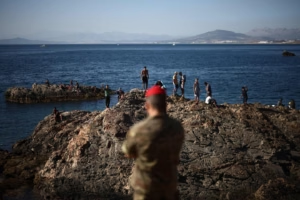
The July 2026 Ceuta crisis, during which an estimated 72,000 people crossed the border from Morocco, exposed a paradox in the EU’s externalisation of migration management. Relying on transit states to limit crossings also gives those states bargaining power. This article examines EU–Morocco cooperation and competing explanations for the crisis, from structural pressures and failures of anticipation to the possible instrumentalisation of migration flows. Both interpretations point to the same vulnerability: the EU’s dependence on Moroccan cooperation. The article situates Ceuta within a broader policy model by examining the European response and comparing Morocco with Tunisia. It concludes that externalisation does not guarantee containment and that the pursuit of greater control may deepen the EU’s reliance on transit states.

Read More »

Jurf al-Sakhar: Ali al-Zaidi faces the military and economic power of Kata’ib Hezbollah

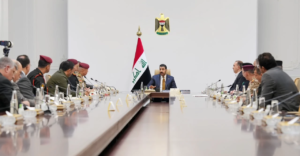
In an interview with Kurdistan 24, on November 16, 2026, Dr. Adel Bakawan, Director of the European Institute for Studies on the Middle East and North Africa (EISMENA), described Jurf al-Sakhar as one of the first tests of credibility facing Iraqi Prime Minister Ali al-Zaidi’s gouvernement. Beyond the question of the return of approximately 129,000 people displaced since 2014, the research portrays a territory under the effective control of Kata’ib Hezbollah, where military infrastructure, clandestine prisons and parallel economic activities would constitute major obstacles to the exercise of state authority. His analysis highlights the gap between the Prime Minister’s constitutional powers and the balance of power underpinning Iraq’s political system.

Read More »

From the Algiers Doctrine to the Madama Forward Operating Position: Anatomy of a Strategic Realignment in the Sahel

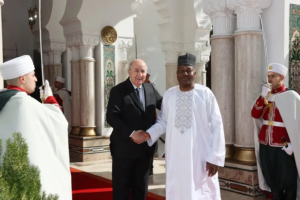
The Sahelo-Saharan region is undergoing a strategic realignment that now extends beyond the sole framework of the fight against armed groups. The withdrawal of Western forces from several Sahelian theatres, the emergence of new military alliances and the weakening of traditional regional cooperation mechanisms have profoundly altered the balance of power.

Read More »

Related Articles

Rewarded Either Way: Morocco, the EU and the Paradox of Border Externalisation after Ceuta

Amelia Aguirrezabal Ortega

Jurf al-Sakhar: Ali al-Zaidi faces the military and economic power of Kata’ib Hezbollah

Adel Bakawan

From the Algiers Doctrine to the Madama Forward Operating Position: Anatomy of a Strategic Realignment in the Sahel

Imen Chaanbi

In Lebanon, the End of a Sense of Superiority? The Shiite Community Facing Hezbollah’s Decline

Lyna Ouandjeli

Could Coalition Withdrawal Increase or Reduce Threats to Iraqi Kurdistan?

Wladimir van Wilgenburg

Lebanon’s rejection of “resilience” qualification

Lyna Ouandjeli