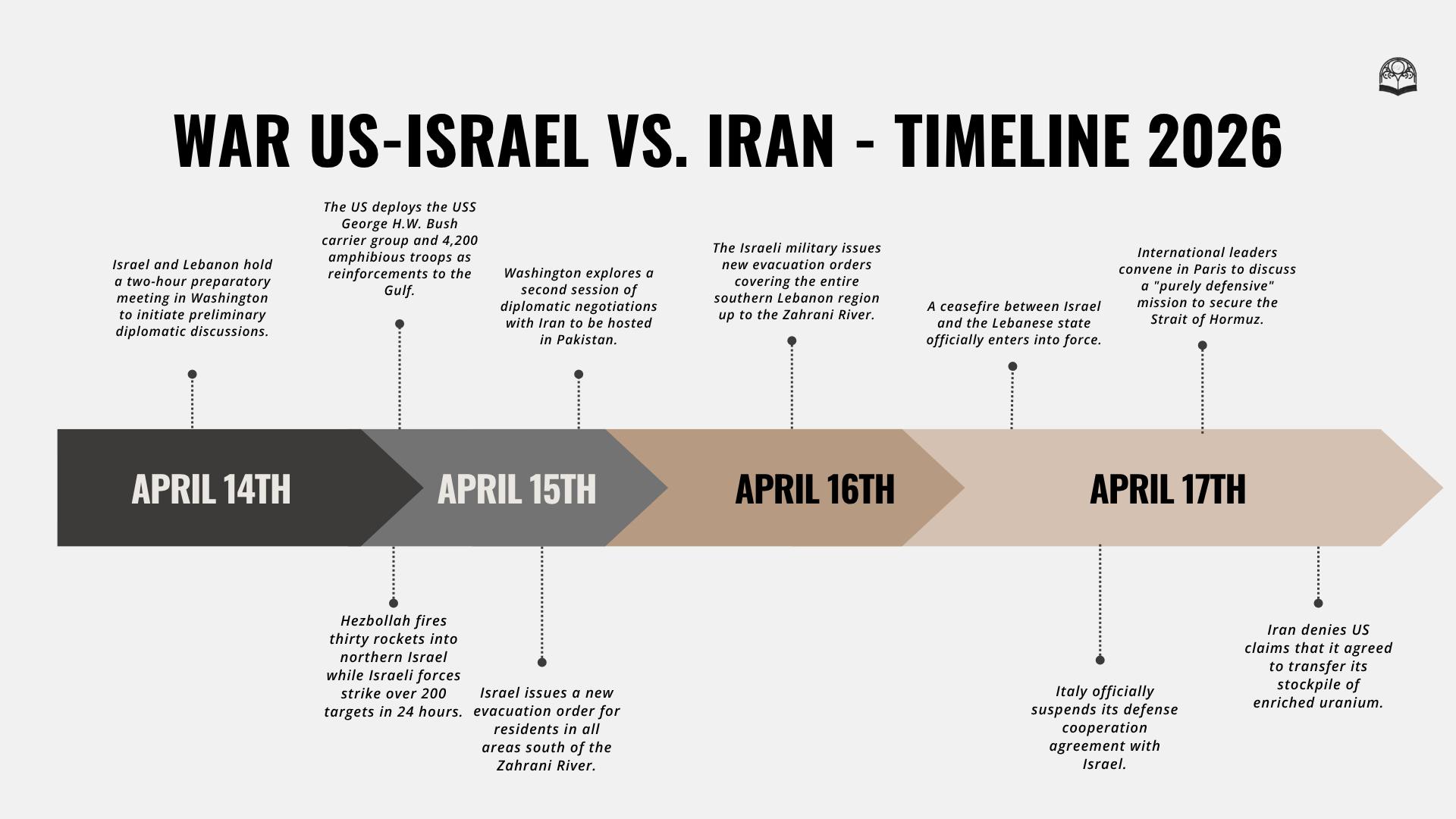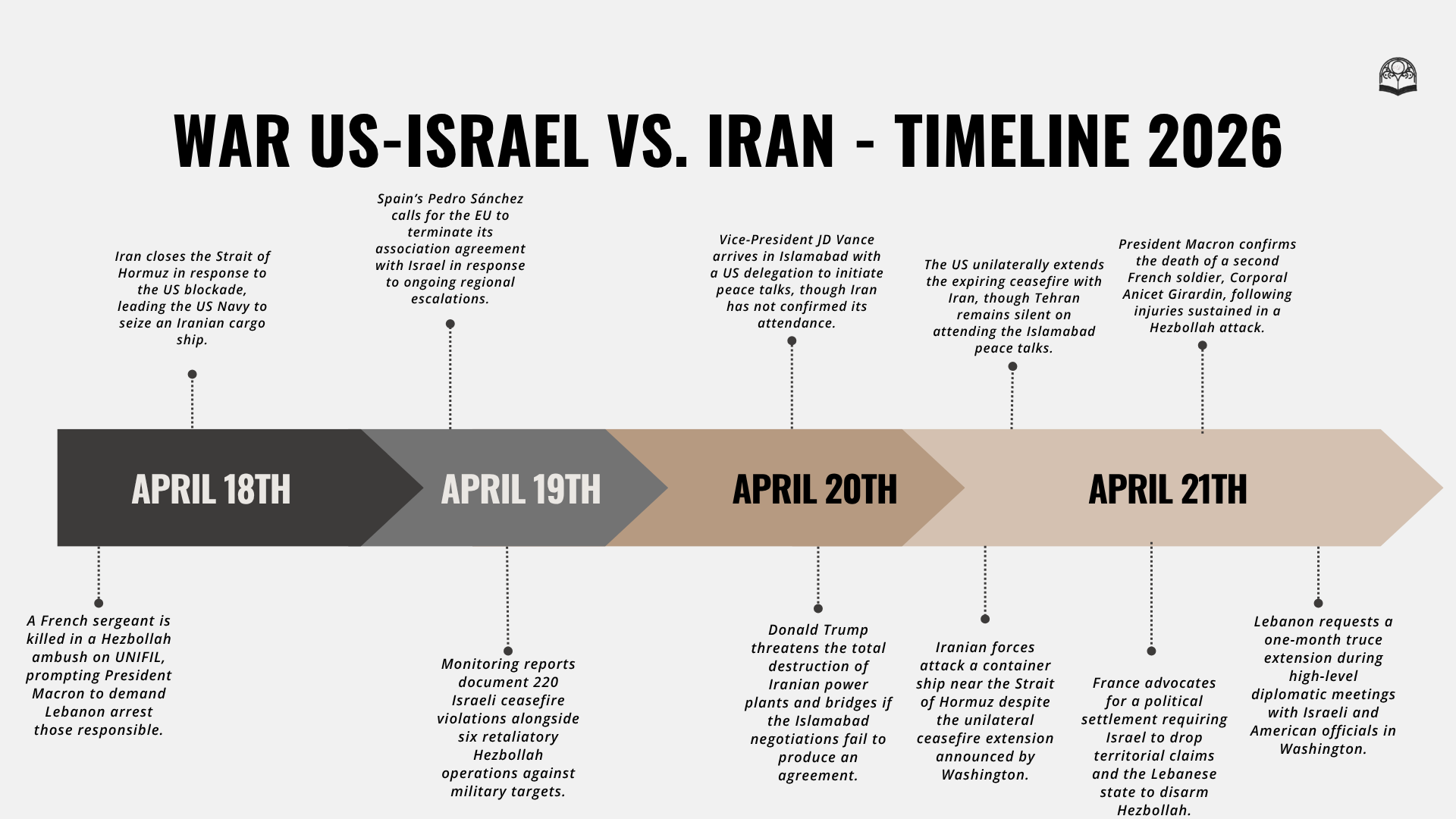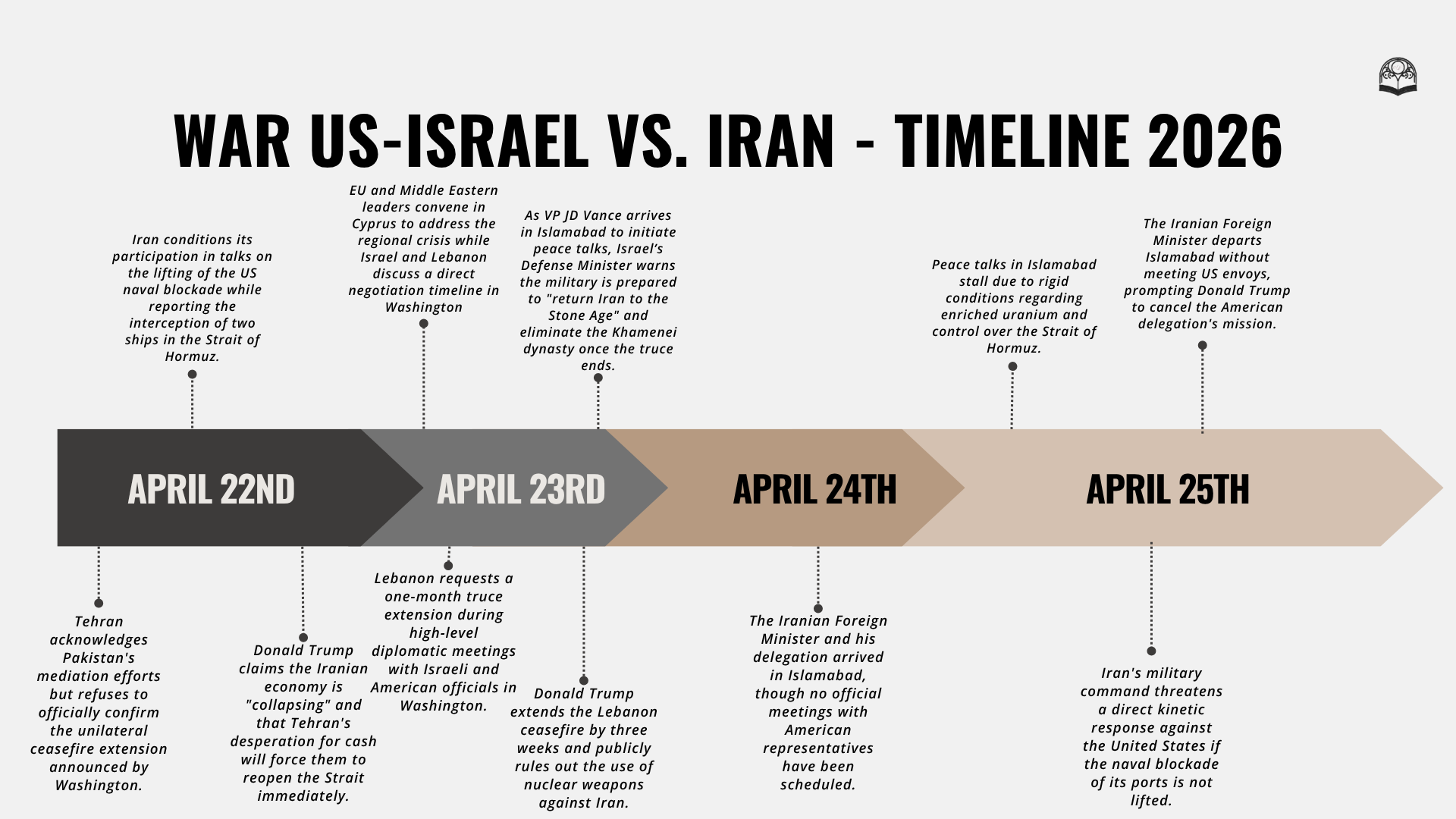

War Timeline March to April 2026

© RTS

Author

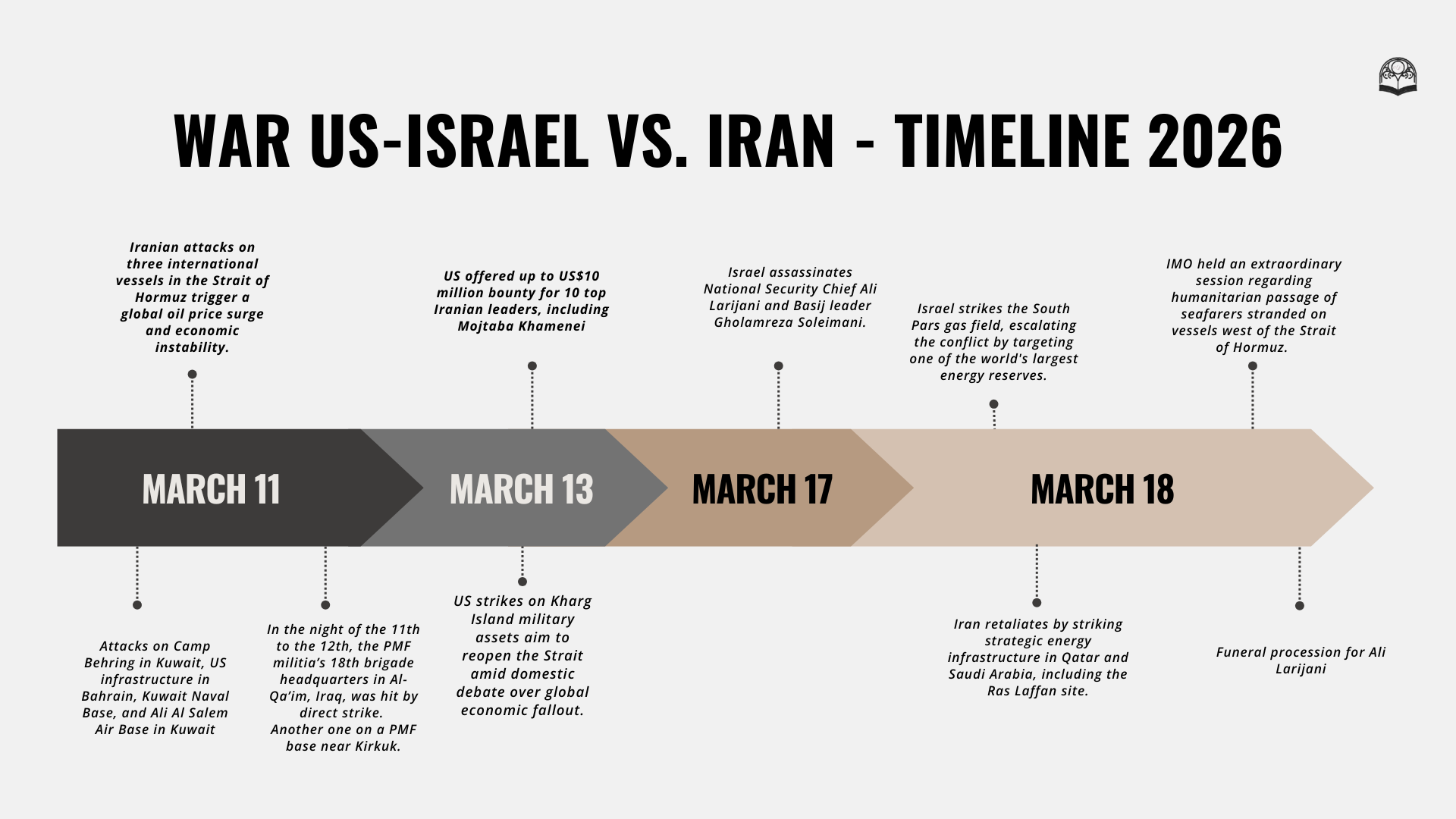
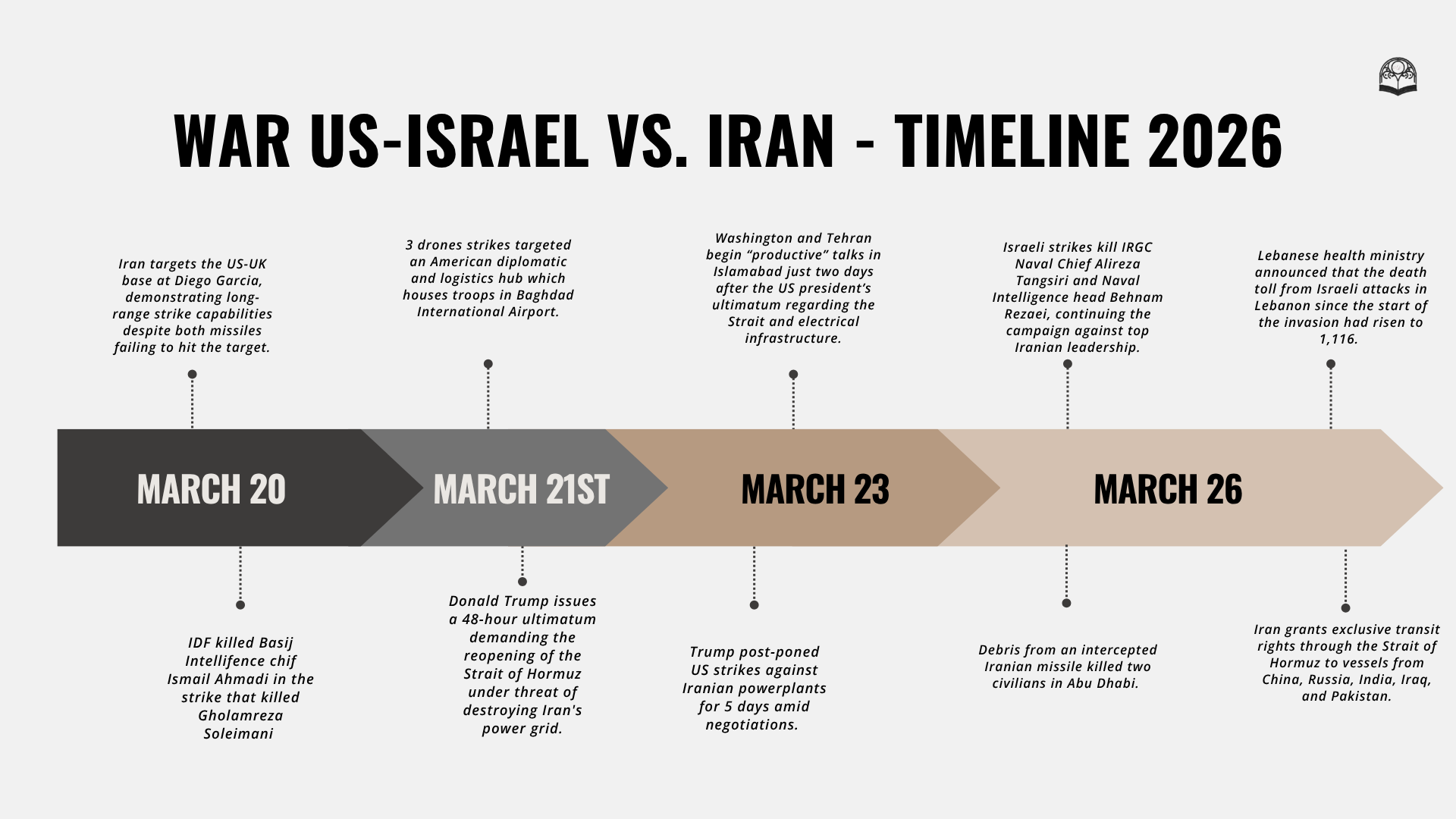
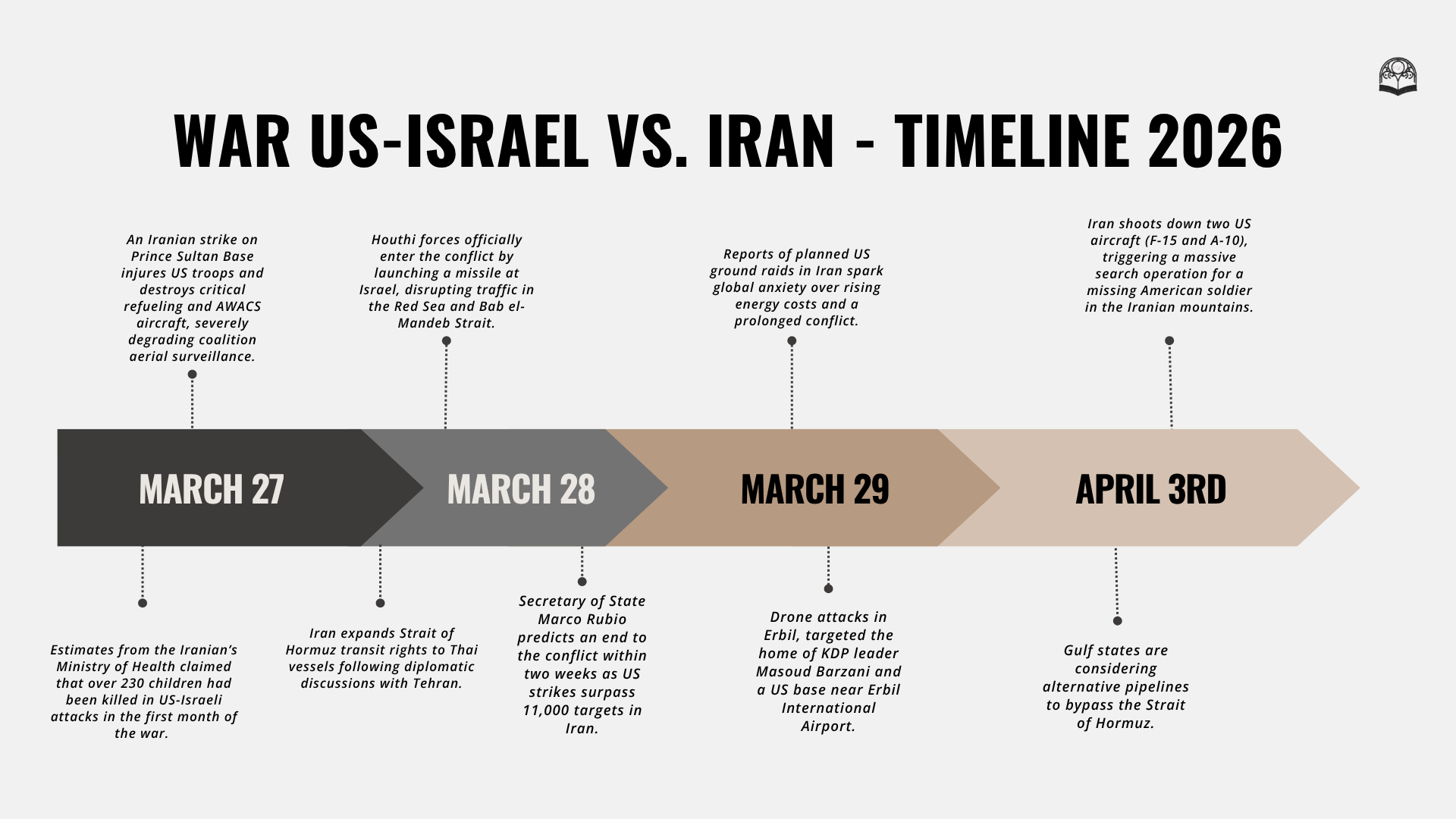
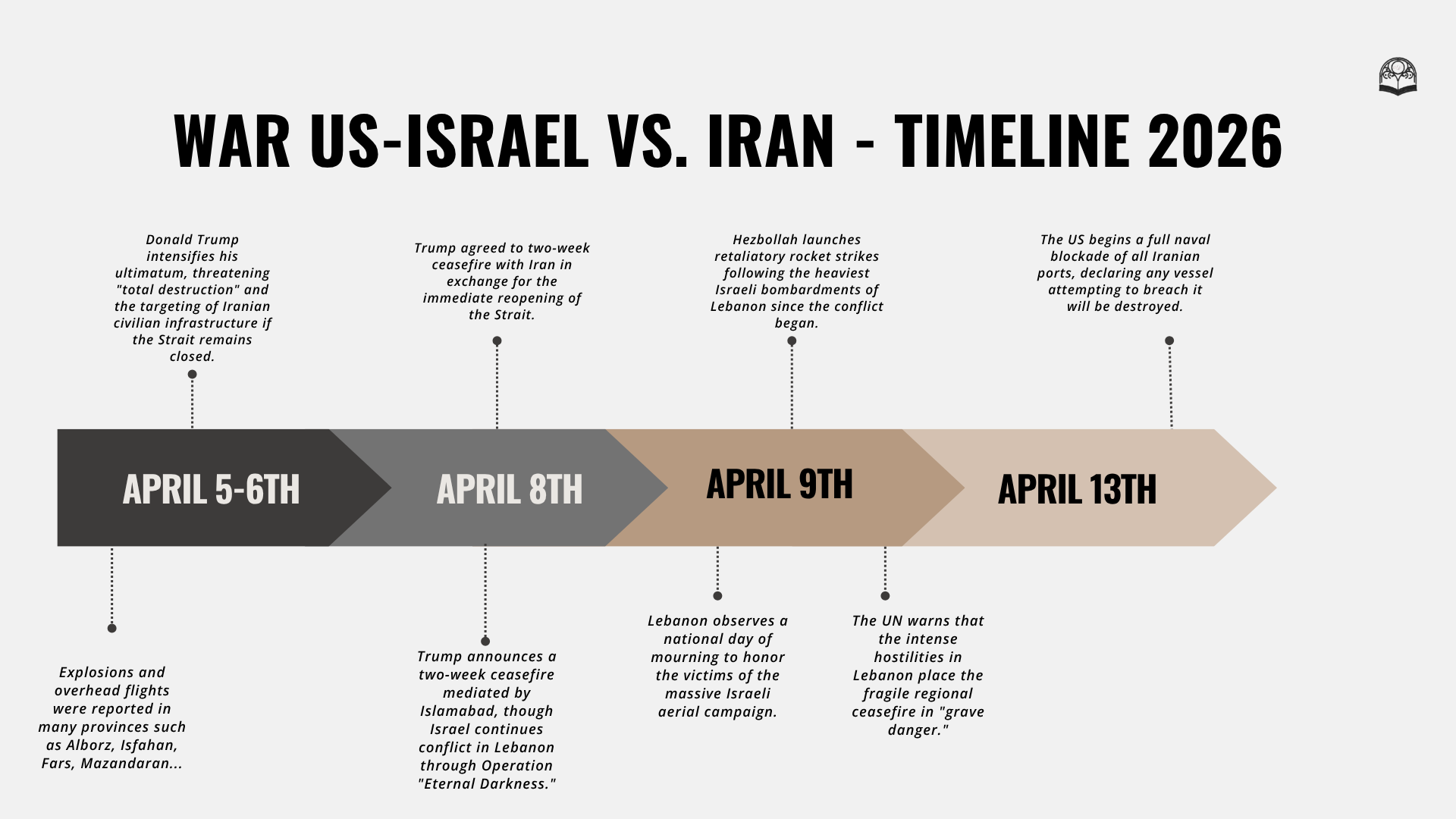
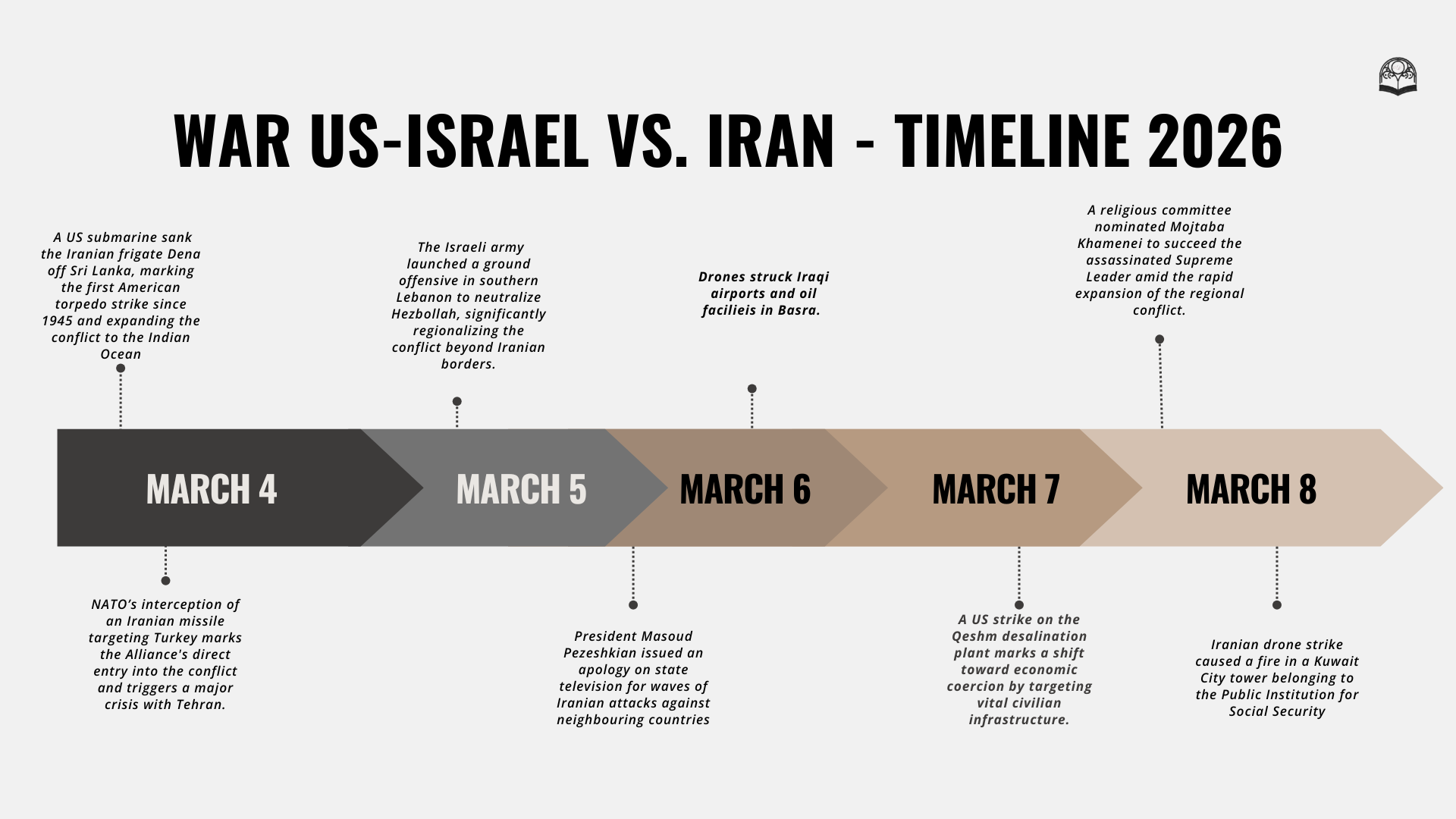
EISMENA’s team has compiled the key events of the conflict between the United States–Israel alliance and Iran, covering the period from early March to the end of April 2026. The information presented here is drawn from our correspondents, think tanks, media outlets, and official press briefings.

Please note that this overview is designed to remain accessible and readable; while we have aimed for comprehensive coverage, some events may not be included, particularly during periods when similar military tactics were repeatedly employed.

The developments from February to early March were covered previously.
To cite this article: “War Timeline March to April 2026” by Maxime Lechat, Edgar de Barbeyrac, EISMENA, 06/05/2026, [https://eismena.com/news/war-timeline-march-to-april-2026/].

The information and opinion contained in the articles on the EISMENA website are solely those of the author(s) and do not engage the responsibility of the institute.

Share this article

In Lebanon, the End of a Sense of Superiority? The Shiite Community Facing Hezbollah’s Decline

Long associated with military protection, considerable political influence and a particular status within Lebanon’s political balance, Hezbollah helped foster, among part of the Shiite community, a sense of power and pre-eminence. The destruction, the death of Hassan Nasrallah and the weakening of the movement are now calling this perception into question. During this research mission in Lebanon, field observations and interviews reveal a deeper transformation: a shift in the relationship with citizenship, power and the place of the Shiite community within the Lebanese state.

Read More »

Could Coalition Withdrawal Increase or Reduce Threats to Iraqi Kurdistan?

The full withdrawal of the U.S.-led Coalition on September 30 poses risks and new possibilities for the Kurdistan Region to improve relations with Iran. Until today, Iran has continued drone strikes in the Kurdistan Region, targeting Iranian Kurdish parties. The lack of air defenses and the failure by Baghdad so far to disarm Iranian-backed Iraqi armed factions, as previously promised by Baghdad, also expose the Kurdistan Region to risks. At the same time, the Coalition withdrawal gives Iran less excuses to attack the Kurdistan Region, and the Iraqi Kurds have also suggested to Iran to launch a peace process with Iranian Kurds to reduce Iranian attacks. The Coalition withdrawal makes Erbil more dependent on its relation with Baghdad and on its neighbours.

Read More »

Related Articles

From the Algiers Doctrine to the Madama Forward Operating Position: Anatomy of a Strategic Realignment in the Sahel

Imen Chaanbi

In Lebanon, the End of a Sense of Superiority? The Shiite Community Facing Hezbollah’s Decline

Lyna Ouandjeli

Could Coalition Withdrawal Increase or Reduce Threats to Iraqi Kurdistan?

Wladimir van Wilgenburg

Lebanon’s rejection of “resilience” qualification

Lyna Ouandjeli

Israel, Türkiye, and the Instrumentalization of the Armenian Genocide

Karen Hekimian

Can Israel’s Opposition Overcome Its Divisions to Oust Netanyahu?

Adel Bakawan