


Introduction
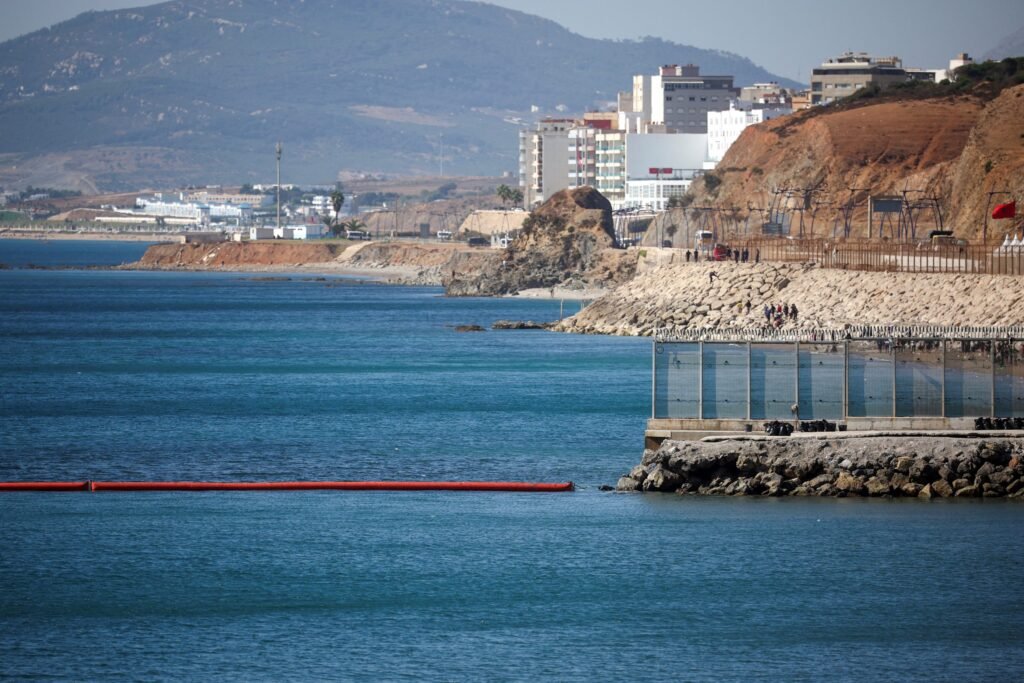
On July 29 and 30, nearly 72,000 Moroccan migrants flocked to Ceuta, the Spanish enclave located in northern Morocco. Within four days, almost all the migrants who had crossed the border illegally were repatriated to the Kingdom by the Spanish and Moroccan authorities. This episode echoes previous migratory waves toward the Spanish enclaves, notably those of 2014, 2021 and 2024. The Ceuta incident occurred within a context characterized by structural socio-economic difficulties in Morocco, specifically unemployment and territorial inequalities, compounded by deficiencies in public healthcare and education services. These issues (not exhaustives) contribute to fostering a persistent sense of marginalisation and a lack of prospects among a part of the Kingdom’s youth. Indeed, large-scale migrations to Europe are driven not solely by economic logic, but also reflect the social frustrations experienced by a portion of the Moroccan population. Furthermore, this migratory crisis highlights the dynamics of the co-management of irregular migration between Spain and Morocco, within the framework of the policy to externalize migration management between the European Union and Southern Mediterranean countries. The unprecedented number of migrants who managed to cross the Tarajal border, which is usually chequered and under strict surveillance, raises questions regarding the responsibility of Moroccan authorities. This crisis therefore suggests the use of migration control by Rabat as a diplomatic tool against Madrid. This article analyses the socio-economics challenges underlying the migratory influx to Ceuta, and the extent to which migration surveillance conducted by Morocco in cooperation with the EU can be transformed into an instrument of diplomatic leverage.
An unprecedented migratory crisis revealing Morocco’s socio-economics ills
A migratory influx driven by digital rumors?
According to the Spanish and Moroccan authorities, the migrants who attempted to reach Ceuta were reportedly influenced by the circulation of rumors on Moroccan social media regarding an alleged relaxation of border controls. The diffusion of this unverified information is believed to have contributed to the acceleration of departures and the rapid concentration of migrants on the outskirts of the Spanish enclave. Indeed, the Moroccan digital space hosts numerous accounts dedicated to irregular migration to Europe, such as Instagram pages Haraga.europe and Haraga Castillejo. In recent months, these pages have highlighted the flexible migratory climate supposedly fostered by recent Spanish legal measures. In 2026, following the precedent of previous regularisations (six in total, with the most recent dating back to 2005), the extraordinary regularisation of 500,000 undocumented migrants residing in Spain, was approved by the Spanish Council of Ministers in January, and subsequently by the Supreme Court in May. In late June, the Spanish Supreme Court issued a ruling prohibiting the summary return of individuals arriving in Spain by sea. The hasty and erroneous interpretation of these judicial decisions led to the emergence of a perception of the Iberian Peninsula as a host country and an El Dorado of opportunities for irregular migrants, a narrative further amplified by content encouraging such migration.
The massive influx of Moroccan migrants did not start on July 29, rather, it had occurred in successive, smaller-scale ways since July 20. This migratory incident coincides with the Prime Minister Sanchez’s visit to Algiers, which officially brought an end to the diplomatic tensions between Madrid and Algiers[1]. In 2022, Spanish support for the Moroccan autonomy plan for Western Sahara led Algiers to suspend the Treaty of Friendship with Madrid, signed in 2002, thereby straining relations between the two countries. The recent Algerian-Spanish reconciliation has been accompanied by a revitalisation of economic relations. This temporal coincidence echoes the migratory crisis in May 2021, when 8,000 migrants breached Ceuta over a two-days period, following Madrid’s decision to admit Polisario Front leader Brahim Ghali for hospitalisation.
It thus appears that while migratory aspirations exist among a segment of the Moroccan population, they materialised into concrete action once information regarding the relaxation of surveillance at the Tarajal border reached them. Given the timeline of events, their large-scale mobilisation is far from a spontaneous occurence. The digital space thereby facilitated the accelerated coordination of migrants, who were merely awaiting a favorable opportunity to reach Spain. The chronology of this episode also prompts us to move beyond the notion of a purely spontaneous mobilisation. The initial departures had begun several days prior to the massive influx of July 29, and certain reports concerning a potential opening or relaxation of border controls were already circulating on social media. The diffusion of this information was thus able to transform a pre-existing migratory intent into a rapid collective mobilisation. This dynamic, however, serves as a reminder that social media does not necessarily generate migratory demand. Rather, it primarily accelerates, coordinates and amplifies mobilities rooted in deeper social and economic factors.
Behind irregular migration: structural socio-economics ills
Willing to brave waves and currents to reach Ceuta and Melilla, thousands of irregular Moroccan migrants have been attempting to flee the Kingdom in search for a better future, long before this recent episode. Among them, a significant number of unaccompanied minors risk the perilous journey of irregular migration. According to researcher Mercedes Jimenez-Alvarez, the clandestine immigration projects are often supported by the family of these young persons, driven by precarious living conditions and limited social prospects[2]. Several Moroccan media have interviewed migrants regarding the reasons behind their participation in the mass migration to Ceuta. Their responses consistently point to a lack of opportunities, unemployment, deficient healthcare services and corruption, evoking a profound feeling of hoggra. This Arabic term denotes the contemps, arbitrariness, and systemic violence experienced by marginalised segments of Maghreb societies. Brought to the forefront by the catalyst of the Arab Spring (immolation of Mohammed Bouazizi) and the Rif Hirak (the death of fisherman Mohcine Fikri, crushed in a garbage truck), it reflects the social disparities within Morocco and the abuses of power committed by the authorities. A recent example illustrates this feeling: the image of a Moroccan security force member threatening a young man – who was scaling a rock in an attempt to reach Ceuta – with a large stone, has scandalised the Moroccan netizens[3].
Morocco’s economic growth has not been accompanied by significant social and human development. In light of the Ceuta migratory crisis, political and civic actors have pointed out the ambivalence of the Kingdom’s economic and social policy choices: the progress achieved in road connectivity, football infrastructures, and the hosting of major sporting events has done little to contribute to the reduction of endemic unemployment, the creation of stable employment, or the reduction of chronic deficiencies within the healthcare and education sectors. The Kingdom’s statistics are indicative of the socio-economic crisis affecting a significant portion of the population: the unemployment rate[4], standing at 13% in 2024, is even higher among graduates (19,4%) and the 15-24 demographic (36%). Given the challenge of illiteracy (28%) [5], and the socio-economic divides between urban and rural areas, human development remains far from being fully realised in Morocco.
In particular, the Tanger-Tétouan-Al Hoceima region, from which a large proportion of irregular migrants heading to Ceuta and Melilla originate, is characterised by socio-economic inequalities and a dynamic of dissidence[6] regarding the Morocco “interior”. The Rif, a mountainous region spanning northern Morocco, still preserves the memory of the resistance led by Abdelkrim al Khattabi, a prominent figure in the fight against Spanish colonisation and the architect of the Republic of the Rif (1921-1926). The region is marked by the legacy of the Rif Revolt (1958-1959) which was violently repressed by the Royal Armed Force (RAF) as well as the territorial marginalisation enforced during the reign of King Hassan II.
The reconciliation and socio-economic development of the north of the Kingdom, initiated as early as 1999, remain incomplete. King Mohammed VI sought to end the North’s marginalisation by impulsing several economic projects and establishing his summer residence in M’diq, thereby generating a surge in tourism for the region. The establishment of a free-trade zone near Tangier – Tangier Free Zone – in 1999, alongside the creation of the Fahs-Anjar province in 2003, which houses numerous industrial facilities including the Tangier-Med Port (since 2008), the Renault factory and Tangier Automotive City (since 2012), raised hopes and promises for the region’s socio-economic growth. This was particularly significant for a population partly dependent on income from cannabis cultivation, remittances from diaspora, and cross-border smuggling with Ceuta and Melilla. However, while the economic outcomes of these projects are undeniably satisfactory, the industrial dynamism has been largely concentrated within the Fahs-Anjar and Tangier area[7]. The local population has not been the primary beneficiary of this job creation, due to a skill gap and low levels of qualification, even for low-skilled positions [8]. Indeed, a part of the rural population maintains an agropastoral lifestyle, leaving them ill-prepared for the industrial shock the region has undergone over the past two decades. Furthermore, Morocco’s strategic shift toward export-oriented industrialisation – which creates jobs at competitive labor costs for international corporations – does not foster sustainable wages or career advancement.
Migration Management at the Core of Spanish-Moroccan Relations
Morocco-Spain: Between economic interdependence and cyclical instabilities
Relations between Morocco and Spain are characterised by what Ambassador Raimundo Bassols termed the “cushion of interests[9]”, designed to absorb bilateral tensions. This concept emerged in the 1980s, centering the relationship between Rabat and Madrid on shared interests alongside political and institutional dialogue, with the aim of depoliticizing bilateral ties by sidestepping contentious issues. Consequently, the two states signed the Treaty of Friendship, Good-Neighborliness, and Cooperation in 1991, and Madrid defended Rabat’s interests during the Barcelona Process, established in 1995. Spain also became the first economic partner of Morocco and its fourth-largest investor[10]. However, latent frictions periodically emerged, stemming from territorial disputes, the delimitation of maritime zones, Spanish mediatique coverage of Morocco, and the management of the migratory phenomenon.
Tensions regarding the Western Sahara issue trace back to the era of Francoist Spain. Spain’s withdrawal from the Saharan territory in 1976 was the consequence of the Green March, impulsed by King Hassan II. Since then, Madrid has sought to maintain a stance of neutrality on the Saharan case, advocating for a UN-led management of the conflict and the organisation of a self-determination referendum. Torn between Algeria and Morocco to endorse their respective positions, it is Spanish civil society and certain political parties (including the PSOE and Podemos) that have supported the revendations of the Polisario Front, thereby provoking Rabat’s discontent[11]. This Spanish solidarity was notably illustrated by the media coverage of the violent dismantling of the Gdeim Izik Sahrawi camp in 2010.
The enclaves of Ceuta and Melilla also triggered diplomatic flare-ups on the Morocco side. Rabat does not recognise Spanish sovereignty over the two enclaves, characterising them as “occupies” and claiming them as Moroccan territory. Historically, from the 8th to 14th century, both enclaves were under the control of Muslim Maghrebi dynasties, and subsequently the Sultanate of Granada. Ceuta was dominated by the Kingdom of Portugal between 1414-1497. The two enclaves shifted under Spanish control starting in 1497, when King Philip II unified the Portuguese and Spanish kingdoms. In November 2007, the Spanish monarchs’ visit to the two cities, coinciding with the annual commemoration of the Green March, led to the recall the Moroccan ambassador to Madrid for two months[12].
The 2001-2003 Spanish-Moroccan crisis serves as an emblematic case of the tempestuous climate that can characterise bilateral relations between the two nations. Against a backdrop of tensions concerning migration management and the delimitation of fishing zones, Morocco recalled its ambassador for consultation in October 2001 and suspended a series of bilateral meetings. In July 2002, Rabat decided to occupy the Perejil Island (named Leila by Morocco), coinciding with the negotiation between Madrid and London regarding the status of Gibraltar. Spanish-Moroccan reconciliation was not fully concluded until December 2003, when the migratory cooperation was reinstated.
Migratory control: a blackmail tool and diplomatic pressure for Morocco?
The enclaves of Ceuta and Melilla saw their 19th-century reputation as “colonial penal colonies[13]” transformed into the “gatekeepers of Fortress Europe[14]” upon Spain’s integration into the European Economic Community (EEC), adopting a comprehensive approach in coordination with European states. Spain and Morocco signed the Agreement on Migration and the Readmission of Irregular Foreigners in February 1992, as Madrid sought to turn Morocco into a buffer state, obliging it to readmit both third-country nationals and its own citizens. Through, the 1997 Treaty of Amsterdam, the European Union, adopted the communitarisation of migration management, which was subsequently operationalised at the Tampere European Council (1999). The summit’s conclusions established migration management in partnership with neighboring third countries as a foundational principle of European migration policy[15]. The Tampere program advocates the inclusion of measures to combat irregular migration, along with a readmission clause for irregular migrants, in any association or cooperation agreements between EU and its partners[16]. Consequently, the EU outsourced the management of the irregular migratory flows and asylum responsibilities to its neighboring, including North African countries. This externalisation policy was formalised by the European Neighbourhood Policy (ENP), launched in 2004 alongside the EU’s enlargement to 10 new member states. In exchange for financial assistance and reinforcement of bilateral relations, the responsibility of controlling irregular migration falls to the Southern Mediterranean countries.
Between Rabat and Madrid, however, the co-management of the migration phenomenon remains arduous. The 1992 convention was not implemented by Morocco until 2004. The Kingdom proved reluctant to cooperate for several reasons[17]: financial costs, the function of irregular migration as a socio-political safety valve, the desire to avoid straining relations with West African states, and above all, the powerful diplomatic leverage provided by migration control. Indeed, the Southern Mediterranean states to which the EU has outsourced border surveillance and the containment of irregular migrants utilise these roles as bargaining chips to advance their strategic interests or extract financial assistance. For instance, in 2010, Colonel Kadhafi demanded €5 billion in exchange for containing migratory flows at Italy’s borders[18]. Similarly, Ankara periodically wields the threat of Syrian Refugees and migrants following the 2016 agreement, under which the EU agreed to provide Turkey with €6 billion in funding[19].
The instrumentalisation of migration control is a tool for diplomatic influence. Kelly Greenhill, an international relations scholar, was the first to introduce the concept of coercive engineered migration in her book Weapons of mass migration: forced displacement, coercion, and foreign policy in 2010. She defines it as “cross-border population movements that are deliberately created or manipulated in order to induce political, military and/or economic concessions from a target state or states”. Migration thus serves as a means of coercion in diplomatic relations, used by political actors since the advent of globalisation in the 19th century. Examples of this Machiavellian policy — which is profoundly dehumanising for the migrants involved — abound; Kelly Greenhill has identified over fifty such instances since 1953, ranging from West Germany targeting the United States to Belarus targeting the European Union in 2021.
The Ceuta migratory crisis, unprecedented in its magnitude, is therefore far from an isolated incident. Morocco has weaponised migration against Spain on several occasions[20]: in 2014, following a statement by a Ceuta official, Rabat relaxed its control of the Tarajal border, allowing 300 migrants to cross within two days. Similarly, in November 2020, 2,300 migrants reached the Canary Islands against a backdrop of Spanish-Moroccan tensions over the delimitation of Atlantic fishing zones. The Kingdom appears to employ indirect migratory blackmail as a diplomatic tool to extract concessions on contentious issues – namely Western Sahara, maritime boundaries, and relations with Algeria – as well as to demand increased funding for migration control.
Conclusion
The Ceuta migratory crisis triggered profound alarm among the authorities of the enclave, which, with a population of just over 83,000 saw its demographic size nearly double within 48 hours. Prime Minister Sanchez, hastily dispatched to Ceuta on July 31, characterised the situation as a “violation of Spanish territorial sovereignty”. On the Moroccan side, officials did not break their silence until August 2, through a statement issued by the spokesperson for the Ministry of the Interior. At the international level, the Ceuta crisis elicited numerous reactions. Various political figures, such as President Donald Trump and Prime Minister Giorgia Meloni, criticised the Sanchez administration’s migration policy. Furthermore, Italy temporarily suspended the Schengen Agreement regarding Madrid for a duration of one month, and 22 Member States addressed a letter to the President of the European Council expressing their grave concern over the uncontrolled border crossings in Ceuta[21].
Notes
[1] Pedro Sánchez à Alger : le retour d’un dialogue dicté par les intérêts stratégiques, Le Matin d’Algérie le 20 juillet 2026, https://lematindalgerie.com/pedro-sanchez-a-alger-le-retour-dun-dialogue-dicte-par-les-interets-strategiques/
[2] Mercedes Jimenez- Alvarez, La migration vers l’Espagne, la migration autonome des mineurs marocains in Les mineurs migrants non accompagnés : Un défi pour les pays européens. KARTHALA Editions, 2014.
[3] القصطلني, أكرم. “مشهد يهز الضمير بسبتة.. عنصر من القوات العمومية يعتدي على شاب أعزل بحجارة كبيرة فوق منحدر صخري.” صوت المغرب, 1 Aug. 2026, https://thevoice.ma/مشهد-يهز-الضمير-بسبتة-عنصر-من-القوات-ا/.
[4] Haut-Commissariat au Plan, Activité, emploi et chômage, résultats annuels 2025, https://www.hcp.ma/Activite-emploi-et-chomage-resultats-annuels-2025_a4310.html, Consulté le 02/08/2026
[5] Haut-Commissariat au Plan, Evolution du taux d’alphabétisation des 15 ans et plus, https://www.hcp.ma/Evolution-du-taux-d-alphabetisation-des-15-ans-et-plus-en_a3479.html, Consulté le 02/08/2026
[6] Mohsen-Finan, Khadija & Vermeren, Pierre, Dissidents du Maghreb, Belin Editeur, 2018
[7] Sirine Al Hachimi, Omar Belkheiri et Yolande Benarrosh, « Distorsions économiques et spatiales dans le Nord du Maroc. Quels mondes en présence et quelle intégration possible ? Le cas de Fahs Anjra », Les Cahiers d’EMAM, 34 | 2022
[8] Ibid.
[9] Bernabé López García, Miguel Hernando de Larramendi Approfondissement des crises avec le Maroc. IEMED, https://www.iemed.org/publication/approfondissement-des-crises-avec-le-maroc/?lang=fr.
[10] Faiza Rhoul, L’Espagne en passe de devenir le troisième investisseur au Maroc.” Le 360 Français, https://fr.le360.ma/economie/lespagne-en-passe-de-devenir-le-troisieme-investisseur-au-maroc_67MP3RKTZBFGTD6T2ZLOXPIH5Y/, Consulté le 02/08/2026
[11] Bernabé López García, Miguel Hernando de Larramendi
[12] García, Bernabe López, et Miguel Hernando de Larramendi. « Le Maghreb et l’Espagne ». Le Maghreb dans les relations internationales, édité par Khadija Mohsen-Finan, CNRS Éditions, 2011
[13] Alicia Fernández García, « Enjeux économiques et défis sociaux à la frontière hispano-marocaine de Ceuta », ILCEA, 58 | 2025
[14] Ibid.
[15] Parlement européen, CONSEIL EUROPEEN DE TAMPERE 15 ET 16 OCTOBRE 1999, https://www.europarl.europa.eu/summits/tam_fr.htm
[16] Maëlle Parfait, « Instrumentalisation de la migration : assurer un continuum sécuritaire dans la fabrique des politiques migratoires européennes », e-Migrinter [En ligne], 25 | 2025, mis en ligne le 01 avril 2025, consulté le 05 août 2026. URL : http://journals.openedition.org/e-migrinter/4789Global Approach to Migration (GAM) in 2005
[17] MIGREUROP. “1992-2004 la coopération maroco-espagnole en matière de politique migratoire.” MIGREUROP, 31 Dec. 2004, https://migreurop.org/article645.html.
[18] Le chantage à l’immigration juteux de M. Kadhafi.” France terre d’asile, https://www.france-terre-asile.org/actualites/actualites-choisies/le-chantage-a-limmigration-juteux-de-m-kadhafi, Consulté le 02/08/2026
[19] “Migrants : l’UE face au cynisme de la Turquie.” Le Monde, 4 Mar. 2020. Débats,Turquie. Le Monde, https://www.lemonde.fr/idees/article/2020/03/04/migrants-l-ue-face-au-cynisme-de-la-turquie_6031792_3232.html.
[20] “Le chantage migratoire marocain.” France Inter, 19 May 2021, https://www.radiofrance.fr/franceinter/podcasts/les-histoires-du-monde/le-chantage-migratoire-marocain-4317212. Consulté le 02/08/2026
[21] https://www.lexpress.fr/monde/europe/crise-de-ceuta-comment-pedro-sanchez-sest-retrouve-isole-sur-la-scene-europeenne-Q6DX3LDQVFAJ3KAD5TA4OBM3FE/