


Since April 2023, the war between the Sudanese Armed Forces (SAF), led by Abdel Fattah al-Burhan, and the Rapid Support Forces (RSF), led by Mohamed Hamdan Dagalo, known as Hemedti, has revealed a crisis that extends far beyond a confrontation between two military establishments. It reflects the gradual collapse of the state’s monopoly over the use of force, the fragmentation of sovereignty structures, and the growing regionalisation of Sudanese power dynamics. Within this configuration, Egypt occupies a unique position. Sharing a border with Sudan, dependent on the Nile, and concerned with the balance of power in the Red Sea and the Horn of Africa, Egypt has prioritised support for the SAF as an instrument of stabilisation. This article nevertheless argues that this strategy produces a paradox: by seeking to preserve the Sudanese state through its military apparatus, Cairo is contributing to the consolidation of the mechanisms of militarisation that have themselves contributed to its fragmentation. The analysis brings together the sociology of conflict, the political economy of war, and regional geopolitics to examine this tension between coercive stabilisation and the reconstruction of sovereignty.
—
The Sudanese war cannot be reduced to a personal rivalry between al-Burhan and Hemedti. It represents the culmination of a structural crisis of the state, shaped by several decades of authoritarian governance, peripheral conflicts, and the fragmentation of coercive institutions (de Waal, 2015; Young, 2022). Under Omar al-Bashir, the proliferation of military, security, and paramilitary institutions enabled the regime to limit the autonomy of each centre of coercion. The RSF emerged precisely from this governance through fragmentation: initially conceived as a counter-insurgency instrument, it gradually acquired economic resources, territorial control, and political autonomy (Tubiana, 2017). The 2019 revolution nevertheless appeared to open an alternative trajectory based on the demilitarisation of politics and the restoration of civilian sovereignty. Its failure, followed by the October 2021 coup and the outbreak of war in 2023, returned armed institutions to the centre of the political system. This dynamic now has a decisive regional dimension. For Egypt, Sudan simultaneously represents a strategic border, a hydropolitical partner, and a space of strategic projection towards the Horn of Africa and the Red Sea. Cairo therefore prioritises the SAF as potential guarantors of territorial integrity. Yet this strategy raises a fundamental contradiction: can the Sudanese state be rebuilt by strengthening the militarised structures that have contributed to its weakening?
The Sudanese War as a Crisis of Sovereignty
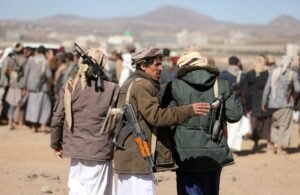
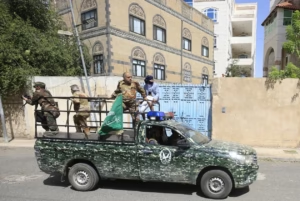
In Weberian terms, sovereignty presupposes the state’s ability to successfully claim the monopoly of legitimate violence (Weber, 1919/2004). Yet the Sudanese system has historically moved away from this model. The regular army, intelligence services, militias, and paramilitary structures have constituted competing centres of coercive and economic accumulation (de Waal, 2015). The confrontation between the SAF and RSF therefore appears less as a rupture than as the culmination of this fragmentation. The question of integrating the RSF into the national army concealed a more fundamental struggle: determining which institution could control coercive resources and speak in the name of the state. The war consequently transforms Sudanese territory into spaces of competing sovereignties, particularly in Darfur and Kordofan. This fragmentation also has a social dimension. Civil wars restructure local hierarchies, economies, and mechanisms of access to resources (Kalyvas, 2006). The collapse of public services and the mass displacement of populations demonstrate that sovereignty is not limited to territorial control: it also entails the capacity to administer, protect, and maintain social cohesion.
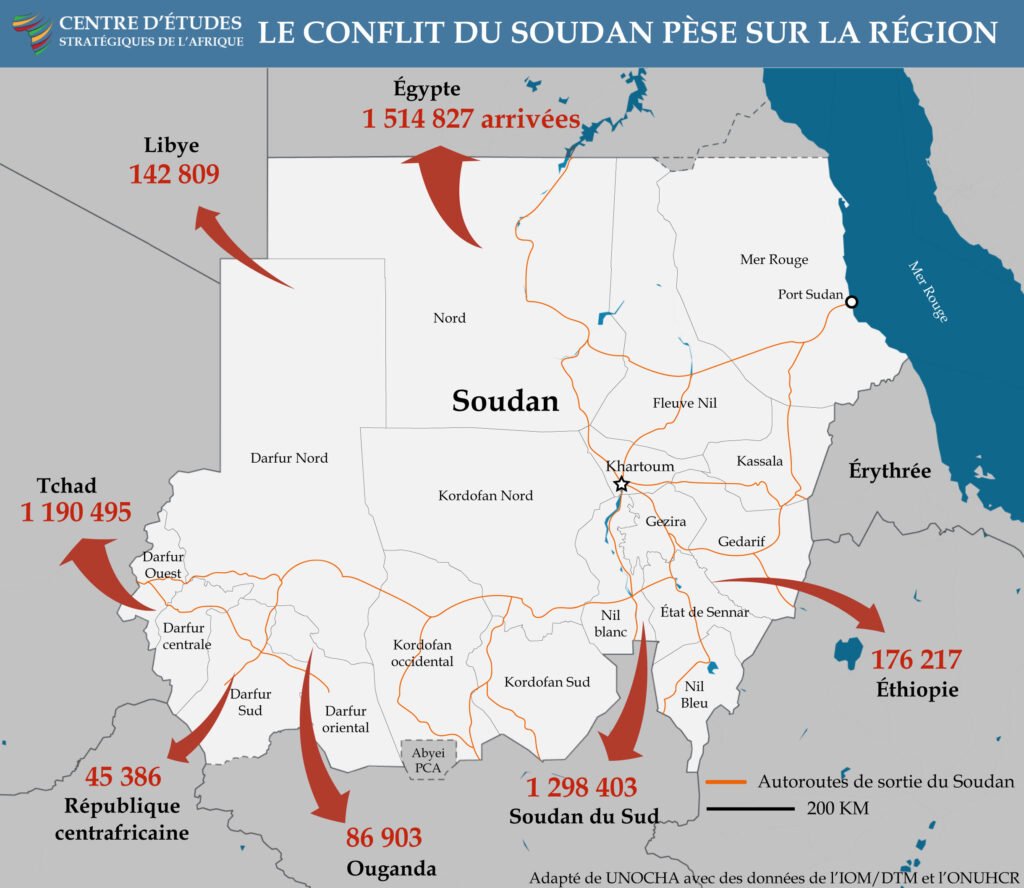
https://africacenter.org/fr/spotlight/le-conflit-au-soudan-fragilise-ses-voisins/
The Sudanese paradox therefore lies in the fact that both the SAF and the RSF claim to embody or restore the state while simultaneously contributing to its disintegration. This crisis simultaneously creates space for intervention by regional powers, including Egypt.
Egypt: Strategic Depth and Coercive Stabilisation
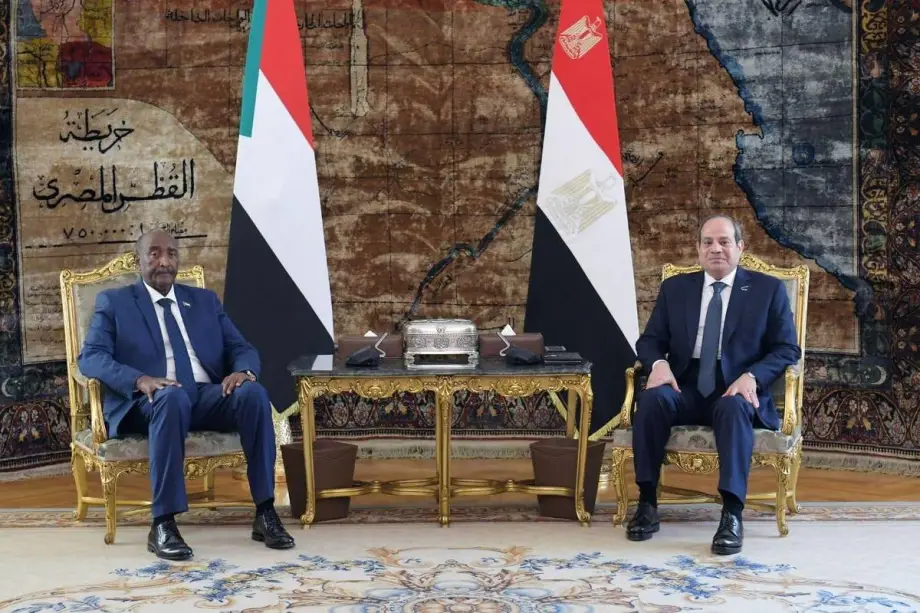
Egyptian policy towards Sudan is rooted in a historical conception of the territory as part of Cairo’s strategic depth. Sudan is simultaneously a buffer zone, a corridor towards the Horn of Africa, and an essential partner within the Nile Basin (Waterbury, 2002; Swain, 2011). Any reconfiguration of power in Khartoum therefore carries a national-security dimension for Egypt. This perspective explains the preferential support given to the SAF. The Sudanese army is regarded as the institution most capable of preserving territorial unity and preventing the emergence of a permanently fragmented space south of Egypt. Yet this doctrine rests on a problematic conflation of the army with the state. Contemporary Sudanese history shows that military institutions have not merely defended the state: they have been central actors in the reproduction of authoritarianism and the fragmentation of power (de Waal, 2015).
The Nile reinforces this preference for institutional continuity. Egypt’s structural dependence on the river transforms hydropolitical balances into an existential issue. In a regional context marked by tensions over water-sharing, a predictable Sudanese government constitutes a strategic asset for Cairo (Cascão, 2009). Supporting the SAF therefore amounts to seeking a state interlocutor compatible with Egyptian water-related priorities.
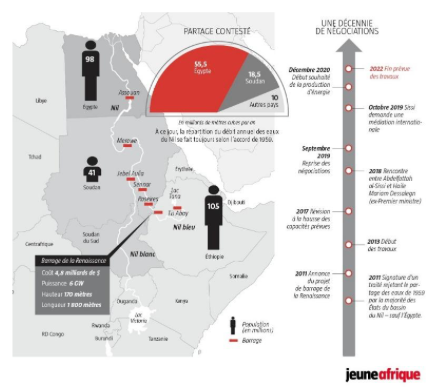
This policy also reveals an ideological paradox. Since 2013, anti-Muslim Brotherhood sentiment has been a central component of Egypt’s security discourse. Yet certain networks originating from the former Sudanese establishment have regained influence within the political environment surrounding the military. Egyptian support for the SAF therefore demonstrates that ideological coherence recedes when geostrategic imperatives demand it. Anti-Islamism appears less as an immutable principle of foreign policy than as a variable subordinated to the preservation of a regional order favourable to Egyptian interests (Mearsheimer, 2001; Waltz, 1979).
Cairo’s strategy thus reflects a coercive conception of stability: prioritising territorial control, borders, and military institutions. It nevertheless carries the risk of “conditional sovereignty”, whereby Sudanese political autonomy gradually becomes subordinate to the security concerns of more influential regional powers (Clapham, 1996).
The Political Economy of War and Territorial Fragmentation
The Sudanese crisis also constitutes a competition for the resources necessary to finance and territorialise power. Security institutions have developed their own businesses, commercial networks, and logistical channels over several decades. War amplifies this militarised political economy: controlling territory now means controlling trade routes, productive areas, infrastructure, and economic flows.
This development encourages an “archipelisation of power” (Mbembe, 2001), in which several territorial spaces operate under competing political, military, and economic authorities. War then ceases to be merely a struggle to conquer the state; it becomes a system capable of generating its own economic interests. As Keen (2012) has demonstrated, certain actors may derive greater resources from the continuation of conflict than from its resolution.
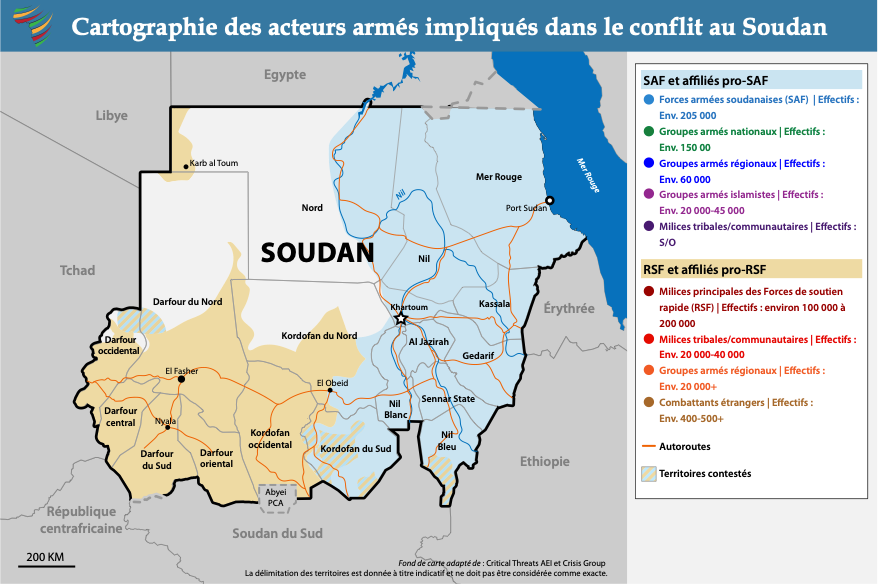
https://africacenter.org/fr/spotlight/acteurs-armes-conflit-soudan/
This dynamic directly undermines Egypt’s objectives. A temporary military victory by the SAF would not guarantee the restoration of effective sovereignty if armed economies, territorial inequalities, and the historical marginalisation of peripheral regions persist. In the long term, a strategy of stabilisation through the military could therefore produce precisely what Cairo seeks to avoid: a fragmented, permanently vulnerable neighbour incapable of controlling its territory.
Civilian Actors and the Limits of the Security Paradigm
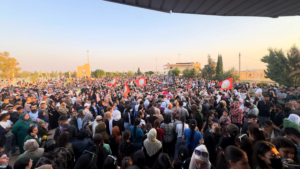
An analysis of the conflict remains incomplete when it is limited to those who control coercive power. The 2019 revolution revealed the existence of an organised civil society built around professional associations, trade unions, women’s movements, and resistance committees (Young, 2022; Gallopin, 2023). These actors advanced an alternative conception of sovereignty based on political participation and the demilitarisation of the state. The war has considerably reduced their capacity for action without eliminating them. In several territories, civilian and community networks continue to perform essential functions of solidarity and assistance. Their marginalisation from negotiations reveals a paradox of contemporary peace processes: military capacity tends to become the primary criterion for political recognition. Those who possess weapons are considered indispensable to negotiations, while those who had driven the civilian transition remain peripheral. This hierarchy aligns with the Egyptian conception of stability. The analytical problem, however, lies in conflating control with legitimacy. The experience of Omar al-Bashir’s regime demonstrates that a coercive order can temporarily maintain political control while accumulating the tensions that ultimately lead to its collapse. By prioritising the restoration of the military apparatus, Egypt may therefore achieve tactical stabilisation without producing the political conditions necessary for lasting stability.
Egyptian strategy must be understood in light of genuine geopolitical constraints: the security of its southern border, the centrality of the Nile, the balance of power in the Red Sea, and the fear of a lasting fragmentation of Sudan. Support for the SAF therefore responds to a strategic rationale. But rationality does not necessarily mean long-term effectiveness. By equating the army with the state and control with stability, Cairo risks reinforcing the mechanisms that have contributed to the crisis it seeks to contain. The central contradiction of this policy lies precisely in this tension between coercive stabilisation and the reconstruction of sovereignty. A military victory would not be sufficient to restore the state if it reproduced the armed economies, territorial asymmetries, and political exclusion that have contributed to its fragmentation.
For Egypt, the challenge is therefore to move from a logic of stabilisation through the military to a logic of stabilisation through institutions. A sustainable exit from the conflict requires the gradual demilitarisation of the political sphere, the reintegration of civilian actors, and the reconstruction of institutions capable of incorporating peripheral regions. In this respect, Sudan represents a test for the regional order: the security of neighbouring states can hardly be durably guaranteed by weakening the political sovereignty of their neighbours.
Notes
Brown, N. J. (2018). Egypt’s authoritarian reconstruction and the Muslim Brotherhood. Carnegie Endowment for International Peace.
Cascão, A. E. (2009). Changing power relations in the Nile River Basin: Unilateralism vs. cooperation? Water Alternatives, 2(2), 245–268.
Clapham, C. (1996). Africa and the international system: The politics of state survival. Cambridge University Press.
de Waal, A. (2015). The real politics of the Horn of Africa: Money, war and the business of power. Polity Press.
Gallopin, J.-B. (2023). Sudan’s interrupted democratic transition. International Crisis Group.
Kalyvas, S. N. (2006). The logic of violence in civil war. Cambridge University Press.
Keen, D. (2012). Useful enemies: When waging wars is more important than winning them. Yale University Press.
Mbembe, A. (2001). On the postcolony. University of California Press.
Mearsheimer, J. J. (2001). The tragedy of great power politics. W. W. Norton.
Swain, A. (2011). Challenges for water sharing in the Nile Basin: Changing geo-politics and changing climate. Hydrological Sciences Journal, 56(4), 687–702.
Tubiana, J. (2017). Darfur and Sudan’s armed conflicts: Patterns of violence and political fragmentation. Small Arms Survey.
Waltz, K. N. (1979). Theory of international politics. Addison-Wesley.
Waterbury, J. (2002). The Nile Basin: National determinants of collective action. Yale University Press.
Weber, M. (2004). The vocation lectures. Hackett Publishing. Original work published 1919.
Young, J. (2022). Sudan’s long revolution. Zed Books.