

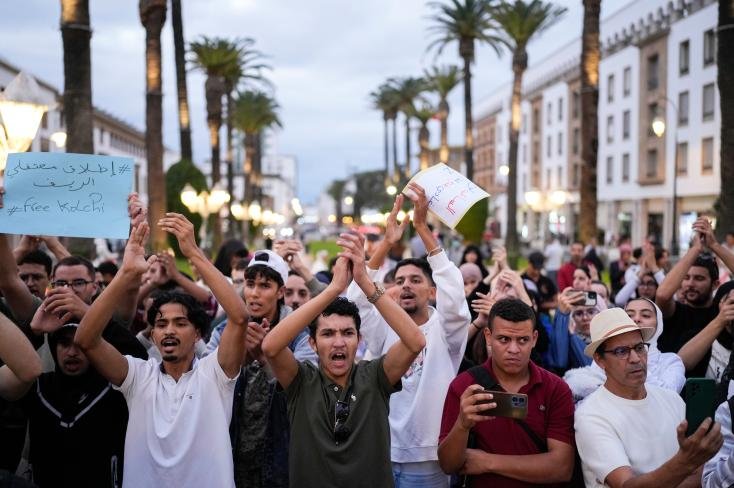

Sparked by the tragic deaths of eight pregnant women in an Agadir hospital in late September 2025, the Moroccan Gen Z protests were a visible symptom of a deep systemic crisis in Morocco. The youth-driven movement’s anger drew on years of disillusionment with the persistence of a two-speed Morocco as the image projected internationally of an ultra-modern nation with gleaming new stadiums and high-speed trains had lost touch with the domestic reality of high youth unemployment, corruption and entrenched regional inequality. The GenZ212 demonstrations, named after Morocco’s country code, represent the latest installment in a long history of social protest movements, from the 1959 Rif Revolt through to the 1981 Bread Riots and the 2011 Moroccan Spring, which all share the same core grievances surrounding unequal development and marginalisation. These common foundations encourage comparison between different cycles of protest, in turn raising questions about the extent and nature of change and progression in modes of modern protest. In some ways GenZ212 could be seen as the ideological heir to the period- and region-defining Arab Spring of 2011. However, distinctive features of the movement, such as its innovative use of technology to enable a more decentralised leadership and organisational structure, align closely with Bayat’s theory of nonmovements. This conceptual evolution in repertoires of mobilisation is also reshaping the king of Morocco’s ambiguous role in government and protest. Given its long history of manipulating the civil and political sphere, the continuing disconnect between institutional responsibility and actual intervention at the heart of the monarchy is increasingly exposed. As a result, the façade of fair, transparent government under the current system of semi-constitutional monarchy is further eroded with each iteration of protest and cosmetic reform.
A new house built on old foundations
While comparison on a conceptual level between the 2011 and 2025 protests may reveal a recent shift in modes of protest, the underlying causes of popular discontent in Morocco remain deeply rooted in the country’s history. Indeed, Morocco’s perennial centre-periphery disparity is an element of the country’s colonial legacy that is still very much present today. Under the French Protectorate (1912-1956) the country was divided between an urban, economically prosperous ‘useful’ Morocco centred along the Atlantic coastal plain where investment, administration and military control was focused, and a mostly rural, harder to access, less fertile and thus less marketable ‘useless’ area which extended diagonally from Oujda in the northeast to Agadir on the Atlantic coast in the southwest.[1] Decades of colonial centralisation created an entrenched socioeconomic rift which drove a stake between the inhabitants of marginalised regions and the government in Rabat. After Morocco gained independence, the development policies of Hassan II (1961-1999) did little to reverse these local inequalities. He continued to repress hinterland areas like the Rif and concentrated government spending on key infrastructure such as ports according to the inherited ‘useful’-‘useless’ logic.[2] The IMF and World Bank Structural Adjustment Programmes he helped institute fostered some macroeconomic stability and export-oriented growth, yet the austerity they brought with them led to rising unemployment and reductions in public spending which served only to widen regional wealth imbalances. As a result, the economic, administrative, and industrial poles of Casablanca, Rabat, and Tangier today account for over 50 percent of national expenditure, while the regions of Dakhla-Oued Eddahab and Guelmim-Oued Nun in the southern periphery account for just 0.8 percent.[3] The extensive out-migration of youth to more urban areas in search of better job opportunities, higher income, and higher-quality public services has fed into a vicious cycle of socioeconomic decline along clear regional lines. This largely unaddressed marginalisation has served as a perennial wellspring of popular discontent since Morocco’s independence, thereby intrinsically linking GenZ212 to the movements that preceded it.
Accordingly, the protests that emerged in 2025 were triggered less by isolated events and circumstances than by a longstanding shared perception that state priorities no longer reflected citizens’ everyday concerns. The government’s decision to invest in lavish sports mega-projects centred around the 2025 Africa Cup of Nations and the 2030 World Cup, which have cost a reported US$5 billion,[4] became a powerful symbol of this disconnect. While these projects were presented as vectors of international prestige and long-term trickle-down development, Gen Z protesters, a group especially affected by the high youth unemployment rate of over 37.2 percent,[5] found Morocco’s enduring two-speed reality ever more untenable.[6] The chant ‘we want hospitals, not stadiums’[7] became a defining slogan of the uprising. In the context of the systemic failures in public health due to inadequate spending, an issue underscored by the tragically avoidable deaths of eight women undergoing caesarean sections at the Hassan II Regional Hospital Center in Agadir, the ongoing stagnation of Morocco’s anti-corruption mechanisms under the government of Aziz Akhannouch became similarly unacceptable. This failure of transparent, democratic development was highlighted by the withdrawal of the international anti-corruption association Transparency Morocco from the National Committee for Combating Corruption, citing years of government inaction and prime minister Akhannouch’s repeated refusal to convene the committee.[8] An organiser of early demonstrations in September 2025 captured the growing sense of national outrage, telling Deutsche Welle that ‘health, education and a good living situation isn’t something we should have to demand, these are our rights. But greed took them from us.’[9] The Moroccan Gen Z protests, like their predecessors, embodied a groundswell of public frustration founded each time in issues of enduring inequality and perceived government inaction. In light of the evident socioeconomic precedent for the 2025 movement, GenZ212 comes to represent less of a rupture with the past than a paradox of conceptual iteration built on a foundation of historical continuity.
Conceptual evolution versus revolution
While popular grievances have remained remarkably consistent, the mechanisms through which those grievances are expressed have changed considerably. Another undercurrent of civil unrest in Morocco, namely persistent government repression, reveals an interesting conceptual alignment that may foreshadow future modes of protest. In a 2010 book entitled Life as Politics: How Ordinary People Change the Middle East, Iranian sociologist Asef Bayat introduced the notion of ‘nonmovements’ to conceptualise forms of activism and protest that did not fit the mould of traditional Western social movement theory. For Bayat, nonmovements instead represent the ‘collective actions of non-collective actors […] the shared practices of large numbers of ordinary people whose fragmented but similar activities trigger much social change, even though these practices are rarely guided by an ideology or recognizable leaderships and organizations.’[10] As a result, agency in these nonmovements is fragmented and resides within ordinary people’s assertion of self in their everyday life in spite of authoritarian constraints, a phenomenon he terms ‘the art of presence.’[11] The cumulative effect of this quiet activism can effectively challenge an entrenched status quo even without an organisational framework or overarching ideology.
Morocco appears to represent an archetype for Bayat, who groups it among other countries such as Jordan, Syria, Egypt, Iran, and the Gulf monarchies whose systems of government create the political conditions under which nonmovements can emerge. During the ‘Years of Lead’ in Morocco (1956-1999), the government under Hassan II arbitrarily detained, tortured or ‘disappeared’ thousands of its own citizens, while brutally cracking down on public protests and strikes, causing dozens of civilian deaths.[12] Nowhere experienced this total repression of sociopolitical self-expression more than the Rif, a mountainous area in northern Morocco. After a 1959 uprising protesting against the region’s post-independence marginalisation in which over 10,000 Rifians were killed by the newly formed Forces Armées Royales led by Crown Prince Hassan, the region was subjected to a policy of ‘collective punishment’ by the central government.[13] By the late 1960s, over a decade of underdevelopment meant that the Rif had an infant mortality rate of over 50 percent,[14] nearly five times higher than the global average.[15] Successive waves of unrest in the region, notably in 1981 and 2016, all contested the same persistent marginalisation and heavy security presence and were met with similarly repressive government tactics of police beatings and coerced confessions.[16] The Rif, in spite of its peripheral geographic position within Morocco, represents a powerful, nationwide microcosm of the repeated and systemic nature of government repression of sociopolitical agency. These political conditions defined by constraint almost exactly mirror the basis of Bayat’s concept of nonmovements. States such as Morocco, which are incapable of or unwilling to fulfil their people’s social and material needs and expectations, and where traditional social protest movements are thwarted by state-sponsored violence or distrust in conventional legal channels like lobbying, are the ones where people are forced to move away from traditional modes of social protest to find alternative ways to express their discontent.[17]
Furthermore, a distinction can be drawn between the intrinsic character of the 2011 and 2025 uprisings. The earlier Moroccan Spring embodied traditional social movements, as its youth-driven base later came to include institutional actors like trade unions and political parties with structured demands for constitutional reform. GenZ212, however, remained stubbornly non-partisan and decentralised, and as such could never articulate an explicit agenda. This divergence is best understood as the latest phase of a transition in modern Morocco from the organised social protest movements of the past to Bayat’s newer theory of diffuse, popular nonmovements. Consequently, many of the key dimensions of nonmovements are identifiable in the development and legacy of the 2025 protests.
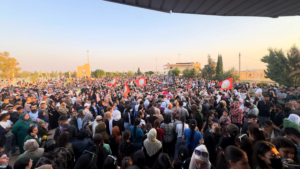
One hallmark of GenZ212, and one of its strongest points of convergence with Bayat’s concept, was its innovative use of technology, building on precedents set by other Gen Z uprisings in Nepal, Madagascar, and Peru. The GenZ212 moniker itself originated from a Discord server established at the end of September 2025. Traditional Meta-owned platforms such as Facebook, prominent during the 2011 Moroccan Spring, had come to be seen as infiltrated by government bots, trolls and disinformation campaigns. The shift to Discord as the main coordination hub for the protests suggested a growing awareness among demonstrators of the importance of tactical expression of dissent under surveillance,[18] given how its pseudonymity and unconventionality reduced fear of government penetration and interference. The Discord server’s city-specific voice channels allowed immediate, localised recalibration of tactics on the ground. For instance, after the harsh response to the first two days of protest on 27-28 September, groups were able to move away from the usual areas for demonstrations, instead concentrating marches in working-class neighbourhoods.[19] Rapidly gaining over 250,000 members, the GenZ212 Discord became a new ‘digital public square’[20] where daily mass voice chats functioned as assemblies for collective decision-making and strategising, with video updates from each region. As one of the server moderators put it, ‘leaders get jailed. We are many, anonymous, and connected.’[21] This marked shift from the hierarchical, identifiable leadership of past protests to a new mode of digitally mediated communal coordination corresponds to several core tenets of nonmovements. For Bayat, when ‘passive networks’ of common spaces, practices, and means of communication allow large numbers of atomised individuals to engage in collective action, the cumulative effect of these individual yet similar instances of activism becomes powerful enough to reshape societal norms even within restricted political environments like Morocco.[22]
Yet despite the striking conceptual alignment between Bayat’s theory of nonmovements and the 2025 protests in Morocco, it would be an overgeneralisation to directly correlate the two. The eventual rioting in towns like Laqliaa and Sidi Bibi followed a recognisable pattern associated with the more conventional social movements of 1981 and 2011, which were characterised by forms of mobilisation and dissent that went well beyond the routine of daily life. Similarly, the GenZ212 ‘nonmovement’ ended in much the same way as its supposedly more formalised predecessors, with the announcement of limited reforms by the king doing just enough to divide and erode the strength of protest groups without offering any meaningful change. Although Bayat’s concept effectively encapsulates the decentralised and networked character of GenZ212, the movement also exhibited features of conventional collective mobilisation, particularly during episodes of urban unrest. Bayat’s framework therefore complements, rather than replaces, classical social movement theory by explaining an evolution in repertoires of contention rather than a definitive conceptual revolution. The theory’s application to GenZ212 highlights commonalities that position the 2025 demonstrations as another waypoint in the cyclical evolution of protest within Morocco’s specific historical and sociopolitical context towards increasingly decentralised forms of organisation and more unorthodox methods of protest.
An ambiguous façade: Monarchy in Politics and Protest
The monarchy is one of the key agents in Morocco’s political sphere most affected by this iterative transformation. In the wake of the 2011 uprisings and their central demand for change in the structures of government, a Consultative Commission on Constitutional Reform initiated by King Mohammed VI drafted a new constitution.[23] Enacted by a national referendum in July 2011, it strengthened the independence of the legislative branch,[24] imbued the elected government with some executive powers,[25] and sought to more explicitly define those of the monarch.[26] Even so, Mohammed VI retained complete control over the armed forces[27] and the judiciary,[28] alongside his prerogative to dismiss government ministers[29] and dissolve Parliament.[30] At its core, however, the true architecture of power in Morocco’s semi-constitutional monarchy retained its two-tiered construction around an outward-facing elected government and an opaque permanent core centred around the Palace, whose operation remains rooted in the personal decisions and strategic interests of the king.[31] This patrimonial network of royal power, called the ‘makhzen,’ continues, through informal relationships between palace elites and political parties, to influence economic policy, control of security institutions and appointments to key roles.[32] This hybrid system undermines the development of a transparent, democratic, and accountable political order.[33] In essence, the monarch is not merely a king, but a system which carries the considerable weight of public expectation to ensure the wellbeing of the people through implementing effective policy.[34] As such, if the king wishes to remain in power and avoid public criticism, he finds himself in a Catch-22 where he must ‘simultaneously dominate the political system while maintaining the image of being above politics.’[35]
Mohammed VI’s role in the Gen Z protests appears at first glance to differ from the one he played during the Moroccan Spring. In 2011, demonstrators were vocal in their desire for a new constitution to limit his powers, while in 2025 protesters directly addressed their concerns to him, going so far as to pause their demonstrations out of respect for his October 10 speech to Parliament. Nevertheless, each cycle of protest and reform has historically served only to modernise the façade of good governance without ever truly redistributing power,[36] exposing an entrenched pattern of ambiguous royal intervention extending back to the 1981 Bread Riots. In 2004, under mounting pressure from human rights organisations, Mohammed VI appointed a royal commission to investigate abuses committed by security forces during that period. Although the commission officially verified the number of deaths at 114, it stopped short of acknowledging any institutional responsibility in how those victims had died.[37] It is not surprising, then, that in his 2025 parliamentary address, Mohammed VI never explicitly mentioned GenZ212 and avoided directly engaging with its demands. Instead, he encouraged a general improvement in social services, to which the government responded with a token 16% increase in spending on health and education.[38] This recurring theme in royal governance, whereby the king reacts to periods of unrest with limited concessions that are sufficient to defuse immediate public pressure without producing meaningful structural reform, reveals a monarchy which prioritises political calculation and stability over consistent institutional responsibility.[39]
Yet this delicate royal balancing act between actual intervention and perceived governmental accountability, for so long a defining undercurrent of Moroccan protest movements, appears to be increasingly precarious in the wake of GenZ212. For years the monarchy has exploited Morocco’s hybrid government structure to manipulate the domestic party scene. Fouad el Himma, a close advisor to the king and one of the many former Royal College classmates Mohammad VI surrounded himself with in the makhzen upon ascending to the throne, became emblematic of this soft power incursion into domestic politics. He founded the Authenticity and Modernity Party in 2008 in a bid to bring Morocco’s political landscape under palace influence by curbing Islamist and left-wing socialist parties. This blatant attempt at political engineering made el Himma a direct target of protest in 2011, forcing his resignation from the party’s leadership, but he remains to this day in a less visible role within the royal cabinet with his influence largely undiminished.[40] The monarchy’s embedded position within Morocco’s economic system further undermines its claim to institutional neutrality. Nareva, the energy subdivision of a holding company owned outright by Mohammed VI, was part of a 2024 partnership with the National Office of Electricity and Drinking Water worth 12 billion dirham (US$1.29 billion).[41] This constant manipulation of civil society and the political party scene has eroded the monarchical façade of non-involvement and has progressively exposed the king to direct public scrutiny.[42] While in response to the Moroccan Spring Mohammed VI established a blue-ribbon royal commission to draft a new constitution he then endorsed, he entirely sidestepped the call of GenZ212 to ‘intervene for a profound and just reform that restores rights and punish [sic] the corrupt.’[43] In the case of GenZ212, the movement’s support for the monarchy ironically enabled the king to more easily evade responsibility by deflecting blame onto elected politicians.
This apparent bonus in 2025, however, may prove a poisoned chalice for the king going forward, as the carefully maintained ambiguity at the heart of the monarchy’s political role becomes more exposed with every cycle of protest and thwarted reform. In hollowing out the capacity for independent governance by political parties, the monarchy has safeguarded its domestic interests in the short term. Yet in doing so it has also set in motion a political time bomb, a ‘regrettable and dangerous vacuum’[44] of sociopolitical agency which a future nonmovement, whose innovative use of technology and increasing diffusion will complicate traditional regime strategies of negotiation and repression, may readily seek to fill.
Conclusion
In many ways the 2025 Moroccan Gen Z protests represent a paradoxical synthesis of evolution and revolution. Fundamentally, they remained grounded in the same unchanging historical and socioeconomic context of inequality, marginalisation, and repression as the movements that preceded them. With its intrinsic links to past protest movements, GenZ212 was at once parallel and distinctive—a new house built on old foundations. The role of the monarchy in government and protest also operates according to this dual logic. The king’s perpetual manipulation of Morocco’s hybrid power structure amidst analogous cycles of public discontent has exposed both the curated disconnect between meaningful intervention and institutional responsibility at the core of the monarchy and the resulting void of genuine sociopolitical agency within the system of government. Together these phenomena constitute a serious threat to the status quo of royal power. The introduction of Asef Bayat’s theory of nonmovements as a frame of reference for GenZ212, enabled by the presence of political conditions defined by constraint, provides an insight, albeit limited, into what future modes of Moroccan protest might look like. Nonmovements are, in effect, more cumulative than conventional social protest movements. In the case of the 2025 uprising, trends towards technological innovation and decentralised leadership which crystallised as the demonstrations progressed mean that successors to GenZ212 will be able to iterate far quicker and present far greater difficulties to mechanisms of government negotiation and suppression. Yet the 2025 Moroccan Gen Z demonstrations should not be conceptualised as a contrived new dawn for protest in Morocco. Instead, they should be seen as another important step in the cyclical progression of social protest movements away from more traditional forms and methods towards novel, more effective ones better suited to the context of contemporary Morocco. For now, the argument for evolution very much outweighs that of revolution, but when judging the legacy of GenZ212 and in looking ahead to the future of protest and governance in Morocco, the words of Mike Campbell in Hemingway’s The Sun Also Rises seem especially prescient. ‘“How did you go bankrupt?” Bill asked. “Two ways,” Mike said. “Gradually and then suddenly.”’
Notes
[1] Washington Institute. (October 2023) “The Neglected High Atlas Mountains and the Challenges of Life Post-Earthquake” Accessed on 7 July 2026. Available at: https://www.washingtoninstitute.org/policy-analysis/neglected-high-atlas-mountains-and-challenges-life-post-earthquake
[2] World Bank. (June 1996) “Performance Audit Report Morocco, Port of Casablanca and Mohammedia Project” Accessed on 20 July 2026. Available at: https://documents1.worldbank.org/curated/en/991331493243429903/pdf/multi-page.pdf
[3] Atalayar. (October 2025) “Mohammed VI rejects unequal development in Morocco’s progress” Accessed on 7 July 2026. Available at: https://www.atalayar.com/en/articulo/politics/mohammed-vi-rejects-unequal-development-in-moroccos-progress/20251002190000218994.html
[4] BBC. (October 2025) “We need hospitals more than football stadiums, say Morocco’s young protesters” Accessed on 30 June 2026. Available at: https://www.bbc.co.uk/news/articles/c8rv2l3me40o
[5] Trading Economics. (2026) “Morocco Youth Unemployment Rate” Accessed on 30 June 2026. Available at: https://tradingeconomics.com/morocco/youth-unemployment-rate
[6] Stimson. (December 2025) “Morocco’s Two-Speed Reality” Accessed on 20 July 2026. Available at: https://www.stimson.org/2025/moroccos-two-speed-reality/
[7] BBC. (October 2025) “We need hospitals more than football stadiums, say Morocco’s young protesters” Accessed on 30 June 2026. Available at: https://www.bbc.co.uk/news/articles/c8rv2l3me40o
[8] Washington Report on Middle East Affairs. (November 2025) “Does the Moroccan Monarchy Function as an Institution?” Accessed on 7 July 2026. Available at: https://www.wrmea.org/north-africa/does-the-moroccan-monarchy-function-as-an-institution.html?__cf_chl_f_tk=ORwzN3LQ0iyg2dP073Uxub1_gnXONn4Ig6ly3L_aqnU-1783348391-1.0.1.1-QnF8p8uIx5ABkOQk2DigzU_xzcZgp2z8g7jJuzEv_Z4
[9] Deutsche Welle. (October 2025) “Anonymous, digital, democratic: Morocco’s Gen Z protests” Accessed on 9 July 2026. Available at https://amp.dw.com/en/anonymous-digital-democratic-moroccos-gen-z-protests/a-74266285
[10] Bayat, A. (2010). “Life as Politics: How Ordinary People Change the Middle East”. Amsterdam: Amsterdam University Press. p. 14. Retrieved from https://hdl.handle.net/1887/15229 (https://scholarlypublications.universiteitleiden.nl/access/item:2721992/view)
[11] Ibid.
[12] International Center for Transitional Justice. (January 2009) “Truth and Reconciliation in Morocco” Accessed on 7 July 2026. Available at: https://www.ictj.org/sites/default/files/ICTJ-Morocco-TRC-2009-English.pdf
[13] Al Jazeera. (September 2012) “The plight of the Rif: Morocco’s restive northern periphery” Accessed on 7 July 2026. Available at: https://www.aljazeera.com/opinions/2012/9/28/the-plight-of-the-rif-moroccos-restive-northern-periphery/
[14] Ibid.
[15] Our World in Data. (2026) “Infant mortality rate, 1970” Accessed on 10 July 2026. Available at: https://ourworldindata.org/grapher/infant-mortality?time=1970
[16] Human Rights Watch. (September 2017) “Morocco: King Brushes Off Evidence of Police Abuse” Accessed on 10 July 2026. Available at: https://www.hrw.org/news/2017/09/05/morocco-king-brushes-evidence-police-abuse
[17] Ibid. Bayat.
[18] El Karmaoui, A. (2026). “Stadiums of dissent: ultras, youth grievance, and informal political socialisation in Morocco” The Journal of North African Studies, 31(2), 361–389. Accessed on 10 July 2026. Available at: https://doi.org/10.1080/13629387.2025.2608586
[19] Carnegie Middle East Center. (October 2025) “Understanding Morocco’s GenZ Uprising” Accessed on 30 June 2026. Available at: https://carnegieendowment.org/middle-east/diwan/2025/10/moroccos-genz-uprising
[20] Rosa Luxemburg Stiftung, North Africa Office. (October 2025) “From Hospital Outrage to a Digitally-enabled Protest Movement: GenZ212’s Emergence and Organization” Accessed on 10 July 2026. Available at: https://rosaluxna.org/publications/from-hospital-outrage-to-a-digitally-enabled-protest-movement-genz212s-emergence-and-organization/
[21] Ibid.
[22] Bayat, A. (2010). “Life as Politics: How Ordinary People Change the Middle East”. Amsterdam: Amsterdam University Press. p. 20. Retrieved from https://hdl.handle.net/1887/15229 (https://scholarlypublications.universiteitleiden.nl/access/item:2721992/view)
[23] Carnegie Endowment for International Peace. (June 2011) “The New Moroccan Constitution: Real Change or More of the Same?” Accessed on 7 July 2026. Available at: https://carnegieendowment.org/research/2011/06/the-new-moroccan-constitution-real-change-or-more-of-the-same?
[24] Articles 70-101, Kingdom of Morocco. (2011) “Constitution of the Kingdom of Morocco” (Dahir No. 1-11-91, 29 July 2011). Official Bulletin No. 5964 bis. Accessed on 2 July 2026. Available at: https://bdj.mmsp.gov.ma/Fr/Document/5601-Dahir.aspx
[25] Articles 89-92, Constitution of 2011
[26] Articles 41-59, Constitution of 2011
[27] Article 53, Constitution of 2011
[28] Articles 56-57, Constitution of 2011
[29] Article 47, Constitution of 2011
[30] Article 51 and 96-98, Constitution of 2011
[31] Washington Report on Middle East Affairs. (November 2025) “Does the Moroccan Monarchy Function as an Institution?” Accessed on 7 July 2026. Available at: https://www.wrmea.org/north-africa/does-the-moroccan-monarchy-function-as-an-institution.html?__cf_chl_f_tk=ORwzN3LQ0iyg2dP073Uxub1_gnXONn4Ig6ly3L_aqnU-1783348391-1.0.1.1-QnF8p8uIx5ABkOQk2DigzU_xzcZgp2z8g7jJuzEv_Z4
[32] Zartman, Ira William, ‘Political economy in Morocco’, in Karim El Aynaoui, and Arkebe Oqubay (eds), The Oxford Handbook of the Moroccan Economy, Oxford Handbooks (Oxford, 2026; online edn, Oxford Academic, 3 Apr. 2026), https://doi.org/10.1093/9780198953739.003.0002, accessed 7 July 2026.
[33] Washington Report on Middle East Affairs. (November 2025) “Does the Moroccan Monarchy Function as an Institution?” Accessed on 7 July 2026. Available at: https://www.wrmea.org/north-africa/does-the-moroccan-monarchy-function-as-an-institution.html?__cf_chl_f_tk=ORwzN3LQ0iyg2dP073Uxub1_gnXONn4Ig6ly3L_aqnU-1783348391-1.0.1.1-QnF8p8uIx5ABkOQk2DigzU_xzcZgp2z8g7jJuzEv_Z4
[34] Le Monde. (August 2025) “Mohammed VI, le makhzen et l’art des secrets de palais” Accessed on 7 July 2026. Accessed on 7 July 2026. Available at: https://www.lemonde.fr/en/summer-reads/article/2025/08/28/mohammed-vi-the-makhzen-and-the-art-of-palace-secrecy_6744809_183.html?srsltid=AfmBOoqcY0P5A-31D5l6UBMGUmSexZ5fYP4DneYoPj_IA2n5312p6vfe
[35] Project on Middle East Political Science. (May 2026) “The Gen Z Youth Protests and the Rising King dilemma in Morocco” Accessed on 27 June 2026. Available at: https://pomeps.org/the-gen-z-youth-protests-and-the-rising-king-dilemma-in-morocco
[36] Institut de relations internationales et stratégiques. (October 2025) “GenZ212 : Les aspirations d’une jeunesse marginalisée.” Accessed on 1 July 2026. Available at: https://www.iris-france.org/genz212-les-aspirations-dune-jeunesse-marginalisee/
[37] BBC. (October 2025) “We need hospitals more than football stadiums, say Morocco’s young protesters” Accessed on 30 June 2026. Available at: https://www.bbc.co.uk/news/articles/c8rv2l3me40o
[38] Institute for Security Studies, Africa. (October 2025) “Gen Z loses steam in Morocco” Accessed on 28 June 2026. Available at: https://issafrica.org/iss-today/gen-z-loses-steam-in-morocco
[39] Washington Report on Middle East Affairs. (November 2025) “Does the Moroccan Monarchy Function as an Institution?” Accessed on 7 July 2026. Available at: https://www.wrmea.org/north-africa/does-the-moroccan-monarchy-function-as-an-institution.html?__cf_chl_f_tk=ORwzN3LQ0iyg2dP073Uxub1_gnXONn4Ig6ly3L_aqnU-1783348391-1.0.1.1-QnF8p8uIx5ABkOQk2DigzU_xzcZgp2z8g7jJuzEv_Z4
[40] Le Monde. (August 2025) “Mohammed VI, le makhzen et l’art des secrets de palais” Accessed on 7 July 2026. Accessed on 7 July 2026. Available at: https://www.lemonde.fr/en/summer-reads/article/2025/08/28/mohammed-vi-the-makhzen-and-the-art-of-palace-secrecy_6744809_183.html?srsltid=AfmBOoqcY0P5A-31D5l6UBMGUmSexZ5fYP4DneYoPj_IA2n5312p6vfe
[41] Washington Report on Middle East Affairs. (November 2025) “Does the Moroccan Monarchy Function as an Institution?” Accessed on 7 July 2026. Available at: https://www.wrmea.org/north-africa/does-the-moroccan-monarchy-function-as-an-institution.html?__cf_chl_f_tk=ORwzN3LQ0iyg2dP073Uxub1_gnXONn4Ig6ly3L_aqnU-1783348391-1.0.1.1-QnF8p8uIx5ABkOQk2DigzU_xzcZgp2z8g7jJuzEv_Z4
[42] Project on Middle East Political Science. (May 2026) “The Gen Z Youth Protests and the Rising King dilemma in Morocco” Accessed on 27 June 2026. Available at: https://pomeps.org/the-gen-z-youth-protests-and-the-rising-king-dilemma-in-morocco
[43] AP. (October 2025). “Protesters rally across Morocco in final push for reforms before king’s expected address” Accessed on 2 July 2026. Available at: https://apnews.com/article/morocco-protests-gen-z-king-resignation-prime-minister-b1191d0d07a454e88cb7da8b025efc81
[44] Mohammed VI in his Throne Day Speech on 29 July 2017, Kingdom of Morocco. (July 2017). “Full Text of Royal Speech on the Occasion of the Throne Day” Accessed on 2 July 2026. Available at: https://www.maroc.ma/sites/default/files/pdfs/message_7331_en.pdf?