


REBROADCAST FRANCE 24: (04/2026)
At the center of the conversation is the Strait of Hormuz — not only as a strategic chokepoint for global energy flows, but as a key element in Iran’s broader security doctrine and negotiating position.
The interview explores how Iranian decision-makers view pressure, escalation, and diplomacy; why Tehran prepares for talks with long-term strategic depth; and how military, economic, and geopolitical calculations shape its posture toward Washington. It also unpacks the wider implications of Hormuz for the global economy, regional balance, and the future of U.S.-Iran relations.
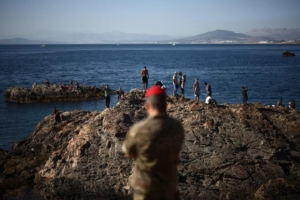
Rewarded Either Way: Morocco, the EU and the Paradox of Border Externalisation after Ceuta
The July 2026 Ceuta crisis, during which an estimated 72,000 people crossed the border from Morocco, exposed a paradox in the EU’s externalisation of migration management. Relying on transit states to limit crossings also gives those states bargaining power. This article examines EU–Morocco cooperation and competing explanations for the crisis, from structural pressures and failures of anticipation to the possible instrumentalisation of migration flows. Both interpretations point to the same vulnerability: the EU’s dependence on Moroccan cooperation. The article situates Ceuta within a broader policy model by examining the European response and comparing Morocco with Tunisia. It concludes that externalisation does not guarantee containment and that the pursuit of greater control may deepen the EU’s reliance on transit states.