

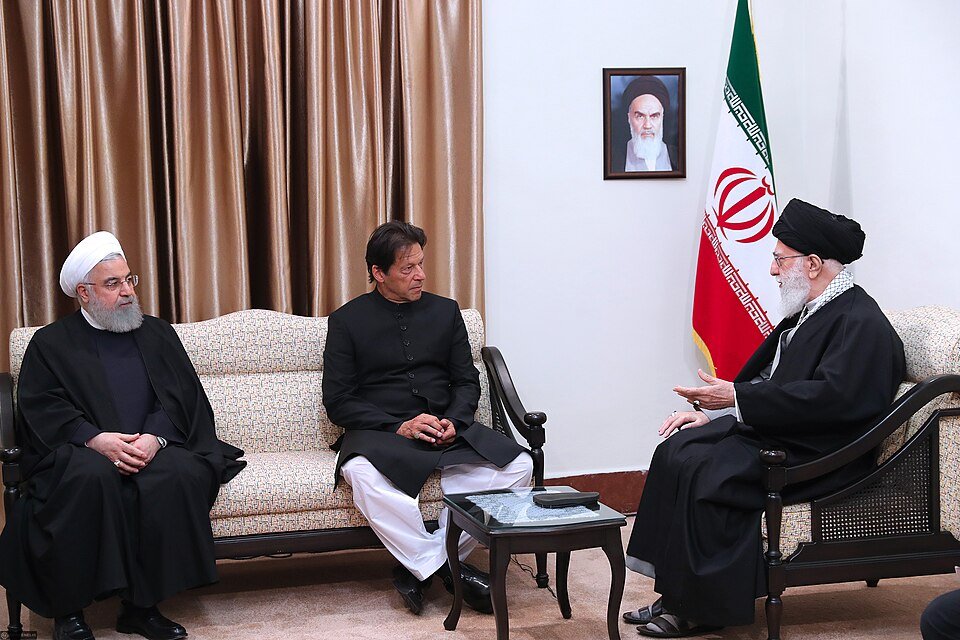

On Thursday 18 June 2026, Shehbaz Sharif announced on the social media platform X the signing of the Islamabad Memorandum of Understanding between the United States and Iran, bringing an end to a war which, in just three months and twenty days, has left a lasting impact on the Middle East. Beyond the diplomatic significance of this agreement, the event reveals a profound shift. Indeed, Pakistan is emerging as a credible interlocutor in the management of Middle Eastern crises. Owing to its geographical position, the country has traditionally been perceived as being an exclusively South Asian state. However, this event demonstrates that Pakistan is increasingly establishing itself as a player whose interests, dependencies and diplomatic capabilities extend far beyond its original regional context. This evolution is not the result of recent developments, but of a long history. Since its creation in 1947 following the partition of British India, Pakistan has had to contend with a challenging regional environment, marked by its rivalry with India and recurring tensions with Afghanistan – two permanent casus belli. This stalemate between two fault lines has gradually prompted Islamabad to seek partners outside its immediate vicinity, particularly in the Gulf, where economic, energy, religious and security interdependencies have developed. However, it would not be enough to reduce this development to a mere rapprochement with the Gulf monarchies. Since gaining independence to the present day, the country has developed a strategy of alignment with numerous states, including China, the United States, Saudi Arabia, the United Arab Emirates, Qatar, Turkey and also Iran. This rare ability to negotiate with powers that are generally rivals gives it a role as an attractive diplomatic intermediary, one that extends beyond economic, security and religious influence alone.
This reality also calls into question the very concept of the Middle East. Far from being a geographical given, this region is a historical and geopolitical construct whose borders are constantly evolving. Consequently, membership of this region cannot be assessed solely on the basis of geographical criteria set out in traditional definitions. It must also be analysed through the lens of economic interdependencies, security dynamics, as well as the movement of people and diplomatic practices that shape regional relations. Consequently, the question is perhaps no longer whether Pakistan belongs geographically to the Middle East, but rather to understand to what extent the interdependencies that currently shape the region now make Islamabad a key player in its balance of power. The hypothesis put forward in this analysis is that Pakistan does not geographically fall within the Middle East. Indeed, the country is increasingly establishing itself as a peripheral power whose interests are closely linked to those of the Middle East. Whilst Islamabad is fully engaged in political, economic and security dynamics, its neighbours – namely India and Afghanistan – continue to limit its strategic autonomy and keep it at the heart of South Asian issues. Thus, to demonstrate this hypothesis, this paper will review the definitions of the Middle East before analysing the various forms of integration the country has within this new regional space. Finally, this study will show that this integration remains, however, subject to structural constraints specific to the Indian subcontinent.
The concept of the Middle East: a geopolitical construct rather than a geographical reality.
The geographical definition of the Middle East is the result of an evolution and a demarcation that are the subject of perpetual debate. Although the term is now commonly used to refer to the area stretching from Turkey and Egypt to Iran, these boundaries are, above all, the result of the formulation of an abstract concept. The term first appeared at the turn of the 20th century in the writings of British strategists keen to protect the route to India, before gradually becoming established through Western diplomatic and academic usage. To quote Guillemette Crouzet, this genealogy shows above all that the Middle East corresponds to a concept that is ‘deeply Eurocentric: an Orient close to the West, which has regarded it as a backwater of its political and economic rivalries since the late nineteenth century[1].’ From the outset, therefore, the Middle East has been conceived as a sphere of interest, movement and control, rather than as a homogeneous geographical reality. Across various contemporary historical periods, the region has been understood to encompass an area stretching from Egypt to Iran, sometimes including Turkey, the Levant, the Arabian Peninsula, the Gulf, and on occasion Central Asia. This variable scope thus demonstrates that the Middle East is not defined by its cultural or religious essence, but by relationships of interdependence and conflict. Based on this observation, the Middle East thus functions as a geopolitical construct subject to shifts in the international balance of power.
This analysis helps to explain why Pakistan can gradually be associated with this region without necessarily fitting a strictly geographical definition. Pakistan is traditionally classified as a South Asian state, but several international institutions now tend to associate the country with the Middle East. In 2026, the World Bank included it in the MENAAP group (Middle East, North Africa, Afghanistan and Pakistan). This development is a recognition of a trend already initiated by the IMF over a decade ago. In other words, the question is not whether Pakistan belongs to the Middle East in a geographical sense, but rather to analyse its potential vital interests, its room for manoeuvre and its diplomatic trade-offs, and whether these are now shaped by this region. In this respect, Pakistan appears less like a state outside the region and more as a peripheral power whose trajectory is increasingly shaped by Middle Eastern dynamics. However, it is important to bear in mind that this development in no way detracts from its roots in South Asia, but rather adds a new dimension of interdependence that redefines its place within the regional landscape.
Pakistan: a periphery fed by and rooted in the Middle East
Energy and economic survival dependent on the Middle East and the Gulf
Pakistan, which suffers from a significant chronic deficit and a fragile industrial base, cannot free itself from the Middle East, and more specifically from its resources, its geostrategic position and its trade routes. In 2024, nearly 20 per cent of global consumption of liquid petroleum and one-fifth of liquefied natural gas passed through the Strait of Hormuz[2], whilst an estimated 12 per cent of maritime trade transits through the Strait of Bab el-Mandeb and the Suez Canal[3]. For Pakistan, whose economy remains vulnerable to external events, energy supply is a prerequisite for survival. Pakistan is particularly dependent on imports from Gulf countries such as Qatar, which supplies 89 per cent[4] of its liquefied natural gas requirements, and Saudi Arabia and the United Arab Emirates, from which it sources between 85 per cent and 90 per cent of its crude oil[5]. Pakistan is also involved in a gas pipeline project with Iran, estimated at $7.5 billion according to Reuters, the scope of which extends beyond its energy dependence. Through this involvement, Islamabad is demonstrating a desire to diversify its supply sources. Conversely, every rise in the price of oil has a direct impact on Pakistan’s external accounts. A recent illustration of this vulnerability occurred during the Iran-US-Israel confrontation in February 2026. From the very first days of the war, the Pakistani government was forced to adopt emergency measures to cushion the impact of the conflict, not least because every $10 rise in the price of oil costs Islamabad nearly $2 billion in energy imports[6]. This vulnerability therefore explains why crises in the Middle East have a direct impact on the country’s stability. As demonstrated, when war disrupts sea routes or any other means of transporting energy resources, Pakistan must react urgently to cushion the impact on its currency, its reserves and its budget. One reason for its mediation in this conflict may therefore stem from Pakistan’s need to avoid prolonging the destabilisation of its Arab partners, as well as the closure of the Strait of Hormuz.
This energy dependence is compounded by economic and financial dependence. Whilst Turkey, Qatar and the United Arab Emirates are increasing the number of trade agreements and investing in sectors such as property and renewable energy, it is with Saudi Arabia that Pakistan’s ties are closest. Since 1947, Saudi financial support has been indispensable to the Pakistani state, which regularly runs a deficit and must ensure its survival in the face of India, and on an economic and financial level. For the Saudi giant, Pakistan represents not only a non-Arab Muslim partner but also, significantly, a major source of labour and a useful military player. Conversely, for Islamabad, the Kingdom of Saudi Arabia is an indispensable source of funding for its economic stability, payment options, investments and all other forms of credit and payment during periods of financial strain. In 2019, Mohammed bin Salman began his tour of Asia there by negotiating a $20 billion agreement at a time when Pakistan was grappling with a deficit of the same magnitude. The Saudi Vision 2030, centred on economic diversification, suggests that partnerships between the two states are likely to increase in the future. This economic cooperation also takes place at the intergovernmental level within the Organisation of Islamic Cooperation, of which Pakistan has been a member since its creation in 1969. The organisation’s charter incorporates political considerations such as the Palestinian question, but also above all, economic objectives such as the creation of a common Islamic market. This body enables Pakistan to finance major projects in areas such as disease eradication and motorway construction, thereby addressing its internal shortcomings and vulnerabilities.
The Pakistani diaspora holds particular importance, more specifically in labour migration to the Gulf, which the government encourages to reduce domestic unemployment and boost foreign currency inflows. Indeed, every year, between 700,000 and 800,000 Pakistanis leave to work in the Middle East[7]. During the previous financial year, Pakistan received nearly $30 billion in remittances, more than half of which came from the Gulf states[8]. These remittances represent a vital source of foreign exchange, contributing to an equilibrium in the balance of payments and directly supporting the consumption of millions of households. The war between Israel, Iran and the United States thus posed an immediate threat to this economic structure. Indeed, estimates suggested that a continuation of the war could force up to 1.4 million Pakistani workers to return home, resulting in an annual loss of between 3 and 4 billion dollars[9]. In this context, reaching a peace agreement was not merely a diplomatic opportunity, but a vital economic necessity. This point illustrates the country’s financial dependence on its partners.
Ultimately, this dependence explains why Islamabad is paying ever closer attention to regional developments. Indeed, a protracted war in the region would not only threaten its energy supplies but would also undermine remittances, investment and employment prospects for its diaspora. This is another key reason why the country has pushed for de-escalation and mediation.
The reversal of the balance of power: military and nuclear power as a bargaining chip at a regional level
Pakistan’s ties with these countries are not limited solely to the economic and commercial spheres. Islamabad also relies on partnerships in the military and security sectors, with Turkey and the United Arab Emirates, for example. This capability enables it to transform a position of economic dependence into a diplomatic asset. Indeed, it is worth remembering that Pakistan, like its Middle Eastern partners, boasts a large, experienced and well-trained army equipped with nuclear weapons. This makes it a unique military player within the Muslim world. But it is once again with its Saudi partner that Pakistan collaborates most closely. For several decades, Pakistani military personnel have been deployed on Saudi territory to assist with the training of local forces and the protection of the kingdom[10]. Furthermore, Islamabad provides equipment, advisers and technical cooperation in the field of defence. However, as mentioned at the start of this section, it is Pakistan’s nuclear capability that is the most decisive factor. As the only Muslim country to possess nuclear weapons, Pakistan enjoys considerable prestige within the Islamic world. It is this symbolic significance that has fuelled the idea that Islamabad could serve as the ultimate guarantor of security for certain Gulf partners. It was in September 2025, shortly after the Iranian attacks, that the alliance reached its peak with the signing of a defence agreement between the two countries, bringing Saudi Arabia under Pakistan’s nuclear umbrella. The appeal of this alliance is clear; Turkey is actively seeking to join it[11], fuelling speculation about the emergence of a new security bloc within the Muslim world.
Although this military build-up is significant and represents a key aspect of the country’s relations with its allies, it should not be overestimated. Pakistan possesses strengths that do not always translate automatically into action, as demonstrated by the long-standing tensions between the Kingdom of Saudi Arabia and the Islamic Republic of Iran. Despite its ties with both entities, Islamabad struggled to provide direct military support to Riyadh when the latter came under attack from Iranian strikes. This restraint does not reflect a weakness in the alliance; on the contrary, it exposes the very logic of Pakistani foreign policy. On the other hand, Islamabad cannot afford to sever its ties with Tehran, with which the country maintains the numerous relations mentioned above. It must therefore be noted that Pakistan does not seek to be an exclusive military ally, but rather to preserve its ability to engage in dialogue with all regional actors. Thus, its policy of multi-alignment forces it to play the role of mediator without necessarily satisfying its partners during periods of high tension. In other words, military action against Tehran in the wake of the attacks on Saudi territory would have risked destabilising Pakistan’s western border, as would a deterioration in its energy relations with Iran. Similarly, an intervention against the monarchy or clear and assertive opposition would undermine its historic ties with Riyadh. Thus, Islamabad offers a strategic guarantee, but refuses to be drawn into its allies’ conflicts when its own fundamental interests are at stake.
Islam: a geopolitical and societal glue
Religion is a significant driver of the rooting of Pakistan in the Middle East. Indeed, from its very inception in 1947, the country has defined itself as a state intended to represent the Muslims of the subcontinent. This aspect of its identity forms one of the cornerstones of its foreign policy. Furthermore, this aspect is enshrined in the Pakistani constitution, which stipulates an obligation to ‘strengthen ties with the Muslim world’[12]. This objective is also reflected in the constitutions of Saudi Arabia and the United Arab Emirates, which are required respectively to ‘promote Arab, Islamic and human civilisations[13]’ and to ‘support Islamic causes and interests[14]’. Whilst the Islamic Republic of Pakistan affirms this commitment, this position also responds to internal strategic considerations. Indeed, the country is home to between 20 and 36 million Shia Muslims, representing 10 to 15 per cent of the population; Pakistan is thus the second-largest Shia population centre after Iran and ahead of Iraq. By way of comparison, Baghdad has a Shia majority, accounting for around 60 per cent of its population, estimated at 47 million. Pakistan thus emerges as one of the main demographic centres of global Shia Islam. Yet this reality is often overlooked due to the religious and political centrality of Iran and Iraq within the Shia world, which places Islamabad in a unique position.
On the other hand, the establishment of the Organisation of Islamic Cooperation enables Pakistan to play a central role in its relationships with its partners. The organisation was founded on the initiative of Saudi Arabia and offers Islamabad an opportunity to set out its positions on certain issues. This institution is not merely a symbolic forum, as it facilitates the development of concrete cooperation in various fields, including education and health, with the primary objective remaining to ‘strengthen the bonds of unity and solidarity amongst Muslim peoples and member states’, thereby aligning with the foreign policy strategy enshrined in Pakistan’s founding documents[15]. From a strictly societal and religious perspective, Pakistan has the second-highest quota for the Hajj (pilgrimage to Mecca) granted by Saudi Arabia after Indonesia, with 180,000 authorised pilgrims[16]. Every year, tens of thousands of Pakistanis undertake this journey to Islam’s holy sites, which sustains a heavy flow of people between South Asia and the Arabian Peninsula. In addition to the pilgrims, there is also a network of ulema, preachers and religious students who act as a bridge between Pakistani and Middle Eastern societies.
It is therefore important to understand that Pakistan maintains historical ties with Saudi Arabia, the centre of Sunni Islam and a key financial partner. At the same time, however, it cannot ignore its own Shia population nor sever its relations with Iran, the other centre of religious and political power that wields influence over a section of its population. Consequently, Pakistani diplomacy is guided by a need to maintain a sectarian balance, and any lasting deterioration in relations with Tehran could have repercussions for the country’s internal cohesion, whilst a rift with Riyadh would undermine its economic and security interests.
A multi-aligned mediator that remains entangled in the issues of the Asian subcontinent
Pakistani diplomacy is not based on a policy of neutrality, but on a strategy of constrained multi-alignment. Unlike powers that choose their alliances, Islamabad seeks above all to avoid having to choose. This stance stems from its simultaneous dependence on several partners whose interests are often conflicting. Pakistan depends on the Gulf for its energy, on China for strategic investment – particularly in infrastructure projects linked to the New Silk Roads – and on the United States for part of its security and financial cooperation, and more specifically as a country whose status as a key partner outside NATO has been essential in the fight against terrorism since the September 11 attacks and in the hunt for Al-Qaeda leaders, but also in the context of ‘sensitive’ technologies, such as cryptocurrency, or strategic resources, all whilst sharing a border of nearly 900 kilometres with Iran as well as common security challenges. Its multi-alignment is therefore less an expression of strategic autonomy than a direct consequence of geopolitical constraints that make any exclusive alignment particularly costly.
This diplomatic architecture largely explains the role Pakistan has claimed in the mediation that led to the memorandum of understanding signed between Washington and Tehran in June 2026. Few states, in fact, have sufficiently strong political relations with all of the key players to be able to claim a role as an intermediary. Pakistan maintains channels of communication with the United States, Iran, the Gulf monarchies, China and Turkey, whilst remaining one of the few Muslim states never to have recognised Israel. This situation lends it particular credibility as a facilitator of dialogue. Prime Minister Shehbaz Sharif’s announcement of the agreement is thus part of a broader strategy aimed at repositioning Islamabad as a key diplomatic player in the Middle East and beyond. This approach remains, however, deeply fragile. The more partnerships Islamabad forges, the more it exposes itself to the risk that rivalries between its partners will limit its own room for manoeuvre. Its role as a mediator rests precisely on a balance that Pakistan only partially controls.
Pakistan’s growing entrenchment in the Middle East is, however, not without risks or limitations; the country is laying bare its own contradictions, which it appears unable to manage. The first limitation is Pakistan’s new membership of the Peace Council established by Donald Trump. The country’s membership of this forum has drawn considerable criticism both domestically and from certain allies, who view this move as an implicit alignment with the United States, and indirectly with Israel. The possibility of extending the Abraham Accords, as called for by Donald Trump, is an extension of this idea. Indeed, Pakistani society is deeply engaged with the Palestinian issue; a 2023 study shows that 91 per cent of the population felt empathy for the Palestinian people. Furthermore, this stance on the Palestinian cause has been used by the Pakistani authorities to construct a narrative linking events in Palestine to Pakistan’s situation regarding Kashmir. Any potential rapprochement with Tel Aviv, or even normalisation of relations, would trigger a severe internal political and social crisis. However, Pakistan’s foreign policy remains linked to, or even dependent on, that of Riyadh, and on Saudi Arabia’s potential accession to the agreements. Should this happen, Pakistan would have to reconsider its position and find itself in a state of political inconsistency and subservience to its partner. Indeed, its dependence on its Saudi ally – which acts as a continuous source of funding for Islamabad – raises questions about Pakistan’s ability to formulate a fully autonomous and independent foreign policy, and about its role as a mediator.
Domestically, Pakistan’s diplomacy rests on the figure of Field Marshal Asim Munir, Chief of the Defence Staff and the country’s de facto leader. This individual embodiment of foreign policy raises questions not only about the institutional apparatus – which appears to have taken a back seat to a military figure – but also about the fragile balance between civilian and military power in Pakistan. In other words, it reveals a relative weakness in civilian decision-making mechanisms. Whilst in the short term diplomatic success and the role of mediator seem guaranteed by the Field Marshal’s presence, this charismatic figure undermines the legitimacy of a state apparatus that is likely to struggle to assert itself in international forums in the future.
Finally, Pakistan remains deeply entangled in the affairs of the Indian subcontinent, particularly due to its border disputes with India and Afghanistan. In early June, New Delhi threatened to alter the flow of water from its rivers that supply Pakistan, using water resources as a new means of exerting pressure on its brother-enemy. As for Afghanistan, the conflict reignited as soon as the Taliban returned to power, with Pakistan accusing its neighbour of harbouring fighters from the Pakistani Taliban (TTP). According to the UN, between January and March 2026, 372 Afghan civilians were killed near the border, the epicentre of tensions between the two states.
Pakistan thus occupies a unique position at the crossroads of the Middle East and South Asia. Its diplomatic network, combined with its military clout and its integration into key regional dynamics, enables it to play an increasingly significant role in the balance of power in the Middle East. Nevertheless, this influence remains subject to significant structural constraints, as Islamabad functions both as a bridge between several geopolitical spaces and as a power firmly rooted in the region. Its ability to exert lasting influence will depend less on its capacity to undertake numerous mediation efforts than on its ability to reduce the vulnerabilities that continue to entangle it in the crises of the Asian subcontinent.
Conclusion
From a strictly geographical perspective, Pakistan does not belong to the Middle East. However, it is linked to the region through the appraisals of its key players and through a range of economic, security, religious and diplomatic dynamics. It is therefore impossible today to grasp the full extent of Middle Eastern dynamics without extending the analysis to include Pakistan’s role, an essential piece of the Middle Eastern puzzle. Nevertheless, this integration remains partial and is subject to a major constraint linked to its strained relations with its neighbours. Islamabad aspires to establish itself as a central player in the Middle East, but remains, above all, caught up in the divisions and dynamics of South Asia and the tensions that the capital maintains with India and Afghanistan.
The signing on 19 June of the agreement between Tehran and Washington therefore serves as a test of the strength of the role claimed by Pakistan, which has the opportunity to transform its role as a mediator into lasting influence, but which must still rise to the challenge of strategic autonomy. On the other hand, the situation itself remains fragile, as the memorandum of understanding constitutes more of a first step than a genuine peace treaty and is already under threat from renewed tensions. It now remains to be seen whether Pakistan’s position will remain a uniquely exclusive asset, or whether its distinctiveness may face competition from actors such as Qatar, which is hosting delegations from both sides on 30 June. On the other hand, whilst the Middle East has become imperative for the Pakistani state, is the latter, in turn, truly indispensable?
Notes
[1] Crouzet, Guillemette. « Les Britanniques et l’invention du Moyen-Orient : Essai sur des géographies plurielles ». Esprit, May 2016, pp. 31-46
[2] U.S.Energy Information Administration “About one-fifth of global liquefied natural gas trade flows through the Strait of Hormuz,” June 24, 2025.
[3] Council on Foreign Relations, “Another Hormuz? The Red Sea’s Threat to the Global Economy,” June 24, 2026.
[4] “Pakistan LNG imports face growing pressure from supply shocks,” Global LNG Hub, June 17, 2026
[5] “Mapping Gulf State Actors’ Expanding Engagements in East Africa,” Africa Center for Strategic Studies, July 8, 2025
[6] Ehsan Malik, “Oil shock,” Dawn, March 10, 2026
[7] Statement showing number of Pakistani workers registered for employment abroad during the period 1971-2026 (till may) country wise. Bureau of Emigration & Overseas Employment. Government of Pakistan
[8] International Organization for Migration (IOM), Aug 19 2025. DTM Remittance Inflows To Pakistan January 2020 – May 2025. IOM, Pakistan.
[9] PIDE. (2026). The Middle East Conflict and Its Implications for Pakistani Migrant Workers. Pakistan Institute of Development Economics
[10] Pakistan-Saudi Arabia Memorandum of Understanding, 1982
[11] “Turkey Said to Seek Membership of Saudi-Pakistan Defense Pact,” Bloomberg, January 2026
[12] Article 40 of the Constitution of 10 April 1973 of the Islamic Republic of Pakistan, modified 28 February 2012
[13] Article 29 of the Constitution of 1 March 1992 of the Kingdom of Saudi Arabia
[14] Article 12 of the Constitution of 2 December 1996 of the United Arab Emirates
[15] Preamble of the Charter of the Organisation of Islamic Cooperation of 4 March 1972
[16] “Pakistan says it fully utilized Hajj quota, secured four Saudi excellence awards,” Arab News, June 28, 2026