

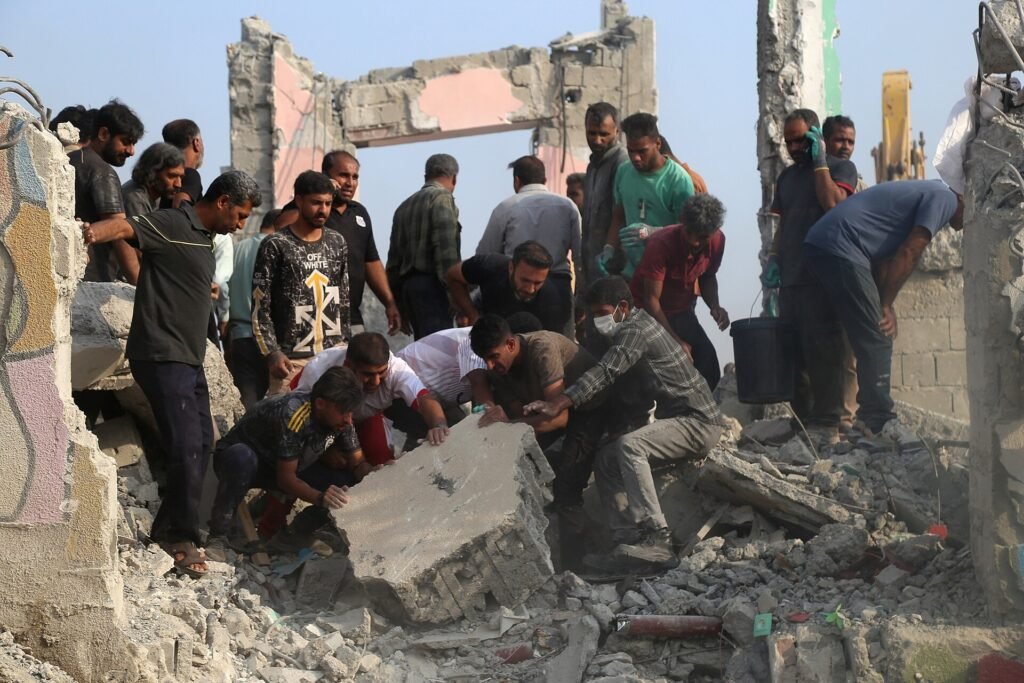

The joint U.S.-Israeli Operation Epic Fury (in French: Fureur épique), launched on February 28, 2026, marks a major turning point in the geopolitical dynamics of the Middle East. The airstrike campaign was designed to achieve a rapid military victory directly targeting Iran’s strategic infrastructure, including its energy and nuclear facilities. In response, Tehran implemented an asymmetric resistance strategy[1], characterized by regional strikes, the mobilization of its armed proxies, and economic pressure through the partial blockade of the Strait of Hormuz. Quickly, the conflict transcended the purely military confrontation between the opposing parties. Iranian strikes repeatedly hit U.S. bases in allied countries, including Qatar, Bahrain, the United Arab Emirates, Kuwait, and Iraq[2], gradually regionalizing the hostilities. Simultaneously, the partial closure of the Strait of Hormuz triggered an immediate economic and energy crisis, causing a sharp spike in oil prices that paralyzed the global economy. By April 30, 2026[3], the price of a barrel exceeded $125 (USD), marking one of the most significant energy disruptions since the 1970s oil shocks[4]. Facing the risk of further regional escalation, multiple mediation and negotiation efforts were initiated[5], primarily led by Pakistan and China[6]. Despite the conclusion of temporary ceasefires, these talks failed to produce a lasting agreement due to deep-seated divergences between the U.S. and Iran[7]. The key sticking points included[8]: Iran’s uranium enrichment and so the nuclear program, the blockade of the Strait of Hormuz, the U.S. naval embargo on Iranian ports, the inclusion of Lebanon in ceasefire agreements. This crisis raises a fundamental question: to what extent does Operation Epic Fury expose the limitations of an exclusively military strategy in an interdependent international environment? More broadly, this confrontation highlights the transformations in regional and international power balances through the interplay of military, energy, and diplomatic dimensions.
This article aims to analyze the immediate consequences of the conflict, the impact of the resulting energy crisis, and the diplomatic deadlocks observed during negotiations, in order to understand the geopolitical reconfigurations that this crisis brings to light.
The regionalization of the conflict and the internationalization of tensions
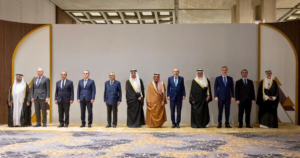
If the US-Israeli offensive caused significant damages on civilian and strategic Iranian’s infrastructures, including power plant, bridges, roads and Kharg Island (a critical hub for Iran’s oil industry), Tehran’s responses were equally strategic. By targeting U.S. military bases in the region, Iran sought to force Arab states into a conflict they had sought to avoid. These countries found themselves caught between conflicting pressures: U.S. demands on one side and Iranian retaliation on the other. To face this dilemma, the Gulf monarchies adopted a de-escalation strategy, promoting dialogue between the two sides. This was evident in their joint request to the U.S. to delay a planned attack scheduled for Tuesday, May 19. The day before, the U.S. president announced that the strikes had been postponed at the urging of several regional allies : Saudi Arabia, Qatar, and the United Arab Emirates[9], who believed that ongoing negotiations were close to reaching a compromise. As a result, despite the opposing pressures from Tehran and Washington, the Gulf Cooperation Council (GCC) members, previously passive, now appear eager to assume an active mediating role, seeking a return to regional stability and taking independent initiatives from the White House[10].
As part of its strategic continuity, Iran has leveraged its proxies such as Hamas, the Houthis and Hezbollah to widen the conflict’s scope. The “Axis of Resistance” is tasked with waging a war of attrition and opening multiple fronts thereby dispersing enemy military and technological resources[11]. However, the regionalization of the conflict did not remain confined to the Middle East. Indeed, by blocking the Strait of Hormuz, the Iranian regime internationalized the conflict. The strait accounts for approximately 20% of global oil[12] supply, allowing Tehran to disrupt global trade[13]. Nevertheless, it continues to permit maritime passage for commercial vessels from its partner countries, such as China.
China occupies a pivotal role in this dynamic, as it accounts for 80–90% of Iran’s oil exports[14]. Tehran’s exemption of China from the Strait of Hormuz blockade underscores the Islamic Republic’s dependence on its Chinese partner. However, being often categorized as an unwavering ally, Beijing’s support for Tehran remains limited to diplomatic and economic backing, no military assistance is provided. China’s strategic caution takes precedence, which explains why it avoids direct military involvement or supplying war assistance that could drag it into the conflict[15]. Additionally, one of China’s strengths in the Middle East lies in its ability to engage with all parties[16]. Maintaining commercial ties with Saudi Arabia and the UAE means that Xi Jinping cannot afford blind alignment with Tehran, as this could put those relationships in trouble. By refraining from direct participation in the conflict, China positions itself as a peacemaker, opting for political and economic protection rather than military aggression, in stark contrast to the U.S. approach.
India, meanwhile, faces a diplomatic predicament similar to that of the Gulf monarchies, as it maintains relations with both Washington and Tehran. New Delhi relies on Iran for its energy supplies and access to Central Asian trade routes via Chabahar Port, yet it cannot afford to break its growing diplomatic ties with the U.S.. Simultaneously, Pakistan has emerged as a mediator in the conflict by opening a diplomatic channel in Islamabad. While the Islamabad mediation did not result in a peace agreement, it facilitated negotiations between the two sides leading to a ceasefire. This ceasefire now aims to pave the way for a memorandum defining the red lines for future peace talks. As a result, Islamabad has strengthened its position on the international stage.
Since then, the conflict has also triggered repercussions within the Western bloc and the Transatlantic Alliance. European partners, already opposed to the illegal and unilateral U.S. operation launched without an UN mandate have expressed their opposition, fearing severe disruptions to their energy supplies. This resistance has weakened U.S. leverage, enabling Tehran to negotiate with the White House on equal footing.
The oil crisis and the fracture in the world energy order
Iran’s blockade of the Strait of Hormuz[17], as previously mentioned, represents one of the key strategic levers deployed in this conflict. This decision primarily impacts the Gulf’s oil monarchies[18], whose economies rely heavily on energy exports. The blockade has exposed internal fractures within OPEC and OPEC+. The withdrawal of the United Arab Emirates from both organizations as of May 1, 2026, has created a profound disruption in regional and global energy balances. Abu Dhabi justified this move by invoking national interest and a desire to better serve global energy markets. Additionally, the UAE has criticized Arab states, particularly Saudi Arabia, for their lack of resolve in responding to Iranian strikes that have targeted regional infrastructure since the conflict began. This event has further increased volatility in energy markets and intensified tensions among producers[19].
Unlike the 1973 oil crisis, which resulted from a collective strategy by Arab oil-producing states to use oil as a coordinated political weapon[20] : the current crisis stems from a unilateral blockade imposed by Iran in the context of direct armed conflict. Furthermore, Tehran appears to be pursuing a long-term strategy of controlling regional maritime flows. Iranian authorities are gradually seeking to institutionalize their control over the strait by implementing mandatory transit permits, monitored maritime routes, and selective taxation mechanisms. Iran exploits the fact that it never ratified the 1982 United Nations Convention on the Law of the Sea[21] (UNCLOS), arguing that it is not contractually bound by its provisions. One of the convention’s key principles (the right of transit passage) guarantees complete, continuous, and unobstructed navigation for all vessels and prohibits taxing ships merely for passing through. So, the Mollah’s regime is not legally bound by UNCLOS, he can justify setting up a maritime toll. Despite the fact that international law considers this norm to have evolved into customary law (applicable to all states), the Islamic Revolutionary Guard Corps (IRGC) claims to have consistently opposed it. Thus, Iran relies on its national legislation[22] to impose prior control and selective tolls, asserting that it applies to the most restrictive regime (innocent passage) to non-UNCLOS member states like the U.S. This regime, resulting from the 1958 Geneva Convention, allows ships to pass only if they do not threaten the peace or security of the coastal state. Moreover, Iran also draws an analogy with the Suez and Panama Canals (which charge passage fees) to justify its project. However, this comparison is legally invalid, as Suez and Panama are artificial canals created by human intervention, whereas the Strait of Hormuz is a natural waterway where no human infrastructure justifies the imposition of fees. Nevertheless, the major flaw in Iran’s argument lies in the 1958 Geneva Convention, which explicitly prohibits the general and discriminatory suspension of passage. This development reflects a broader ambition to bypass Western financial mechanisms, reduce dependence on the Western financial system, and immunize itself against U.S. sanctions. This mechanism includes payment based on the Chinese yuan[23]. While Tehran claims sovereignty over the entire strait, it shares co-ownership with the Sultanate of Oman. True to its historical role of mediator, Oman maintains direct relations with both Tehran and Washington, being in a diplomatically uncomfortable and complex position. Iran demands that Oman exclude Western powers from the strait, while Donald Trump has threatened to “blow up” the sultanate if it surrenders to Tehran’s demands[24].
Negotiations and diplomatic red lines
Facing the risk of regional escalation and uncontrolled conflict, multiple diplomatic initiatives were launched. After repeated ultimatums from Donald Trump to Tehran, Iran chose to accept a 14-day ceasefire[25] from April 8 to 22, 2026. Under Pakistani mediation, a diplomatic channel was established in Islamabad to facilitate discussions between the belligerents. However, despite a unilateral 3-day extension of the ceasefire by the White House, no agreement was reached. Disagreements over critical negotiation points prevented the signing of any peace treaty. For the United States and Israel, priorities include reopening the Strait of Hormuz, restricting Iran’s nuclear program, and more recently expanding the Abraham Accords. Washington views Iran’s 60% uranium enrichment (with a stockpile of approximately 441 kg[26]) as dangerously close to military-grade levels (80–90%)[27]. Meanwhile, Iran refuses any compromise on its civilian nuclear program and considers control of the strait a strategic necessity in the face of Western pressure. As a result, the lack of mutual guarantees on the most sensitive issues perpetuates a mistrust feeling between the parties.
Another contentious issue dividing the conflicting parties is the question of Hezbollah and by extension, Lebanon. Hezbollah, a Lebanese politico-military organization backed by Iran, has been at war with Israel since its establishment, with waves of tensions and direct confrontations : the most recent occurring in 2023–2024[28]. Despite a 2024 ceasefire between the two entities[29], Hezbollah declared war on Israel following the assassination of Ayatollah Ali Khamenei[30]. In response, Tel Aviv launched Operation “Eternal Darkness”[31] on April 8, annexing the buffer zone in southern Lebanon while conducting massive airstrikes across the rest of the country. This issue is the real condition for Netanyahu’s exit from the conflict. In this perspective, Israeli and Iranian positions appear irreconcilable: since Israel views the disarmament of Hezbollah as an essential condition for any durable regional stabilization, Iran refuses to abandon one of its key regional strategic proxies and thus the Lebanese question.
Finally, in response to the closure of the Strait of Hormuz, the U.S. Navy imposed a naval blockade on several Iranian ports, further exacerbating economic tensions. Iranian authorities demand the lifting of the blockade and a reduction of U.S. military presence in the region before any serious resumption of negotiations. At the same time, China, one of the conflict’s mediators, has adopted a more discreet stance[32] while retaining significant influence over Tehran due to its economic weight. Beijing publicly supports Iran’s right to civilian nuclear[33] use while encouraging diplomatic de-escalation. Additionally, the Sino-American discussions in May 2026 and Donald Trump’s visit to China[34] demonstrate Asia’s giant desire to avoid a prolonged deterioration of the regional situation that could threaten its economic interests. However, despite its economic leverage over Iran, Beijing does not appear capable of imposing decisive compromises on the parties involved. Thus, China’s cautious posture toward the conflict calls into question the effectiveness of its potential levers of influence.
Conclusion
To conclude, it seems that we are witnessing a reshaping of the international system in which the United States of America seeks to maintain their role as the world’s policeman. This crisis demonstrates that the military dimension of a conflict is no longer the lone factor to consider. Instead, it illustrates how a middle power like Iran can leverage the global economy as a means of resistance, even against a superpower as the United States. By deploying its proxies and disrupting global energy flows through the blockade of the Strait of Hormuz, Iran’s asymmetric resistance strategy has sown discord among the Gulf monarchies, culminating in the historic withdrawal of the UAE from OPEC. This development, combined with the escalation of naval blockades, introduces two new dimensions to global reconfiguration: first, a reshaping of the global energy order, and second, an increasing militarization of global maritime routes. For its part, Pakistan has positioned itself as a key diplomatic player by establishing a negotiation channel in Islamabad, thereby strengthening its position on the international scene. In contrast, NATO, which has been crystallizing tensions for years, is increasingly fracturing due to the unilateral aggression of the United States. All these signals must be interpreted with caution, as the conflict is still ongoing and current negotiations do not yet lead to a final agreement. The resolution of this crisis will depend either on compromises and concessions from the parties on their presumably incompatible red lines, or on military strikes accompanied by a U.S. ground invasion in order to force a “regime change.” Regardless of the outcome, this conflict is altering regional balances. Future research will determine whether these dynamics represent a systemic rupture or merely a temporary disruption of the regional and international order.
Notes
[1] Bruno Tertrais, « Première Guerre mondiale asymétrique », Le Grand Continent, 27 mars 2026. Disponible sur : legrandcontinent.eu.
[2] Valentin Stoquer, « CARTE. Koweït, Qatar, Émirats arabes unis… Visualisez les frappes menées par l’Iran en représailles aux attaques israélo-américaines », Franceinfo, chronique « Guerre entre les États-Unis, Israël et l’Iran », 3 mars 2026. Disponible sur : franceinfo.fr.
[3] Annick Berger, « Un baril de pétrole à plus de 120 dollars : pourquoi c’est inquiétant (et pas seulement pour votre porte-monnaie) », TF1 Info, 30 avril 2026. Disponible sur : tf1info.fr
[4] Le Monde, « Vivons-nous un quatrième choc pétrolier ? Comprendre en trois minutes », Le Monde, vidéo de la série « Comprendre en 3 minutes », 4 avril 2026. Disponible sur : lemonde.fr.
[5] Romain Raynaldy, « Géopolitique. Guerre en Iran : les médiateurs s’affairent pour sauver le cessez-le-feu », Courrier international, 12 mai 2026. Disponible sur : courrierinternational.com
[6] China.org.cn, « La Chine appelle au calme et à la retenue face aux tensions croissantes au Moyen-Orient », China.org.cn, 25 mai 2026. Disponible sur : china.org.cn
[7] AFP, « Les États-Unis et l’Iran échouent à trouver un accord », Connaissance des Énergies, 12 avril 2026. Disponible sur : connaissancedesenergies.org
[8] FRANCE 24, « Décryptage États-Unis-Iran : quels points bloquent l’accord ? », France 24, chronique « Décryptage », 25 mai 2026. Disponible sur : france24.com.
[9] I. Rachati, « Donald Trump annonce avoir renoncé à l’attaque contre l’Iran prévue ce mardi », Franceinfo, chronique « Guerre entre les États-Unis, Israël et l’Iran », 19 mai 2026. Disponible sur : franceinfo.fr.
[10] Sardar Aziz, « Les pays du Golfe arabique : point de bascule ou point de rupture ? », Eismena, 20 mai 2026. Disponible sur : https://eismena.com/analysis/les-pays-du-golf-arabique-point-de-bascule-ou-point-de-rupture/?lang=fr
[11] Nicolò Sancassiani, Asiem El Difraoui, Jeanne Dubroca, Héloïse Heuls, Pierre Ramond, « Comment le régime étend la guerre au-delà de l’Iran : un entretien à Bagdad », Le Grand Continent, 6 mai 2026. Disponible sur : legrandcontinent.eu
[12] Guillaume de Calignon, « Le détroit d’Ormuz, ce verrou contrôlé par l’Iran et qui ferme l’accès au pétrole », Les Échos, 10 mars 2026. Disponible sur : lesechos.fr
[13] Jonathan Parienté, « Cinq graphiques pour comprendre comment le blocage du détroit d’Ormuz bouleverse le transport maritime », Le Monde, 20 mars 2026. Disponible sur : lemonde.fr.
[14] BBC Persian, « Comment l’Iran utilise des réseaux financiers clandestins pour contourner les sanctions », BBC News Afrique, 9 mai 2024. Disponible sur : bbc.com.
[15] Guillaume Tawil, « Chine-Iran : une relation bilatérale à l’épreuve de la guerre », Le Vent Se Lève, 25 avril 2026. Disponible sur : lvsl.fr.
[16] Georges Berghezan, « L’influence de la Chine au Moyen-Orient », Groupe de recherche et d’information sur la paix et la sécurité (GRIP), Éclairage, 20 mai 2026. Disponible sur : grip.org.
[17] Le Monde, « L’Iran verrouille de nouveau le détroit d’Ormuz : Donald Trump dénonce un chantage », Le Monde, 19 avril 2026. Disponible sur : lemonde.fr.
[18] Franceinfo, « Pourquoi les pays du Golfe peinent à contourner le détroit d’Ormuz pour exporter leur pétrole et leur gaz », Franceinfo, chronique « Guerre entre les États-Unis, Israël et l’Iran », 14 mai 2026. Disponible sur : franceinfo.fr
[19] Le Revenu, « OPEP : la sortie des Émirats relance l’incertitude pétrolière », Le Revenu, chronique « Placements divers », 30 avril 2026. Disponible sur : lerevenu.com
[20] Eric Monnet, « Le choc pétrolier de 1973 consacre l’importance de la politique monétaire comme outil dominant de lutte contre l’inflation », Le Monde, 6 octobre 2023. Disponible sur :lemonde.fr
[21] Organisation des Nations Unies, « Convention des Nations Unies sur le droit de la mer : État des traités », Collection des Traités des Nations Unies, Chapitre XXI, 6. Disponible sur : un.org.
[22] Ormuz : Du Chaos Juridique à un Régime ad hoc ? » by Olivier Lasmoles, EISMENA, 26/05/2026, https://eismena.com/analysis/ormuz-du-chaos-juridique-a-un-regime-ad-hoc/?lang=fr
[23] Ghazal Golshiri et Claire Gatinois, « L’Iran se prépare à maintenir durablement son emprise sur le détroit d’Ormuz », Le Monde, 19 mai 2026. Disponible sur : lemonde.fr.
[24] Courrier international, « Négociations. Donald Trump menace Oman : illustration de sa dépendance grandissante à la puissance militaire », Courrier international, 28 mai 2026. Disponible sur : courrierinternational.com.
[25] Kelly Ng, Khashayar Joneidi et Daniel De Simone, « Ce que l’on sait du cessez-le-feu de deux semaines entre les États-Unis et l’Iran », BBC News Afrique, 8 avril 2026. Disponible sur : bbc.com
[26] Luis Barrucho, « Ce qu’il faut savoir sur l’importance du détroit d’Ormuz », BBC News Afrique, 17 avril 2026. Disponible sur : bbc.com
[27] Anne le Gall, « Enrichissement de l’uranium : de quoi parle-t-on exactement ? », Radio France, chronique « Le billet sciences », 23 juin 2025. Disponible sur : radiofrance.fr
[28] Jean-Philippe Rémy, « Brusque escalade entre Israël et le Liban », Le Monde, 24 septembre 2024. Disponible sur : lemonde.fr
[29] Le Monde, AFP, « Ce que l’on sait sur l’accord de cessez-le-feu entre Israël et le Hezbollah au Liban, entré en vigueur cette nuit », Le Monde, 27 novembre 2024. Disponible sur : lemonde.fr.
[30] Ici Beyrouth, « Mort de Khamenei : le Hezbollah promet de “faire face à l’agression” des États-Unis et d’Israël », Ici Beyrouth, 1er mars 2026. Disponible sur : icibeyrouth.com
[31] Le Nouvel Obs, « 100 frappes en dix minutes sur le Liban : Israël déclenche “les ténèbres éternelles au sens premier” », Le Nouvel Obs, 9 avril 2026. Disponible sur : nouvelobs.com.
[32] Marc Julienne (cité par Annick Berger), « “Aucun intérêt à se mettre en difficulté” : pourquoi la Chine reste à distance dans la guerre au Moyen-Orient », Ifri – Institut français des relations internationales, 6 mars 2026. Disponible sur : ifri.org
[33] Marc Julienne (cité par Annick Berger), « “Aucun intérêt à se mettre en difficulté” : pourquoi la Chine reste à distance dans la guerre au Moyen-Orient », Ifri – Institut français des relations internationales, 6 mars 2026. Disponible sur : ifri.org
[34] Emmanuel Lincot, « Visite de Trump à Pékin : un échec attendu », IRIS – Institut de Relations Internationales et Stratégiques, 18 mai 2026. Disponible sur : iris-france.org.