


REBROADCAST FRANCE 24: (04/2026)
At the center of the conversation is the Strait of Hormuz — not only as a strategic chokepoint for global energy flows, but as a key element in Iran’s broader security doctrine and negotiating position.
The interview explores how Iranian decision-makers view pressure, escalation, and diplomacy; why Tehran prepares for talks with long-term strategic depth; and how military, economic, and geopolitical calculations shape its posture toward Washington. It also unpacks the wider implications of Hormuz for the global economy, regional balance, and the future of U.S.-Iran relations.
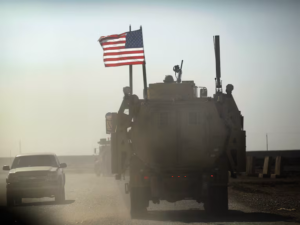
“A Highly Symbolic Withdrawal”: What Changes as the Anti-ISIS Coalition’s Military Mission in Iraq Ends
INTERVIEW. As the international coalition’s military mission against Islamic State in Iraq officially comes to an end on September 30, Adel Bakawan, director of the European Institute for Middle East and North Africa Studies, examines the announced departure of American troops. Interview by Julie Malo. Published on September 30, 2026, at 5:00 p.m. in Le Point.