
Israel Legislative Elections of 2026: Key Players, Alignments and Campaign Issues

Source: Wikimedia Commons

Author

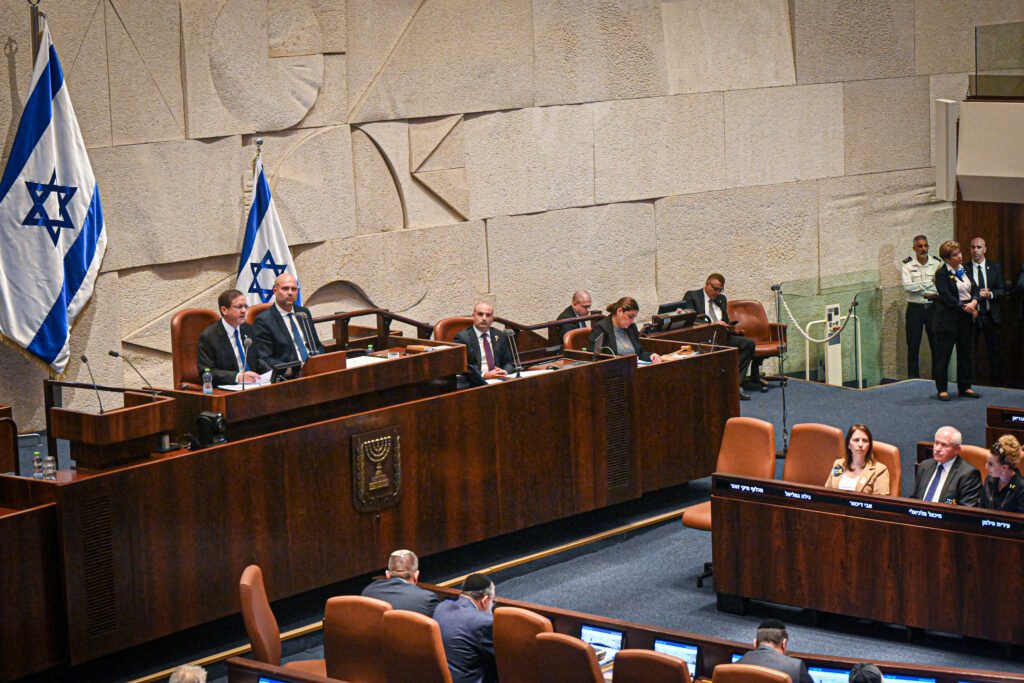
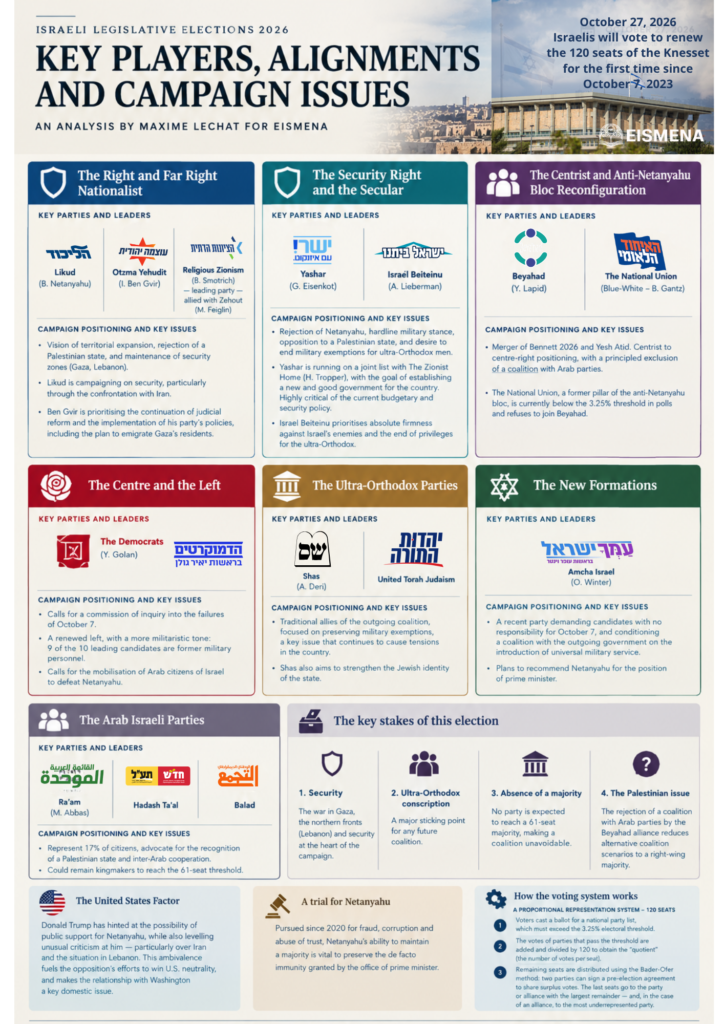
On 27 October, 2026 Israeli voters will go to the polls to elect the 120 members of the Knesset. This is the first election to be held since the attacks of 

7 October, 2023, imposing security as the major theme facing the open fronts. with security emerging as the dominant issue against the backdrop of various ongoing conflicts. Whilst no single party list can secure an absolute majority of 61 seats on its own, the campaign is characterized by major identity divisions, Benjamin Netanyahu’s legal future and strategic approaches to the Palestinian issue. 

This briefing note explains how the elections are conducted and maps out the realignment of political forces in the run-up to the vote. 
To cite this article: “Israel Legislative Elections of 2026: Key Players, Alignments and Campaign Issues” by Maxime Lechat, EISMENA, 10/09/2026, [https://eismena.com/news/israel-legislative-elections-of-2026-key-players-alignments-and-campaign-issues/].

The information and opinion contained in the articles on the EISMENA website are solely those of the author(s) and do not engage the responsibility of the institute.

Share this article

In Lebanon, the End of a Sense of Superiority? The Shiite Community Facing Hezbollah’s Decline

Long associated with military protection, considerable political influence and a particular status within Lebanon’s political balance, Hezbollah helped foster, among part of the Shiite community, a sense of power and pre-eminence. The destruction, the death of Hassan Nasrallah and the weakening of the movement are now calling this perception into question. During this research mission in Lebanon, field observations and interviews reveal a deeper transformation: a shift in the relationship with citizenship, power and the place of the Shiite community within the Lebanese state.

Read More »

Could Coalition Withdrawal Increase or Reduce Threats to Iraqi Kurdistan?

The full withdrawal of the U.S.-led Coalition on September 30 poses risks and new possibilities for the Kurdistan Region to improve relations with Iran. Until today, Iran has continued drone strikes in the Kurdistan Region, targeting Iranian Kurdish parties. The lack of air defenses and the failure by Baghdad so far to disarm Iranian-backed Iraqi armed factions, as previously promised by Baghdad, also expose the Kurdistan Region to risks. At the same time, the Coalition withdrawal gives Iran less excuses to attack the Kurdistan Region, and the Iraqi Kurds have also suggested to Iran to launch a peace process with Iranian Kurds to reduce Iranian attacks. The Coalition withdrawal makes Erbil more dependent on its relation with Baghdad and on its neighbours.

Read More »

Lebanon’s rejection of “resilience” qualification

As part of its research and analytical work on geopolitical transformations in the Middle East, EISMENA sent Lyna Ouandjeli, Head of Research and Strategic Partnerships to Lebanon for a week-long research mission from 22 to 29 October 2026. This first field report examines the rejection of the term “resilience”, increasingly imposed by media and political discourse on the Lebanese population.

Read More »

Related Articles

In Lebanon, the End of a Sense of Superiority? The Shiite Community Facing Hezbollah’s Decline

Lyna Ouandjeli

Could Coalition Withdrawal Increase or Reduce Threats to Iraqi Kurdistan?

Wladimir van Wilgenburg

Lebanon’s rejection of “resilience” qualification

Lyna Ouandjeli

Israel, Türkiye, and the Instrumentalization of the Armenian Genocide

Karen Hekimian

Can Israel’s Opposition Overcome Its Divisions to Oust Netanyahu?

Adel Bakawan

Netanyahu or Eisenkot: Different Leaders, Same Strategy?

Adel Bakawan