

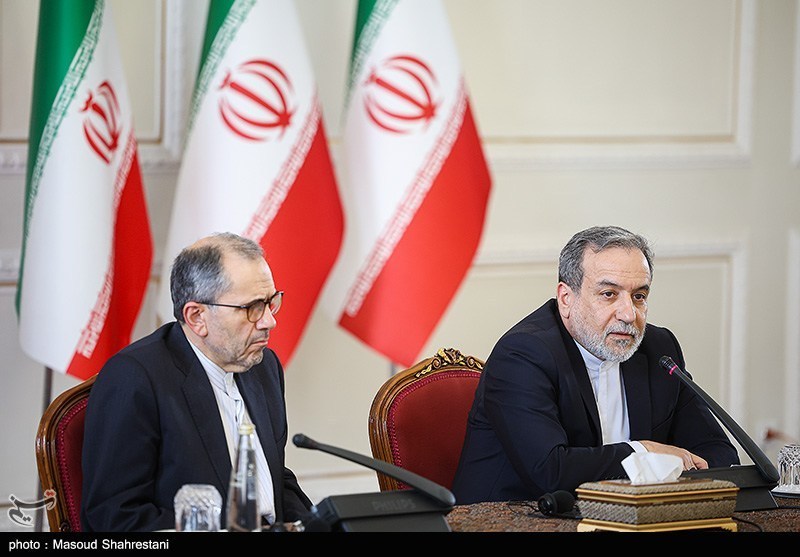

On June 13, 2025, Israel launched a military offensive against Iran, a conflict that lasted until June 24. Many observers have come to refer to it as the “Twelve-Day War”. Though brief, its impact on the region has been profound–and is likely to deepen over time. One of the most significant consequences lies in the disruption of Iran’s longstanding diplomatic approach, often symbolized by the metaphor of the carpet. In Iranian political culture, the carpet represents patience, intricacy, and strategic depth–qualities long associated with Tehran’s policy. As Iranian Foreign Minister once noted, the carpet is emblematic of the country’s diplomatic craftsmanship: a careful weaving of influence through knowledge-gathering, relationship-building, and strategic surprise. These attributes not only reflect national artistic pride but have also shaped Iran’s approach to regional politics.
However, the Twelve-Days War has delivered a severe blow to this metaphor. Like the Six-Day War of 1967, this conflict may mark a historic turning point, not just for Iran, but the whole region. For decades, Iranian deterrence doctrine was premised on the principle of “fighting abroad to avoid bloodshed at home,” a strategy famously articulated by Colonel Mojtaba Pashaie, former head of the Middle East Directorate at SAVAK, Iran’s intelligence agency during the pre-revolutionary regime. The war, which reached deep into Iranian territory, shattered this illusion of strategic insulation.
For decades, Iran shielded its territory from direct attacks by building a multi-layered deterrence strategy. This included a wide network of proxies, strategic alliances, dependent partners, sectarian affiliations, and parallel investments in missile and nuclear capabilities. These mechanisms were designed not only to project influence beyond Iran’s borders but, fundamentally, to safeguard the homeland. This architecture of deterrence granted Tehran the luxury of what came to be known as “strategic patience,” enabling it to engage in deliberate, long-term diplomacy—what many called “carpet diplomacy” for its complexity and calculated craftsmanship.
However, the moment the war breached Iranian territory, those layers proved insufficient. For the first time in decades, the specter of regime change resurfaced with real urgency—an outcome long feared in Tehran and deeply ingrained in the Islamic Republic’s strategic thinking. Supreme Leader Ali Khamenei has consistently interpreted U.S. foreign policy as a campaign to dismantle the Islamic regime. Following the 2003 U.S. invasion of Iraq, he articulated this view explicitly, declaring (6): “What the United States, which has been spearheading the aggression against our Islamic revolution, expects from our nation and government is submission and surrender to its hegemony, and this is the real motive for U.S. claims regarding weapons of mass destruction, human rights, or democracy.”
Therefore, when Khamenei read Trump’s tweet calling for “unconditional surrender,” it only confirmed his old view. Ostensibly, he was not surprised but rather angered, as he said that the “statement is too big for the US president’s mouth.”
Throughout the last two decades, Iran has been striving for regional hegemony. However, the war has drastically shifted as they are battling for survival now, a situation Iranians detest and which also displays their imperial inclination. Whether the regime survives or not, it is no longer the same. Today, Iran has no friends, no allies, and less influence in the Middle East. This loneliness felt stronger as Iran had told the Iraqi militias that “I starved the wolves and fed the dogs[1].”
According to Awus Al-Khafaji, an Iraqi religious leader, the metaphorical message indicates that Iran was disappointed with the Iraqi militia proxies and regretted that it had chosen to side with the Coalition Framework rather than Sadr. The governing elites in Iran realized they could not rely on any foreign power, not even their allies and proxies, to support them. This applies to the Iranian and the Kurdish political parties also. According to a knowledgeable source from Sulaymaniyah, Iran has requested that Kurdish political parties show their support for Iran. But even those with strong links to the Iranians have been reluctant to comply. This dynamic extended to other Iraqi proxies as well. Ultimately, it may not have come as a surprise to the Iranians, given that “strategic loneliness” has been a cornerstone of their security doctrine for the past four decades. During the eight-year war with Iraq, the Islamic Republic struggled to obtain arms, a traumatic experience that deeply shaped its strategic outlook. Yet in recent decades, Iranian leaders believed they had overcome that vulnerability.
Iranian expectations were shaken by the manner in which the war was fought. Iran traditionally viewed Israel as a vassal of the United States. That has been completely upended by the Twelve-Days War. However, that’s not all, as there is more to it. As Fawaz Gerges[2] argues in his latest book, The Great Betrayal: The Struggle for Democracy in the Middle East,“Because the Great Powers still control the global arena, it looks as if they will continue to play an important, though perhaps less overt, role in the Middle East. And because it is unlikely they will take unilateral action to dominate the region, they will be keen to work through local proxies. It is the age of empire by proxy in the Middle East and beyond.” According to him, “We are already seeing this happen in Syria, the Gulf, and Israel.” The United States has been trying to set up a new security architecture in the Middle East, where local actors take care of their security, with Washington leading from behind and providing intelligence, arms, and logistics, including an integrated regional air defense system. But even if and when local proxies are empowered to act on their behalf, this does not mean the empire by proxy will not take action to defend its vital interests.
This new reality grants U.S. proxies greater autonomy in their actions, backed by American support. As a result, the United States is seeking to redefine its role in the Middle East, -by avoiding unilateral interventions to maintain regional dominance.
How is this playing out? Israel remains the primary U.S. proxy in the region, and other states are expected to align with and reinforce this emerging framework. Within Israel, there is a growing support for this shift, especially as the country’s politics increasingly lean toward theocratic government at the expense of democratic freedoms. The rise of these religious parties, advocating for a “Greater Israel,” reinforces the warning made by Azmi Bishara that ‘the Arab Levant countries could become a zone of Israeli hegemony.’
A billboard was erected in Tel Aviv, featuring images of Arab leaders, including President Donald Trump, alongside Netanyahu, clearly reinforcing the emerging narrative. Unveiled on June 25 by the Abraham Alliance, the timing and figures depicted were highly symbolic The message was twofold: first, that a weakened Iran would pave the way for other Arab countries, including Saudi Arabia, Lebanon, and Syria, to align with the Israel-led regional order backed by the U.S.; second, it promoted the slogan “It’s Time for a New Middle East.” The course of the Twelve-Day War itself illustrates how this new proxy system operates. This happened while negotiation between the US and Iran was underway. This sequence of events not only confused the Iranian leadership but also left them feeling blindsided and humiliated. Together, these dynamics became a strategic component of the conflict. Given widespread American opposition to foreign military engagements, the empire-by-proxy model reflects internal shifts within the United States. At the same time, the international landscape is increasingly shaped by renewed great power rivalry. As a result, while U.S. policymakers seek to retain influence, they are reluctant to deploy troops abroad—especially as domestic priorities (Los Angeles).
The notion of a proxy is inherently ambiguous, encompassing various characteristics—such as the existence of a relationship, its overt or covert nature, the provision of material support, the conditions tied to that support, grassroots involvement, and the potential for escalation. Yet, despite these common elements, the U.S.-Israeli proxy relationship stands apart. This evolving dynamic threatens to unravel the metaphorical Iranian carpet. With the Iranian carpet no longer symbolizing the country’s governing approach, Iran now faces a series of difficult decisions. A weakened Iran could solidify Israel’s position—alongside Turkey—as one of the region’s dominant military powers. To remain relevant, Tehran must let go of outdated strategies. As one observer noted, the pressing question is no longer whether Iran still possesses strategic patience, but whether today’s world allows it to remain a viable strategy.
Notes
[1] Ibid.
[2] Fawaz A. Gerges. 2025. The Great Betrayal: The Struggle for Freedom and Democracy in the Middle East Princeton University Press, p. 290