


The U.S.-Israel war on Iran tested the Gulf Cooperation Council (GCC) in unprecedented ways. Prior to the conflict, the GCC had an optimistic vision of the future. In the aftermath, however, the organization must reassess its direction. First the war has halted, if not derailed, all the prewar megaprojects. Second, the GCC must redirect its priorities toward security imperatives, such as the development of an army (or mercenaries) and the acquisition of modern weapons, such as cheap, effective drones and counter-drones systems. Third, it must recalibrate its relationships with neighboring countries, such as Iran and Iraq. Finally, the GCC must learn to navigate the complexities and uncertainties of the region. To understand this shift, it is necessary to briefly revisit the condition of the Gulf states prior to the war.
Before the beginning of the conflict, the Arabian (or Persian) Gulf countries were undergoing a relatively stable period of transition. Unlike many historical transformations, this one was marked by a degree of economic and political comfort. In this case, the GCC states were moving from an oil to a post-oil economy model. From a peripheral actors to the central players in the Middle East and the global stage. When it comes to geopolitics and security, while they remained reliant on the US, they also sought to diversify their alliances by engaging with regional and international powers, such as Iran, Turkey, and China. Within this broader framework, some Gulf states also pursued normalization with Israel[1].
Another aspect from this shift is the Gulf countries increasingly behaved as regional powers. They consolidated a capitalist economic system domestically, they projected influence outward, becoming more assertive, and at times interventionist, in regional politics. Their engagement was driven by both internal rivalries within the GCC and by a shared objective of safeguarding existing political regimes from democratic movements and forms of political Islam, like those associated with the Muslim Brotherhood. In this regard, their role has often been compared to that of the Concert of Europe following the Congress of Vienna in the nineteenth century. In response to the revolutionary momentum of the Arab Spring, and the external pressures for democratization, GCC states actively sought to counterbalance uprisings in Tunisia, Libya, Egypt, and Syria, and earlier in Iraq.
When it comes to the economy, the GCC countries aim to utilize the oil and natural gas income to establish a post-oil economy. Rather than abandoning oil, they have sought to move up the value chain by industrializing natural resources. This strategy has enabled them to emerge as major producers in sectors, such as fertilizers, and more broadly food production. At the same time, they tried to become a hub for emerging sectors, mainly artificial intelligence, relying on relatively low-cost energy resources. Grasping the capitalist aspect of the GCC economies is essential to interpreting their regional role.. As Adam Hanieh puts it, Gulf states must be understood not simply as monarchies dependent on oil rents, but as dynamic capitalist actors shaping broader regional hierarchies. In addition to industrialization, the GCC countries aimed at becoming a global hub for the movements of goods, capital, labour, tourism, and data. In order to become so, they developed essential infrastructures such as ports and airports and integrated into the global trade system. A prominent example is Jebal Ali port, The largest man-made port in the world, which operates as a free trade zone model with highly flexible regulatory practices that facilitate a wide range of commercial activities.
Beyond these major achievements, , the Gulf countries have also pursued global visibility as a strategic objective. This has taken the form of iconic urban development, such as skyscrapers, as well as hosting major international events, including the 2022 FIFA World Cup in Qatar and the planned 2034 tournament in Saudi Arabia. Investments in global sports, particularly football, have further amplified their international presence. This visibility has served not only economic and reputational goals but also contributed indirectly to national security—an arrangement underpinned by U.S. security guarantees.
However, the war has exposed the vulnerabilities underlying these sources of strength. Indeed, as the US and Israel attempt to block Iran’s regional influence,the Gulf countries suddenly find themselves in a dramatically altered strategic landscape—one characterized by a shift from a surplus of policy options to a scarcity of viable choices. Their relationship with Washington is now under scrutiny. . Their support for Donald Trump may prove to have been a short-term calculation, as the political trajectory associated with Trumpism appears increasingly uncertain.
However, the debate within the Gulf now questions whether the US alliance constitutes an asset or a liability, especially after the failure to prevent the Iranian attacks, and the suspicions that U.S. policies may have contributed to regional escalation. Obviously, this is no more than an expression of frustration, they nonetheless signal a shift in perception. Despite these new found positions, the GCC has limited alternatives and is likely to maintain ties with Washington. , but the change of the relationship may originate from the US itself. Radical factions from both ends of the spectrum, both right-wing and left-wing political currents show growing reluctance toward sustained military engagement abroad. At the same time, managing relations with Iran remains a central challenge. Indeed, the GCC was originally established in 1981 largely as a response to the geopolitical upheaval triggered by the Iranian Revolution. It can be interpreted that today, the GCC neither seek a democratic Iran nor a powerful Iran. Their absence from the ongoing negotiations in Islamabad, has heightened concerns about their “marginalization” in shaping regional outcomes. As Ebtisam al-Ketbi of the Emirates Policy Center notes, “the absence of Gulf nations—among the actors most directly affected by the outcome—does not merely constitute a procedural gap. It raises deeper questions about whether any resulting arrangement can adequately reflect the complexity of regional security dynamics.”
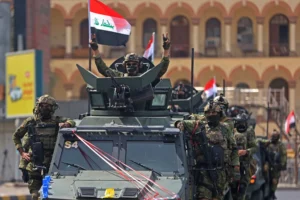
The consequences of the conflict extend beyond Iran to Iraq, which emerged during the war as part of the broader Iranian sphere of influence. The Iraqi government’s failure to condemn or prevent attacks on Gulf states has deepened mistrust. This places the GCC in a difficult position: Iraq remains a strategically important partner that cannot be ignored, yet it is also a source of persistent instability. As Muhanad Seloom observes, Iraq represents a partner the Gulf cannot afford to lose, but one it struggles to accommodate.
Taking in consideration these ongoing shifts and impacts on the future of the GCC, they face constrained and often undesirable strategic options. One emerging priority is the development, as mentioned previously, of domestic and regional defense industries capable of producing weapons rapidly, at a high scale, and at a low-cost. An approach that is reminiscent of the Ukrainian wartime model. Therefore, joint production may become an attractive option.
Syria is also likely to play an essential role in the evolving Gulf’s new security architecture. As the sectarian dynamics intensify, a Sunni-dominated Syria may be used to put pressure on Iraq and Hizballah in Lebanon in order to divert Iraq’s attention inward. Supporting a centralized state by the Gulf in Syria undermined the Kurds. As Kurds have no problem with Gulf countries, the Gulf’s enmity will not serve their interest in the coming unstable political and security landscape.
Notes
[1] Elham Fakhro. 2024. The Abraham Accords: The Gulf States, Israel, and the Limits of Normalization. Colombia University Press.