


Arguably, no other issue has captured global attention quite like the Israeli-Palestinian conflict. “For the Jews, the establishment of Israel was a Return, with all the mystical significance the capital R implies.” For the Arabs, it was another invasion,” wrote I.F. Stone in his 1967 review of Le conflit israélo-arabe, published by Les Temps Modernes in Paris. The names and history aforementioned show the longevity of the conflicts and the level of involvement of many in them. The past summits were never entirely about the Palestinians; they have always been about much more. Summit after summit, the realm of the conflict and those who are involved in it continues to widen.
The Palestine question, one of the most multilayered and intractable conflicts of the modern era, has been the subject of countless summits. Ironically, with each new round of diplomacy, Israel becomes stronger, the Palestinians weaker, and a viable solution even more elusive. As leading scholars on the issue argue, there is no solution capable of satisfying both sides. By now, both the one-state and two-state solutions appear unattainable, as Robert Malley argues. The latest Sharm el-Sheikh peace summit is, in many ways, Trump’s summit. Therefore, it requires a Trumpian reading. From the outset, Trump’s approach to the Palestinian question and the war in Gaza was never genuinely peace-oriented. In fact, the U.S. president was among those who legitimized the fringe of population displacement. On 4 February 2025, President Donald Trump declared to reporters that the United States would take control of the Gaza Strip, displace its Palestinian population, and exploit Gaza’s resources. This resulted in a project to “evacuate the Gaza population to Sinai,” released by Israel’s Ministry of Intelligence.
The document recommends that Israel “evacuate the Gazan population to Sinai” during the war: by establishing tent cities and new urban centers in northern Sinai, to absorb the expelled population. It further calls for the creation of “a sterile zone of several kilometers inside Egypt and not allow the population to return to activity or residence near the Israeli border.” At the same time, it urges that countries around the world, primarily the United States, be mobilized to facilitate the plan’s implementation. This was soon followed by the Gaza Riviera plan, a dystopian blueprint that envisioned a future clearly inspired by Gulf urbanism[1]. Moreover, maybe more importantly, the plan imagined Gaza as a vital node in the India-Middle East-Europe Corridor (IMEC), a project at the G20 summit in New Delhi in September 2023. All these developments form part of the Middle East that is emerging, or rather, the Middle East as some wish it to be. Together, they reveal a grim truth, in this envisioned order, there is no place for the Palestinian people. History shows that when a people become stateless, the future is easily imagined without them. In this sense, the Palestinian question mirrors the Kurdish issue. Indeed, both peoples rendered stateless through the modern colonial reorganization of the region.
The turning point came on September 9th, when Netanyahu ordered an airstrike on a residential building in Doha, aiming to assassinate four Hamas leaders then engaged in ceasefire negotiations. The strike was a characteristic of the Middle East to come, a region where Israel attacks when and where it wishes. As Netanyahu put it, the strike was not a failure, “it had one central message, and we considered it before we launched it, and that is, ‘You can hide, you can run, but we’ll get you’.” But the strike infuriated the Gulf countries, especially Qatar. However, more importantly, it struck something more sensitive than principle: the bottom line. The Trump family’s business ventures are increasingly intertwined with Qatari and Gulf capital. Trump ultimately pressured Netanyahu to deliver a scripted apology to Doha.
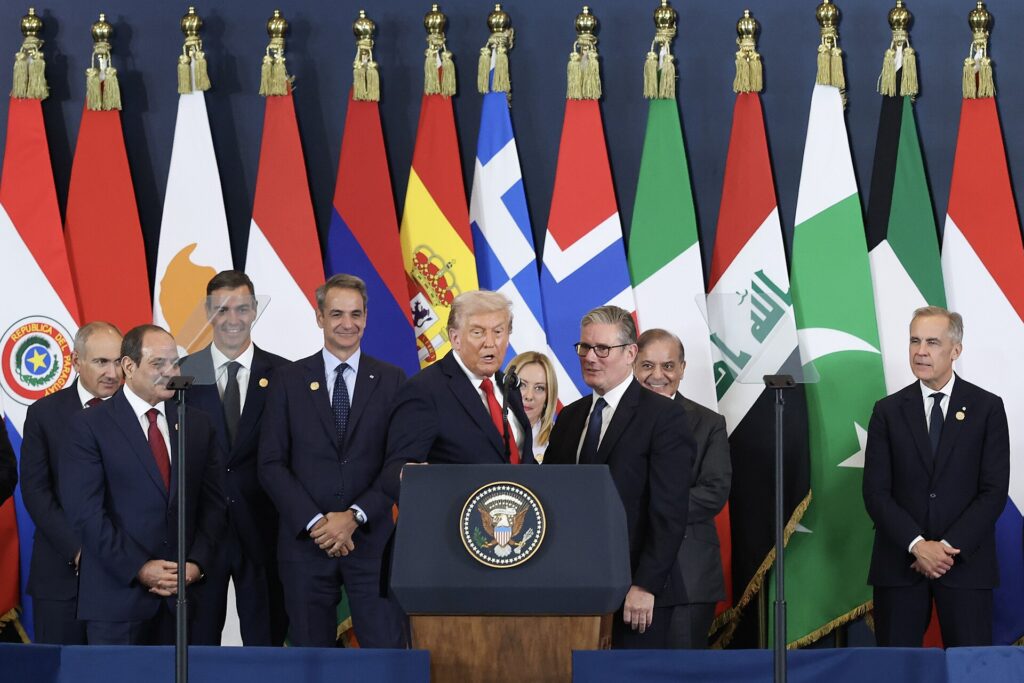
Against this background the Sharm el-Sheikh summit emerged. The summit was a grand spectacle in its own right. For the declining power of Egypt, it offered a rare moment of relevance, something both the country and its president desperately needed. For Trump, it served multiple purposes: a gesture of reconciliation with the Gulf countries, a reinforcement of personal and familial business ties, and, not least, a retort to the Nobel Peace Prize committee that declined to honor him. Nevertheless, the summit might have a number of other impacts on Palestinians and the rest of the region. It all depends on how it evolves. The participation of leaders and officials from 27 countries, including many Islamic countries in the Middle East and beyond, can be seen as a preparatory step toward managing relations with Israel and, potentially, paving the way for further normalization.
Here lies a paradox of the Gaza war: while the war might have isolated Israel internationally, it has simultaneously established its regional position. Should the war transition toward peace and reconstruction, a closer relationship between Israel and the six states of the Gulf Cooperation Council (GCC)—Saudi Arabia, Qatar, Kuwait, the United Arab Emirates, Bahrain, and Oman—will emerge. The two sides will be supported by the US and serve as pillars for the US hegemony in the region, especially as Washington pivots toward containing China. This dynamic would further strengthen Israel’s regional influence, especially as both Gulf countries and Israel will be nudged by America. While the decline of Iran is allowing this, the Turkish regional ambition is seen as a challenge. Israel will never accept a Turkish military presence in Gaza, especially given Ankara’s active involvement in Syria and the incompatibility between Turkey’s regional model and Israel’s strategic vision.
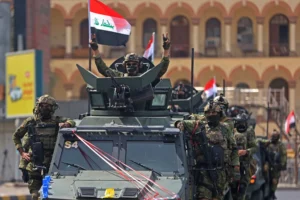
Interestingly, most of the countries have a clear aim and goal, whether participating in the summit or opposing it, except Iraq. The Iraqi position is intriguing. In 2022 the Iraqi parliament passed a law entitled “Criminalizing Normalization and Establishment of Relations with the Zionist Entity.” As the title suggests, even mentioning Israel by name is illegal. The law makes normalization with Israel a criminal act punishable by life imprisonment or death. It was largely a personal initiative of the influential Shia cleric Muqtada al-Sadr, who, while forming a coalition with Sunnis and Kurds (notably the Kurdistan Democratic Party), faced accusations from his Shiite rivals of intending to normalize relations with Israel. In response, he drafted the law and passed it in the parliament, as he had a majority. This episode epitomizes the dominance of personal reactions over institutional diplomacy in Iraq’s foreign policy.
As a result, Iraq’s regional position has become severely constrained. For example, the Iraqi prime minister could only attend the Sharm el-Sheikh summit once it was confirmed that the Israeli prime minister would not be present. Within this framework, Iraq cannot endorse a two-state solution nor effectively support the Palestinian cause, yet it also seeks to avoid direct confrontation with Israel. Consequently, Iraq finds itself unhappily isolated—caught in a gray zone between principle and pragmatism.
Notes
[1] Roberto Fabbri & Sultan Sooud Al-Qassemi. Urban Modernity in the Contemporary Gulf. 2022. Routledge.