

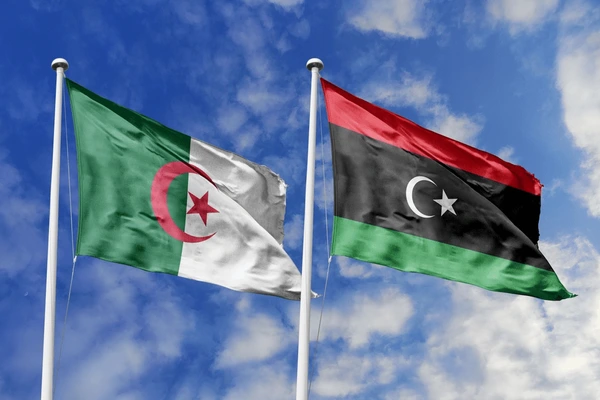

Contemporary history is marked by recurring forms of state violence, perpetrated in the name of sovereignty, security, or progress. Such violence, often legitimized through discourses of order or exceptional legal frameworks, takes multiple forms – military occupation, mass repression, ethnic cleansing, and genocide – yet all share a common logic: the elimination or neutralization of the Other, perceived as an ontological threat. This logic runs through colonial narratives, authoritarian regimes, and contemporary security systems alike, relying on mechanisms that combine material dispossession, symbolic erasure, and political repression. Two historical cases offer particularly revealing illustrations of this pattern: the French colonization of Algeria (1830 – 1962) and the Italian colonization of Libya (1911 – 1943). These configurations display common structural features: the denial of the right to self-determination, identity erasure (linguistic, cultural, territorial), the systematic criminalization of dominated populations, and the instrumentalization of law as a tool for legitimizing state violence. Each is grounded in a dual process of juridical de-subjectivation and political dehumanization, aimed at transforming the dominated people into a “non-subject” of rights, and thus a legitimate target. This study is based on the premise that such violence is not an anomaly of the international system, but rather an expression of its enduring historical architecture. Far from being remnants of the past, these forms of domination participate in a world order in which some lives are rendered expendable, some peoples disqualified as bearers of rights, and certain forms of violence neutralized through mechanisms of silence, denial, or impunity. From this perspective, colonization, occupation, and repression are not isolated episodes but manifestations of the same order – one structured by the hierarchization of lives, the asymmetric use of law, and the production of internal and external enemies. The central question of this article is therefore the following: how do these two regimes of violence participate in a shared process of destruction of dominated peoples, through the erasure of their political subjectivities, the manipulation of legal frameworks, and the normalization of state violence? By juxtaposing the Algerian and Libyan cases, this analysis seeks to illuminate structural continuities in the forms of domination, while accounting for the specific historical, political, and legal contexts of each. The argument unfolds in two main parts. First, it reconstructs the political and legal logics underlying the denial of the rights of peoples in each case, emphasizing the ways in which law was used as an instrument of control, fragmentation, and exception. Second, it examines the mechanisms of dehumanization and systemic criminalization through the discourses, security practices, and symbolic representations mobilized by the dominant states.
The Political and Legal Architecture of Denial: When Law Becomes an Instrument of Domination
When law serves the empire, it ceases to be a framework for justice and becomes a machine of negation. Colonial empires turned law into a language of domination, transforming exception into norm and injustice into legality.
Algeria as a Political and Legal Laboratory of Denial: Law in the Service of Impunity and Dispossession
The French colonial experience in Algeria (1830-1962) offers a paradigmatic example of how law can be transformed into a systematic instrument of domination. Rather than acting as a constraint on arbitrariness, colonial law was designed, adapted, and deployed to produce and maintain fundamental inequalities. Among its key features were the civil and political exclusion of the colonized, territorial appropriation for the benefit of European settlers, the pieds-noirs, the criminalization of resistance and the normalization of a permanent state of exception. Thus, the French military conquest of Algeria beginning in 1830 inaugurated a domination in which military violence and legal engineering were tightly intertwined. In its early decades, the French army conducted so-called “pacification” campaigns that amounted to wars of extermination, combining scorched-earth tactics, village destruction, mass executions, and deportations. The massacre of Ouled-Riyah in 1845 is emblematic: hundreds of people were asphyxiated in caves, a calculated method openly assumed by the army as a means of total submission. This violence was not accidental but constitutive of the colonial system, which persisted well into the twentieth century.
To such physical brutality was soon added a complex legal arsenal designed to consolidate colonial domination. In 1881, the Code de l’indigénat was established, formalizing an exceptional status reserved for “Muslim natives” and, to a lesser extent, Algerian Jews. The code created a parallel system of administrative justice that excluded Algerians from common law and subjected them to an arbitrary regime of collective punishments, detention without trial, travel restrictions, and arbitrary sanctions for minor infractions. This legislation instituted a two-tiered citizenship: full citizenship for pieds-noirs only, and a humiliating conditionality for Muslim Algerians. The colonial system relied on violent repression of any political dissent. After World War II, the brutality of the colonial state reached a new peak with the massacres of Sétif, Guelma, and Kherrata. Sparked by nationalist demonstrations violently repressed by French forces, these events left between 8,000 and 20,000 dead, depending on estimates. They exemplified the enduring colonial mode of governance founded on terror and the denial of Algerian political legitimacy.
During the War of Independence (1954-1962), this architecture of legal and political domination became even more rigid. The state of France established a permanent regime of exception, granting special powers to the army, instituting martial courts, and systematically employing torture, most famously in the case of Maurice Audin, a young communist mathematician who disappeared under torture in 1957. The massacre of October 17, 1961, in Paris extended this colonial violence even into metropolitan territory: on that day, a peaceful demonstration organized by the National Liberation Front (FLN) against a discriminatory curfew imposed on Algerians was brutally suppressed by the Paris police under Prefect Maurice Papon. Between 30 and 300 demonstrators were killed, many thrown into the Seine river or arbitrarily arrested, in what remains one of postwar Europe’s worst police repressions. Long obscured or denied by French authorities, this event perpetuated the same logic of impunity applied in Algeria: law was manipulated to legitimize a racist and violent system that denied the rights of the colonized, even in the metropole. The Paris massacre thus reveals the continuity of a juridical and political architecture of exception grounded in racism and dispossession, as well as the limits of the French Republic’s universalism when confronted with colonial populations.
Italy in Libya: Law as a Tool of Colonial Domination
In Libya, the architecture of colonial law took shape in even more brutal form, reflecting the intensity of Italy’s late but fervent imperial ambitions. As noted in Le Monde, Italy’s “collective amnesia” surrounding its colonial past in Libya, Somalia, and Ethiopia continues to obscure the magnitude of this violence. From Italy’s invasion of Ottoman Libya in 1911 on, the massacre of Shar al-Shatt near Tripoli marked the extreme brutality of the Italian conquest in Tripolitan. Yet it was only under the fascist regime of Benito Mussolini (1922-1945) that the colonial Italian regime established a genuine government of exception aimed at destroying the Libyan resistance. Between 1929 and 1934, the Libyan genocide unfolded, claiming between 20,000 and 100,000 lives through mass deportations, concentration camps, the use of chemical weapons (notably mustard gas), and the execution of both combatants and civilians. Generals Rodolfo Graziani and Pietro Badoglio were among the principal architects of this repression. Nearly half of the population of Cyrenaica (eastern Libya) was deported or interned. The concentration camp of Suluq alone held over 20,000 detainees during the “pacification” campaigns in Libya.
Italian colonial law in Libya functioned as a permanent state of war – an open-ended exception with no distinction between combatants and civilians – founded on the principle that “natives” were enemies to be neutralized. This repressive and racialized system coincided with a settler colonial project aimed at relocating peasants from central and southern Italy to Libya while denying political rights to Libyans. As historian Gilbert Meynier observed in Italiani, brava gente?, “the law of summary executions and massacres, the rule of deportations” became the norm.
Thus, in both Algeria and Libya, the occupier’s law, the logic of exception, and the colonial enterprise merged to negate the political and legal subjectivity of the dominated populations.
Mechanisms of Dehumanization and Systemic Criminalization: Transforming the Other into an Ontological Threat
In both contexts, state violence extended beyond physical coercion to include systematic strategies of dehumanization aimed at dehumanizing and collectively criminalizing the dominated population. This process was essential to legitimizing repression and normalizing dispossession, turning the Other not merely into a political adversary, but into an existential danger, a “non-subject” upon whom violence could be legally and morally inflicted.
Algeria: Stigmatization and Repression Justified through Otherness
In Algeria, the colonial construction of the “Muslim Indigenious” as inferior, irrational, and dangerous was central to the apparatus of France. Colonial discourse essentialized the Algerian population as inherently hostile, undisciplined, and “savage,” thereby justifying extreme violence. Systematic criminalization of political and social resistance took the form of exceptional tribunals, collective punishment as well as arbitrary detention and expulsion. The militarization of law and racial stigmatization combined to render all opposition both illegitimate and threatening in the eyes of the colonial state. Dehumanization extended to cultural and symbolic dimensions: the Arabic language, religious practices, and local customs were marginalized or banned. The population’s subjugation also passed through control of the body, exemplified by the “unveiling” campaigns targeting Muslim women as instruments of domination and forced social transformation. The Kabyle people of northern Algeria were subjected to specific mechanisms of dehumanization and criminalization. Though sometimes portrayed by colonizers as more “openly civilized” because of certain social and linguistical structures, their persistent resistance and attachment to Amazigh culture led to their stigmatization as inherently rebellious or “barbaric.” Their uprisings were criminalized and met with targeted military operations. Colonization thus operated through both racial essentialization (Arabs versus Kabyle) and internal division, aggravating tensions and fracturing any potential unity among the colonized. Conversely, the Arab majority was depicted as deeply religious, irrational, and resistant to European “civilization.” The Code de l’indigénat of 1881 imposed upon Muslims (not distinguishing between Arabs and Kabyle) a set of restrictive rules, such as bans on leaving one’s commune without permission, collective punishments, and arbitrary arrests, thus reinforcing their status as inferior and deviant subjects in the eyes of the colonial state. By combining physical violence and cultural erasure, the colonial system legitimized a structural inferiority that shaped every interaction between colonizers and colonized.
Libya: Total War Against a Colonized People
In Libya, the criminalization of the Other reached an extreme level, both in scale and systematicity. Initially animated by a logic of traditional imperialism, Italian colonialism was soon fascized after the 1920s, abandoning any distinction between resistance fighters and civilians and perceiving the entire Libyan population as a threat to be eliminated. The indigenous population became the incarnation of an “internal enemy”, which served as justification to militarize the entire territory and use extreme violence. From 1911 on, Italy’s colonial project, dubbed the “Fourth Shore” (Quarta Sponda), sought to transform Libya into an extension of Italian territory, aspiring the relocation of between 500 thousand and one million Italian settlers, most of which from the working classes of southern Italy, searching for land and upward mobility. This endeavor was driven by a rhetoric of “return”, justified by an imperial mythology invoking the legacy of the Roman empire and the supposed “return” of Libya to Italian civilization. It was also accompanied by a rhetoric of victimhood, presenting colonization as a symbolic compensation for Italians marginalized and mistreated abroad. However, this imperial myth soon collided with fierce Libyan resistance, particularly in Cyrenaica and Fezzan, thwarting Rome’s expectations of a swift and glorious conquest. Faced with this resistance, especially between 1915 and 1918, a period during which Italy only managed to maintain its hold on the ports of Tripoli, Derna, and Benghazi, Rome was forced into negotiations with certain local leaders, even granting limited citizenship to some Libyans. Yet this concession was merely a brief respite: the colonial power, frustrated by its inability to pacify the territory, soon shifted to a strategy of total war, based on systematic repression and the annihilation of all forms of resistance. The use of chemical weapons, the systematic destruction of villages, mass deportations and the creation of concentration camps became instruments of a policy of silent extermination. From 1929 to 1934, under Marshal Rodolfo Graziani, about half of the population of Cyrenaica was displaced or interned. A 270-kilometer barbed-wire barrier was erected along the Egyptian border to isolate the Senussi resistance[1] and starve entire tribes by cutting them off from supplies, but also to prevent them from fleeing to Egypt. Documentation also holds proof of toxic gas attacks, especially during campaigns against the tribes of eastern Libya. In such a system, repression no longer targets only resistance fighters, but the entire society. Women, children, and the elderly were treated as complicit or potential support in rebellion. By the end of the colonization, an estimated 10 percent of Libya’s 1.5 million inhabitants had been exterminated. Here, colonial law became an instrument of erasure, turning the denial of the Libyan people’s very existence into an administrative norm.
Conclusion
The comparative analysis of Algeria and Libya reveals that state violence is never an isolated phenomenon but a structured system combining physical repression, legal erasure, and symbolic domination. In both cases, colonial regimes transformed law into an instrument of control and legitimization of violence, imposing exceptional frameworks that criminalized resistance and constructed the Other as an ontological enemy. In Algeria, the Code de l’indigénat, mass massacres, and the War of Independence illustrate the normalization of exception and repression, while the 1961 Paris massacre demonstrates that such mechanisms extended beyond colonial territories into the metropole itself. In Libya, Italian colonization, with its concentration camps, mass deportations, and use of chemical weapons, embodied a logic of total war aimed at the systematic annihilation and erasure of a people’s political, cultural, and territorial identity. Both these experiences reveal that state violence rests on a combination of militarization, juridicization, and essentialization of the Other, producing regimes of impunity and enduring forms of dispossession and marginalization. Examining Algeria and Libya side by side highlights the structural continuity of colonial domination, in which law, memory, and resistance are manipulated to sustain a hierarchized order of lives. Understanding these logics sheds light on the historical mechanisms that continue to shape power relations, governance strategies, and the persistent difficulty of fully recognizing the rights and dignity of dominated peoples.
Notes
[1] The Senussi resistance refers to the resistance movement against foreign colonization and occupation in Libya, primarily in the early 20th century.