
Academic and journalist Akeel Abbas delves into the implications of President Bush’s 2003 order to protect Iraq’s Development Fund and its recent extension by President Biden. He also addresses the challenges Iraq faces without these orders, the impact of U.S. presence, China’s reaction, Iraqi funds in the U.S., and Iran’s influence.
Can you contextualise the significance of Bush’s 2003 order and Biden’s extension in 2024, considering military, geopolitical, security, economic, political and social dimensions?
Dr. Akeel Abbas: To fully understand the significance of these executive orders, we need to look at their historical context and impact across multiple dimensions.
During the 1990s, Iraq faced several executive orders under the Clinton administration that imposed severe sanctions. These sanctions were a part of the broader international effort to contain Iraq following the Gulf War. In 1996, the Oil-for-Food Programme was introduced, which allowed Iraq to sell oil under UN supervision. The revenue was deposited into a fund, which Iraq could then use to buy essential goods, thus mitigating the humanitarian impact of the sanctions.
Following the overthrow of Saddam Hussein in 2003, the situation changed dramatically. UN Security Council Resolution 1483 transferred control of this fund to the newly established Iraqi government and lifted many of the sanctions. At this time, Iraq was under the administration of Paul Bremer, representing the Coalition Provisional Authority. The 2003 executive order by former President Bush was critical in protecting Iraqi assets from legal claims, thereby enabling the reconstruction of Iraq without the immediate threat of asset seizure by creditors.
Iraq faced two main types of economic challenges due to the sanctions. First, there were significant sovereign debts accrued from the Iraq-Iran War and the Gulf (Kuwait) War. The US played a crucial role in alleviating these debts through the Paris Club agreement, where most countries agreed to release Iraq from official sovereign debt, with notable exceptions being Kuwait and Saudi Arabia. This was essential for giving Iraq an economic restart.
Second, there were numerous debts claimed by companies that had won judgments in their national courts against Iraq for losses incurred during the Gulf War. These judgments often went uncontested by Iraq due to the lack of legal representation, resulting in substantial awards to these companies. The 2003 executive order protected Iraqi funds from being used to settle these judgments, allowing the country to focus on its reconstruction.
The 2003 executive order and its subsequent renewals, including Biden’s extension in 2024, are crucial for maintaining Iraq’s political and security stability. Protecting Iraqi funds from seizure allows the government to use these resources for rebuilding infrastructure, funding essential services, and maintaining security. Biden’s extension of the executive order in 2024 is significant because it continues to provide the necessary legal framework for protecting Iraqi assets from international claims. This ongoing protection is crucial for Iraq’s economic recovery and stability. It allows the Iraqi government to focus on internal development and rebuilding efforts without the immediate threat of asset seizure due to old debts. Moreover, the extension reflects the continued US commitment to supporting Iraq’s sovereignty and stability. By ensuring that Iraqi funds remain protected, the US helps Iraq manage its financial obligations more effectively and maintain progress in its reconstruction and development efforts. The routine renewal of this order underscores the importance of stability and support for Iraq in the broader context of US foreign policy and international relations
In terms of Iraq’s national debt and obligations to international firms, what challenges arise if the orders are not renewed?
Dr. Akeel Abbas: If the executive orders are not renewed, Iraq faces several significant challenges related to its national debt and obligations to international firms. Firstly, we lack full accuracy regarding the exact number of cases and their details, as Iraq needs to hire an international firm to catalogue these cases and understand the extent of the national court orders. This could involve a significant number of cases, potentially totalling up to 2 billion dollars, though the exact amount is less critical than the implications of having accounts frozen until these debts are paid.
Without the protection offered by the executive orders, Iraq would need to engage in complex institutional work, empowering certain bodies within the government to handle these cases. International institutions would likely need to be involved, as Iraq currently lacks the capacity to negotiate these settlements independently.
One approach could be to negotiate settlements where Iraq offers creditors a portion of the claimed amounts, such as 40%, to resolve the cases and move forward. This method has been used in other contexts where countries have resolved outstanding debts post-sanctions.
If the US does not renew the protection, it would likely cause a significant economic shock. Freezing just two Iraqi accounts could have a ripple effect, spreading fear throughout the economy. The uncertainty and disruption could deter economic activity and investment, creating a broader economic crisis.
No one can predict the exact impact, but it would undoubtedly hurt Iraq’s economy, financial standing, and overall stability. The shockwaves from such a disruption would take time to absorb, during which Iraq would have to identify the full extent of its obligations. The immediate effect would be a severe blow to Iraq’s financial and economic systems, exacerbating existing challenges and potentially destabilising the country further.
To what extent does U.S. presence in Iraq impact the latter country’s development, and do you perceive it as beneficial or detrimental?
Dr. Akeel Abbas: The U.S. presence in Iraq has a significant impact on the country’s development, and overall, I perceive it as beneficial, particularly in terms of financial protection. The U.S. protection ensures that Iraq’s funds are safeguarded from international claims, allowing the country to engage in deals with companies and facilitate transactions through the financial system. This protection is crucial for Iraq’s economic stability and development.
However, this raises another important question: is Iraq truly achieving economic development? Is it engaging with legitimate companies and building something substantial? Unfortunately, the answer is not entirely positive. Iraq is not fully capitalising on this order. The protection acts as a sword hanging over Iraq’s head—while it provides immediate security, it also highlights the country’s vulnerability and dependency.
If Iraq were to fall out of favour with the U.S. and lose this protection, the consequences could be severe. Therefore, while the U.S. presence and the executive orders are beneficial in the short term, they also underscore the need for Iraq to strengthen its own economic systems and reduce its reliance on external protections. Ideally, Iraq should develop to the point where it no longer needs this safety net, ensuring its development is sustainable and self-reliant.
How is China reacting to the extension of the U.S. order, and what are the potential benefits for China in terms of their development projects in Iraq?
Dr. Akeel Abbas: China’s reaction to the extension of the U.S. order is likely to be strategically measured. While the U.S. order protects Iraq’s funds and provides stability, China’s approach to doing business in Iraq is different from that of the U.S. China generally finds it easier to navigate the system in Iraq compared to U.S. companies. U.S. firms operate under strict regulations, including stringent anti-corruption laws that prevent them from engaging in bribery. In contrast, Chinese companies do not face the same level of regulatory scrutiny regarding corruption, which can make them more attractive to certain political classes in Iraq that prefer less oversight and more flexibility.
One of Iraq’s failures has been poor management of contracts, which has led many Western companies, particularly in the oil sector, to leave the country. These companies expected significant returns from Iraq’s oil reserves, but due to mismanagement and unmet expectations, they moved out, leaving room for smaller companies and other foreign investors. The Chinese have capitalised on this opportunity, stepping in where Western companies have withdrawn. They bring political influence and a development model similar to what they have implemented in Africa. This often involves substantial investment in infrastructure and development projects, creating dependency and sometimes leading to what is referred to as a “debt trap.” China’s potential benefits in Iraq include long-term access to natural resources, particularly oil, and increased political influence in the region. By filling the gap left by Western companies, Chinese firms can secure lucrative contracts and establish a strong presence in Iraq’s development projects. This not only boosts China’s economic interests but also enhances its geopolitical standing in the Middle East.
However, while this might be beneficial for China, it poses risks for Iraq. The reliance on Chinese investments and the associated political influence can lead to a dependency that might limit Iraq’s economic sovereignty in the long run. The “debt trap” scenario seen in other countries where Chinese investments are prevalent could also become a concern for Iraq if not managed carefully.
Can you explain the different types of Iraqi money in the US and how this initial involvement might actually be helpful for Iraq, especially considering its financial ties with countries like China?
Dr. Akeel Abbas: The situation involves several technicalities regarding the control and flow of money. Essentially, there are two types of funds related to Iraq that are controlled in the U.S.:
- Federal Reserves: Many countries, including Russia and China, place their reserve funds in the U.S. due to the legal protection and leverage it offers. This provides security and stability for those reserves under U.S. jurisdiction.
- Oil Money: When Iraq sells oil, the proceeds are deposited into an account in New York. This money is then transferred to the Central Bank of Iraq. Although these funds originate from Iraqi oil sales, they are initially managed within the U.S. financial system, providing a level of protection. From the Central Bank of Iraq, payments can be made to various countries and companies through mechanisms such as the Trade Bank of Iraq (TBI).
Chinese companies, which have substantial investments in Iraq, do not typically have court orders against Iraq that would result in account freezes. Therefore, the flow of money from oil sales is relatively smooth, moving from U.S.-controlled accounts to Iraqi control, and then distributed as needed. If the U.S. executive order were to be removed or expire, there could be complications. While there might not be immediate issues if there are no outstanding court cases or claims, the absence of this protection could pose risks. Funds could potentially be frozen if new claims arise or existing ones are enforced. This could disrupt the flow of money and impact Iraq’s ability to pay its obligations, including those to Chinese companies.
In summary, while the funds from oil sales do eventually go to Iraqi accounts, the initial control and protection by the U.S. play a crucial role in safeguarding these assets. The involvement of the U.S. ensures a level of stability and legal protection that benefits Iraq’s financial operations and its ability to fulfil international obligations.
Was the U.S presence in Iraq predominantly military, or did it extend to other levels such as economic and political engagements?
Dr. Akeel Abbas: The U.S. presence in Iraq initially encompassed military, economic, and political engagements. However, over time, the U.S. ambitions and involvement have shifted.
- Military Presence: Initially, the U.S. presence was predominantly military. The invasion in 2003 aimed to overthrow Saddam Hussein and establish security. However, the prolonged military engagement led to significant costs and casualties, contributing to a sense of “historical fatigue” among Americans.
- Economic Engagement: Alongside the military efforts, the U.S. aimed to rebuild Iraq’s economy. The goal was to create a vibrant democracy with a strong economy that could become a reliable Western ally. This involved significant financial investments in infrastructure, governance, and economic reforms.
- Political Engagement: Politically, the U.S. hoped to establish a democratic government in Iraq. However, these efforts faced numerous challenges. Over time, Iraq has come under significant influence from Iran, complicating U.S. objectives. The political landscape in Iraq is sectarian and often leans towards anti-U.S. and pro-Iran sentiments.
- Current U.S. Strategy: The U.S. ambitions have lessened considerably. Initially, the goal was to create a strategic ally, but Iraq has increasingly become viewed as a burden. The current U.S. strategy focuses on preventing Iraq from becoming a breeding ground for terrorist groups like ISIS and Al-Qaeda, and curbing Iranian influence. While ISIS no longer has a significant foothold in Iraq, the U.S. uses sanctions and political pressure to maintain influence and support the Iraqi national government, except for periods like under the Abdul-Mahdi administration, which had closer ties to Iran.
The executive order protecting Iraqi funds is one tool among many that the U.S. uses to exert influence. Overall, the U.S. has reduced its ambitions from building a fully developed democratic ally to preventing Iraq from destabilising further and falling entirely under Iranian control.
Considering the U.S. was the leader of the international coalition in Iraq from 2014 to 2017 and is about to leave Iraq, will the U.S. maintain a presence there, or do they have other plans?
Dr. Akeel Abbas: The U.S. presence in Iraq is set to undergo changes, but it will not be a complete withdrawal. The international coalition, which the U.S. led, will continue to exist, though its operations may be based outside Iraq since there is no pressing need for its presence within the country following the liberation of Mosul and the dismantling of terrorist networks. Despite the formal end of major military operations, the U.S. troops will remain in Iraq under different designations. This change in nomenclature is more of a political decision, reflecting a compromise between the U.S. and the Coordination Framework governing Iraq, which includes Iranian-aligned groups. The agreement allows U.S. troops to stay in a non-combat role, providing training and support, while these groups agree not to target U.S. forces.
This arrangement ensures that the U.S. maintains a strategic foothold in Iraq without appearing to have an overt military presence. The continued U.S. presence is part of a broader strategy to balance influence in the region, particularly against Iranian interests. Recent events, such as the assassination of a key militant leader, have shown that the U.S. is willing to respond forcefully to threats, reaffirming the deal and maintaining stability.
In summary, while the U.S. will reduce its visible military footprint in Iraq, it will continue to have a presence under different terms. This ongoing presence is a strategic move to ensure regional stability, support the Iraqi government, and counteract Iranian influence.
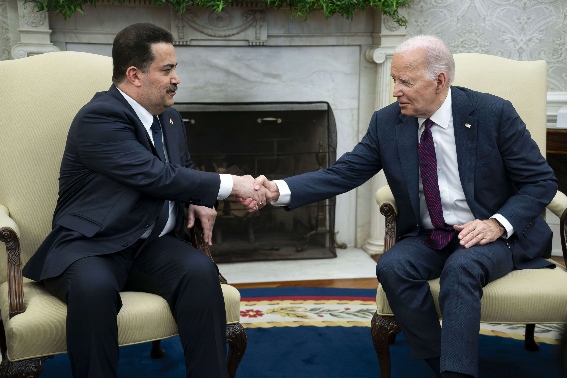
Do you believe the extension of the mandate speaks to how Washington perceives Iraq’s fragility, and if so, what insights can you share in this regard? (Sudani-Biden meeting)
Dr. Akeel Abbas: Yes, the extension of the mandate indeed reflects Washington’s perception of Iraq’s fragility. The rhetoric used by the Iraqi government during the Sudani-Biden meeting highlights a commitment to activating the broader Strategic Framework Agreement, which has largely been dormant aside from its military aspects. This agreement encompasses seven sectors, but only the military component has been actively pursued.
For Iraq to benefit fully, significant effort needs to be put into activating the entire agreement. This includes engaging with U.S. companies and ensuring follow-through on various initiatives. A recent example is the Iraqi delegation’s extended visit to the U.S., which involved meetings with American companies to invigorate the strategic partnership.
However, the real challenge lies in the necessary reforms. For the strategic agreement to be truly effective, Iraq would need to implement substantial reforms that could disrupt the status quo. These reforms would involve dismantling entrenched systems within the state, which currently benefit from state revenues through patronage and bribery. Such changes would face significant resistance from those who benefit from the existing system.
Therefore, while the extension of the mandate underscores Washington’s concern about Iraq’s stability and the need for continued support, there is scepticism about whether the necessary reforms can be realised. The fragility of Iraq’s political and economic systems makes it difficult to implement changes that would disrupt established power structures. The extension is a precautionary measure, ensuring that the U.S. continues to support Iraq through this period of instability, but the success of these efforts heavily depends on Iraq’s willingness and ability to undertake deep and often painful reforms.
What are your ideas and expectations toward Iran? Will the renewal of the order affect the relationship between Iraq and Iran? Also, regarding President Raisi, will the new president follow the same path of maintaining close ties with Iraq?
Dr. Akeel Abbas: Iran has a vested interest in the continuation of the U.S. order protecting Iraqi funds. This is because a stable Iraq that can meet its financial obligations is beneficial to Iran. If Iraq were to experience severe financial instability, it would become a burden on Iran. Therefore, Iran prefers that Iraq remains functional, allowing it to serve as a market for Iranian commodities, which, while not competitive by international standards, are sold easily in Iraq due to the accommodating political class.
Regarding President Ebrahim Raisi, it is unlikely that his administration will deviate significantly from Iran’s established policy toward Iraq. Iranian policy in Iraq is primarily driven by the Revolutionary Guards and guided by the Supreme Leader, rather than the presidency. While the president has a voice in the Supreme National Security Council, the overarching strategy towards Iraq remains consistent and is not subject to significant change with a new president. Iranian leadership, regardless of who holds the presidency, views Iraq as a critical area of influence. The continuation of the U.S. order ensures that Iraq can continue to pay its debts, including those to Iran, which helps maintain economic and political stability beneficial to both countries. Therefore, the renewal of the order is expected to positively influence the relationship between Iraq and Iran, aligning with Iran’s interest in a stable and economically viable Iraq.
What are your opinions on this order? Should it be continued or dissociated?
Dr. Akeel Abbas: Ideally, the need for this order should come to an end. Iraq should prioritise settling all outstanding cases and establish a normal operating system where it doesn’t rely on external protections. The current situation, where Iraq depends on this order for financial security, is unsustainable in the long term. Iraq’s failure to address these issues reflects a lack of prioritisation and a failure to recognize that the need for this protection may not be permanent. Continuing to rely on this order creates a lopsided situation where Iraq’s financial stability is contingent upon external factors, primarily U.S. policy.
However, the reality is that the U.S. is likely to want to continue this order as a pressure tool. It has used this order in the past to exert influence, and it will likely want to maintain that leverage in its relationship with Iraq. Therefore, while the ideal scenario would be to dissociate from this order and address the underlying issues, the practicalities of geopolitics may necessitate its continuation for the foreseeable future.