

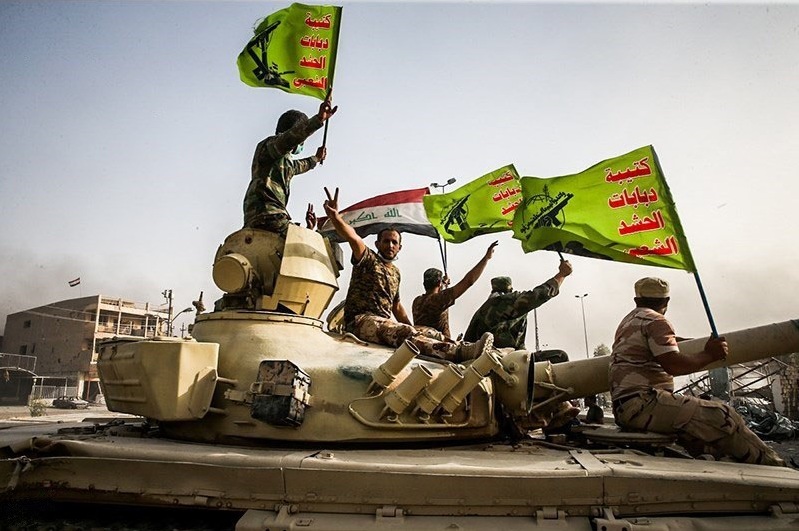

In a context of growing regional tensions and internal political reconfiguration in Iraq, the question of dismantling Iraqi militias, particularly the Popular Mobilization Forces (PMF), has emerged as a major strategic issue and has revived the debate over Iraqi state sovereignty. The regional environment in the aftermath of 7 October, marked by a reconfiguration of Iran’s Axis of Resistance, has further increased the centrality of the issue of state control over pro-Iranian armed groups in Iraq, driven jointly by the tightening of U.S. demands and by an Iraqi electoral calendar that intensifies pressure on the central authorities.
Although all non-state armed groups operating in Iraq are theoretically concerned by this issue, U.S. pressure in practice primarily targets pro-Iranian Shiite militias, especially those integrated into the PMF. These groups are perceived both as the main vector of Iranian influence in Iraq and as the last structured bastion of the Axis of Resistance. The PMF constitute a specific institutional framework, encompassing some, but not all, militias present on Iraqi territory, alongside other non-integrated Shiite armed groups as well as Sunni, tribal, or local militias. Therefore, while the question of the state’s monopoly over violence arises in general terms, it is primarily focused on these partially institutionalized pro-Iranian militias, which possess political wings and benefit from a certain degree of social legitimacy.
In this context, the renewed debate over the dissolution of armed groups and their full integration into the state implies a process requiring the disappearance of their autonomous structures, the surrender of weapons, and their conversion toward strictly political activity.
Why, then, is this issue accelerating today? What structural and conjunctural obstacles hinder its implementation? And to what extent is the dismantling of the PMF both feasible and genuinely relevant in light of Iraq’s stability and its regional balance of power? To address these questions, this analysis examines the extent to which objective, structural, and conjunctural conditions allow for the effective realization of such dismantlement and, beyond mere feasibility, interrogates its broader relevance. It also seeks to identify the factors that have accelerated the debate over disarmament and state consolidation, particularly U.S. demands and the current Iraqi politico-electoral context, within the framework of a broader reflection on state sovereignty in Iraq.
The Dismantling of the PMF: Objective, Structural, and Conjunctural Constraints and the Relevance of the Debate
The 2003 US invasion, marked by the dissolution of the army, de-Baathification, and the outsourcing of security, deeply destabilized the Iraqi state and created the conditions for lasting fragmentation, redefining sovereignty and the monopoly of violence in post-2003 Iraq. In this context, Iran gradually strengthened its influence by relying on Shiite politico-military networks, which were consolidated after 2014 with the creation of the PMF.
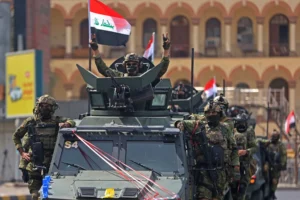
Established in 2014 to fight the Islamic State, the PMF quickly emerged as a central actor in Iraq’s politico-socio-security landscape. Their role in the defeat of the jihadist organization initially granted them popular legitimacy, although this legitimacy has since largely eroded. They constitute a heterogeneous set of militias with diverse ideological affiliations, primarily Shiite but also Sunni and drawn from minority communities, continuing a security sector historically shaped by parallel structures, a dynamic that intensified after 2003, paving the way for a structured militia order. Law No. 40 of 2016 institutionalized the PMF by placing them under the direct authority of the Prime Minister, without integrating them into the sovereign ministries, thereby enshrining the existence of a parallel armed force. Although formally incorporated into the state, they retain significant organizational, political, and ideological autonomy, with their own administration, budget, and chain of command, which considerably limits any centralized control. While certain units cooperate with the Iraqi Security Forces, others pursue internal or transnational agendas, notably pro-Iranian ones. This institutional ambiguity durably erodes the boundaries between state and non-state actors, especially as the PMF have developed quasi-state attributes and locally perform security, administrative, and social functions sometimes perceived as more effective than those of the state.
The structural and functional hybridity of the PMF reflects a fragmented Iraqi power system, in which the boundaries between official institutions, armed militias, and political parties are structurally blurred. Although Iraqi legislation prohibits the militarization of the political field, this requirement has remained largely theoretical: the main militias enjoy institutional political representation. The Badr Organization, Asa’ib Ahl al-Haq, and Kata’ib Hezbollah are respectively linked to the Badr Party, Sadiqoun, and Hoquq, pillars of the Shiite Coordination Framework, alongside Nouri al-Maliki’s Dawa Party, itself strongly influenced by Faleh al-Fayyadh, head of the PMF Commission. This entanglement enables the PMF to extend their military power through institutional means, influence key state decisions, and obstruct any reform of the security sector.
The question of the feasibility and relevance of militia disarmament and reintegration cannot be posed in classical terms in a context where, in Iraq, “the state becomes militia, militias become the state, and they own the state[1].” The PMF cannot be understood either as simple auxiliary forces or as peripheral non-state actors: they constitute a fluid, adaptive ensemble deeply rooted within power structures, connecting political leaders, senior officials, economic networks, religious figures, and civil organizations. Far from being mere armed groups, they constitute a fully-fledged institution, exercising local authority, controlling formal and informal economic networks, and fully participating in political life. They are therefore not an anomaly, but a central actor in the reconfiguration of the Iraqi state, persistently blurring the boundaries between institutional legality and factional autonomy, national sovereignty and transnational logics.
The repeated failures of approaches based on sanctions, legal reforms, or military intervention stem less from their implementation than from an inadequate reading of the Iraqi state, which operates as a distributed network of power rather than as a centralized state. Any sustainable reform must recognize that the PMF are both a product of the system and one of its actors: excluding them or attempting to neutralize them in isolation cannot yield a viable solution. A structural approach is therefore necessary, grounded in a fine-grained understanding of networks and their interconnections, as well as in a regulated recognition of the PMF as a security institution subject to rules of governance, transparency, and accountability. More broadly, any credible reform must address the Iraqi state system as a whole and coherently articulate political and security dimensions, starting from the state’s actual functioning rather than from abstract normative models.
The relevance of the debate on disarming Iraqi militias must also be assessed in a regional contextual environment marked by recent tensions in Syria, notably between Damascus and the Kurds of Rojava, in territories administered by the Kurdish-dominated Syrian Democratic Forces (SDF) in northeastern Syria. The jihadist threat has not disappeared and is showing signs of localized resurgence, while the transfer of Islamic State-affiliated detainees from Syria to Iraq increases pressure on an already fragile security, judicial, and penitentiary system. In several peripheral and disputed areas, Iraqi regular forces do not, in the short term, possess sufficient capacities to fully replace the territorial control, local intelligence, and rapid-response mechanisms ensured by certain PMF components. There is therefore an objective risk in considering the dismantling of Iraqi militias under the current security conditions.
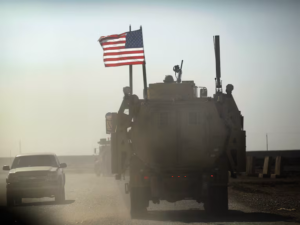
Under these circumstances, a rapid dismantling would create the risk of a security vacuum that could be exploited by jihadist networks, while weakening the state’s ability to manage detention and surveillance of fighters transferred from Syria. The issue is therefore not the principle of dismantlement as such, but its temporal inadequacy given the current level of threat and the insufficiency of state substitution capacities. The question also arises as to the opportunity of increased confrontation with militias that contributed to the defeat of the Islamic State alongside the international coalition, in a context marked by a persistent risk of jihadist resurgence in Iraq and Syria, particularly sensitive given that US forces have left Iraq, except for the contingent stationed at the Harir base in Erbil, whose withdrawal is scheduled for November 2026.
Acceleration of the Debate on the Dismantling of the PMF: U.S. Pressure, Iraqi Actors’ Positioning, and the Electoral Calendar
Before 7 October 2023, U.S. attention focused primarily on militias posing a direct threat to American interests. The rise in regional tensions, amid growing confrontation with Iran and Washington’s determination to dismantle the Iranian “axis of resistance,” gradually expanded the scope of this pressure, which shifted toward the Iraqi government, armed militias, and their institutional political representatives.
As the timetable for the withdrawal of U.S. troops from Iraq advanced, Washington’s demands hardened, and the dismantling of militias, together with the reaffirmation of the state’s monopoly over the use of force, became implicit conditions of this process. Although the withdrawal, initiated in 2023, was announced as completed by mid-January 2026, with the exception of the Kurdistan region, the militia issue remains largely unresolved and continues to be the object of sustained U.S. pressure. This pressure materialized throughout 2025 through a series of political and institutional signals: warnings during bilateral communications between American and Iraqi officials, calls to exclude six Iraqi armed groups from the future government, the designation of four additional pro-Iranian militias as Foreign Terrorist Organizations (FTO), and repeated field visits by Colonel Stephanie Bagley, the U.S. embassy’s defense attaché, notably during the attacks against energy infrastructure in Iraq and the Kurdistan region in 2025.
The tightening of the American position reached its peak with threats to restrict, or even suspend, Iraq’s access to its oil revenues, as well as references to targeted strikes; the memory of the assassination of Qassem Soleimani and Abu Mahdi al-Muhandis in 2020[2] remains, in this respect, a reminder of the credibility of such threats. The financial leverage linked to oil revenues[3] thus constitutes a major instrument of pressure, taken very seriously in Baghdad given its potentially severe economic consequences. This pressure was further institutionalized through the adoption of the National Defense Authorization Act (NDAA) for fiscal year 2026 (S.2296), passed in October 2025 and enacted in late December. The legislation conditions U.S. security assistance on effective control over armed militias, providing for the freezing of 50% of the funds allocated to the Office of Security Cooperation in Iraq (OSC-I) until the Secretary of Defense certifies credible progress, thereby shifting the burden of proof onto Baghdad. The release of these funds rests on three cumulative criteria: the verifiable reduction of the operational capabilities of non-integrated pro-Iranian militias through a publicly verifiable DDR (Disarmament, Demobilization, and Reintegration) process; the effective strengthening of the Prime Minister’s authority and operational control over all security forces; and the opening of investigations and judicial proceedings against armed actors operating outside the official chain of command and involved in attacks or illegal activities. This last requirement, particularly controversial, explicitly aims to end the impunity of factions responsible for attacks against coalition interests and diplomatic missions, while formally designating Iraqi Shiite militias as “Iranian proxies.”
Under this heightened pressure, pro-Iranian Iraqi militias are confronted with a structural dilemma: an increasing incentive for state integration in order to preserve their political and institutional gains, combined with a persistent reliance on armed force, perceived as indispensable to the protection of their strategic interests. In this context, disarmament is widely understood as an existential risk, likely to entail a loss of political, economic, and security influence.
However, consensus remains lacking among armed groups and their institutional political representatives. Several major factions, notably Asa’ib Ahl al-Haqq, Harakat Ansar Allah al-Awfiya’, Jund al-Imam, Kata’ib Sayyid al-Shuhada’, and Kata’ib al-Imam ‘Ali, have shown, to varying degrees, openness to discussions involving cooperation aimed at restricting weapons in favor of the state. By contrast, the hardline position embodied by the most radical factions, particularly Kata’ib Hezbollah and Harakat al-Nujaba, has reaffirmed its opposition to disarmament, or has strictly conditioned it on the full restoration of Iraqi sovereignty, understood as the prior withdrawal of all foreign forces from Iraqi territory.
This stance[4] rests on an expansive definition of foreign interference, which now includes certain Iraqi security actors perceived as aligned with Washington, notably the Kurdistan peshmerga forces. These factions increasingly portray them as indirect extensions of the American military presence and accuse them of contributing to an erosion of Iraqi sovereignty. Nevertheless, the withdrawal of U.S. forces by mid-January 2026 is expected to weaken this argument and to strengthen, at least partially, the central government’s room for manoeuvre in negotiations.
In parallel, these armed groups possess structured political channels within the Coordination Framework, the main Shiite parliamentary bloc. The legislative elections of 11 November 2025 strengthened this institutional presence, with significant results for the al-Sadiqoun Alliance (linked to Asa’ib Ahl al-Haqq, 27 seats), the Badr Party (18 seats), and the Hoquq Party (linked to Kata’ib Hezbollah, 6 seats). Washington, however, has demanded that these groups, now all designated as FTOs, be excluded from the process of forming the future government through their political wings. The electoral success of these militia-affiliated formations helps explain the more conciliatory stance adopted by some of their leaders in response to US demands, as they seek to convert electoral capital into lasting political legitimacy.
In this context, several officials[5] have publicly affirmed their principled commitment to the state’s monopoly over arms. For these factions, the key challenge is to continue expanding their influence through recognized institutional channels, relying on their direct or indirect parliamentary representation within the Coordination Framework and positioning themselves within a gradual process of political normalization grounded in electoral legitimacy.
On 20 December 2025, the head of the Supreme Judicial Council, Faïq Zidan, intervened publicly, stating that the leaders of the armed factions had agreed to coordinate their efforts in support of strengthening state control over weapons and had accepted to cooperate on the sensitive issue of the state’s monopoly over the use of force. He thanked them for adhering to his recommendations, calling for respect for the rule of law, the restriction of arms to state authority, and the prioritization of strictly political action. This statement immediately drew criticism from US officials, notably Representative Joe Wilson, who denounced what he described as the Iraqi judiciary’s complacency toward armed factions, arguing that an independent judicial system could not thank armed groups for following its advice without revealing the existence of enduring institutional ties with militia actors. A few days later, at the end of December 2025, even as US Special Envoy Mark Savaya pointed to diplomatic signals interpreted as moving toward disarmament, a mass mobilization[6] of the PMF’s grassroots base in Baghdad contradicted these interpretations: several thousand-armed men and supporters publicly reaffirmed their refusal of any disarmament process despite international pressure.
During the commemorations of the assassination of Qassem Soleimani and Abu Mahdi al-Muhandis in early January 2026, Faïq Zidan articulated a discursive framing aimed at legitimizing the principle of the state’s monopoly over arms without undermining the symbolic and political value of the sacrifices made by fighters. Disarmament was presented as a moral continuation of their past commitment, and the transition from armed struggle to the rule of law as a national duty adapted to Iraq’s current challenges. By invoking the memory of martyrs and recalling victories against the Islamic State, this discourse combined recognition of past sacrifices with a reaffirmation of the imperatives of national unity, sovereignty, and state reconstruction grounded in law, justice, and development. The central argument thus rests on the idea that fidelity to past struggles now requires the consolidation of state authority, rather than the perpetuation of weapons outside the state.
Prime Minister Mohammed Shia al-Sudani adopted a comparable stance, praising the fight against terrorism led by the two commemorated figures, while recalling that restricting arms to the authority of the state constitutes a sovereign Iraqi choice, free from any external interference, and one of the structuring pillars of the government’s program, in accordance with the orientations of the country’s highest Shiite religious authority.
This attempt at institutional reframing was, however, immediately challenged by the armed factions. In a joint statement, the Iraqi Resistance Coordination Committee, bringing together Kata’ib Hezbollah, Asa’ib Ahl al-Haqq, Kata’ib Sayyid al-Shuhada’, Kata’ib Karbala, Ansar Allah al-Awfiya’, and Harakat al-Nujaba, reaffirmed the sacred nature of the weapons of resistance in a country still considered occupied, rejecting any discussion of disarmament as long as the territory has not been fully liberated from all forms of occupation. This position highlights an apparent reversal by certain groups such as Asa’ib Ahl al-Haqq, Harakat Ansar Allah al-Awfiya’, and Kata’ib Sayyid al-Shuhada’, which had previously signalled a more open disposition toward negotiation and compromise.
Three months after the legislative elections of 11 November 2025, Iraq formally adhered to the constitutional timetable in its initial parliamentary phase, as Sunni blocs quickly agreed on the appointment of the Speaker of Parliament, Haibat al-Halbousi, and his two deputies, Adnan Faihan and Farhad Amin Salim Atrushi. This apparent institutional fluidity nevertheless masks persistent fault lines, as illustrated by the firm US opposition to the nomination of Adnan Faihan as First Deputy Speaker, given his position as leader of the al-Sadiqoun bloc, the political wing of Asa’ib Ahl al-Haqq, the main pro-Iranian Shiite militia integrated within the PMF.
In this already polarized context, the designation on 24 January 2026 by the Coordination Framework of former[7] Prime Minister Nouri al-Maliki, a controversial figure, as candidate to head the next government, following Mohammed Shia al-Sudani’s withdrawal, crystallized tensions with Washington. The United States threatened to withdraw all political, economic, and security support to Iraq should Maliki return to power, citing his past record deemed detrimental and his proximity to pro-Iranian militias, warnings immediately rejected by Maliki and several political figures as foreign interference and a violation of Iraqi sovereignty. The choice of Maliki, surprising for a position traditionally assigned to an administrative manager rather than an autonomous political decision-maker, nevertheless reflects the desire to impose a strong personality in a context of political and security recomposition, his ties to Shiite militias having likely weighed heavily given the risks of jihadist resurgence and the transfer of thousands of jihadist prisoners to Iraqi prisons.
The electoral process nevertheless remains blocked by the postponement of the designation of the President of the Republic[8], an indispensable step for appointing the Prime Minister and forming the government, an impasse linked to internal divisions among Kurdish parties over the choice of the presidential candidate. This situation further complicates government formation, all the more so as Washington has stated that no armed group would be tolerated within the future cabinet and has transmitted a list of fifty-eight members of parliament associated with the Islamic Republic of Iran, accompanied by threats of sanctions targeting the Iraqi state, including its oil revenues, and a suspension of all cooperation should any of these deputies obtain a ministerial portfolio.
By blocking the formation of the government, the postponement of the presidential designation effectively suspends any major institutional decision, particularly regarding the dismantling of the militias. The ambiguity maintained by the militias and certain Iraqi officials thus appears as an instrument for buying time in the face of predominantly American pressure, both until the government is formed and in anticipation of the 2026 US midterm elections, which may reduce the urgency attached to this issue. The removal of the American envoy Mark Savaya further weakens Washington’s ability to translate its position into an immediate constraint, reinforcing a status quo that provides the PMF and Iraqi elites with strategic room to delay radical decisions, preserve their influence, and manage the file according to their own timetable, while maintaining the appearance of compliance with institutional and international obligations.
Conclusion: What Does the Debate over the Disarmament of Iraqi Militias Reveal?
The debate on the disarmament of Iraqi militias reveals less the existence of an isolated hybrid actor than the deeply hybrid nature of the Iraqi state itself. The PMF participate in the reconfiguration of state structures by integrating into institutions while simultaneously circumventing traditional bureaucratic logics, durably obscuring the boundary between state and non-state actors. Their relative autonomy, their institutional political representation, and their transnational connections make them both a vector of Iranian influence and the product of a hybrid organization shaped by the fragmentation of the politico-security field, inter-institutional competition, and clientelism. Far from constituting an anomaly, the PMF constitute a mode of governance in which sovereign functions are shared, contested, and co-managed among multiple centres of power, rendering the classical opposition between state and militia ineffective. The analytical challenge is therefore not to decide between the statization or autonomy of the PMF, but rather to understand how they concretely redraw the contours of sovereignty within a post-conflict state functioning as a distributed network of power. Any durable reform cannot be limited to the militias alone: it must address the entire state apparatus, grounded in an analysis of the connections between actors competing for power, and in an understanding of Iraq as it actually operates, rather than according to a normative ideal of centralized sovereignty.
This observation helps shed light on the deeply contradictory positions and discourses formulated in the name of Iraqi sovereignty, often in a largely dogmatic manner. On the one hand, the United States exerts increasing pressure on the Iraqi state, combining political injunctions and explicit threats in order to impose the dismantling of militias, particularly pro-Iranian ones, while displaying an unrestrained form of interference. This posture is accompanied by a recurrent invocation of the legitimate monopoly of violence and the sovereignty that the Iraqi state is supposedly required to recover, even as Washington does not hesitate to threaten reprisals, notably in the event of Nouri al-Maliki’s return to the post of Prime Minister, given his proximity to the Islamic Republic of Iran and pro-Iranian factions. From 2025 onward, the United States has thus sought to re-engage with the Iraqi file not with the aim of rebuilding a centralized state, but rather in a logic of containing Iranian influence within an institutional system that it itself has contributed to fragment since 2003. Iraqi sovereignty can therefore hardly be reduced to the dismantling of the PMF alone, insofar as the observed American interference contradicts this stated ambition and militias are now deeply intertwined with state structures. The place of pro-Iranian armed groups thus fits less within a project of sovereign reconstruction than within an American strategy primarily aimed at limiting Iranian influence and the politico-security role of these factions, with the dismantling of the PMF appearing as an instrument of Washington’s regional policy, consistent with its demands toward Tehran, including the end of Iranian support for so-called “resistance” armed groups across the region.
In this context, the lack of consensus and the contradictory discourses of militia leaders and several political figures reflect a strategic ambiguity likely maintained by certain factions and Iraqi elites in order to buy time in the face of predominantly American pressure, both until the formation of the government and by placing the militia issue within a broader political horizon, notably in anticipation of the November 2026 U.S. midterm elections, which could alter the priority attached to this question. This strategy could nevertheless quickly reach its limits given recent developments in Iran, where protests and their repression have heightened attention on pro-Iranian militias. Any cross-border action could then be interpreted as direct support for Tehran, exposing Iraq to regional escalation. Moreover, even unsubstantiated American accusations claiming that Iran would rely on Iraqi militias to repress demonstrations could generate concrete political effects, fuelling arguments in favour of disarmament and contributing to the legitimization of potential targeted strikes. At the same time, the central argument of the hardline Shiite militias, conditioning any negotiation over their future on the departure of foreign forces, has lost much of its relevance since the completion of the U.S. troop withdrawal in January 2026, with the exception of Kurdistan, and the transfer of the concerned bases under the control of Iraqi security forces. In this context, the prospect of dismantling and fully integrating Iraqi armed groups remains largely indeterminate. Several trajectories are possible: total demilitarization accepted by all factions, fragmentation between radical and pragmatic currents, or uncontrolled escalation. The most likely scenario, however, remains an intermediate path in which militias adopt a rhetoric centred on national sovereignty, avoid cross-border operations, and accept, at least partially, a form of state supervision.
The persistent gap between diplomatic discourse in favour of disarmament and operational constraints on the ground thus underscores the fragile and incomplete character of the transition toward a security system fully integrated into the state. The transfer of thousands of jihadist prisoners to Iraqi facilities further exacerbates these tensions, increasing security risks and highlighting the limits of a rapid militia disarmament in a context of renewed jihadist threats.
Finally, while the weakening of the axis of resistance, particularly Hamas and Hezbollah, as well as the fall of the Assad regime have led Tehran to recognize the operational limits of its allied factions and to rely more heavily on its own internal deterrence, it remains unlikely, if not unfeasible, that its ties, at least ideological ones, with these factions, particularly Iraqi ones, will disappear. This remains true even as these groups become increasingly anchored in a specifically Iraqi military and political reality, shaped by structural and conjunctural constraints as well as by their own strategic interests. This evolution instead tends to push Tehran to diversify and simultaneously strengthen its strategic rapprochements with major powers such as China and Russia.
Notes
[1] Adel Bakawan lors d’une table ronde « Les interferències externes i el nou context regional », 3ᵉ Escola d’Estiu Orient Mitjà (Barcelone), modérée par Xavier Cutillas, le 9 juillet 2025.
[2] The commander of Iran’s Qods Force, Qassem Soleimani, and the deputy head of the PMF, Abu Mahdi al-Muhandis, were killed in a targeted U.S. airstrike in Baghdad on 3 January 2020, as they were leaving the Iraqi capital’s international airport.
[3] The United States has de facto exerted decisive influence over Iraq’s oil revenues denominated in dollars since the 2003 invasion. Iraq’s oil income is deposited in an account held by the Central Bank of Iraq at the Federal Reserve Bank of New York. Although this account legally falls under the sovereignty of the Iraqi state, Washington retains supervisory authority and a lever of control over the financial flows transiting through it. Oil accounts for approximately 90% of Iraq’s state budget.
[4] In mid-December, Kata’ib Hezbollah thus stated that national sovereignty, internal security, and the end of any foreign interference constituted prerequisites for any discussion of the state’s monopoly on arms, reaffirming the right to resistance as long as forces described as occupying remained present.
[5] Qais al-Khazali (Asa’ib Ahl al-Haqq / the Sadiqoun Bloc) thus stated that his group adhered to the principle of restricting arms to the state, claiming that it had now become an integral part of it—a position also supported by Harakat Ansar Allah al-Awfiya’ and Kata’ib al-Imam ‘Ali.
[6] The gathering aimed to honour fighters killed in U.S. strikes, displaying funerary symbols and chanting slogans hostile to the United States and Israel.
[7] It would be his third term: Nouri al-Maliki served as Prime Minister from 2006 to 2014, then as Vice President from 2014 to 2015, and again from 2016 to 2018.
[8] In accordance with the Constitution, members of parliament must elect the President of the Republic within 30 days of the first parliamentary session, which took place on 29 December 2025; the election should therefore have occurred before 28 January 2026. The Constitution, however, provides neither legal sanctions nor an automatic mechanism in the event that this deadline is exceeded. Once elected, the new president then has fifteen days to appoint the candidate of the largest parliamentary bloc, the Coordination Framework, to form a government, which will have thirty days to establish a cabinet and present its program for a confidence vote.