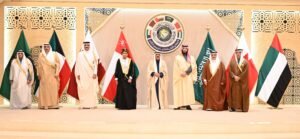



Before 7 October 2023, the Middle East was characterised by a geopolitical distribution between a Shiite power, Iran, and a Sunni power, Saudi Arabia. This configuration did not aim to redraw the region’s territorial borders, as had been the case in 1916 with the agreements concluded between the British Mark Sykes and the Frenchman Picot, but rather sought to delineate spheres of influence. An Iranian sphere, in which the model of the militia order (state militias, the militia-state) prevailed, and a Saudi sphere, dominated by a model of authoritarianism based on security, stability and economic development, yet devoid of democracy[1]. Between 2003 and 2023, these two models clashed with particular violence across all domains—security, military, diplomatic and economic—through their proxies in Iraq, Lebanon, Syria, Yemen and even Palestine. At certain moments, these confrontations directly reached the national territories of Saudi Arabia and Iran[2].
However, twenty years later, it is clear that both countries have undertaken a strategic reassessment and realized that neither can fully impose its dominance over the entire Middle East, given the multiplicity and diversity of obstacles. Following several preliminary meetings held in Oman and Iraq, a strategic agreement was concluded on 10 March 2023 in Beijing between Tehran and Riyadh[3]. According to this agreement—which I describe as a pax irano-saoudiana—Iraq, Lebanon, Syria, Yemen and Gaza fall within the sphere of influence of the Iranian model, while the Gulf countries (United Arab Emirates, Qatar, Bahrain, the Sultanate of Oman and Kuwait), Egypt, Jordan and the West Bank are attached to the Saudi model. Between these two poles stood Turkey and Israel. These two countries, each according to its own approach, aligned more closely with the Saudi logic and did not view the agreement between Tehran and Riyadh unfavorably. Israel was already benefiting from the Abraham Accords with part of the Arab world[4], while Turkey had already normalized its relations with Saudi Arabia, the United Arab Emirates and Egypt[5].
1. A Moment of Structural Rupture
On 7 October 2023, the entire context changed radically. On that day, more than two thousand Hamas fighters attacked Israel, collectively massacred 1,200 people and took 250 individuals hostage. It was the first time since the founding of the State of Israel that Arab forces had managed to wage war on territory administered by Israel. The shock defied imagination. The Israeli army required seventy-two hours to reorganize and prepare for total war[6]. In Israel’s collective memory, 7 October is perceived and conceptualized as a second Holocaust. For many, there existed that day the possibility that the State of Israel—as a political entity, population and territory—might disappear[7], and that the Israeli national narrative might be erased forever. In the eyes of Israelis, the main actor responsible for 7 October is not Hamas, but the Islamic Republic of Iran, Hamas being seen merely as the executor of plans conceived, organised and decided by the ayatollahs in Tehran[8]. In reality, not only is there no tangible evidence of the Islamic Republic’s direct involvement in the operations of 7 October, but moreover Tehran had no interest in provoking a regional war that would, in all likelihood, structurally weaken it and cause it to lose a significant part of its dominance over the Middle East.
Nevertheless, it is interesting to note that more than the question of actual responsibility, what matters is Israel’s designation of the “designer and decision-maker”. In other words, the central question is not whether Iran was involved or not, but whether Israel believes it was. And on this point, the Israeli response is unambiguous: for Israel, Iran is the primary responsible actor[9]. Thus, 7 October marks the end of one world and the birth of another in the Middle East. In this new environment, not only is the golden age of the militia order coming to an end, but the very existence of the Islamic Republic is seriously called into question. While, for the time being, the Iranian regime still retains the possibility of survival, it must be acknowledged that its domination over Arab countries (Iraq, Lebanon, Syria, Yemen and Palestine) has been profoundly weakened. Moreover, its ambitions to acquire nuclear weapons and to maintain its ballistic arsenal are severely compromised[10].
2. What Is the Militia Order?
Before addressing the decline of the militia order in the Middle East, it is necessary to define its contours. The militia order cannot be reduced to a mere military organisation operating on the margins of the state. It is a complete politico-social system, articulated around a project of total resocialisation. Its primary vocation is to impose a way of life entirely shaped by militant ideology, in which no domain—economic, social, cultural or political—escapes its influence. This project aims to produce a “new man”, whose loyalty, discipline and total adherence to the cause become fundamental identity markers, to the point where belonging to the militia takes on an existential dimension[11]. The militia order unfolds in territories where the state is weakened or failing, exploiting sovereignty vacuums to impose its own rules. This phenomenon goes beyond a purely military logic and forms part of a broader recomposition of modes of governance in the Middle East. Militias do not merely control physical space through force; they penetrate public institutions, shape the economy, redefine social and cultural norms, and impose an alternative political narrative. In doing so, they construct a parallel state—sometimes better structured than the official state—and in certain cases, a genuine counter-state[12].
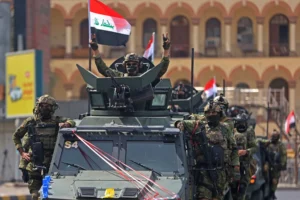
The grip of the militia order rests on a dual strategy. On the one hand, it relies on organic integration into the social fabric through charitable associations, schools, hospitals and religious structures. These mechanisms serve to reinforce popular support while maintaining material and symbolic dependence on the organisation. On the other hand, it maintains a security and military apparatus capable of deterring any internal contestation and projecting its force beyond its areas of implantation. This combination of social power and coercive capacity creates an autonomous ecosystem that is difficult to dismantle without a profound transformation of the political and security environment. Historically, the militia order consolidated in the wake of prolonged conflicts and chronic state crises. Lebanon, Iraq, Syria and Yemen offer emblematic examples. In each of these contexts, the militia presents itself as the guarantor of communal security in the face of real or perceived threats, while exploiting state weakness to expand its sphere of action. Gradually, it becomes not only an indispensable actor in the security arena, but also a centre of economic, diplomatic and ideological power.
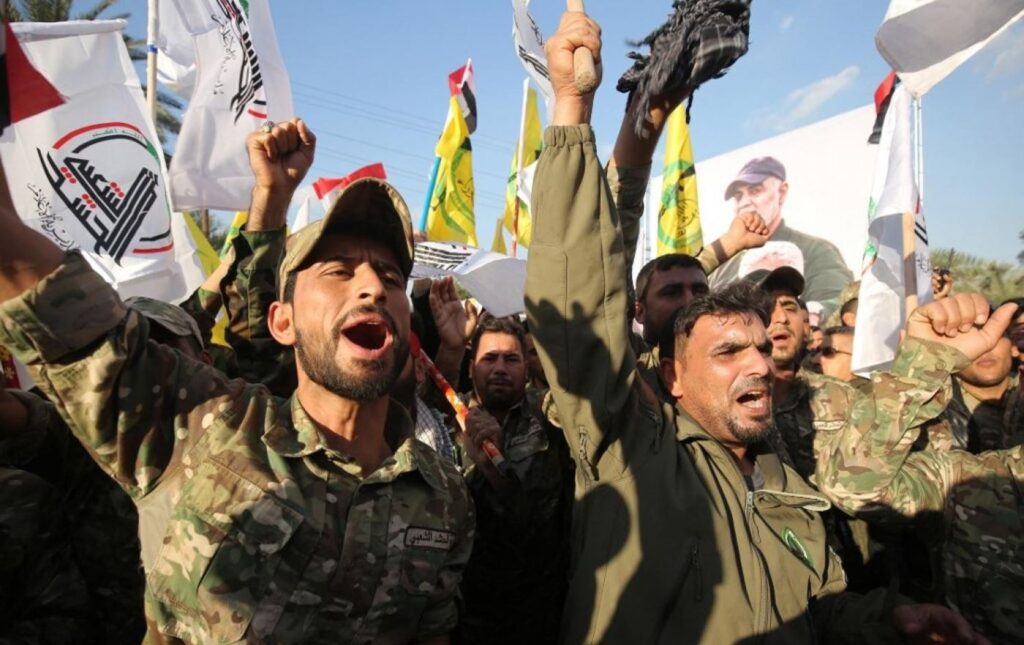
This model, which long enabled organisations such as the Lebanese Hezbollah or the Iraqi Hashd al-Chaabi to expand their influence, rests on a fragile equilibrium. It presupposes both tacit tolerance or partnership with certain state elites, and a regional context in which armed confrontation remains limited to contained phases. Recent upheavals—particularly after 7 October 2023—now undermine the very foundations of this order. The erosion of the protective narrative, the rise of international pressure and the transformation of the military balance of power are forcing militias to rethink their model, or risk seeing the edifice they patiently constructed collapse.
3. From the Militia Order to the State Order? An Uncertain Transition
After the fall of Bashar al-Assad in Syria in December 2024 and the twelve-day war (12–24 June) against the Islamic Republic of Iran—which resulted in the major destruction of its nuclear programme and ballistic arsenal—the Lebanese Hezbollah and the Iraqi Hashd al-Chaabi face questions with tragic implications. Have they understood and internalised the profound structural transformation of the Middle East after 7 October? Have they grasped that, if they do not inscribe themselves within the state framework of their respective countries, they will be signing their own political and strategic suicide? Do they have the capacity to modify their frame of reference, shifting from loyalty to Iran to belonging to their own state?
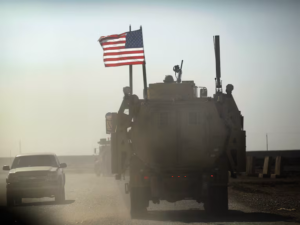
To answer these questions, both groups can refer to the founding narrative that long legitimised their existence. In this narrative, their weapons were meant to protect the supreme interests of the Shiite community in Lebanon and Iraq. They embodied that community’s dream: a better life, the reconstruction of regions, the establishment of quality public services, solid education for new generations, effective healthcare infrastructure, access to employment and equitable distribution of wealth[13]. Since 7 October, however, these weapons no longer guarantee any of this. Worse still, they have led Shiite areas to even greater destruction. In Lebanon as in Iraq, their territories are now highly exposed to total destruction—a destruction that only the deterrent intervention of the United States prevents, at least in Iraq and for the time being, from materializing[14]. In this context, Hezbollah and the Hashd face a historic ordeal: either to hand over their weapons to their respective states in order to fully integrate into the political arena and better serve their community through institutional action; or to retain weapons that are now incapable of protecting them—whether against Israel or, indirectly, against the United States—and embark on a path of collective suicide, the Shiite community paying a very heavy price.
In this trial, the Hashd and Hezbollah must choose between loyalty to Iran—a foreign, non-Arab but Shiite power—and belonging to Iraq and Lebanon, their respective homelands. Before their social bases, they are compelled to choose between an ideological narrative leading to total marginalisation and a narrative of truth that takes into account a context in which armed struggle can no longer achieve its objectives. This new context could represent an exceptional opportunity: instead of sending their militants to battlefields, they could, through normalisation and political integration, offer them the possibility of becoming ambassadors, ministers, directors-general, university professors, journalists or civil society actors.
4. Between Integration, Confrontation and Fragmentation
The sequence opened on 7 October 2023 profoundly reshaped the political and security balances of the Middle East. That day, Hamas’s attack against Israel and the Israeli response that followed acted as a revealer of long-ignored vulnerabilities. The strategic certainties that had allowed the pro-Iranian militia order to prosper for nearly two decades cracked. For both the Lebanese Hezbollah and the Iraqi Hashd, the issue is no longer simply resistance or deterrence: the fundamental question is now how to survive politically and militarily in an environment where their model of action is being challenged. The golden age of the militia order—marked by the expansion of Iranian influence through a network of politico-military organisations—appears to be coming to an end. The twelve-day war against Iran, the fall of Bashar al-Assad in Syria and the growing pressure exerted by Israel and the United States have exposed the fragility of a system based on armed force and ideological loyalty.
In Lebanon as in Iraq, the Shiite social base increasingly perceives the human, economic and political cost of this strategy. The protective promise that had justified the existence of the militias is eroding, replaced by a sense of exposure and vulnerability. In the face of this reality, several scenarios emerge. The first is that of gradual demilitarisation and political integration. In this scenario, Hezbollah and the Hashd would agree to hand over part of their weapons to their respective states in exchange for political and security guarantees. This process, potentially supported by regional or international mediation, would aim to transform military capabilities into political capital, enabling militia elites to play an institutional rather than military role. Such a scenario would reduce the risks of war and redirect resources toward economic and social development[15].
A second scenario is that of prolonged confrontation, marked by refusal to disarm and the continuation of armed struggle against Israel or other regional adversaries. This choice could rely on renewed ideological mobilisation and reinforced Iranian support, but it would expose militia-controlled territories to repeated strikes and continuous degradation of infrastructure and the economy. In the long term, this path risks accelerating political marginalization and fueling popular discontent that would be difficult to contain[16]. A third, intermediate scenario is that of opportunistic integration. Militias would display a willingness to participate in political institutions while retaining, in the shadows, military capabilities and autonomous economic networks. This model, already observed in Lebanon’s recent history after the 1989 Taif Accords, could allow them to preserve influence while limiting direct exposure to retaliation. However, it would maintain institutional ambiguity and hinder state consolidation. The consequences of 7 October, for the Middle East in general and Lebanon in particular, significantly reduce the likelihood of such a scenario succeeding.
Finally, a fourth scenario is that of internal fragmentation. Under military, diplomatic and social pressure, Hezbollah and the Hashd could experience deep divisions between “pragmatists”, favoring political integration, and “maximalists”, committed to armed struggle at all costs. Such a split would weaken organizational cohesion and could lead to the emergence of uncontrollable groups, with an increased risk of diffuse violence and criminalisation. This scenario appears more likely in the Iraqi context, where the Hashd is not a unified organisation but rather a platform grouping several factions that do not necessarily share a common ideological and political framework. By contrast, the Lebanese Hezbollah is a centralized organisation structured around a guiding ideology, a shared programme and an explicit allegiance to the Islamic Republic of Iran, making it potentially less exposed to this outcome.
Whatever option is chosen, the post-7 October context forces both organisations to rethink their relationship to the state, to war and to their social base. The choices they make will have consequences far beyond Lebanon and Iraq, shaping the regional environment and the balance of power between Iran, Israel and Arab powers. For their communities, the challenge is less about preserving a symbol of resistance than about guaranteeing a future in which security, prosperity and institutional stability no longer depend on the survival of an exhausted militia order.
Conclusion
The post-7 October 2023 period has durably altered the geopolitical environment of the Middle East, weakening the pillars that had allowed Hezbollah and the Hashd to thrive for nearly two decades. The certainties underpinning the militia order have deteriorated, and the capacity of these organisations to serve as a protective bulwark for their communities is now seriously contested. Regional transformations impose a profound revision of their strategies, both in their relationship to the state and in their use of armed force. In Iraq, the Hashd benefits from a singular context: since 2003, the Shiite community has held power in Baghdad and has systematically marginalised Kurdish and Sunni components, whose influence over strategic decisions remains very limited today. This dominant position could facilitate a transformation of militia structures into integrated political actors, provided there is a willingness to reform and security guarantees accompany the process. Yet, to date, such willingness has not been expressed; on the contrary, Shiite leaders reject the disarmament of the Hashd and have even prepared a new draft law aimed at further institutionalizing the force—a project categorically rejected by the United States. Shiite pre-eminence within the Iraqi state thus constitutes a solid basis for envisaging this transformation, even if it remains fraught with internal and regional obstacles.
In Lebanon, the situation is of a different nature. Hezbollah is not the dominant force of the state but one of its components, constrained to operate within a confessional political system in which Sunni, Christian, Druze and other forces coexist. This plurality reduces its room for manoeuvre to impose an internal reform based on full integration into the state apparatus. Opposing forces within Lebanese society view its military arsenal not as a tool of protection but as a threat to the country’s stability and independence, making the prospect of a durable compromise particularly difficult. In both the Iraqi and Lebanese contexts, the central question is the ability of these militias to redefine their role by abandoning the primacy of armed force. Such a transformation would require not only a shift in internal doctrine but also a repositioning vis-à-vis Iran, which remains for them a strategic ally and, in many respects, a centre of ideological loyalty. Iran’s weakening on the regional stage could, paradoxically, create space for national re-anchoring, but at this stage no tangible sign suggests that such an evolution is genuinely envisaged.
Should a process of political integration take place, it could open the way to internal stabilisation and a reduction of regional tensions. In the absence of clear will, however, the risk remains high of continued confrontation or internal fragmentation, with potentially disastrous consequences for social cohesion and security. The choices made by Hezbollah and the Hashd in the coming years will determine not only their own future, but also the political and security balance of a significant part of the Middle East.
Notes
[1] Simon Mabon, « Saudi Arabia and Iran: The Struggle to Shape the Middle East », Foreign Policy Centre, I.B. Tauris, Londres, Royaume-Uni, 2018, pp. 3-6.
[2] Kenzy Dessouki, « Sectarianism and Geopolitics: The Saudi-Iran Rivalry in Proxy Conflicts », IE International Policy Review, IE University Press, Madrid, Espagne, 2025, pp. 10–29.
[3] Fatima Al-Ahmad, « Révision stratégique entre Riyad et Téhéran : la diplomatie chinoise à Pékin », Revue Internationale et Stratégique (IRSEM), IRSEM, France, 2023.
[4] Fatima Al-Ahmad, « Révision stratégique entre Riyad et Téhéran : la diplomatie chinoise à Pékin », Revue Internationale et Stratégique (IRSEM), IRSEM, France, 2023.
[5] Emre Erdoğan, « Turkey–Saudi Arabia Rapprochement: Strategic Calculations amid Regional Realignments », Middle East Policy, Washington (DC), États-Unis, 2025.
[6] Avraham Russell Shalev, « Hamas’ October 7th Genocide: Legal Analysis and the Weaponisation of Reverse Accusations », Cambridge University Press, Cambridge, Royaume‑Uni, 2025.
[7] Grace Wermenbol, « A Year On, October 7 Reinforces Dueling Narratives Among Israelis and Palestinians », Wilson Center Backgrounder, Washington (DC), États-Unis, 2024.
[8] David P. Goldman, « Iran Viewed as Facilitator of October 7 Hamas Attack, War on the Rocks », War on the Rocks Press, Washington (DC), États-Unis, 2024.
[9] Dan Diker, « Israel Under Fire – Iran’s Involvement in the October 7, 2023 Massacre: From the Shadows to Center Stage », Jerusalem Center for Public Affairs, Israël, 2024.
[10] Michel Duclos, « Iran : guerre des Douze jours, le jour d’après », Institut Montaigne, France, 2025.
[11] Adel Bakawan, « La recomposition du Moyen-Orient : quel avenir pour l’ordre milicien ? », Confluences Méditerranée, France, 2023, pp. 119–133.
[12] Ranj Alaaldin, Federica Saini Fasanotti, Arturo Varvelli, Tarik M. Yousef, The Rise and the Future of Militias in the MENA Region, ISPI – Brookings Doha Center, Milan : Ledizioni LediPublishing, novembre 2019.
[13] These commitments recall the promises articulated by the senior leadership of the Islamic Republic in 1979. At that time, they grounded the meaning of their struggle in ideals such as social justice and the equitable distribution of wealth, which were regarded as central objectives of the revolution. Mohammad Ali Kadivar, “Social Development and Revolution in Iran”, Sociology of Development (University of California, United States), 2022
[14] Following our investigation and interviews with several Iraqi ministers, they informed us that the United States had intervened on multiple occasions to prevent Israel from striking Iraqi infrastructure controlled by pro-Iranian militias, while stressing that this situation could not last indefinitely.
[15] The implementation of this scenario would require a genuine ideological and geopolitical reassessment, both on the part of the groups concerned and of the Islamic Republic of Iran. The objective conditions for such a reassessment do indeed exist, particularly in the post–7 October context. However, it must be acknowledged that neither Hezbollah, nor the Hashd al-Shaabi, nor Iran appear to demonstrate any genuine commitment in this direction.
[16] On 15 August 2025, Hezbollah Secretary-General Naim Qassem stated that his group would not hand over its weapons to the Lebanese state and that, should the government pursue such a course, it would bear responsibility for triggering a civil war that could bring about the very end of Lebanon’s existence. “Lebanon will have no life if you choose to stand on the other side,” he warned (L’Orient-Le Jour, 15 August 2025). On the same day, Iraqi Hezbollah issued a statement expressing not only its full support for the position of Lebanese Hezbollah, but also its categorical rejection of the disarmament of Iraqi militias, describing its weapons as “the resistance of dignity.” “Iraqi Hezbollah confirms its rejection of the disarmament of the resistance groups” (in Arabic), Al-Arabiya, 15 August 2025.