

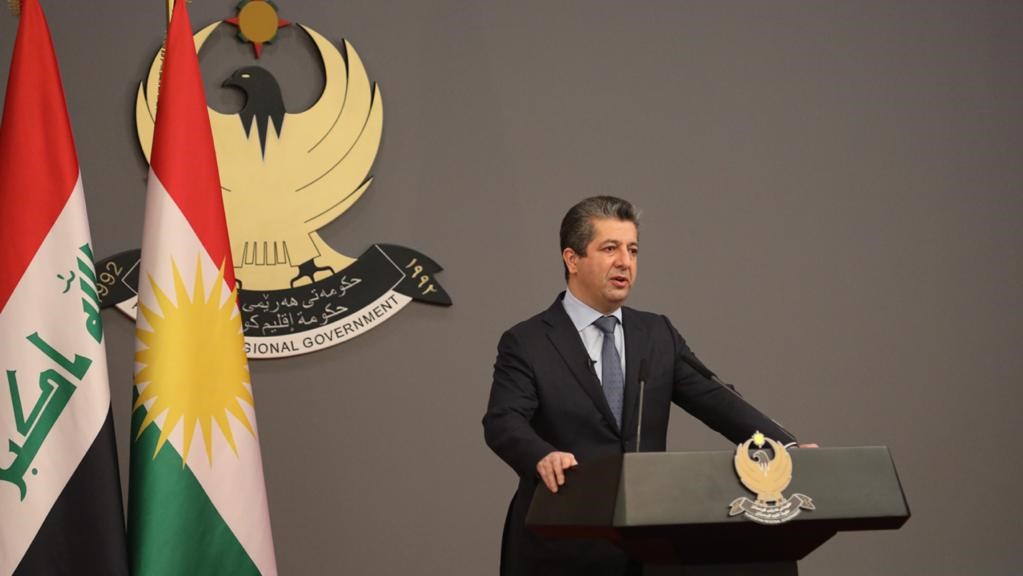

Turkish President Recep Tayyip Erdoğan’s recent decision to initiate talks with the imprisoned Kurdistan Workers’ Party (PKK) leader Abdullah Öcalan and engage with Kurdish parties based in Iraqi Kurdistan presents both challenges and opportunities. These negotiations could lead to outcomes ranging from the revitalisation of economic relations and investment opportunities to heightened sensitivities with the federal government of Iraq and its western neighbor, Iran.
Negotiations and Kurdistan
While President Erdoğan characterised the likelihood of a comprehensive agreement as slim “To be frank, the picture before us does not allow us to be very hopeful”, developments among Turkey’s Kurds will likely have ripple effects on Syrian Kurdish parties and the Kurdistan Region of Iraq (KRI). A comprehensive peace agreement could pave the way for greater Kurdish autonomy and influence, potentially reshaping regional dynamics. In Iraq, Masoud Barzani, the head of the Kurdistan Democratic Party (KDP), and Nechirvan Barzani, President of the Kurdistan Region, expressed their strong support for Turkey’s peace plan. Barzani commented Turkey’s commitment to peace, noting its potential benefit between Ankara and the PKK, an arbiter role previously played by the Kurdistan Democratic Party during the 2013-2015 ceasefire. The most immediate and tangible impact of an agreement between the Turkish government and the PKK would be the bolstering of Kurdish identity and a sense of unity among Kurdish groups fostering aspirations for greater autonomy or even the long-held dream of a Greater Kurdistan, though this vision is often regarded as overly ambitious.
Kurdish public opinion in Iraq is divided on the matter. While some support the peace process, others view the PKK as a staunch defender of Kurdish rights. Recognizing the PKK as a legitimate political entity, rather than solely a military force, could, according to some, play a pivotal role in strengthening Kurdish identity and advancing rights across the region. This could, in turn, create a complex geopolitical landscape for the KRI, as its relations with the federal government of Iraq, Turkey, and Iran would inevitably be affected. Successful dialogue with Turkey might foster closer cooperation between Erbil and Ankara, paving the way for joint economic initiatives such as the “Development Road” project influencing Baghdad’s stance on Kurdish autonomy. However, such developments also risk entangling the KRI in a deeper web of regional rivalries, particularly with Iran, which remains wary of both the PKK empowerment and Turkey’s expanding influence in the region.
Political stability
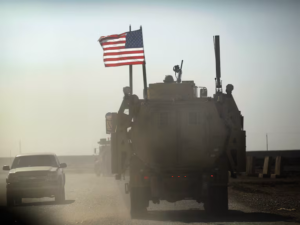
Engaging in peace talks between Turkey and the PKK could yield more concrete benefits for the KRI than just fostering identity and social awareness. The PKK’s presence in the KRI dates back to the Baathist regime in Iraq. In 1982, the PKK and the Kurdistan Democratic Party (KDP) reached an agreement that allowed the PKK to establish a presence in the Qandil Mountains for military operations near the Turkish border. Since then, Ankara has conducted numerous incursions into the KRI, beginning in 1977 to neutralize the PKK strongholds. From July 2015 to the present, Turkish military operations have reportedly resulted in the deaths of 7,119 individuals linked to the PKK, while this group has carried out 1,084 attacks against Turkey from the Iraqi territory in 2023 alone. To counter the PKK’s influence, Turkey has established a 30-to-40-kilometer buffer zone in Kurdish areas and maintains approximately 40 “military outposts” in the KRI, staffed by an estimated 5,000 to 10,000 troops in northern Iraq.
A possible comprehensive agreement between Turkey and the PKK could lead to the withdrawal of Turkish forces and the dismantling of their permanent bases, fostering political stability in these contested areas. Reduced hostilities would also enable displaced residents to return to their villages, creating social stability. Furthermore, peace would allow Iraqi Kurdistan to redirect its focus toward economic development, especially in the oil and agricultural sectors, which have been affected under the ongoing conflict. Ultimately, the negotiations could also serve as a political platform for the KDP, based in Erbil and Duhok, to assert itself against its rival, the Sulaymaniyah-based Patriotic Union of Kurdistan (PUK). Long-standing tensions between the two parties, aggravated by disputes over regional elections and oil revenues, could be further influenced by peace diplomacy. Improved relations with Turkey could enhance cross-border trade, strengthening the KRI’s economy. Turkey serves as an essential gateway for Iraqi Kurds to the global markets, with about 400,000 barrels of oil per day exported through the Kirkuk-Ceyhan pipeline until disputes with the Iraqi federal government interrupted these flaws.
However, relations within the KRI remain complicated. The KDP opposes the PKK’s presence in the region and has urged its departure. It also has a fraught relationship with Syria’s largest Kurdish group, the Democratic Union Party (PYD), and its armed wing, the People’s Defense Units (YPG). In December 2021, the KDP temporarily closed Iraq’s border with northeastern Syria due to political and security disputes with the Syrian Kurdish groups. Conversely, the PUK is said to maintain close ties with both the PKK and the PYD. The divergence has aligned the KDP with Turkey and the PUK with Iran, intensifying regional dynamics. If Ankara proceeds with the peace talks, the PKK’s justification for its continued presence in the KRI would weaken, putting both the PKK and the PUK, in a vulnerable position. Ankara has accused the PUK of supplying the PKK with Chinese and Iranian-made kamikaze drones and, in April 2023, closed its airspace over Sulaymaniyah to limit the PUK’s support for the PKK. The pressure benefits the KDP, bolstering its influence within the KRI.
The KRI’s delicate foreign relations with neighboring states, compounded by its strained ties with Baghdad, are deeply shaped by the broader Kurdistan geopolitical landscape. Turkey’s negotiations with the PKK could present both opportunities and challenges for the KRI, with the ultimate outcome hinging on how the KDP and PUK navigate these shifting dynamics.