

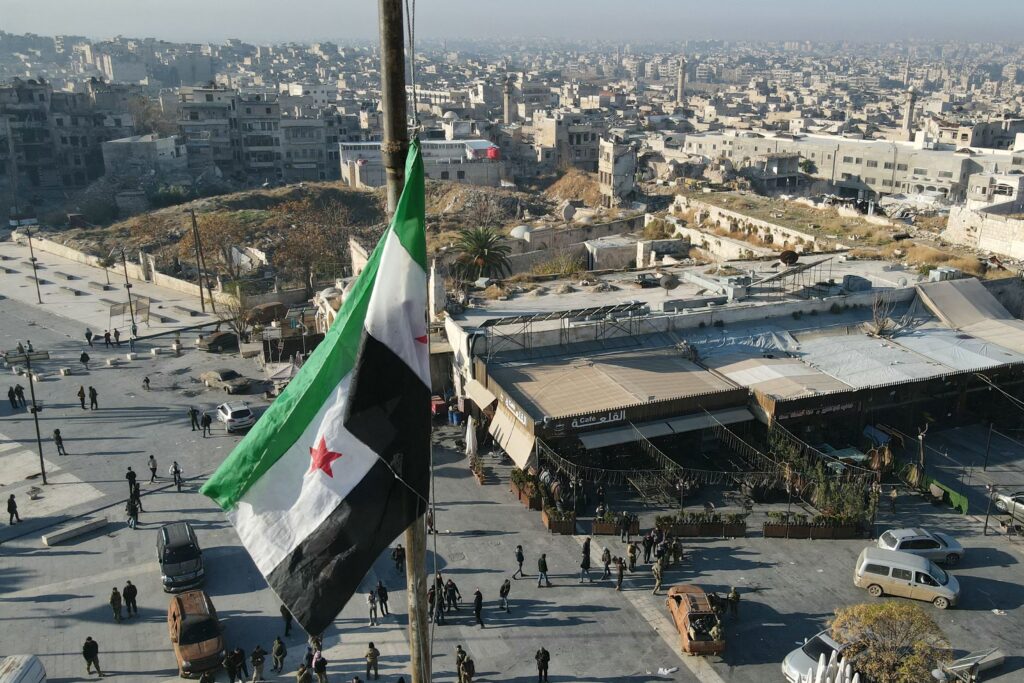

In its later years, the Assad family, who ruled Syria for more than half a century, became weak, dependent and isolated. Nevertheless, their downfall reshaped the broader region far beyond Syria itself. While this underscores the role of the Assad regime, it highlights even more the strategic importance of Damascus and the inherent fragility of the Middle East. For decades, Assad was synonymous with “eternity”[1], especially as the name “Assad” in Arabic rhymes with abad, which means “eternity”. The regime reinforced this perception through propaganda, using “eternity” as a slogan in a psychological effort to demoralise the populace[2]. The notion of eternity suggests something unchanging and everlasting —yet history has shown Assad was not beyond time. However, he ruled a region that remains central to the balance of power in the Middle East and beyond. One of the least discussed consequences of his fall is the decline of Arab nationalism[3]. Originally emerging in response to the Ottoman Empire, colonial rule, and the fragmentation of Arab lands, Arab nationalism became a true driving force among the Arab people. As a secular ideology, it failed to appeal to the majority of them and revealed that nationalism was never a unifying theme across Arab societies. The necessary societal transformations to embrace a secular Western inspired model never took place.
According to Hilal Khashan[4], professor of political science at the American University of Beirut, “in the Arab region, religion remains the decisive social force and the driver of collective action.” This return to religion became evident in Syria and Iraq following the collapse of the Baath parties. Reflecting this shift, the new Syrian school curriculum, has replaced the term “Ottoman occupation,” once used to describe Ottoman rule in Syria, with “Ottoman administration” [5]. This shift also underscores Turkey’s rise as a regional power in Syria. As Galip Dalay [6] points out, Syria is “not merely a foreign policy issue for Turkey but also a domestic one.” Over the past decade, the Syrian conflict has not only been shaped by Turkey but has also significantly influenced Turkish domestic politics and international relations. The ethnic, sectarian, and ideological divisions present in Syria are mirrored within Turkey itself. For a long time Damascus was seen by Turks as a liability, but following Assad’s fall, it is increasingly seen as a strategic asset. However, long-term stability in the Middle East remains uncertain, and assuming its sustainability may be overly optimistic. Turkey cannot manage Syria alone; it requires regional and international support, which will not come without conditions. Among other priorities, Turkey hopes for financial investment in the country’s reconstruction, with Turkish companies playing a major role in the process.
Domestically, forging a long-term alliance with Syria while preserving Atatürk’s nationalist legacy presents a challenge for Ankara. Meanwhile, the influence of religious orders (tariqat) like Erenköy, İskenderpaşa, İsmailağa, the various Nurcu cemaat of Said Nursi’s followers, Menzil, and the Süleymancı is increasingly shaping the country, as David Tonge [7] discusses in his new book, The Enduring Hold of Islam in Turkey: The Revival of the Religious Orders and Rise of Erdoğan. Turkey’s hegemony over Syria is further reinforced by the decline of Arab nationalism. In addition to these, Ankara’s approach to Damascus is deeply tied to its Kurdish policy, in other words, prioritising efforts to prevent Kurdish factions from gaining recognition or political autonomy in Syria. This situation may have shifted, particularly following two key turning points: first, Abdullah Öcalan’s historic call for the PKK to disarm and initiate a new phase aimed at resolving the Kurdish-Turkish conflict through democratisation [8]. Second, the announcement of an agreement between SDF leader Mazlum Abdi and Syrian de facto president Ahmed al-Sharaa[9]. This deal could help ease Turkey’s concerns and potentially prevent any efforts to establish an autonomous or independent Kurdish state in Syria along the Turkish-Iraqi border (Rojava), a scenario Turkey had strongly opposed. As Abdi stated, “Syria’s territorial integrity must be preserved, with one army, one state, one capital, and one flag”.
Alongside Turkey, another regional power that has strengthened its position in the post-Assad era is Israel. Its ambition increasingly clashes with Turkey’s, particularly as both seek to shape the regional order in the wake of Iran’s declining influence. For Israel, a decentralised Syria is a strategic opportunity. Currently, discussions are underway regarding an international conference aimed at cantonising Syria. To understand that it leverages military force, sectarian dynamics, and its influence in Washington. While Assad’s fall has been advantageous for Israel, the consequences have been entirely different for Iran and Iraq. The collapse of his regime has significantly weakened– if not outright ended–, the Shia project and the Axis of Resistance. Alt14hough some argue that this axis will not vanish overnight, its decline is evident both militarily and socially. Beyond Syria, its weakening is palpable in Lebanon, and Iraq as well as within Iran itself, where it has lost substantial social and political influence. The Shia, who rose to regional prominence after Saddam Hussein’s fall, have seen their era of dominance come to an end with the downfall of both Saddam and Assad– an ironic turn of events. On the international stage, two major powers profoundly impacted by the fall of Assad are Russia and China. According to legend, Russia’s military intervention in Syria was prompted by Qassem Soleimani’s visit to Moscow in 2015. Whether it is myth or reality, what remains clear is that Russia and Tehran worked in tandem in Damascus; Moscow provided devastating airstrikes, while Iran deployed ground forces.
Russia’s support of Assad was not merely an act of friendship; it was a strategic move aligned with the Primakov doctrine, named after former Foreign and Prime Minister Yevgeny Primakov. This doctrine aimed to counterbalance U.S. influence by advocating for a multipolar world order managed collectively by major powers—Russia, China, and India, alongside the United States. Rather than challenging Washington unilaterally, Moscow sought to constrain the US dominance by aligning with other influential states. The goal was to establish Russia as an indispensable global player, with both a vote and a veto in resolving major international issues– a vision that China also shares. The fall of Assad would deal a significant blow to Russia, especially when it comes to its influence in the Middle East, the Mediterranean, and Africa. Syria has long served as a strategic hub for projecting Russian power and influence across these regions. Russia tries to stay in Syria, Israel lobbies for it, and the recent mass killing in the Alawite area. China is another international power whose influence in Syria diminished after December 2024. While the sudden fall of the Assad regime may not have affected China as profoundly as it did with Iran and Russia, the consequences remain significant. China’s ties to Syria extended beyond energy and infrastructure; they were also rooted in ideology, great power competition, and security considerations.
China did not welcome the change, as reflected in an editorial published in China Daily which stated: “The lightning advance of the Syrian rebel forces has plunged the Middle Eastern country into further violence, chaos, and now an alleged regime change, dealing yet another heavy blow to the fragile fabric of the country and the broader region’s peace and stability.” While the relationship between the two countries dates back to the mid-1950s, a major turning point in their relationship happened after the Syrian government recaptured Aleppo in December 2016. Following this event, China’s aid to Syria increased dramatically from approximately $500,000 in 2016 to $54 million in 2017, according to the COAR report[10]. In retrospect, this shift may be viewed as a miscalculation, but it also highlights key aspects of China’s approach to Syria and the broader Middle East. Beijing saw Assad’s survival as essential to an anti-American regional alliance that included Iraqi militias, Iran, and Hezbollah. To support this stance, China repeatedly used its UN National Security veto to support Assad and oppose the rebels, even in matters related to humanitarian aid deliveries. Despite all that, one thing we learn from Chinese history is that China is not in a rush and considers the transition period to take longer than anticipated.
Many countries faced difficult choices regarding Syria, and Iraq was no exception. For the Iraqi Shia elites, the aftermath of Assad’s fall presented no favourable outcome. They viewed Ahmed al-Sharaa’s potential success with concern and his possible failure with even greater apprehension. In short, Baghdad found itself in a catch-22 situation. Nevertheless, as Amjed Rasheed[11], author of Power and Paranoia in Syria-Iraq Relations, notes, conflict or intervention is no longer considered a viable option. Unlike other nations that can choose to distance themselves from Syria, Iraq does not have that luxury. Throughout modern history, Damascus and Baghdad have oscillated between periods of strong alliance and deep hostility. The current Syrian president is tied to Iraq in many ways; his father graduated in Baghdad, he fought and caught and served time in Iraq; he even posed as an Iraqi when he was in prison. He might be many things, but above all, a great pretender. These dynamics underscore Assad’s pivotal role in the regional order and highlight how his fall will reshape not only Syria but the broader Middle East. As Volker Perthes suggests, this transformation makes Syria a renewed focal point for regional and global powers, each seeking to influence its new trajectory to their advantage. However, such external involvement is a double-edged sword– can multiple actors truly engage with the sincere intent of rebuilding Syria, an approach rarely witnessed in history?
Notes
[1] روسيانهاية الأبد» في سوريا… وفرار الأسد إلى
[2] محمد امیر ٢٠١٩ سوريا بين شعارين.
[3] Salvin Barbara. 2024. After Assad, Time For A New Nationalism in the Middle East.
[4] Hilal Khashan 2021The Illusion of Arab Nationalism.
[5] The New Arab 2025. Syria’s education reforms spark outrage amid curriculum overhaul.
[6] Galip Dalay 2024. Turkey has emerged as a winner in Syria but must now use its influence to help build peace.
[7]David Tonge. 2024. The Enduring Hold of Islam in Turkey: The Revival of the Religious Orders and Rise of Erdoğan.
[8] Saeed Abdulrazek. 2025. Ocalan’s Message to SDF: A Democratic Solution Within a New Constitution.
[9] Reuters. 2025. Syria’s interim president signs a deal with Kurdish-led SDF to merge forces.
[10] COAR 2022 الصين في سوريا: المساعدات والتجارة حالياً، النفوذ والصناعة لاحقاً؟
[11] Amjed Rasheed. 2023. Power and Paranoia in Syria-Iraq Relations: The Impact of Hafez Assad and Saddam Hussain. Routledge.