

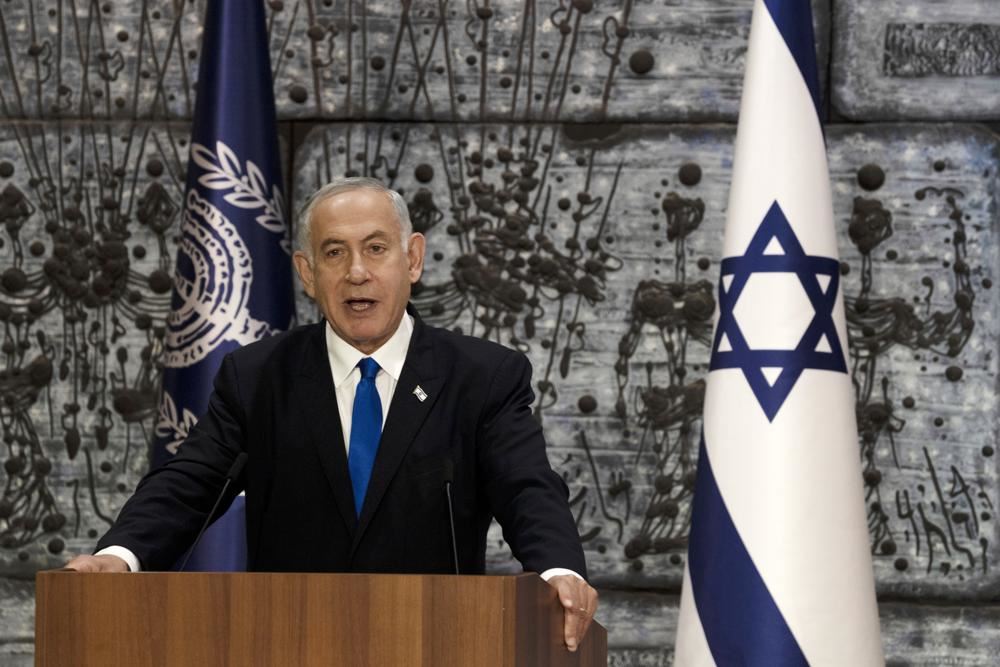

The Middle East is in a state of “wars.” According to Benjamin Netanyahu, Israel is engaged in warfare on seven fronts:
1. Gaza
2. The West Bank
3. Lebanon
4. Syria
5. Iran
6. Yemen
7. Iraq.
These fronts are not all equally active. Some are in turmoil, while others remain relatively calm (for example, relations between Israel and Iraq remain rather peaceful).
Regarding Gaza, the current truce is considered fragile by many observers, especially since the Israeli Prime Minister has expressed his intention to continue the war until achieving “total victory,” as he stated after October 7. The outbreak of these conflicts dates back to that day, which led to an extremely violent Israeli response, causing approximately 48,000 Palestinian deaths and 1,000 Israeli deaths. To this day, hostilities continue.
These are very specific wars for several reasons:
1. The Specificity of the Combatants
On one side, Israel has a highly powerful conventional army, equipped with nuclear weapons and an extremely efficient intelligence service, as demonstrated by its infiltration of Hezbollah and Iranian networks. Israel has shown great determination following the trauma of October 7, which deeply affected Israeli society. On the other side, there are self-managed militias and armed groups, such as Hezbollah, Hamas, the Houthis, and certain Iraqi militias, which have sometimes been involved in the fighting. These groups possess relatively sophisticated weaponry: Hezbollah has short- and medium-range missiles supplied by Iran and manufactures numerous drones. Hamas, for its part, produces rockets and drones, but in far smaller quantities than what the Israeli army possesses. This is therefore an asymmetric war, where a conventional army faces militias that compensate for their weakness through terrorist practices and hostage-taking.
Lebanon and Syria are, against their will, involved in this conflict. As for Iran, it played a more active role after a significant Israeli provocation: the assassination of Ismail Haniyeh in Tehran. These states have become involuntary actors in the war, forced to take sides despite themselves.
2. The Small Scale of the Battlefield
The Gaza Strip, which represents about one-third the size of the Paris metropolitan area, is at the heart of this battlefield, but its effects extend to Lebanon, Syria, Yemen, and Iran, although these extensions are more sporadic. There are also now repercussions in the West Bank. This is a war taking place in a limited geographical area, but whose consequences extend far beyond, affecting Israel and the “international community.”
3. Israel’s Use of Targeted Assassinations
This was an old and relatively rare practice, initially targeting only Palestinians outside Palestine, Iranian scientists, or Palestinians in Iran. It then became more common and sophisticated, as demonstrated by the case of beeper tracking and collective targeted assassinations aimed at nearly all senior Hezbollah officials. This development marks a troubling evolution of what was once an exceptional practice. It is also characterized by the scale of destruction. I mentioned the 48,000 Gazans killed and 100,000 wounded, with Gaza largely razed, about 85% of its infrastructure rendered unusable, including schools and universities that can no longer function. In Lebanon, entire villages have been destroyed, and even Beirut has suffered Israeli attacks.
The Israeli army’s rules of engagement, which lead to what is euphemistically called collateral damage, have resulted in so many civilian casualties that they can no longer be considered incidental. Several Israeli figures have highlighted this issue. This situation is linked to the Eizenkot Doctrine, formulated by the Israeli Chief of Staff, which states that a massive response should be carried out whenever an attack originates from a specific location, regardless of the number of people present. It is, therefore, no longer merely collateral damage.
4. The Powerlessness of the International Community
Even when the United States joins the international community in condemning the situation and proposing solutions, such as Resolution 2735 of June 10, 2024, supported and voted for by the U.S., Israel has not implemented it. Strangely, it was only under Trump that we saw the beginnings of this resolution’s application. Israel attempted to conceal its actions from Biden while continuing to block humanitarian aid and attack Lebanon, despite the Biden administration’s attempts at deterrence.
Former President Trump wants the fighting to end, but the solution he envisions does not seem capable of resolving the issue. This is evident in the “Riviera” video, where Gaza is supposed to be transformed—something that appears more like a provocation. As for the future position of the United States, it remains unclear. Will they encourage the expulsion of Palestinians from Gaza or the West Bank? Will they accept a partial or total annexation of Palestinian territories? Trump’s categorical rejection of the counterproposal does not suggest a serious solution for the future of events.
All of this is happening with very vague objectives
What is Israel seeking? Israeli Prime Minister Benjamin Netanyahu has spoken of a “total victory,” but what does that mean in practice? Is it the eradication of Hamas and Hezbollah to ensure Israel’s security? Or is it the recovery of the hostages? The latter does not seem to be Netanyahu’s priority. The eradication of these groups appears difficult. U.S. Secretary of State Antony Blinken has noted that Hamas has likely recruited more fighters than it has lost. Hamas’ structure remains intact despite the ongoing conflict. As for Hezbollah, while it has been weakened, it has not been eliminated. Both groups are well-structured ecosystems, politically and socially, with strong popular support—whether from the Shiites in southern Lebanon or the Sunni Palestinians.
What are Israel’s other objectives? One of them is to ensure the security of the country, especially the population in northern Israel, where about 80,000 people have been evacuated due to Hezbollah attacks. Similarly, a large part of the Lebanese population has been forced to flee, although some have returned in a limited capacity. Another objective, expressed by Netanyahu, is to reshape the Middle East. However, Israel does not seem positioned to succeed where the United States failed under George W. Bush. There also appears to be an underlying goal that is clear to the Israeli public: the longer the war lasts, the greater the chances that Netanyahu will escape justice. What is concerning is that Israel could be drawn into an endless war, possibly accompanied by the expulsion of Palestinians. This could create a prolonged, endless conflict.
Regarding Hamas, it seems that its objective is to position itself as the sole legitimate representative of the Palestinian cause, particularly after the widespread adoption of the Abraham Accords. The October 7 attack may have been triggered as a response to these agreements, reinforcing Hamas’ role as an alternative to a discredited Palestinian Authority. For the Houthis, their objective is to gain international recognition, which they have successfully achieved by controlling two-thirds of Yemen. As for Hezbollah, its main goal is to maintain control over southern Lebanon. Their support for Hamas has been sporadic and relatively modest. It is primarily Israel that has sought to settle scores with Hezbollah after the semi-failure of the 2006 war[1], also known as the 33-day war.
Are these wars coming to an end?
There was a temporary lull, notably with a ceasefire in Lebanon in September, brokered by the Biden administration. However, the new U.S. administration does not seem bound by this previous agreement. Despite the ceasefire, Israel continues its occupation of parts of southern Lebanon, including five strategic zones along the border, and carries out operations in violation of the agreement, including in Beirut and Baalbek, Hezbollah strongholds.
In Syria, Israel continues to expand its control over the Syrian Golan Heights and insists on the complete demilitarization of the area, including the territory between Damascus and the Jordanian border up to Daraa—an unacceptable demand for the new Syrian government.
Gaza Truce
The situation remains fragile, and everything indicates that the fighting will resume, as stated by the Israeli army chief and prime minister, who have emphasized the need to “finish the job.” The Trump administration appears willing to let this happen. Will the war extend to Iran? So far, there have only been sporadic exchanges. Iran managed to launch 300 missiles and drones over Israel, but caused no significant damage. On the other hand, Israel, beyond the assassination of Ismail Haniyeh, has destroyed a large part of Iran’s air defenses.
Will Israel go further? Netanyahu has long sought to target sensitive Iranian sites, including oil and nuclear facilities. However, he has been held back by the United States, whose logistical support is crucial—whether for bunker-buster bombs, intelligence, or refueling. The situation remains uncertain. Trump seems to favor maximum pressure rather than a direct attack on these sites. These factors, combined with others, suggest that an expansion of the war is almost inevitable, with military actions that could set the Middle East on fire.
A Glimmer of Hope
The evolution of the situation in Syria is particularly interesting. The brutality of the fall of Bashar al-Assad’s regime surprised everyone. Although the Syrian army had been weakened for some time, last July, Bashar became aware of his army’s exhaustion and sought help from Vladimir Putin, who refused. This brutality can be explained by several factors, including the indirect consequences of the Israeli aggression, which weakened Hezbollah, the partial withdrawal of Shiite militias by Iran— preoccupied with its own issues—and the Russian military disengagement due to the war in Ukraine. All these elements contributed to Bashar’s downfall, as his regime became increasingly vulnerable, a sort of empty shell. In the end, it only took a few external events to make this shell collapse, exacerbated by an army plagued by corruption.
As for the new regime, the emergence of Ahmed al-Charaa, a former jihadist turned politician, is particularly surprising. After 20 years in jihad, he abandoned his fighter’s look to adopt a three-piece suit and a neatly trimmed beard. This physical transformation is accompanied by an ideological shift. Some wonder if this reflects a desire to present himself as a respectable man, worthy of economic and financial support. For now, al-Charaa is trying to reassure everyone by multiplying speeches on elections, dialogue, the protection of communities, and freedom of expression—while insisting that this does not concern institutions. He has also expressed the wish to see European and American sanctions lifted, as they have caused severe shortages in Syria. His position is all the more urgent because, with Iran’s withdrawal and the halt of Russian supplies of oil and cereals, the country’s economic situation is becoming increasingly critical.
This largely explains the political dynamics observed among Western and Arab countries. The Biden administration has indeed managed to ease and suspend some sanctions, particularly those with humanitarian and food-related implications. Europe has followed the same path, allowing for a new flow of imports that should continue to develop. However, this new power is deeply lacking in financial resources. Clearly, al-Charaa is trying to play the diplomacy card between Turkey and Saudi Arabia. Turkey, which probably played an important role in his rise to power, seems to have acted strategically. It is difficult to say whether Erdogan encouraged al Charaa to move towards Damascus or if this was the latter’s own initiative, but al Charaa certainly received benevolent neutrality from Turkey. As for financial resources, they will likely come from Saudi Arabia, which could play a key role. There was an official visit to Saudi Arabia, followed by a visit to Turkey, reinforcing this hypothesis.
Some progress has been made. For example, a dialogue conference was held, and it went relatively well, though a notable absence was that of the Kurds. A new government, initially expected to form on March 1st, is still anticipated. This could be a good sign, suggesting that negotiations are underway to integrate figures not directly linked to HTC. However, this future government will face major challenges. First, Syria remains completely fragmented, with foreign troops present in several regions, mainly Turkish forces. Although Iranian and Russian forces have reduced their presence, the Turks remain a key player. A portion of the territory is still controlled by the Kurds, who have a sizable army of around 100.000 fighters and refuse to integrate into the Syrian army, preferring to maintain their military structure in case of reintegration. Additionally, the Alawite region still seems difficult to control. Finally, in the south, several important militias, including Druze militias, claim a certain degree of autonomy and do not wish to integrate into the Syrian army.
Things will progress slowly, marked by many uncertainties, particularly with the gradual lifting of sanctions. Regarding the return of refugees, there have been about 5 to 6 million Syrians in exile, spread across neighboring countries and beyond, notably in Europe, especially in Germany. Many of them are professionals. The question is whether they will return. Some have integrated well, particularly in Germany, where about a third have acquired German nationality. However, it is uncertain whether they will choose to return. The European Union, including France, has taken measures to guarantee Syrian refugees wishing to return home a refugee status, provided their stay is temporary. As for the Arab countries, the Saudis, after a period of mistrust, now seem to accept the new power in Syria. But what about Russia and Iran? These two powers have a capacity for disruption and, for now, seem somewhat withdrawn. That said, negotiations are ongoing for Russia to retain its two strategic bases in Syria—one maritime and one air base. All of this remains uncertain. There is no real alternative, hence the position of supporting this new power, provided it meets certain criteria, particularly in terms of exclusivity. I wouldn’t go so far as to talk about democracy.
Regarding Lebanon, there is some good news. The ceasefire of November 27, 2024, and the implementation of Resolution 17014 should lead to Hezbollah’s withdrawal north of the Litani River, accompanied by the disengagement of military installations. The fall of Bashar al-Assad can also be seen positively, as the new Syrian regime will probably not be as authoritarian as the former one. Lebanon’s political situation has slightly improved with the election of J. Aoun as president and the appointment of Nawaf Salam, former president of the International Court of Justice (ICJ), as prime minister. He managed to form a government, although it still includes 4 or 5 ministers close to Hezbollah in key positions. However, internal structural problems persist, such as security, drug trafficking, and a failing economy. Moreover, Lebanon remains governed on a communal basis, which continues to pose major challenges.
The Middle East is Undergoing a Complete Geopolitical Shift
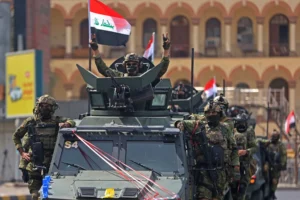
If we examine the situation of different countries and actors, we see that some countries are in a state of distress. Damascus and Baghdad play a major role in this dynamic. In Syria, reconstruction will take a long time. In Iraq, despite significant financial resources from oil production, the country finds itself caught between the United States and Iran, with a fragmented situation between Sunni, Shia, and Kurdish communities. Some voices are calling for the Shia community to become a separate state, but this issue remains unresolved, especially given the influence of militias backed by Iran.
Among the distressed countries, Yemen faces a catastrophic humanitarian situation and remains deeply fragmented. Libya is still divided into two, while Sudan continues to suffer from civil war. However, new regional powers are emerging, some of them non-Arab, in addition to Israel. Turkey, with a president pursuing an active and sometimes aggressive foreign policy, has expanded its influence in the Arab Middle East. Iran, though weakened, remains a key player, particularly because the United States effectively handed it Iraq on a silver platter by eliminating the threat of Saddam Hussein and promoting democracy, which favors majority rule—thus benefiting Iraq’s Shia population, who were long exiled in Iran and are naturally linked to it. Regarding the Arab countries, the Gulf states have gained influence thanks to their considerable financial resources. Some have also pursued an active foreign policy, starting with Saudi Arabia, which experienced a rupture under Salman, followed by the rise of Mohammed bin Salman as crown prince. Qatar and the United Arab Emirates, particularly Abu Dhabi, also have ambitions for power and influence, which they are willing to use, including militarily.
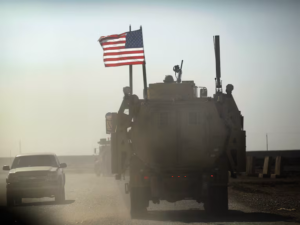
One last point to note is the shift in external influences. Since the Obama era, continued under Trump, the United States has opted for a pivot to the Pacific, viewing China as the primary strategic threat. Trump, while remaining engaged in the Middle East to ensure Israel’s security, seeks to reduce American involvement in the region. The U.S. military still maintains a significant presence, with about 40,000 troops in the region, but the goal remains gradual disengagement.
Europe seems largely absent from the scene, while Russia is making a notable return to the region. It has managed to establish itself in countries where it previously had no significant relations, notably Saudi Arabia. There is now close coordination between Russia and oil-producing countries within OPEC+ to manage the global oil market. Russia is also highly active in Libya, has strengthened its presence in Yemen, and has returned to Egypt. Although there was a setback with its withdrawal from Syria, the Trump-Putin cooperation seems to allow Russia to regain an important role in the Middle East.
As for China, it has entered the region economically and is now beginning to play a political role. Most Middle Eastern countries have China as their primary trading partner. Arab foreign ministries regularly meet in Beijing under Chinese leadership, and China has skillfully used its diplomacy to normalize relations between Saudi Arabia and Iran.
The Middle East is undergoing a major transformation and will continue to change, but in which direction remains unknown. Structural problems persist, notably the Palestinian issue— neglected by Israel, particularly after the events of October 7—as well as questions regarding Iran’s role, its military presence, and Syria’s reconstruction. In the end, the only certainty that remains in the Middle East is uncertainty.
Notes
[1] Editor’s note: The 33-day war took place in the summer of 2006 following a border incident provoked by Hezbollah, with Israel declaring war on Lebanon. According to many sources and documents, the border incident was merely an ideal pretext to attack Hezbollah and attempt its destruction, as its military capabilities posed a threat to northern Israel.