


[Lyna Ouandjeli] For this interview, we would like to discuss the Arab region since the events of October 7, 2023. As we have observed, there are many topics to cover, with numerous events marking this period, rapidly disrupting existing dynamics. That is why we would like to ask you a few questions on this subject. I will now hand over to Matteo for the first question.
[Matteo] First question concerns the Arab states that signed the Abraham Accords. How did these signatories react to October 7?
[Jean-Paul Chagnollaud] I will be brief. Regarding the signatories of the Abraham Accords, these states faced a certain difficulty. By accepting normalization with Israel, they probably did not expect the Palestinian issue to resurface so centrally. Indeed, these accords were part of a process initiated by the Netanyahu government and Donald Trump at the time. The goal of this process was to achieve peace with the Arab states while marginalizing and downplaying the importance of the Palestinian issue, presenting it as a low-intensity conflict that could be managed through economic initiatives but was no longer a major political concern. It was in this context that the Abraham Accords were signed. However, October 7 completely challenged this vision. The governments involved, particularly Morocco, the UAE, and Bahrain, found themselves in a difficult position, not only in relation to their initial expectations but especially regarding their public opinion. It is evident that this public opinion was highly sensitive to the events of October. However, nuances must be made depending on the country. Talking about public opinion in the UAE can be misleading, as there is no truly representative public opinion, with only a few hundred thousand native inhabitants. On the other hand, in a country like Morocco, the impact was much more significant. That said, the essential point is that, despite everything, none of these governments has questioned the agreements they signed, and it is clear that they will not do so.
Lyna Ouandjeli] Coming back to public opinion, Arab populations reacted very differently to the events of October 7, 2023. Did this lead to internal divisions, particularly on political, social, or religious levels, in these countries? Specifically, although some Maghreb countries are geographically distant from the conflict zone, significant discussions and tensions have arisen, such as between Morocco and Algeria, particularly concerning the normalization of relations between Morocco and Israel. Could you tell us more about this, as well as about Egypt’s role, which is central to this conflict, especially after Donald Trump’s speeches in February 2025?
[Jean-Paul Chagnollaud] Are you referring to public opinion?
Lyna Ouandjeli] Exactly, yes.
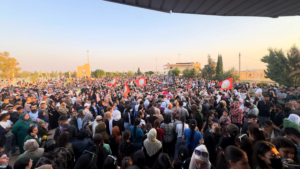
[Jean-Paul Chagnollaud] It is difficult to answer precisely about public opinion without analyzing each country individually through surveys. However, in general, we can say that, except for a few Gulf countries like the UAE, Kuwait, or Qatar (although Qatar is a special case), Arab public opinion is largely sensitive to the Palestinian issue. This is particularly true in the Maghreb, notably in Morocco, Algeria, and Tunisia. In Egypt, there is also strong sensitivity. However, it should be noted that in these countries, political systems are mostly authoritarian, meaning that public opinion has limited impact and does not actually change government policies. Regarding the Abraham Accords, although after October 7 and the war led by Israel, public opinion was strongly mobilized for legitimate reasons, this did not challenge the policies of the concerned states. This shows that, while public opinion exerts influence, it remains limited. However, an important point to highlight is that, although the governments that signed these agreements have not reconsidered them, for those that have not yet signed, such as Saudi Arabia, public opinion plays a more significant role. Even though Saudi Arabia is an authoritarian regime, there are profound changes in the country that make it clear that Mohammed bin Salman (MBS) will think seriously before signing. If it happens, it will be under certain conditions. He can no longer afford to do it in the way he envisioned before the Abraham Accords, because Saudi public opinion has significant weight, even in a regime like this, as confirmed by Saudi officials and observers.
[Matteo] In the same vein, another question about influence: Which Arab country or non-state actor has seen its regional influence increase or decrease since October 7?
[Jean-Paul Chagnollaud] Listen, if we address the issue of states, it is clear that this development goes far beyond October 7. In reality, it is a phenomenon that spans the entire contemporary history of the Arab world over the last 15 years. We should not focus solely on October 7. To put it simply, for a long time, certain capitals embodied the geopolitical heart of the Middle East, such as Cairo, Damascus, and Baghdad. However, for various reasons, these three capitals have lost much of their influence, and some have no geopolitical weight at all today. Riyadh, on the other hand, has always been an influential capital, but today, Saudi Arabia has become the main actor. Thanks to its strategic position, financial resources, influence networks, alliances, and geography, Saudi Arabia is now the key player. It is no coincidence that Saudi diplomacy has an impact far beyond the region. For example, managing relations between Russia and the United States, which can take place in Riyadh, is a testament to this. Today, Saudi Arabia is unquestionably the central player in international affairs concerning the Arab world. And another important state, which is not Arab, is Turkey, which, for other reasons, also holds a strong position.
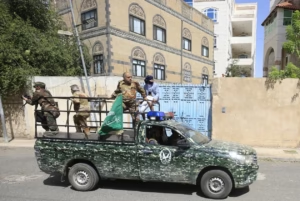
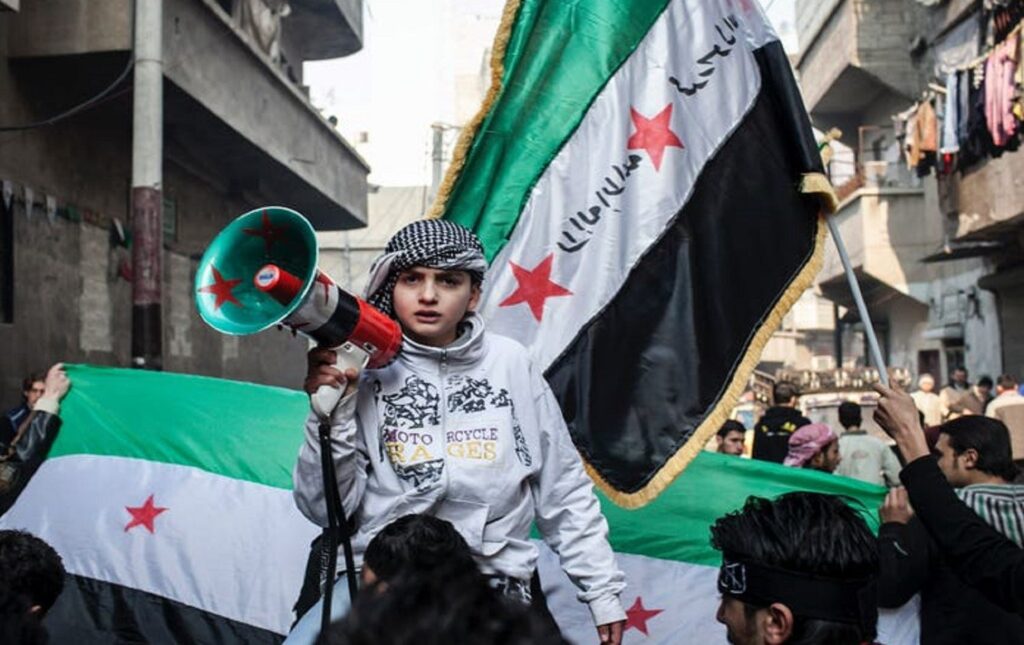
Lyna Ouandjeli] We will come back to Saudi Arabia later, but for now, let’s focus on another important country undergoing significant transformation: Syria. Syria has experienced a major shift with the fall of Bashar al-Assad’s regime last December, following an offensive led by Mohammed al-Joulani, who, since January 2025, has taken the name Ahmed al-Charaa, the leader of Hayat Tahrir al-Sham (HTS). This last figure has a rather atypical profile, having been a member of Al-Qaeda and then the Islamic State before breaking away from these groups to establish the Al-Nusra Front, which later became HTS. In your opinion, how might interim president Ahmed al-Charaa approach the integration of the various components of Syrian society into a new government? It is important to note that Syria has been under the control of the Assad family regimes, first with Hafez and then with Bashar, and that minorities—whether Kurdish, Druze, Shia, Sunni, or others— are divided and deeply scarred by decades of conflict. In this context, how might he attempt to restore political and social balance?
[Jean-Paul Chagnollaud] This is indeed a crucial question for Syria, and not just for al-Charaa. This phenomenon is also seen in Lebanon and Iraq, where societies are composed of numerous minorities, some of which are very influential. Indeed, Bashar al-Assad’s regime was largely dominated by the Alawite community. It was not necessarily an exclusively Alawite regime, but at the core of the government, many influential figures came from this community. Thus, one of the major challenges for the new leadership, whoever it may be, will be inclusion. However, the question is complex. First of all, does he genuinely want this inclusion? The answer is not clear, as he has not yet revealed all aspects of his ideology. He has shown some evolution, particularly when he governed the Idlib region, but is that enough to ensure genuine inclusion of all components of Syrian society, including the Kurds? The Kurds not only present an internal challenge for Syria but also a major geopolitical issue, particularly due to their relationship with Turkey. It is clear that Turkey does not want to see real autonomy for the Kurds in Syria, as that could create a stronghold potentially used by Turkey’s own Kurdish population, especially in the context of their conflicts with the Turkish state. That said, recent developments, particularly with the new positions of Öcalan, the founder of the Kurdistan Workers’ Party (PKK), could change the dynamic in the future. The Kurdish issue is complex because it extends far beyond Syria’s borders. It is linked to relations with Turkey but also to the broader Kurdish question, notably the situation of the Kurds in Iraq, who have managed to gain real autonomy in the Kurdistan Region of Iraq. The main challenge lies in whether it is possible to integrate the Kurds, as well as other communities like the Druze, Alawites, and Christians, into a democratic political system in Syria. Achieving this would be a major step forward, not only for Syria but also for other countries in the region, such as Iraq and Lebanon, which also face multicultural and multi-sectarian societies under difficult conditions.
The question remains: Does Ahmed al-Charaa intend to pursue this path? It is difficult to say, as the National Convention is still at a very early stage. But indeed, it is a crucial issue.
[Matteo] Another question. How is the international community reacting to the new Syrian government, and what conditions are being set for official recognition, as well as for lifting the sanctions that are still only partially in place today?
[Jean-Paul Chagnollaud] The term “international community” is often invoked, but it remains vague and difficult to define concretely. If we take an institutional approach, we could consider the United Nations Security Council as a key actor. However, today, this Council is deeply divided, making any concerted action extremely complicated. Even within the West, there are fractures, particularly between the United States and European nations, which makes a unified response even more difficult. Rather than speaking of the international community as a whole, it is more relevant to examine the situation case by case, depending on the historical and geopolitical relations between Syria and different states. For example, Syria’s ties with Russia are vastly different from its relationships with France. Each country takes a specific approach based on its strategic interests and its history with the region. A key player in this matter is France, which has so far adopted a pragmatic approach. Paris advocates for the inclusion of Syria’s various communities and has expressed willingness to lift sanctions—but conditionally. The goal is to support this transition in a measured way, without giving a “blank check,” while ensuring that developments move in the right direction. Moreover, Syria’s economic reconstruction represents a colossal challenge. Behind political and diplomatic discussions, there is the necessity of rebuilding a country devastated by more than a decade of war. Finally, one major issue that is often underestimated is impunity. The previous regime committed mass crimes systematically. A successful transition in Syria cannot take place without serious efforts toward justice and recognition of past crimes. The issue of accountability and transitional justice is therefore crucial to prevent these cycles of violence from continuing in the future.
Justice in Syria must be addressed from two complementary angles:
- On the one hand, there is traditional justice, whether national or international, aimed at punishing perpetrators of war crimes and crimes against humanity. This involves investigations, judicial proceedings, and convictions to ensure individual accountability and send a clear message against impunity.
- On the other hand, transitional justice is just as crucial. Unlike punitive justice, it seeks to rebuild a fractured society by promoting truth, reconciliation, and recognition of victims’ suffering. Existing models include South Africa’s Truth and Reconciliation Commission, but each context is unique and requires a tailored approach.
In Syria, where society has been deeply fractured by years of extreme violence, the implementation of a transitional justice process is essential. It is not just about prosecuting perpetrators but also about restoring a shattered social fabric and enabling different communities to coexist again. Whether such a process will actually be implemented and under what conditions remains to be seen, but it is undeniable that without justice, lasting peace will remain out of reach.
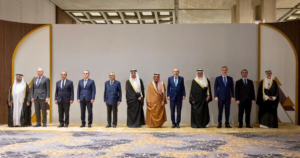
Lyna Ouandjeli] Thank you for your analysis of Syria. Let’s now briefly move on to Saudi Arabia, an actor you mentioned concisely but in great detail at the beginning. Today, Saudi Arabia plays an increasingly central role in Middle Eastern dynamics. MBS appears to be positioning himself—intentionally or not—as the primary mediator in the Gulf region, taking over from actors who historically held this role. On February 22, he notably served as a point of contact between Russia and the United States on the Ukrainian issue, facilitating discussions to try to ease the conflict and restore dialogue between these two powers. More recently, on February 27, a conference was organized around the situation in Syria and other regional issues. Additionally, a conference co-organized with France on Syrian and Palestinian issues seems to be in preparation, further illustrating Riyadh’s commitment to mediation. Furthermore, we are witnessing a rapprochement between Saudi Arabia and Iran, with these two powers now appearing as regional “policemen” of sorts, on an almost equal footing. Historically, their relations have gone through periods of cooperation, notably in the 1970s under Nixon, with rapprochement between the Shah and the Saudi king, before shifting toward heightened tensions. However, in 2023, Chinese mediation led to a new rapprochement between the two countries. In this context, do you think we are heading toward some form of Saudi-Iranian co-governance in the Middle East, especially following the events of October 7? Moreover, will Saudi Arabia be able to maintain its image as a regional mediator despite certain internal tensions with its population?
[Jean-Paul Chagnollaud]To respond to one of the terms you just used, I do not believe at all in the idea of co-governance. There is no real international governance, neither at the global level nor even regionally. Instead, we see actors positioning themselves based on their national interests and security concerns. In the case of Mohammed bin Salman, his goal seems to be regional pacification to implement his economic and financial ambitions. This is an interesting approach, as the Middle East has been marked for decades by endless conflicts, violence, and civil wars. Everyone is aware of this. In this context, rapprochement with Tehran takes on major strategic importance. If a direct confrontation between Israel and Iran were to break out—a scenario increasingly discussed—its repercussions would be felt throughout the region, particularly in Iran’s neighboring countries, including the Gulf states and Saudi Arabia. However, Riyadh absolutely does not want such a conflagration, as it would devastate the economic and strategic ambitions pursued by the current Saudi leadership. One of the major regional challenges today— beyond the war in Gaza, which is far from over—is rethinking collective security. This is not about co-governance but rather a regional security system that includes Iran under certain conditions. The keyword here is inclusion, with all the nuances that entail. A lasting de-escalation in Saudi-Iranian relations, combined with a genuine agreement on Iran’s nuclear program—not a military escalation as the Israeli government desires—would be a breakthrough for the region. The unilateral U.S. withdrawal from the 2015 nuclear deal under Trump severely weakened the balance, and European powers failed to keep the agreement alive. Today, there are two possible paths: confrontation or a resumption of negotiations, which will inevitably involve Iran’s nuclear issue. Iran appears open to considering this option, but the dynamics remain contradictory. It is neither Israel’s preferred path nor necessarily that of the United States, leaving much uncertainty. Nevertheless, the only path to stability lies in building a collective security system that involves political compromises and new agreements. At this stage, these are just ideas, but their realization is essential to prevent the region from falling back into a cycle of endless violence and wars.
Lyna Ouandjeli] Thank you very much. We are nearing the end of our discussion. We still have three or four questions left, including one on Lebanon and a final one covering Jordan and Egypt. Let’s start with Lebanon. This country has found itself, unwillingly, at the heart of the conflict, suffering severe consequences. We have seen massive destruction, particularly in southern Lebanon and Beirut.
We have also seen an intensification of Israeli military operations in southern Lebanon, with targeted strikes that have significantly weakened Hezbollah. In attempting to retaliate, Hezbollah has suffered heavy losses, including the assassination of Hassan Nasrallah and the destruction of its headquarters. These events have had a major impact, including on Iran’s regional influence. At the same time, Lebanon faces major challenges in stabilizing its government, which remains deeply divided politically and institutionally. The formation of an inclusive executive remains a central issue in a country where successive crises have weakened any attempt at sustainable governance. My first question, therefore, concerns the challenges facing President Joseph Aoun, who has long worked toward establishing a government representative of Lebanon’s diverse communities. What are the major obstacles to this stabilization? How does he plan to overcome the political and institutional tensions that paralyze the country, given that Lebanon has regularly faced government crises, political assassinations, and internal deadlocks? In your view, what strategies could he adopt to assert his leadership and drive a new dynamic?
[Jean-Paul Chagnollaud] President Joseph Aoun faces a multitude of challenges, none of which clearly outweigh the others. One potentially positive and new development is the changing regional environment: the Syrian regime, which occupied Lebanon from 1976 to 2005, no longer exercises arbitrary influence, marking a major turning point. However, the situation remains different in the south of the country, where Israel continues to assert its presence through repeated incursions.
The third key point concerns the axis of resistance, which is not limited to Syria but also includes Iran and Hezbollah. Hezbollah can no longer hold the dominant position it once had. While major obstacles remain, their influence has diminished compared to the past. In this context, Joseph Aoun faces a fundamental challenge that all presidents aspiring to transform Lebanon have encountered: the construction of a true state. The goal is to build a state capable of establishing a Lebanese citizenship that gradually relegates the sectarian system to the background. This requires profound reforms, both politically—including constitutional reforms— and economically, as no progress is possible without overcoming the financial crisis that has severely impacted the country for several years.
Finally, a central element in this state-building effort is the question of the monopoly on legitimate physical violence, an essential condition for the existence of a stable and sovereign state. This is the famous formula of Max Weber, which remains unrivaled: for a state to exist, it must be able to impose its choices, which requires a military force. The issue of the Lebanese army is therefore crucial in two respects. On the one hand, it represents the armed branch of the state, ensuring border security and, consequently, the country’s sovereignty. Without a strong army, this sovereignty is continuously undermined by external actors. However, as their influence has diminished today, this could serve as a strengthening factor for Lebanon. On the other hand, the army plays a central role as a space where different communities can engage with each other and potentially transcend their affiliations. While the goal is not to dissolve these communities—since they are an integral part of Lebanon’s identity and richness—it is imperative to go beyond the sectarian system to build a state based on citizenship and institutional strength.
This challenge was already present 20 or 30 years ago, but perhaps this time, political forces will finally recognize the necessity of evolving. This debate also revives memories of the presidency of Fouad Chehab (1958-1964), which many Lebanese regard as exemplary. The “Chehabism[1]” ideology laid the foundations of the state, but this dynamic lasted only about six years before being swept away by subsequent crises. These issues concern not only the head of state but also the head of government, whose background is unique. As a trained jurist and former president of the International Court of Justice (ICJ), he possesses valuable expertise on these matters. However, there remains a significant gap between theoretical reflection and the practical implementation of reforms.
[Matteo] Still on Lebanon, in the context of the current ceasefire, are there any prospects for a lasting peace agreement between Lebanon and Israel?
[Jean-Paul Chagnollaud] A peace agreement between Lebanon and Israel is theoretically conceivable, especially with the weakening of Hezbollah. However, such an agreement would be deeply linked to the Israeli-Palestinian issue. It is difficult to imagine peace between Israel and Lebanon without resolving the Israeli-Palestinian conflict. The major source of instability in the Middle East, which persists today, remains the Israeli-Palestinian question. The Netanyahu government is currently adopting a posture aimed at consolidating and expanding its dominance, regardless of the cost. This triptych, which I would describe as devastating in the long term, rests on three pillars: domination, deportation, and annexation. Regarding deportation, I want to emphasize the term, which is legal and comes from the Fourth Geneva Convention. Israel has organized the deportation of populations from Gaza, and now Trump is even discussing mass deportation. Although this deportation does not seem imminent, the mere fact of discussing such a measure legitimizes an act that goes against international law, ethics, and politics. Unfortunately, deportation is already a reality in the West Bank, with approximately 40,000 people forcibly evacuated, who cannot return to areas such as the Jenin, Tulkarm, and Nur Shams camps. The third element of this triptych is the annexation of the West Bank, a goal seemingly supported by Trump. If this direction materializes, with this combination of domination, deportation, and annexation, the region will be destabilized, and the immediate neighboring countries, such as Lebanon, Syria, and probably Jordan, will be severely affected. Egypt is also extremely concerned about the situation.
In this context, although peace between Israel and Palestine is not currently on the agenda, one could imagine that one day, with a two-state solution, a resolution could be reached. Such a solution would be a major opportunity, not only for Palestinians and Israelis but also for the Lebanese, who would no longer have to live near this volatile area where everything can shift at any moment.
Lyna Ouandjeli] To conclude, you have perfectly introduced several of my concerns, particularly regarding the situation in Jordan and Egypt. In early February, during Benjamin Netanyahu’s visit to the United States, Donald Trump made a highly controversial speech about the forced deportation of Gazans, even comparing it to the creation of a sort of “Riviera” in Gaza. This position was recently reinforced by the publication of a controversial video by Donald Trump, called “Trump Gaza,” in which Elon Musk, Benjamin Netanyahu, and Trump are seen sipping cocktails on what has been turned, in the video’s imagination, into a kind of French Riviera in Gaza. In response, we saw a swift reaction from King Abdullah II of Jordan and Abdel Fattah el-Sisi in Egypt, who firmly rejected the idea of deportation and the displacement of Gaza’s population. Many Arab countries have also quickly begun rallying around this issue, rejecting this violence and violation of human rights, which is formally condemned by the 1949 Geneva Convention. At this stage, given the current developments and historical contexts, a key question arises: Since the United States provides significant financial aid to Jordan and Egypt, if these countries firmly oppose Donald Trump’s policies, could he withdraw or reduce this aid?
Furthermore, if these regimes decide to distance themselves from Washington and Israel, it would be relevant to ask whether an alternative exists for Washington to exert more targeted influence over this situation. Could such a decision also impact the normalization agreements signed in 1979 by Egypt and in 1994 by Jordan with Israel? Finally, the socio-cultural and politico-economic impact of such deportations on Jordan would be considerable. It is important to remember that Jordan hosts one of the largest populations of Palestinian refugees, and a significant portion of its population is of Palestinian origin. What would be the impact on the Kingdom of Jordan, as well as on Egypt, in this context? This is a question that raises many others, given the multiple and complex stakes involved.
[Jean-Paul Chagnollaud] First, regarding the reservation you mentioned, I’m not sure we can call it “controversial”; there should be no doubt about it. This position is unacceptable—scandalous, even—and it is crucial to respond to it categorically. From a legal, ethical, and political standpoint, it is entirely unacceptable. We are returning to a 19th-century era when populations were deported without scruples. It is essential to use the precise wording of Article 49 of the Fourth Geneva Convention[2], which refers to the “forcible transfer of population” or “deportation”—an act that is explicitly prohibited. Trump is advocating deportation, and we must say it clearly: we must call things by their proper names. In this sense, this position is absolutely unacceptable.
I will stop here because I am extremely angry when these statements are brought up—and we should be. Regarding the specific points you raised, I think there are several key elements to consider. As for whether countries like Egypt or Jordan will reconsider their agreements with Israel, it is important to distinguish between normalization agreements and actual peace treaties. They are not the same thing. The United Arab Emirates did not sign a peace treaty because they were never at war with Israel. However, Jordan and Egypt were indeed at war with Israel before signing their peace treaties in 1979 and 1994, respectively. So, will these countries reconsider their peace treaties? I would be surprised if they did because I believe it is in the best interest of all parties, especially for themselves, to maintain these agreements. That is a crucial first point.
The second point is that a deportation that would push hundreds of thousands of Palestinians from Gaza into Egypt or Jordan would be completely impossible for these two countries. Otherwise, it would put their regimes at risk. For Jordan, as you mentioned, it would mean the end of the Hashemite system, or at the very least, it would create major political problems. Furthermore, politically, these countries are already struggling against political Islam, particularly the influence of the Muslim Brotherhood, especially in Egypt. Although it is more subtle in Jordan, the deportation of Gazans would provide a powerful argument for strengthening political Islam, which is something the regimes in Cairo and Amman do not want. I believe this is probably one of the arguments that King Abdullah raised with Trump. According to the information I have, the discussion in Washington did not go as badly as one might think. Trump seems to have been receptive to King Abdullah’s arguments, according to reliable sources. In this context, it is imperative to resist these proposals, whatever the consequences, including financial ones. After all, the Arab world has resources—if only the countries in the region could act in solidarity, which is not their strong suit, but who knows? As you mentioned, a summit is coming up soon, and the issue of deportation will be a major topic. This also means that they must prepare an alternative plan because these measures are absolutely unacceptable. Even if they are supported by Netanyahu, who has long dreamed of deportation and is already implementing it in the West Bank, as I mentioned earlier.
The second issue is security. After this phase of potential destabilization, it is clear that security must be organized. Unfortunately, the Palestinian police will not be enough. It is crucial to imagine an international intervention force that would ensure security on the ground, particularly in Gaza. This is essential for the stability of the region. Finally, the third dimension is the question of reconstruction. Reconstruction must be carried out as quickly and efficiently as possible, with the necessary financial resources. The absolute principle must be that Gazans remain in place during this reconstruction phase, as complex as it may be. After that, it would be necessary to consider a resolution to the Israeli-Palestinian conflict. But here, I allow myself to dream a little.
Lyna Ouandjeli] Thank you very much. Thank you also for taking the time to answer our questions and for using the appropriate terms to describe the different situations, especially the violations of international law. This is very important—knowing how to use the right words and not hesitating to place them where they belong, without timidity. I sincerely thank you for that because it has provided us with valuable insight into the situation in the Arab world. It has also given me material to reflect on for writing an article, using your information as sources. Thank you again for your time.
[Jean-Paul Chagnollaud] You’re very welcome, thank you. Just one last word on this subject: There was a quote from Camus that is very important. He said, “To misname things is to add to the misfortune of the world.”
Lyna Ouandjeli] Exactly.
[Jean-Paul Chagnollaud] We must always remember that. We must always name things correctly. That’s it. Thank you. Thank you a lot. Have a nice day. Goodbye.
Notes
[1] Editor’s Note: Chehabism is a political ideology in Lebanon named after former Lebanese President Fouad Chehab, who served from 1958 to 1964. This movement is characterized by a vision of governance aimed at strengthening the state and promoting national unity in a deeply divided country. Chehabism stands out for several key aspects, including state reform and modernization, moderate Lebanese nationalism, the strengthening of the army and security, as well as support for social and economic reforms.
[2] Editor’s Note: The Geneva Convention relative to the Protection of Civilian Persons in Time of War was adopted on August 12, 1949. Article 49 states in its first paragraph: “Individual or mass forcible transfers, as well as deportations of protected persons from occupied territory to the territory of the Occupying Power or to that of any other country, occupied or not, are prohibited, regardless of their motive.”