


Speaking on BFM, EISMENA Director, Adel Bakawan explains why the US–Iran conflict has entered a third phase centered on economic blockade and secondary sanctions. He examines the limits of China’s support for Tehran, the mounting pressure on Iran’s economy and why neither diplomacy nor military force currently offers a clear resolution.
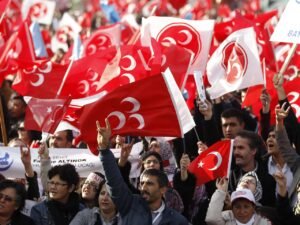
Turkish Nationalism and the Kurdish Settlement Process Launched in October 2024
The article examines why Turkey’s current Kurdish settlement process, launched in October 2024, has so far encountered relatively limited opposition from Turkish nationalist forces. It traces the evolution of Turkish nationalism, from the hardline positions of the 1990s to the more fragmented nationalist landscape of today, and explores the unexpected role played by MHP leader Devlet Bahçeli in initiating the process. The article argues that, while ultra-nationalist opposition remains present, Turkish nationalism is no longer a unified political force, creating space for a new approach to the Kurdish question.