


The interconnection between the Shiite version of the Lebanese militia model and that of Iraq has a long history. This model originates from the major Shia seminaries of Najaf, where the prominent Marjaiyyas (religious authorities) are established. It was in Najaf that the Dawa Party, established in the 1950s following the Muslim Brotherhood’s example to counter the Iraqi Communist Party, gained significant traction. The systematic influx of Lebanese Shia to Najaf to receive theological training facilitated the creation of a dynamic ideological link between the Shia communities of Lebanon and Iraq, fostering reciprocal interactions. Notably, Subhi al-Tufayli, educated in Najaf (Iraq) under the Iraqi cleric Muhammad Baqir al-Sadr, was a co-designer of the concept of “wilayat al-faqih” alongside Ayatollah Khomeini.
Ayatollah Khomeini, the founder of the Islamic Republic of Iran, also spent a significant period in Najaf. The leader of the Iranian Islamic Revolution lived in exile in Iraq for approximately 13 years. He moved to Najaf in 1965 following his expulsion from Iran and remained there until 1978. In October 1978, under pressure from the Iranian government on Iraq’s Ba’athist regime, Khomeini was compelled to leave Iraq. He subsequently relocated to France, where he continued to organise and lead the opposition against the Shah of Iran, culminating in his return to Iran in February 1979.
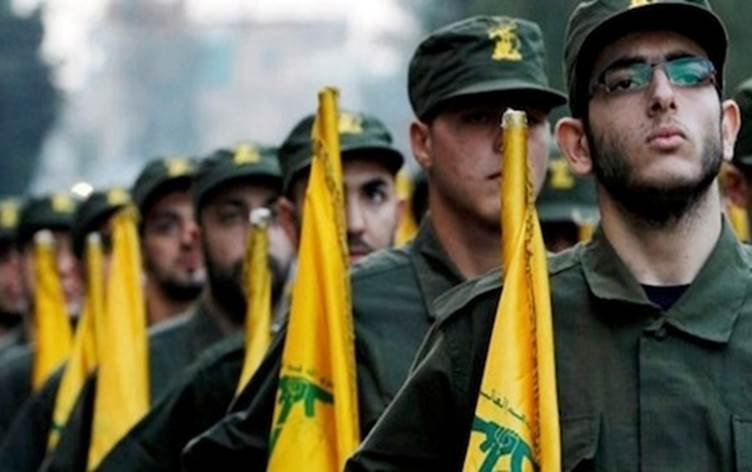
With Khomeini’s triumphant return and the establishment of the Islamic Republic, ties between Iraq, Lebanon, and Iran became even more pronounced. When the Shah’s regime fell, Khomeini’s supporters in Beirut organised large demonstrations, vociferously declaring their allegiance to the revolution. It was within this early, dedicated militant base that the Islamic Revolutionary Guards Corps (also known as the Pasdarans) established Hezbollah in 1982. That year, the Middle East, already embroiled in the dramatic conflict between Saddam Hussein’s Iraq and the Ayatollahs’ Iran, was further destabilised by the Israeli invasion of southern Lebanon. This operation, known as Operation Peace for Galilee, commenced on June 6, 1982, leading to the Israeli occupation of southern Lebanon and a prolonged siege of Beirut. The aim was to expel the Palestine Liberation Organisation (PLO) and curtail their capacity to launch attacks against Israel. The strategists in Tel Aviv likely did not anticipate that their invasion would significantly contribute to the emergence of an organisation far more powerful and dangerous to Israel’s security than the PLO, with whom they would normalise relations just a few years later.
After weeks of bombardments and intense clashes between the PLO and the Israeli army, an agreement was brokered with international assistance, particularly from the United States and France, facilitating the evacuation of the PLO and its fighters from Beirut. The PLO, rooted in its secular struggle, departed Lebanon in 1982, paving the way for a radical Shia Islamist resistance, which adopted the principle of “wilayat al-faqih” as its ideological framework. This principle designates the Supreme Leader of Iran’s Islamic Revolution as the commander-in-chief, to whom Hezbollah owes allegiance. The development had profound implications for the governance of the Lebanese state, as the monopoly on declaring war and peace shifted from the Lebanese state to an authority that was neither Lebanese nor Arab, but Iranian and Shiite—the Supreme Leader in Tehran.
As the Lebanese state has deteriorated over time, Hezbollah has been able to establish its militia order, conceived in Tehran by the Islamic Revolutionary Guards Corps. Although armed struggle against Israel and various Lebanese adversaries—whether Shiite, Sunni, Christian, or Muslim—and even against the enemies of its allies beyond Lebanon, remains a central reason for Hezbollah’s existence, reducing the armed group to this single principle does not fully capture its nature.
Hezbollah’s militia structure also embodies a worldview that forges a model for both society and the state. Societally, Hezbollah’s resocialisation program is closely aligned with that theorised by Sayyid Qutb, albeit adapted to include Shia symbolism and incorporating a set of ideological markers that define its worldview. Within this framework, once Hezbollah gains control over a region, it enforces measures such as closing liquor stores, imposing the veil on women, mandating beards for men, segregating genders, and mobilising societal opposition against LGBT individuals. At the state level, Hezbollah operates as a military, political, and economic force, shaping state practices across these three domains.
Though Lebanon possesses an army, it is compelled to share military sovereignty with Hezbollah. The Lebanese military is ranked 118th globally, whereas Hezbollah is regarded as the most heavily armed paramilitary force in the world. President Michel Aoun of Lebanon explicitly recognises and supports Hezbollah’s preeminence and its external interventions, for instance in Syria, asserting that “Hezbollah’s intervention aims to protect Lebanon from ISIS and Al-Nusra.” The President also acknowledges that the Lebanese army does not have sufficient capacity to confront Israel and that Hezbollah’s military presence is essential for the country’s defence.
Comparing the capabilities of the Lebanese army and Hezbollah, the former has 75,000 regular personnel, while Hezbollah comprises 60,000 fighters and reservists. The Lebanese army operates 63 aircraft, whereas Hezbollah possesses a diverse arsenal of missiles and drones, which provides it with superior control over the airspace. The Lebanese defence budget amounts to $1.7 billion, with the army dependent on international assistance, notably from the United States, for its armament. Despite the sensitive nature of the subject, estimates indicate that Hezbollah’s annual budget surpasses $1 billion.
Hezbollah’s arsenal encompasses nearly every type of weaponry: surface-to-surface missiles including Fajr-1, Falaq-1, Falaq-2, Shaheen-1, Type-81, Khaybar-1, Zelzal-1, Fateh-110, and Scud-B/C/D 880; anti-aircraft missiles such as shoulder-fired Misagh-1/2, dual-barrel ZU-23 machine guns, shoulder-fired Strela-2, the vehicle-mounted Osa missile system, shoulder-fired Strela-3, Igla-1 shoulder-fired missiles, the vehicle-mounted PAC M-2, and the Pantsir S-1 system; anti-ship missiles like C-208, C-704, and Yakhont; and anti-tank missiles including RPG-29 (Vampire), Malytka, Fagot, Konkurs, Metis-M, and Kornet-E. Hezbollah also possesses a range of drones, including both reconnaissance models and those designed to carry munitions.
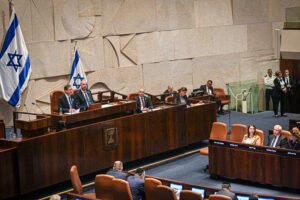
Politically, the Lebanese Parliament comprises 128 seats allocated as follows: 28 for Sunnis, 28 for Shias, 8 for Druze, 34 for Maronites, 14 for Orthodox Christians, 8 for Catholics, 5 for Armenians, 2 for Alawites, and 1 for minorities within the Christian community. Among the 28 Shia seats, Hezbollah occupies 13, with the Amal Movement holding the remaining 15. Nevertheless, Hezbollah’s considerable military and economic strength allows it to exert substantial influence across the National Assembly.
Thus, Hezbollah, through its multifaceted program, exerts extensive influence across military, social, political, and economic domains, emerging as a key actor in the consolidation, enhancement, and entrenchment of the militia model, not only within Lebanon but throughout the Middle East.