

The Middle East region is undergoing profound transformations in the balance of power and a shift in the geopolitical weight and status of states, with significant repercussions on the course of events. Israel’s war against Hamas and Hezbollah, followed by the fall of Bashar al-Assad’s regime and the collapse of Iran’s regional project, have revealed the extent of this transformation. This shift has coincided with confusion and disorder in several countries, which have been unable to escape the political, security, and economic consequences. These upheavals have also highlighted the rise of Saudi Arabia as a regional power in the Middle East, at the expense of other states. Years of cooperation with Arab, regional, and Western countries have transformed the Kingdom into a diplomatic pillar on the international stage—an influential actor in a crisis-ridden region and a credible destination for seeking solutions to complex global issues.
In response to the challenges facing the Middle East, Saudi Arabia has adopted several diplomatic approaches based on a philosophy of integration and partnerships in political, economic, and security fields, with the aim of strengthening its alliances. This strategy reflects an evolution of the principle of preventive diplomacy, seeking to avoid crises before they erupt, to resolve them before they escalate into armed conflict, or to act as an accepted mediator between opposing parties, in accordance with international norms and laws. This position attained by Saudi Arabia is the result of numerous factors, linked both to the nature of its leadership and to its elements of power—an aspect that deserves to be highlighted.
The Prince’s Diplomacy
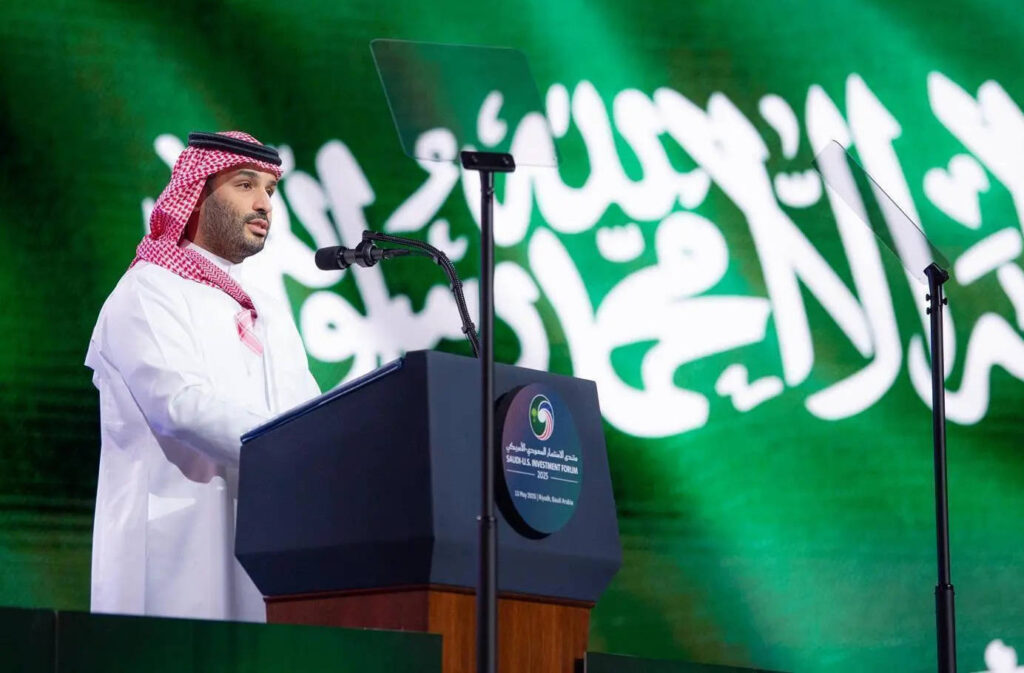
In a speech delivered on the occasion of the 87th anniversary of the founding of the Kingdom of Saudi Arabia in 2017—the same year he was appointed Crown Prince—Prince Mohammed bin Salman expressed his awareness of the influential position and role his country had attained, both regionally and internationally. He also emphasized his ambition, grounded in heritage, real capabilities, and a clear vision, to make Saudi Arabia a central player in the Arab, regional, and global systems.
The position that the Crown Prince seeks to assert is based on a new philosophy of political action. This philosophy revolves around two main pillars. The first aims to ‘reduce to zero’ external disputes—whether with immediate neighbors or more distant actors—while upholding the principle of non-interference in the internal affairs of Arab and regional countries, and remaining open to all nations to unify and coordinate diplomatic positions on various issues.
The second pillar is based on the interconnection of economic interests, thereby creating a network of strategic alliances. Through these two approaches, Saudi Arabia has succeeded in forging numerous alliances. It is within this context that Mohammed bin Salman did not oppose Iran’s desire to reconcile with Saudi Arabia—despite the legacy of a tense relationship and Tehran’s misguided sectarian policies. Instead, the Crown Prince chose not to view Iran as an enemy, but rather to offer it an opportunity to become part of a long-term project for regional stability. In line with an innovative principle that can be described as the ‘Prince’s diplomacy,’ the Saudi Crown Prince has skillfully leveraged his personal relationships with kings, princes, and heads of state to elevate his country to a higher standing on the international stage. In doing so, he has projected a new image of Saudi Arabia—as a supporter of sustainable development and a promising future for the region. This evolution has enabled the Kingdom to gain an enhanced position of global influence—an influence no longer based solely on oil, but also on the capital of friendship and trust associated with the Prince himself.
His personal relationships were particularly notable with President Donald Trump during his first term, to the extent that in 2019, Trump declared: “It’s an honor to be with the Crown Prince of Saudi Arabia, a friend of mine, a man who has really done things in the last five years in terms of opening up Saudi Arabia.”
For his part, Russian President Vladimir Putin praised Mohammed bin Salman, stating: “I consider the Crown Prince of Saudi Arabia a reliable, responsible, and active partner who knows how to achieve his goals.” This personal relationship contributed to strengthening ties with Russia and played a role in reshaping the geopolitical dynamics of the region. Saudi-Russian cooperation in the oil sector—particularly through the “OPEC+” agreements—has positioned Saudi Arabia as a key and influential player in global energy markets.
This approach, characteristic of the young prince’s personality, has made him a friend to most world leaders, in a dynamic primarily aimed at serving his country’s interests while building shared interests. These trusted personal relationships have also granted the prince political credibility, enabling him to propose solutions and articulate visions for many of the crises affecting the region and its surroundings.
Mohammed bin Salman has thus taken on the role of mediator in a global crisis, engaging in efforts to end the war between Russia and Ukraine, bridge differing viewpoints, and facilitate prisoner exchanges between the two countries. Similarly, his strategic vision of the need for balance in relations with major powers has led to a diplomatic approach marked by the development of ties with China—one of the world’s leading powers. This has been reflected in investments in energy and infrastructure projects, as well as in the strengthening of commercial and cultural cooperation with Beijing. Crown Prince Mohammed bin Salman’s role in asserting regional influence and forging international alliances has been pivotal in strengthening Saudi Arabia’s position both regionally and globally. He has also worked to ensure that the Kingdom becomes the central state in shaping the strategies of the Gulf Cooperation Council, particularly in addressing the region’s political and economic challenges.
In parallel, he has supported Arab alliances and established high-level coordination with countries such as Egypt, Jordan, and Turkey, as well as with Syria in the post-Bashar al-Assad era. This strategic role assumed by the Saudi Crown Prince represents a key and fundamental factor in his country’s future rise toward a more influential position in global decision-making on Middle Eastern policy.
Vision 2030 and Saudi Arabia’s Role
Saudi Arabia’s Vision 2030 emphasizes the implementation of unprecedented reforms across the public sector, while working to diversify the economy and strengthen an environment conducive to both domestic and foreign investment. However, this vision has also given rise to a parallel path that can be described as the “Diplomacy of the Vision.”
While the Kingdom’s decision-makers strive to make this diplomacy a support mechanism for the national program roadmap, the Saudi leadership is simultaneously managing to play a leading role on the international stage. It has made the approach based on building diplomatic and economic alliances a fundamental pillar of its future course of action. Saudi Arabia has thus hosted several Arab, regional, and international summits, whose main objective was to support political and economic stability and to strengthen partnerships. Some of these summits have mapped out the future of relations between regional countries and major powers or influential global blocs, while others have aimed to consolidate and expand regional ties. In all cases, these summits have highlighted Saudi Arabia’s regional and international standing, as well as the global confidence in its efforts to promote security and stability both in the region and around the world.
As part of the Vision 2030 diplomacy, Riyadh has hosted several high-profile summits. It organized the first-ever summit between the Gulf Cooperation Council (GCC) and the Association of Southeast Asian Nations (ASEAN), as well as the inaugural summit between the GCC and the Central Asian countries, known as the C5. It also convened an extraordinary Arab-Islamic summit focused on the situation in Gaza, and in 2023, held a meeting that brought together national security advisors and representatives from various countries to discuss the crisis in Ukraine.
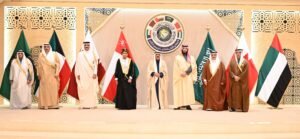
In terms of strengthening and developing its regional relations, the Kingdom hosted the 18th Consultative Meeting of the Gulf Cooperation Council leaders, the 32nd Ordinary Session of the Arab Summit, as well as the proceedings of the Saudi-African Summit. This new diplomatic direction has led to a major success: the selection of the Saudi capital, Riyadh, to host the World Expo 2030. In addition, Saudi Arabia was awarded the hosting of the United Nations Industrial Development Organization (UNIDO) Conference in 2025—an international recognition of the Kingdom’s ability to play a leading role in driving economic growth and industrialization in the region.
Together, these achievements will contribute to positioning Saudi Arabia as an advanced country in the Middle East, capable of influencing future decisions in the region.
Saudi Arabia and the New Middle East
The changes experienced by the region after October 7, 2023, have revived the narrative of the New Middle East by redrawing the boundaries of power and influence. With this return, the region is confronted with two imperatives: the first is to strengthen the chances for peace through solutions to several issues, and the second is to restore the balance of power following the end of Iran’s hegemony and that of its proxies in several countries.
In this context, Saudi Arabia’s role is emerging as that of a state capable of putting forward initiatives and solutions for the most complex and sensitive issues—combining military and political dimensions at both regional and international levels. The Kingdom possesses a unique legacy and method in its foreign relations, grounded in a constructive approach to pressing Arab causes, as well as in its ties with regional and Western systems, which view Riyadh as a state capable of building bridges in situations of deadlock. This includes critical issues such as the Palestinian question and the war in Gaza, the reorganization of the situation in Lebanon and Syria, where Saudi Arabia has succeeded in preventing further deterioration in Damascus, particularly following the vacuum created by recent developments in that country.
What further strengthens Saudi Arabia’s position is the return of Trump to the U.S. presidency. The new occupant of the White House views the Kingdom as the most influential state politically and economically in the Arab and Islamic worlds, and sees in its leadership the ability to formulate effective decisions capable of supporting stability plans and expanding opportunities for economic growth.
This will position Saudi Arabia as an advanced regional state, surpassing traditional regional powers whose influence and strength have declined. It will also occupy a central role in the New Middle East, both in decision-making and in regional restructuring, thanks to the internal and external strengths it possesses or is in the process of developing. These elements will enable the Kingdom to usher in a new phase in which it becomes an influential actor in dialogue and decision-making on Arab, regional, and international affairs.
Sources
- Zaid Al-Khamshi, “Saudi Arabia and Syria: Continued Support for Stability and State Reconstruction”, Sabq, 8 décembre 2024. https://sabq.org/saudia/xguqwdc4eo?
- Reuters, “Saudi defence minister, U.S. defense secretary discuss cooperation in Washington”, Reuters, 25 février 2025, https://www.reuters.com/world/saudi-defence-minister-us-defense-secretary-discuss-cooperation-washington-2025-02-25/
- Reuters, “Saudi Arabia invites leaders of Gulf states, Egypt and Jordan for talks on Friday”, Reuters, 20 février 2025, https://www.reuters.com/world/middle-east/saudi-arabia-invites-leaders-gulf-arab-countries-egypt-jordan-meeting-friday-2025-02-20/
- Dennis Ross, Dana Stroul, “How Trump, Arab Leaders, and Israel Can Overcome Their Disagreements on Gaza”, The Washington Institute for Near East Policy, 10 février 2025, https://www.washingtoninstitute.org/ar/policy-analysis/kyf-ymkn-ltramb-walqadt-alrb-wasrayyl-tjawz-alkhlafat-bshan-ghzt
- Simon Henderson, “A Reign Lasting Fifty Years? Crown Prince Mohammed bin Salman and the Future of Saudi Arabia”, The Washington Institute for Near East Policy, 22 avril 2019, https://www.washingtoninstitute.org/ar/policy-analysis/hd-ystmr-khmsyn-amaan-alamyr-mhmd-bn-slman-wmstqbl-almmlkt-alrbyt-alswdyt
- David Schenker, “The Transformation of Saudi Foreign Policy”, The Washington Institute for Near East Policy, 10 février 2016, https://www.washingtoninstitute.org/ar/policy-analysis/althwl-fy-alsyast-alkharjyt-alswdyt
- CNN, “Netanyahu to CNN: Reaching a normalization agreement with Saudi Arabia ‘will change the Middle East forever’”, CNN, 23 septembre 2023, https://arabic.cnn.com/amphtml/middle-east/article/2023/09/23/netanyahu-says-israel-is-getting-closer-to-quantum-leap-normalization-deal-with-saudi-arabia