


[Lyna Ouandjeli] The relationship between the United States and Iran has long been marked by alternating periods of hostility and cautious engagement. Historically, ties were close under the Shah, but this changed dramatically after the 1979 Islamic Revolution led by Ayatollah Khomeini, culminating in the U.S. Embassy hostage crisis. Since then, while diplomatic relations have remained severed, there have been intermittent efforts to engage Iran, particularly given its significant regional influence through proxies such as Hezbollah, the Assad regime in Syria, and the Houthis in Yemen. The 2015 Joint Comprehensive Plan of Action (JCPOA) represented a high point in diplomatic engagement, though it faced criticism and eventual U.S. withdrawal under the Trump administration in 2018. Iran’s regional activities and its adversarial relationships with U.S. allies—especially Israel and Saudi Arabia—have continued to complicate rapprochement. Following the October 7 conflict escalation, Iran initially positioned itself as a leading actor in opposing Israel. However, a series of internal and external setbacks—including military strikes on its territory and reduced regional leverage—have prompted a partial strategic retreat. Domestically, the regime faces considerable challenges: economic hardship, social unrest, questions surrounding the succession of the ailing Supreme Leader Khamenei, and the legitimacy of the Islamic Revolutionary Guard Corps (Pasdaran). Meanwhile, former President Trump, previously a staunch advocate of the “maximum pressure” campaign against Iran, has recently signaled a surprising openness to renewed dialogue. His divergence from Israeli policy on Iran suggests a potential, albeit unpredictable, shift in U.S. posture. Given this context, my first question is: In what ways has the ‘maximum pressure’ campaign affected Iran’s economic resilience and diplomatic strategies?
[F. Gregory Gause III] It is well established that the “maximum pressure” (MP) campaign significantly impacted Iran’s ability to export oil and severely constrained its economic relations, even with third countries, an outcome that was both critical and largely unforeseen. A key example is China’s reluctance to engage economically with Iran, fearing exclusion from the U.S. market. This dynamic emerged in 2018 when President Trump withdrew from the Iran nuclear deal (JCPOA), marking the beginning of a policy that ultimately failed. The MP strategy did not lead to the collapse of the Iranian regime nor did it compel Tehran to negotiate from a position of weakness, as the Trump administration had expected. Instead, Iran responded with a series of calculated attacks aimed at undermining the MP strategy, most notably the September 2019 strike on Saudi oil facilities. This was the most significant disruption to the free flow of oil since the Gulf War, and it deeply shocked the Saudis when the U.S. chose not to retaliate. Despite its pressure-focused stance, the Trump administration showed a clear reluctance to deploy military force. When the Biden administration took office, it sought to revive the JCPOA, continuing the trajectory of the Obama-era policy. However, negotiations faltered due to incompatibilities on both sides. The U.S. aimed for a “longer and stronger” agreement, while Iran underwent political transitions, including a new president, and the global COVID-19 pandemic further complicated diplomatic momentum. Following Russia’s invasion of Ukraine, the Biden administration prioritized stabilizing oil prices, which contributed to Iran’s gradual re-entry into the global oil market. As Trump’s return to the political scene became increasingly likely, many anticipated a revival of the MP strategy, given the strong critical voices within his circle (e.g., Rubio, Walls). Nonetheless, Trump, known both for confrontational rhetoric and for seeking deals, appeared to interpret Iran’s weakened position, particularly in the aftermath of the Gaza war, as an opportunity for negotiation. Among Iran’s proxies, only the Houthis emerged with relative strength, although they remain geographically and politically marginalized. This shifting landscape, combined with signals from Iran’s new leadership indicating a willingness to engage, has opened the door to potential dialogue. However, as is widely recognized, President Trump is prone to abrupt policy shifts and is often driven by the pursuit of quick political victories. His declaration that he would end the Gaza conflict “in a day” illustrates this tendency; when negotiations became more complex, he abandoned them. Similarly, he has reportedly set a short timeline for reaching a deal with Iran. While Trump has historically been hesitant to engage in military action, it remains a potential option if Iran does not comply with nuclear constraints, either by drastically limiting or eliminating uranium enrichment.
This moment thus represents both a significant opportunity and considerable uncertainty.
[Lyna Ouandjeli] How do current U.S. domestic politics and congressional actions shape the trajectory of the U.S.-Iran relations?
[F. Gregory Gause III] Domestic politics in the United States continues to lean strongly in favor of Israel, particularly within Congress, where Iran has few, if any, allies. Nevertheless, if former President Trump were to pursue and secure a deal with Iran, it is unlikely that Congress would pose a significant obstacle. Within the Republican Party, a substantial number of lawmakers would likely support him, either out of loyalty or fear of his political influence. On the Democratic side, there has historically been greater openness to nuclear agreements with Iran, as demonstrated during the Obama administration. Therefore, if Trump achieves the outcome he seeks, Congressional opposition is not expected to be a major barrier. The more pressing question is what exactly a future Trump administration would want to achieve. Securing a deal similar to the one negotiated under President Obama, entailing limitations on uranium enrichment, international inspections, and efforts to prolong Iran’s breakout time to weaponization would be relatively straightforward. However, if the administration aims to go further, as it has occasionally suggested, and seeks to deny Iran the right to enrich uranium entirely which is a right guaranteed to signatories of the Non-Proliferation Treaty (NPT), which includes Iran, the prospects for an agreement would diminish significantly.
Moreover, if the U.S. seeks to expand the negotiations to include issues such as Iran’s missile program or its support for groups like the Houthis, reaching a deal would become even more difficult. An additional complication lies in the timing: if a deal is not reached swiftly, there is the possibility that Trump could reverse course and return to a maximum pressure strategy, including the threat or use of military force. This would be particularly significant given recent developments, including visits by Israeli officials to Trump several months ago and the current context of military actions targeting Iran.
Ultimately, the unpredictability of Trump’s leadership creates uncertainty about whether the approach will favor diplomacy and agreement, or a return to confrontation and potential military escalation.
[Lyna Ouandjeli] How have previous negotiation failures informed Iran’s current approach to international diplomacy and nuclear discussions?
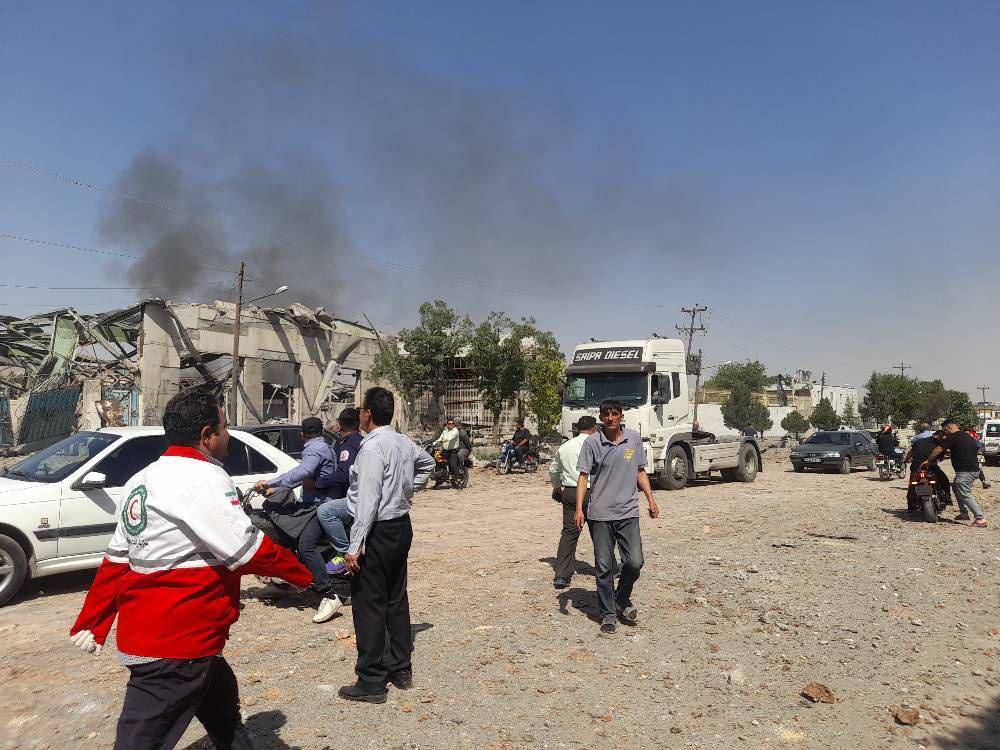
[F. Gregory Gause III] Two important factors shape the current context. First, Iran has already agreed in the past to limitations on its nuclear capabilities, establishing a precedent. If a new agreement can be reached, it is unlikely that the Islamic Revolutionary Guard Corps (IRGC) would veto it, and there does not appear to be significant domestic opposition within Iran to such a deal. Second, Iran is in a weaker position today than it was in 2015. At that time, it held a stronger regional posture and, although it faced sanctions from the U.S., the United Nations, and others, Russia and China managed to circumvent many of these restrictions. The current situation, however, is more fragile. Regionally, Iran has experienced setbacks in Lebanon, Palestine, and Syria, and there may be signs of a willingness to scale back its regional ambitions. A new Iranian government may also be more open to recalibrating its foreign policy. There are indications that informal understandings between Iran and the United States may already be taking place. For example, the apparent stability of the recent arrangement between the U.S. and the Houthis could reflect Iranian acquiescence or even tacit approval. This development may signal Iran’s willingness to negotiate not only on the nuclear file but also on regional issues, suggesting a broader scope for potential diplomatic engagement. Due to the escalation that began on June 13, the negotiations scheduled to take place last Sunday in Muscat, Oman, were canceled. Iranian Foreign Minister Abbas Araghchi confirmed the cancellation in a statement to Al Jazeera. As for what lies ahead, it remains uncertain whether the talks will ultimately collapse under the weight of Israel’s attacks on Tehran and the broader regional escalation, or whether diplomacy can endure and allow discussions on the nuclear issue to resume despite the ongoing military confrontations.
[Lyna Ouandjeli] How might regional actors, such as Israel and Gulf countries, influence or hinder efforts toward U.S.-Iran de-escalation?
[F. Gregory Gause III] A significant shift has occurred in the regional context since the first Trump administration. During his initial term, the United States maintained close ties—both financial and personal—with Saudi Arabia and the United Arab Emirates. These relationships played a central role in shaping and encouraging the “maximum pressure” (MP) policy against Iran, at least until the September 2019 attacks. These attacks had a profound impact on Riyadh and Abu Dhabi, leading both governments to question the reliability of U.S. military commitments. In response, they began to adopt a more pragmatic approach, seeking to reduce tensions with Iran—not to become allies, but to pursue a policy of engagement aimed at lowering regional friction. A weakened Iran is naturally seen as less threatening, and both Gulf states subsequently encouraged the Trump administration to continue negotiations with Tehran. For Saudi Arabia, this approach aligns with its strategic focus on economic development and the realization of Vision 2030, which depends on regional stability. Rather than advocating for aggressive measures against Iran, the Saudis have prioritized diplomacy. In contrast, the Israeli government—particularly under Prime Minister Netanyahu—continues to view Iran as a major threat, despite Tehran’s weakened regional position. Netanyahu’s stance is shaped not only by strategic concerns but also by domestic political considerations. Following the October 7 Hamas attack and amid ongoing corruption charges, Netanyahu faces significant political vulnerability. Maintaining a narrative of perpetual conflict serves his political interests by reinforcing his leadership during a perceived national crisis.
Israel has also demonstrated operational success, notably in its 2024 strikes against Iranian air defense systems near nuclear facilities. It seeks U.S. support for any potential future strikes, and thus aims to align American policy with its own objectives. While the current Trump camp may not be eager to support a military operation, it would be mistaken to overstate divisions between the U.S. and Israel. For example, despite disagreements over Netanyahu’s Gaza offensive, there has been no substantial policy divergence. However, when it comes to Iran, a deeper rift is evident. Netanyahu has limited leverage over Trump, whereas Trump believes he holds influence over Netanyahu. Trump’s decisions—whether to reinstate MP or threaten military action—are likely to stem more from his own calculations than from Israeli pressure. His approach remains highly personalized and unpredictable.
[Lyna Ouandjeli] What are the primary barriers to reviving the JCPOA in the current U.S.-Iran diplomatic climate?
[F. Gregory Gause III] The central issue in any potential renewed negotiations remains uranium enrichment. Politically, the matter is relatively well-defined: under the Non-Proliferation Treaty (NPT), signatory states are permitted to enrich uranium up to a certain percentage. Iran has consistently stated that it will not relinquish its right to enrich uranium within these limits. The Trump administration’s stance on enrichment has fluctuated—at times advocating for a complete ban, and at other times appearing more flexible. It remains unclear whether this question will prove to be a dealbreaker. However, it is widely acknowledged that enrichment is the primary point of contention. By contrast, Iran has shown little resistance to international inspections and related regulatory mechanisms. Another unresolved issue is the scope of the negotiations. The original Joint Comprehensive Plan of Action (JCPOA) was limited strictly to nuclear matters and deliberately excluded Iran’s regional activities, including its support for proxy groups. The Obama administration maintained that expanding the scope would have made an agreement impossible, as Iran would have refused to participate under such conditions.
It remains unclear whether Iran is now willing to address regional issues, or whether the United States will insist on including them—such as Iran’s support for proxies, regional allies, or its missile capabilities—as part of the negotiations. Therefore, a key question is whether the upcoming round of talks will focus solely on the nuclear file, or whether they will attempt to address broader strategic concerns.
[Lyna Ouandjeli] Does the current situation of Hezbollah and Hamas—both being weakened and potentially facing complete disarmament—create an opportunity for Iran and the U.S. to pursue a nuclear agreement?
[F. Gregory Gause III] Hamas is currently in no position to demonstrate flexibility, as Israel is actively pursuing its objective of dismantling the group entirely. Under such circumstances, Hamas is not in a viable position to engage in negotiations. Hezbollah, by contrast, remains the most powerful political actor in Lebanon, but it is significantly weakened. The fall of the Assad regime would hinder Iran’s ability to supply Hezbollah militarily. Presently, there appears to be more domestic political pressure on Hezbollah to disarm than at any point since the end of the Lebanese civil war. This pressure mirrors the disarmament processes that other militias underwent following the war. However, a complicating factor is the Israeli military presence in parts of southern Lebanon, established during its campaign against Hezbollah. Since Israel’s 2000 withdrawal, Hezbollah has justified its continued armament by framing it as part of a liberation campaign against Israeli occupation. While this has served as a pretext, the real strategic value of Hezbollah’s weapons lies in the power they confer within Lebanese politics. Therefore, any serious disarmament effort would likely require a reduction or end to Israeli presence in Lebanon, as this remains Hezbollah’s primary public rationale for retaining its arsenal.
[Lyna Ouandjeli] What leverage does the U.S. currently have in coaxing Iran back to the negotiating table without military escalation?
[F. Gregory Gause III] Two key factors increase the likelihood of a potential agreement: Iran is not only in a weaker position but also perceives itself as such. The current Iranian president has emphasized the need to improve international relations and focus on the country’s economic challenges. This shift is driven not only by the impact of U.S. sanctions and the fallout from the October 7 attacks, but also by significant internal unrest. In the post-COVID period, Iran has witnessed large-scale demonstrations, particularly led by the women’s movement, expressing widespread discontent with the regime’s social policies. Criticism has also extended to both socio-economic conditions and foreign policy, indicating a desire for adjustment—though not necessarily a complete transformation—within the existing system.
While it is important not to overstate Iran’s weakness—the country remains highly influential in Iraq and continues to maintain a strong presence through Hezbollah—it nonetheless views a U.S. president open to negotiations as a positive signal. This moment is characterized by cautious optimism regarding the possibility of reaching an agreement, yet it remains a time of considerable uncertainty.