


Long shaped by a dogmatic ideology and an open confrontation with multiple Arab regimes, Turkey’s foreign policy now appears to be seeking a form of pragmatic normalisation or even convergence with these very regimes/regional powers. Simultaneously, Iran remains its strategic structural rival, deeply rooted in a longstanding mistrust born of imperial legacies, confessional cleavages and a rivalry for influence, particularly in Iraq, Syria, and Palestine. The Kurdish question has long been a source of domestic conflict but could now turn into a factor of stabilization, provided that the ongoing peace process between Turkey and the PKK party succeeds. Finally, the Israeli issue underlines ongoing tensions: Ankara denounces Israel’s actions in Gaza but remains under pressure from a third actor, Washington, that seeks to minimize the frictions between its two strategic allies. Hence, a question emerges: how has Turkey been redefining its relations with regional powers since 2023, navigating between alliance-building, strategic rivalry and the pursuit of normalization? An analysis of its relations with the Arab world, Iran, Israel and the Kurds allows us to evaluate the scope and limits of this regional de- and recomposition.
Turkey and the Arab world: a partnership in construction
For over a decade, relations between Turkey and the Arab world have been marked by profound changes. Today can be witnessed a recomposition of regional balances, marked by a growing convergence between Ankara and muliple Arab capitals. Though no formal alliance has yet been established, current dynamics outline the contours of a Turkey-Arab axis centered on security, stability, and development, at the expense of democratic aspirations.
The case of Syria is emblematic of this change. As a fierce opponent of Bachar al-Assad’s regime, Turkey had, from 2011, adopted a policy of complete rupture with Damascus. However, the rise to power of Ahmed al-Charaa altered the equation and offered Turkey the opportunity for renewed engagement on multiple fronts: militarily, with the establishement of bases in Northern Syria; economically, through active participation in the country’s reconstruction; in security terms, by coordinating cross-border and counterterrorism issues; and even ideologically, through the promotion of an Islamic-conservative model of governance combining political authority with religious references. This strategic repositioning underscores Turkey’s ambition to have a concrete influence on Syria’s future.
In Egypt, the reversal is equally striking. During the Muslim Brotherhood’s brief time in power under Mohammed Morsi, Ankara offered them its unwavering support. As Abdel Fattah al-Sissi came to power and brutally repressed the Islamic movement, all cooperation came to an end. Yet today, Turkey appears willing to turn the page. The Muslim Brotherhood issue has been relegated to the margins, and, driven more by economic and geopolitical calculations than by ideological affinity, a normalization with the Sisi regime is now underway.
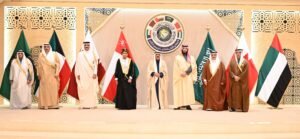
The Gulf provides another illustration of this reconciliation. Rooted in regional rivalry and conflicting visions of political Islam, the once tense relations between Turkey and the United Arab Emirates or Saudi Arabia during the 2010s, have shifted towards a renewed dialogue. Mohammed ben Salmane (MBS) and Mohammed ben Zayed, now pursuing agendas of authoritarian modernization, are reinvesting in Turkey, which is suffering from a deep economic crisis. This financial support is far from altruistic: it reflects a desire to strengthen ties with a key regional player capable of shaping outcomes in several hot spots such as Libya, Syria or the Eastern Mediterranean. Geopolitically, a convergence has emerged around joint priorities: regime stability, counterterrorism, and economic development, though without democratization. This shared foundation has fostered pragmatic rapprochements, even among former rivals. A striking example is the meeting between Donald Trump and Ahmed al-Charaa on May 14, 2025, in Riyadh – discreetly orchestrated by MBS and Erdoğan. The subsequent lifting of U.S. sanctions on Syria bears witness to this newfound influence, enabled by a reconciled Turco-Arab diplomacy.
Hence, although not yet formalized, all elements of a structuring partnership are now in place. Between strategic realignment, converging interests and a shared vision of regional order, Turkey and the Arab world are shaping a new post–Arab Spring chapter together.
Turkey and Iran : the consequences of a structural antagonism
The rivalry between Turkey and Iran is deeply rooted in historical and geopolitical realities[1]. Far from being a mere conjunctural disagreement, it reflects a structural mistrust shaped by centuries of confessional, political, economic, and territorial antagonisms. Turkey, as a Sunni power, aspires to order, stability, and influence within the Sunni–Turkic sphere; Iran, by contrast, positions itself as the center of political Shiism, driven by a revolutionary logic and the export of a militia-based Shiite order.
Since the U.S. occupation of Iraq in 2003, the rivalry has acquired a new dimension. Iran seized the strategic vacuum left by Saddam Hussein’s fall to construct a true “militia order” grounded in ideologized paramilitary networks. From Tehran to Beirut, via Baghdad, Damascus, and Sana’a, the Islamic Republic has steadily consolidated a sphere of influence that Turkey perceives as a direct threat. Ankara views this Shiite militia order as a primary source of regional instability, obstructing its own Middle Eastern ambitions.
The Palestinian question is another source of friction. While Iran openly supports Hamas and the Islamic Jihad, Turkey presents itself as a more legitimate political advocate of the Palestinian cause, notably due to its Sunni anchoring and diplomatic engagement. Ankara therefore perceives the iranian way of handling the palestinian issue as a strategic instrumentalization that prevents any credible political resolution.
Yet Iraq remains the primary theater of Turkish-iranian rivalry, with history weighing heavily. Between 1508 and 1638, Baghdad witnessed successive Safavid and Ottoman conquests, each accompanied by confessional massacres between Sunnis and Shiites. These brutal episodes etched a deep-rooted hostility into both nations’s collective memories, where religion and territorial domination are intertwined. In 2003, the return of Shiites to power in Baghdad, backed by Iran, reopened this historical wound. Despite regular diplomatic exchanges, Iran and Turkey continue to pursue competing trajectories in Iraq. Tehran prioritizes control over Shiite institutions and militias through a grounded approach, while Ankara relies on indirect influence through economic ties, military presence in the north, and alliances with Sunni and Kurdish actors. To date, no sustainable coordination framework has emerged. Ultimately, the Turkish-Iranian relationship remains trapped in a systematized structural antagonism. Despite occasional cooperation, notably on border security and the battle against certain armed groups, the two powers remain unable to transcend logics of confrontation.
In an evolving Middle East, where new equilibria are emerging, this ongoing/steady rivalry weighs on regional stability and complicates the process of building an enduring multipolar order.
Turkey-Israel: from discord to Trump’s arbitration
Turkey was the first Muslim-majority country, in 1949, to recognize the state of Israel[2]. Long perceived as a strategic partner of Tel Aviv, especially in terms of military and security, Ankara gradually shifted, from the 2000s onwards, toward a more critical stance. The rise of the AKP and Recep Tayyip Erdoğan marked the beginning of an ambitious relationship, oscillating between pragmatism and ideological tensions.
Since the geopolitical earthquake of October 7, 2023, marked by Hamas’ attack against Israel and Israel’s subsequent offensive on Gaza, Israel and Turkey have paradoxically emerged as the two powers best able to benefit from the surrounding chaos. Turkey has consolidated its foothold in northern Syria and expanded its influence within the Sunni world, while Israel has significantly weakened Hamas and reasserted its military dominance in the region. However, despite this, no cooperative framework seems to have emerged between the two states[3].
Two major issues crystallize this discordance, the first one being the war in Gaza. Since October 7, Turkey has relentlessly condemned the military strategy of Benjamin Netanyahu’s government, explicitly qualifying it as “genocide” against the Palestinian people. Erdoğan, striving for leadership within the Muslim world, uses this conflict as a political lever, while occasionally hosting Hamas officials on Turkish soil. Such a stance makes strategic cooperation with Israel extremely difficult, especially since Tel Aviv judges Ankara’s accusations as an unacceptable intrusion into its national security affairs.
The second issue concerns post-Assad Syria. As Iran’s influence in the region seems to fade, Turkey aspires to take a central role in Syria’s reconstruction and stabilization under Ahmed al-Charaa’s leadership. Israel, however, strongly opposes any Turkish replacement for Iranian influence in Syria. From Tel Aviv’s perspective, replacing one hostile actor (Iran) with another critical one (Turkey) offers no improvement to its strategic environment.
Despite ongoing rhetorical and diplomatic escalation, both countries have carefully avoided direct military confrontation. Here, a pivotal actor emerges: U.S. President Donald Trump. Returning to the White House in a particularly explosive regional context, Trump has assumed the role of tacit arbiter between Ankara and Tel Aviv. Close to both Netanyahu and Erdoğan, he wields economic, diplomatic, and security levers capable of curbing escalation. His objective is clear: to prevent an irreversible rupture between two key regional allies that could otherwise undermine his own stabilization ambitions in the Middle East.
Hence, the Turkey-Israel relationship remains both conflictual and constrained. Marked by enduring ideological rivalry and divergent strategic interests, it is currently managed through a delicate balancing act orchestrated from Washington. Within this uncertain landscape, Trump serves as the guardian of a fragile status quo, averting for now the specter of direct confrontation between Ankara and Tel Aviv.
Turkey-Kurdistan: transforming the enemy figure
For decades, the Kurdish question has stood at the heart of Turkey’s domestic and regional politics. To grasp its full significance, it is crucial to consider the geopolitical configuration of Kurdish space. Within this fragmented area, two main poles compete to embody the political, ideological, and military representation of Kurdish nationalism in the Middle East: on one side, the Kurdistan Democratic Party (KDP) led by Massoud Barzani, rooted in Iraqi Kurdistan and aligned with liberal democratic models; on the other, the Kurdistan Workers’ Party (PKK), founded by Abdullah Öcalan, structured around a Marxist-inspired ideology and engaged since the 1980s in armed struggle against the Turkish state. While the KDP has, since at least 2007, been a strategic partner for Ankara, particularly in economic, energy, and security matters, the PKK has long been regarded as Turkey’s number one enemy. Yet this paradigm is now on the verge of transformation.
In October 2024, an unprecedented peace process has began between Ankara and the PKK, triggered by profound shifts on both sides. On the Kurdish side, the PKK has deeply revised its ideological foundations. Its initial goal – the creation of a unified Kurdish state based on a proletarian dictatorship – has been abandoned. Under Abdullah Öcalan’s enduring intellectual influence, the movement has shifted toward a democratic project within Turkey, advocating for recognition of Kurdish cultural and political rights within the framework of the Turkish state.
This evolution was formalized at a historic conference held from May 5 to 7, 2025, in Iraqi Kurdistan, where the PKK announced its dissolution and the definitive abandonment of armed struggle. On the Turkish side, a turning point has likewise emerged. The government now appears willing to acknowledge Kurdish identity as an integral component of the Turkish nation, breaking with decades of denial. This opening reflects a broader regional context in which Ankara seeks to stabilize its borders and move beyond a conflict that has claimed tens of thousands of lives.
If this process comes to fruition, its consequences will be far-reaching. Domestically, Turkey could achieve lasting pacification of its Kurdish regions, still heavily militarized today. This would also enable economic revitalization and a redefinition of the state-minority relationship within a renewed democratic framework. Regionally, an accord between Turkey and the PKK would reshape power dynamics, weakening Iran’s ability to instrumentalize Kurdish movements as geopolitical leverage. It would furthermore strengthen cooperation between Ankara and Erbil, supporting the institutional, rather than military, integration of Kurdish actors into the regional order.
Finally, this transformation of the enemy figure could inspire other armed movements across the region in search of political alternatives to violent struggle. Yet the stakes remains fragile. Many forces, within Turkey and beyond, have an interest in maintaining the status quo. Still, for the first time in decades, a horizon of peace appears credible; and with it, the prospect of a profound reconfiguration of the Kurdish role in the Middle East’s political architecture.
In conclusion
The intensified regional interactions since October 2023 reveal a Turkey undergoing strategic recomposition, multiplying tactical adjustments within a rapidly changing Middle Eastern landscape. Its normalization with authoritarian Arab regimes, desire for Kurdish pacification, enduring antagonism with Iran, and delicate balancing act with Israel compose a complex picture where national ambitions, geopolitical opportunism, and ideological constraints intertwine.
What unites these transformations is a distinctly Turkish pragmatism, not aimed at constructing formal alliances, but rather at building functional complementarities grounded in a shared triad: security, stability, and development – all without democratic inclusion. This emerging regional order, often reinforced by ad hoc U.S. mediation, helps avert military escalation while institutionalizing structured competition among regional poles of influence.
Thus, Turkey appears to embrace the role of a pivotal power, seeking to position itself simultaneously as mediator, balancer, and ideological promoter of a reformed Islamic-conservative model. Yet this ambition remains fragile, as it relies on unstable equilibria, enduring rivalries, and unpredictable external actors. The post-October 7 Middle East does not enshrine Turkish hegemony, but it does affirm Turkey’s centrality within a regional system in search of new architectures.
Notes
[1] Marianna Charountaki, Iran and Turkey: International and Regional Engagement in the Middle East, I.B. Tauris, 2018.
[2] Karel Valansi, The Crescent Moon and the Magen David: Turkish-Israeli Relations Through the Lens of the Turkish Public, Lanham, Hamilton Books, 2018, p. 15.
[3] Yusuf Canet, Seda Güneş, « Turkey–Israel Relations After October 7: Layers of Complexity and Posturing », Wilson Center, Washington, D.C., 2024.