


The 1980s Tanker War and the 2026 Crisis: A Historical Comparison
To situate the present crisis analytically, it is essential to engage seriously with the historical precedent most frequently invoked by policymakers and commentators: the Tanker War of 1984 to 1988, which constituted the last major episode of systematic maritime interdiction in the Persian Gulf. The comparison is instructive both for its revealing parallels and its equally revealing divergences, and a rigorous analysis of both is necessary before any assessment of the current strategic situation can proceed with confidence.
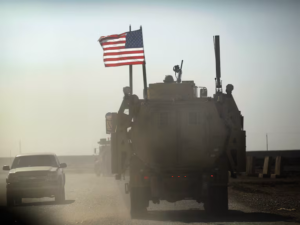
The Tanker War emerged as a secondary theater of the Iran-Iraq War, which had been grinding through its fourth year by the time systematic attacks on commercial shipping began in earnest. Iraq struck first, targeting Iranian oil terminals and tankers in an attempt to deprive Tehran of the export revenues sustaining its war effort. Iran retaliated by striking vessels serving ports in Kuwait and Saudi Arabia, states that were providing material support to Baghdad. Over the course of four years, more than 500 ships were attacked in Gulf waters, with approximately 63 vessels sunk and an estimated 430 seafarers killed. At the height of the conflict in 1987, the Reagan administration took the dramatic step of re-flagging Kuwaiti tankers under the Stars and Stripes and escorting them through the Gulf under naval protection Operation Earnest Will, which became the largest convoy operation the US Navy had conducted since World War II. Iranian mining of international waters, including a mine strike on the US-flagged tanker Bridgeton and the near-sinking of the frigate USS Samuel B. Roberts, escalated the conflict to the point of direct American military engagement with IRGC naval forces in Operation Praying Mantis in April 1988, during which the US Navy destroyed two Iranian oil platforms and sank or damaged six Iranian vessels in a single day.
The crucial distinction between that conflict and the present crisis lies in the identity and motivations of the combatants. In the 1980s, Iran was fighting for its survival against an Iraqi offensive backed by American intelligence and Gulf state financing; maritime attacks were an instrument of economic warfare within a broader conventional conflict, not a primary strategic tool. Crucially, Iran in the 1980s had a powerful incentive to keep the strait open: its own oil exports were the primary source of war financing. Disrupting tanker traffic damaged Iran as much as it damaged its adversaries. Today, the calculus is inverted. Iran’s exports are already effectively suppressed by sanctions, its economy is in structural crisis following the December 2025 protests, and the regime faces an existential military threat. The strait is no longer Iran’s commercial lifeline. it is its most powerful remaining weapon.
A second critical divergence concerns the role of the United States. In the 1980s, America entered the maritime conflict as a third-party protector of neutral shipping, enjoying considerable international legitimacy and the tacit support of most Gulf states. Today, the United States is a principal belligerent. This transformation fundamentally alters the diplomatic environment within which any resolution must be negotiated. In 1988, Iran could eventually accept an American-brokered ceasefire without the political cost of acknowledging defeat by its direct adversary. That option is no longer available. Any ceasefire today requires Iran to make concessions to the power that killed its supreme leader, a political and symbolic obstacle of a different order of magnitude entirely.
The technological environment has also shifted dramatically. Iran’s anti-ship capabilities in the 1980s consisted primarily of Chinese-supplied Silkworm missiles, naval mines, and small attack boats. Today the IRGC deploys a layered anti-access/area-denial architecture that includes shore-based anti-ship ballistic missiles with ranges exceeding 700 kilometers, drone swarms capable of saturating point defense systems, advanced sea mines including pressure-activated and influence-triggered varieties that are far more difficult to clear than the contact mines of the 1980s, and a fleet of over one thousand fast attack craft specifically designed for swarming operations against larger naval vessels in confined waters. The operational challenge of reopening the Strait of Hormuz in 2026 is categorically more demanding than it was in 1988, even accounting for the equally substantial improvements in US naval capability over the same period.
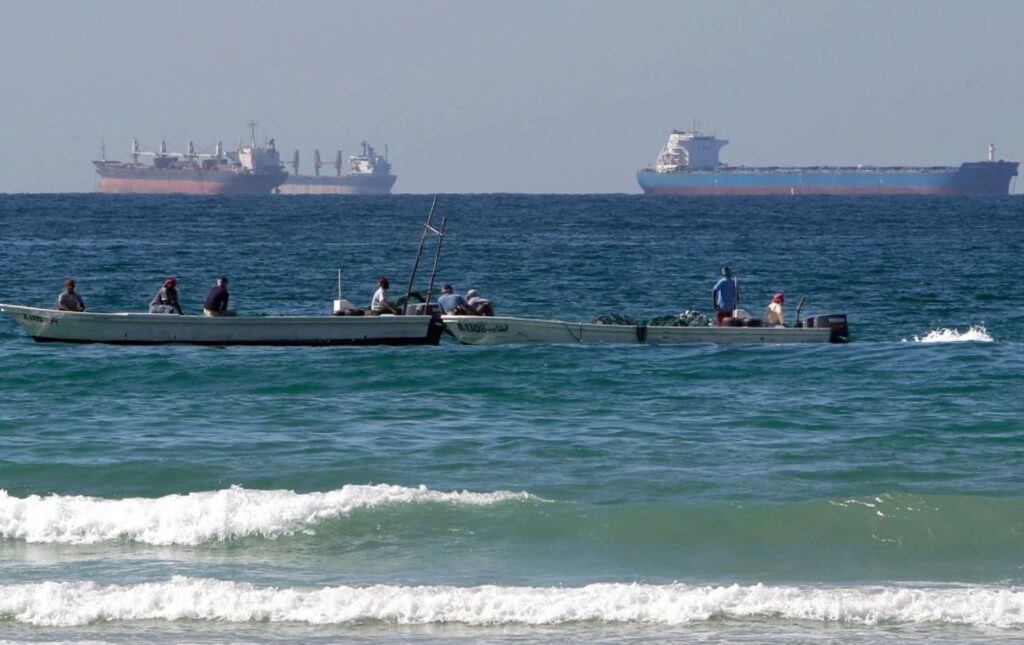
One parallel with the 1980s that does hold is the centrality of insurance markets to the effective closure of the strait. In the 1987-88 period, Lloyd’s of London war risk premium increases effectively priced most commercial operators out of the Gulf without any physical interdiction being required. The same mechanism is operating today with even greater speed and severity. By March 3, 2026, protection and indemnity insurance had been withdrawn entirely for vessels attempting strait transit, Brent crude had surged over fifteen percent in a single trading session, and companies including Hapag-Lloyd, Maersk, and MSC had suspended all Gulf transits. As of this writing, more than 150 tankers including very large crude carriers representing tens of millions of barrels of oil are anchored in open Gulf waters, unable to proceed. The financial markets have, in effect, done Iran’s work for it.
Iran’s Strategic Position: Strengths and Structural Vulnerabilities
Any serious assessment of Iran’s strategic position in the Hormuz crisis must resist two symmetrically misleading temptations: the overestimation of Iranian capability that treats the strait closure as a permanent fait accompli, and the underestimation that dismisses it as a temporary inconvenience that American naval power will rapidly resolve. The reality is considerably more complex, and the following analysis attempts to map both dimensions with precision.
Iran’s most fundamental strategic asset is geographic rather than military. The northern coastline of the strait belongs to Iran, providing overlapping fields of fire from shore-based anti-ship missile batteries, artillery, and drone launch sites across the entire navigable channel. The strait is 33 kilometers wide at its narrowest point, but the commercially navigable shipping lane in each direction is only approximately 3 kilometers across. This geometric reality means that Iran does not need to physically occupy the waterway to interdict it. it only needs to make the risk of transit prohibitive, a threshold the withdrawal of commercial insurance has already effectively crossed. The Zagros Mountains that Robert Kaplan identifies as Iran’s primary defensive asset on land serve an analogous function at sea: they provide elevated launch positions for shore-based systems that are extraordinarily difficult to neutralize from the air, particularly given Iran’s extensive use of underground tunnel complexes for weapons storage and launch preparation.
Iran’s second major asset is its asymmetric naval doctrine, which has been specifically engineered to deny the United States the ability to project conventional naval power in confined littoral waters. The IRGC Navy’s swarming concept, deploying hundreds of small, fast, and heavily armed attack craft simultaneously to overwhelm the defensive systems of larger vessels , represents a genuine tactical challenge for US carrier battle groups operating in the confined waters of the Persian Gulf. A single successful anti-ship missile strike on a US carrier would represent not merely a tactical setback but a strategic earthquake, calling into question the fundamental premise of American naval dominance that has underwritten regional security since the Cold War.
Iran’s mine warfare capability deserves particular analytical attention, because it is the instrument most capable of achieving durable disruption at low operational cost. Iran is estimated to possess over two thousand naval mines of varying types, including modern influence mines that respond to the magnetic signature, acoustic signature, or pressure wave of passing vessels and are far more difficult to detect and clear than the contact mines of earlier generations. The US Navy’s minesweeping capability, though improving, remains a recognized weakness; the service has historically underinvested in mine countermeasures relative to peer-competitor surface and submarine warfare. A systematic mining of the strait’s navigable channels could create a clearance task measured in weeks even under conditions of unchallenged US naval superiority and the current conditions are far from unchallenged.
Table 1: Iran’s Strategic Strengths and Weaknesses in the Hormuz Crisis
| Dimension | Strength | Weakness |
|---|---|---|
| Naval Asymmetry | Iran possesses over 1,000 fast attack craft, extensive mine stockpiles, and shore-based anti-ship missile batteries along 1,500 km of coastline. The IRGC Navy specializes in swarming tactics designed to overwhelm US carrier battle group defenses. | Iran lacks blue-water naval capability and cannot contest US carrier dominance in open water. Sustained attrition against the US Fifth Fleet is not operationally viable beyond short-term harassment. |
| Geographic Control | Iran controls the northern coastline of the strait, providing overlapping fields of fire from shore-based missiles. The 33km width at the narrowest point means Iran does not need to physically occupy the waterway to interdict it. | The southern shore belongs to Oman, which has offered US forces access to its territory. Oman-based operations could enable partial workarounds, reducing but not eliminating Iranian leverage. |
| Mine Warfare | Iran’s mine stockpile estimated at over 2,000 naval mines of varying sophistication can be deployed rapidly by small boats and submarines. Even a fraction deployed effectively could paralyze commercial traffic for weeks. | Mine clearance by US and allied naval forces, while time-consuming, is technically feasible. Historical precedent from Operation Earnest Will (1987-88) demonstrated that US minesweeping can restore passage, albeit slowly. |
| Economic Self-Harm | A closed strait eliminates US access to Gulf oil while simultaneously generating maximum economic pain for adversaries, creating leverage for ceasefire negotiations on Iranian terms. | Iran’s own oil exports critical to regime survival are equally blocked. With the economy already in severe distress following December 2025 protests, self-imposed energy strangulation accelerates domestic collapse. |
| Alliance Leverage | By making the closure painful for China, Japan, South Korea, and India, Iran creates indirect pressure on Washington through its Asian partners, none of whom want a prolonged supply disruption. | Simultaneously harming China, Iran’s principal economic patron, risks converting Beijing from a tacit supporter into an active advocate for Iranian capitulation. China’s leverage over Tehran is the most powerful single lever for ending the conflict. |
Source: Author’s analysis based on IRGC capability assessments, Kpler shipping data, and open-source intelligence, March 2026.
Against these assets, Iran carries structural vulnerabilities that are equally significant. The most immediate is economic self-harm. A closed strait eliminates not only American and Western access to Gulf oil but also Iran’s own remaining export capacity and critically the revenue streams of China and India, the two external powers whose economic relationships with Tehran provide the primary cushion against total international isolation. Iran had anticipated the current conflict sufficiently to triple its oil export rate in the two weeks before the strikes, drawing down storage and front-loading shipments to China. But this buffer is finite. Every week the strait remains closed is a week that Iran’s already-distressed economy operates without external revenue, in conditions of military bombardment, with a leaderless government attempting to manage the largest internal protests in the republic’s history.
The American Strategic Position: Capability and Constraint
The United States enters this maritime crisis with capabilities that dwarf anything available to Iran in absolute terms, and with constraints that are equally significant and considerably less frequently analyzed. Understanding both dimensions is essential to any realistic assessment of how the conflict will evolve.
American naval dominance in the Gulf region is not in serious dispute. The presence of two carrier battle groups USS Abraham Lincoln and USS Gerald Ford, provides the United States with the capacity to establish air superiority over the entire Gulf, strike Iranian coastal installations across the full length of its coastline, and escort commercial convoys through the strait under military protection in a manner analogous to Operation Earnest Will. The Fifth Fleet, headquartered in Bahrain, maintains persistent surveillance of Iranian naval movements, and US submarine forces operating in the Gulf of Oman provide both a strike capability and an intelligence collection platform of formidable sophistication. The US has also demonstrated, through the opening strikes of Operation Epic Fury, that it can hold the full range of Iranian leadership, military infrastructure, and strategic assets at risk simultaneously a coercive capability that the Islamic Republic of the 1980s never faced.
The strategic petroleum reserve, currently holding approximately 415 million barrels, provides a buffer against immediate domestic supply disruption. Coordinated release with IEA member states, whose combined emergency reserves exceed four billion barrels could in principle suppress the initial price shock long enough for diplomatic resolution or military restoration of transit to take effect. OPEC producers including Saudi Arabia and the UAE, while politically compromised by Iranian missile strikes on their territory, retain approximately 3.5 million barrels per day of spare production capacity that could partially offset disrupted Gulf flows if pipeline alternatives to the strait could absorb the additional volume.
Table 2: American Strategic Strengths and Weaknesses in the Hormuz Crisis
| Dimension | Strength | Weakness |
|---|---|---|
| Naval Dominance | Two carrier battle groups,USS Abraham Lincoln and USS Gerald Ford , provide overwhelming air superiority and the capacity to neutralize Iranian shore-based assets. The US Navy’s minesweeping capability, while limited, can be augmented by allied forces. | Aircraft carriers are themselves vulnerable to Iranian anti-ship missile saturation attacks. A successful strike on a carrier would represent a catastrophic political and military setback with no operational precedent since World War II. |
| Strategic Petroleum Reserve | The US SPR holds approximately 415 million barrels, sufficient to offset domestic supply disruption for several months. Coordinated release with IEA member reserves could dampen price shocks in the critical early weeks of a closure. | SPR releases address domestic supply but do not restore global markets. Asian importers who bear the greatest exposure have less reserve capacity. A SPR release would be a short-term palliative, not a structural solution. |
| Energy Independence | US shale production has dramatically reduced American dependence on Gulf oil. The US is now a net energy exporter, insulating it from the direct supply effects that devastated its 1970s economy during the Arab oil embargo. | Oil is a globally priced commodity. A surge in Brent crude to $130-150 per barrel or higher in extreme scenarios raises domestic gasoline prices regardless of import dependency, creating political costs that constrain the administration’s strategic patience. |
| Military Reach | US forces can strike Iranian coastal installations, IRGC naval bases, and mine-laying infrastructure from multiple vectors including carriers, B-2 bombers, and Tomahawk cruise missiles, degrading Iran’s interdiction capacity over time. | Military operations to reopen the strait take time weeks, not days. Historical precedent from the 1980s Tanker War shows that even with overwhelming force superiority, clearing a contested maritime corridor is a prolonged undertaking with significant escalation risks. |
| Economic Pressure Timeline | If the strait closure triggers a global recession, the resulting economic pain will accelerate pressure on Iran’s already-fragile domestic economy, potentially shortening the conflict by generating internal pressure for capitulation. | Stagflation the combination of supply-side inflation and economic contraction creates conditions that the Federal Reserve cannot address through conventional monetary policy. The administration has stated indifference to oil prices, but sustained prices above $90 per barrel represent a significant political liability. |
Source: Author’s analysis based on US Navy capability assessments, EIA data, and Congressional Budget Office projections, March 2026.
American strategic constraints, however, are severe and structurally embedded in ways that operational capability cannot easily overcome. The most immediate is the economics of a supply-side energy shock. Oil is a globally priced commodity, and the United States despite its shale revolution and net export status, is not immune to Brent crude price movements. Bernstein has raised its 2026 Brent target to $80 per barrel from $65, with a severe-case projection of $150. Former White House energy adviser Bob McNally has described a prolonged closure as a guaranteed global recession. Gasoline prices approaching $5.00 per gallon represent a political liability that the Trump administration, whatever its stated indifference to oil prices, cannot indefinitely absorb particularly given the midterm election calendar of November 2026.
A second and deeper constraint concerns the erosion of alliance relationships that the unilateral initiation of Operation Epic Fury has produced. The failure to consult European allies including the E3 members who were actively negotiating with Iran in Geneva on the day the strikes began has generated a diplomatic rift whose strategic consequences will outlast the immediate crisis. NATO’s Article Five mechanism cannot be credibly activated in support of an operation that the alliance’s own members were not consulted on. Gulf state cooperation, while tacitly aligned with Israeli objectives in suppressing Iranian regional power, has been severely complicated by Iranian missile strikes on their territory strikes that would not have occurred in the absence of the American attack. The operational freedom that the United States requires to reopen the strait may depend on access to bases and airspace that Gulf states, under domestic political pressure, are increasingly reluctant to provide.
The Global Economic Consequences: Anatomy of a Supply Shock
The macroeconomic consequences of the Hormuz closure are playing out across three distinct but interconnected dimensions: the immediate energy price shock, the cascading supply chain disruptions that extend far beyond oil, and the structural macroeconomic dynamic that analysts have termed the toxic combo the simultaneous occurrence of supply-driven inflation and demand contraction that central banks are institutionally ill-equipped to address.
The energy price shock is the most immediately visible consequence. Brent crude surged more than fifteen percent in the opening trading session following the closure declaration, and at the time of writing has exceeded $82 per barrel with a trajectory toward $100 that most major banks consider the base case if the closure persists beyond two weeks. Kipler data shows that approximately 13 million barrels per day passed through the strait in 2025 representing 31 percent of all seaborne crude flows globally, along with 20 percent of global LNG trade and 30 percent of global jet fuel supply. These are not marginal flows that can be rerouted without significant economic consequence. The alternative route around Africa’s Cape of Good Hope adds approximately two to three weeks of transit time for vessels serving Asian markets, raising shipping costs per voyage for very large crude carriers by over $250,000. War risk insurance premiums, which had already reached six-year highs before the closure, have now been withdrawn entirely for Persian Gulf transits.
The geographic distribution of economic pain is highly asymmetric, and this asymmetry carries profound geopolitical implications that are analyzed in the following section. Asian economies bear the overwhelming burden of disruption. China receives approximately 40 percent of its crude oil imports and 30 percent of its LNG imports through the strait. Japan depends on the route for close to 75 percent of its oil supply. South Korea sources 60 percent of its crude through Hormuz. India, which has been aggressively diversifying supply sources, still transits approximately 45 percent of its crude through the waterway. For South Asia’s smaller economies the consequences are even more severe: Qatar and the UAE supply 99 percent of Pakistan’s LNG imports, 72 percent of Bangladesh’s, and 53 percent of India’s. Bangladesh, already running a structural gas deficit of over 1,300 million cubic feet per day according to the Institute for Energy Economics and Financial Analysis, faces near-term power sector collapse if the closure persists beyond a month.
Beyond energy, the supply chain consequences extend to sectors that receive less analytical attention but whose disruption is no less economically significant. One-third of global fertilizer trade transits the strait, a dependency that links the Hormuz closure directly to food security across South and Southeast Asia. The port of Dubai’s Jebel Ali, which handles approximately 60 percent of the Middle East’s container trade has already been partially disrupted by missile debris from an intercepted Iranian strike, threatening the just-in-time manufacturing supply chains of electronics, automotive components, and consumer goods that route through Gulf distribution hubs. Qatar has preemptively paused LNG production at Ras Laffan, one of the world’s largest gas export terminals, in anticipation of further strikes on energy infrastructure a decision that will tighten European gas markets that had not yet fully recovered from the disruptions of the Ukraine war.
The macroeconomic dynamic that emerges from this constellation of disruptions is what economists call stagflation the simultaneous occurrence of accelerating inflation driven by supply-side cost pressures and decelerating growth driven by reduced consumer purchasing power and business investment confidence. Unlike demand-driven inflation, which central banks can address by raising interest rates to reduce spending, supply-driven inflation cannot be resolved through monetary tightening without also engineering a recession. The Federal Reserve faces the prospect of having to choose between allowing inflation to run unchecked or inducing an economic contraction. Neither option is politically sustainable. Bernstein’s severe-case scenario of $150 per barrel Brent crude, while not the base case, represents a plausible outcome if the closure extends beyond six weeks a scenario that would, as McNally has stated, constitute a guaranteed global recession.
Gilpin’s Framework and the Geopolitics of Closure: Hegemonic Stability Under Stress
Robert Gilpin’s theory of hegemonic stability, developed principally in War and Change in World Politics (1981) and The Political Economy of International Relations (1987), provides the most analytically powerful framework for situating the Hormuz crisis within the longer arc of systemic international change. Gilpin’s central claim is that the stability of the international economic and political order depends on the willingness and capacity of a dominant power the hegemon to bear the disproportionate costs of maintaining the rules and institutions that benefit all participants. When the hegemon’s power declines relative to rising challengers, the order it has maintained becomes contested, and the probability of what Gilpin terms hegemonic war, conflict that restructures the fundamental rules of international life increases sharply. The current crisis tests this framework at every level.
Gilpin identifies three defining characteristics of a functioning hegemonic order: the hegemon’s ability to provide global public goods including freedom of navigation, monetary stability, and open trade; its credible commitment to enforce the rules of the order against violators; and the acquiescence of other major powers, including potential challengers, in the legitimacy of hegemonic leadership. The Hormuz crisis has placed all three characteristics under simultaneous stress in ways that no previous post-war crisis has managed. The United States has, through Operation Epic Fury, launched a war that directly caused the disruption of the most critical maritime chokepoint in the global energy system. The hegemon is not protecting freedom of navigation it is the proximate cause of its breakdown. This represents an extraordinary inversion of the hegemonic stabilizer role.
Gilpin’s concept of the power transition is particularly relevant to the geopolitical consequences of the closure for the US-China relationship. China is simultaneously the world’s largest crude oil importer, Iran’s principal economic patron, and the most significant potential challenger to American hegemony in Gilpin’s framework. The Hormuz closure places Beijing in an analytically uncomfortable position. In the short term, China is unambiguously damaged by the disruption 40 percent of its crude imports are stranded. But in the medium term, the crisis offers China a set of strategic opportunities that a more cautiously calculating power than Beijing might be tempted to exploit. Every additional week that the US fails to reopen the strait is a week that undermines the credibility of American hegemonic leadership. Every additional percentage point that Brent crude rises above $100 is a data point that US adversaries will use to argue that American hegemony is no longer a reliable guarantee of global economic stability. Gilpin would observe that a hegemonic power that generates the very instability it is supposed to prevent has initiated its own delegitimization.
Russia’s position in this crisis deserves specific analysis within Gilpin’s framework, because it illustrates with particular clarity the way that hegemonic decline creates space for revisionist powers to improve their relative position without direct confrontation. With Middle Eastern barrels stranded in Gulf anchorages, India and China, the world’s first and third largest crude importers face powerful incentives to immediately deepen their reliance on Russian supply. India, which has already been managing a significant pivot toward Russian crude following the 2022 Ukraine war sanctions, will accelerate this diversification. China, which had been moderating its Russian crude intake as part of broader geopolitical signaling, will likely abandon that restraint entirely. Kpler data confirms that this pivot is already beginning. The result is that Russia, the state most clearly identified by the Biden and Trump administrations as a strategic adversary is the principal beneficiary of a conflict that the United States initiated. Gilpin’s framework would categorize this as a textbook example of how hegemonic overextension improves the strategic position of revisionist challengers.
The most important geopolitical variable in the resolution of the crisis, however, is neither American military capability nor Iranian strategic patience it is Chinese economic pressure on Tehran. Gilpin’s theory of power transitions emphasizes that the hegemonic challenger accrues influence precisely through its economic relationships with dependent states. China’s leverage over Iran rooted in its role as the buyer of last resort for Iranian oil, the supplier of dual-use technology, and the diplomatic shield in the UN Security Council is the most powerful single instrument available for ending the conflict short of Iranian military collapse. Beijing’s LNG inventories, at 7.6 million tons as of late February, provide short-term buffer. But if the closure extends beyond six to eight weeks, China will face genuine supply strain, and at that point the economic logic of using its Iran leverage to force a negotiated settlement becomes compelling. The question Gilpin’s framework raises is whether China will exercise that leverage in a way that restores American hegemonic credibility or in a way that demonstrates that American hegemony required Chinese cooperation to function, thereby establishing the precedent for a post-hegemonic multipolar order.
Conclusion: The Strait as Mirror
The Strait of Hormuz has always been more than a shipping lane. It is a geographic fact that concentrates the dependencies of industrial civilization into a 33-kilometer channel between two coastlines, making visible the structural vulnerabilities that global trade obscures in normal times. The 2026 crisis has made these vulnerabilities visible with unusual clarity. The historical comparison with the 1980s Tanker War reveals that the current crisis is more dangerous, more strategically complex, and more structurally consequential than its predecessor, not because Iran is more powerful in absolute terms, but because the geopolitical context has shifted from a proxy conflict with a clear American role as stabilizer to a direct conflict in which America is the destabilizing force.
Gilpin’s theoretical framework offers the most coherent explanation for why this inversion matters beyond the immediate military and economic stakes. A hegemon that closes the world’s most critical energy chokepoint, even indirectly, even as an unintended consequence of pursuing legitimate security objectives has inflicted a wound on the liberal international order that its own hegemonic position depends on maintaining. The restoration of transit through the Strait of Hormuz will eventually occur, whether through Iranian capitulation, military action to clear mines and neutralize coastal defenses, diplomatic resolution brokered by China or a neutral third party, or some combination of these. What will not be easily restored is the credibility of the claim that American hegemonic leadership guarantees the stability of the global commons.
Gilpin wrote that the most dangerous moment in international politics is not when a hegemon is challenged from outside but when it begins to act in ways that undermine the legitimacy of its own order. The 33-kilometer strait between Iran and Oman, lined with anchored tankers and patrolled by drone swarms, is not merely a military theater or an economic disruption. It is a mirror in which the structural contradictions of the current international order are reflected with unusual clarity. Whether those who have the power to resolve the crisis have the wisdom to read what they see there will determine not only the outcome of the present conflict but the architecture of the international order that emerges from it.