


[Lyna Ouandjeli x Héloïse Liebenberg]
Thank you for this interview. Perhaps you could introduce yourself in a bit more detail so that the audience and viewers can better understand who you are, and also say a few words about your book before we begin.
[Aaron Magid]
My name is Aaron Magid. I live in the Washington, D.C. area. I was a journalist based in Amman in 2015 and 2016, and I have a particular interest in Jordanian politics. I later returned to the United States, but I continued writing about the Hashemite Kingdom.
When I began working on this book in 2022, I noticed that King Abdullah II had been in power for more than twenty years, yet no comprehensive biography had been written about him. There was therefore a gap in the literature. Many books had focused on his father, King Hussein, but none centered exclusively on him. I believed such a work would be both interesting and useful for readers.
[Lyna Ouandjeli x Héloïse Liebenberg]
Thank you for your introduction. Given the current situation in the Middle East, we felt it was necessary to interview you about Jordan, mainly about King Abdullah II. Each time we discuss the King, we will connect his actions to what is happening today in Jordan, and sometimes to the past, in order to better understand the relationship between the United States and Jordan.
We have read part of your book and listened to your podcast. My colleague will begin with the first question. You chose to write a book about King Abdullah II, explaining that there was a lack of literature about him. Were there any elements that surprised you about Abdullah II, either as a person or as a political actor? And what sources did you use for your research?
[Aaron Magid]
What surprised me most was the strength of his relationship with the United States. That is precisely why I chose the title The Most American King. King Abdullah spent a significant part of his youth in the United States. He studied at Deerfield Academy in Massachusetts, where he was on the wrestling team. At that time, he went by the name “Ab” to integrate more easily. He later studied at Georgetown University in Washington, D.C., an experience he greatly appreciated, as he later sent his own children there. He also trained with the U.S. military in Kentucky. He maintains a close connection with American culture and even made a cameo appearance in an episode of Star Trek. His honeymoon was partly spent in the United States, including in Hawaii, New York, and Washington.
When he became king in 1999, he spoke better English than Arabic. He owns properties in the United States, particularly in the Washington area and in California. It is very rare for a Middle Eastern leader to have such personal and lasting ties with another country. Politically as well, the relationship with Washington is a central pillar of his strategy. As for my sources, I conducted interviews with former American, Jordanian, and British officials. I consulted archival material, past interviews of the King, official documents, and numerous academic analyses. I also examined his public speeches and positions on major regional issues.
[Lyna Ouandjeli x Héloïse Liebenberg]
Why did you choose the framing of “the most American king” rather than another one, given that he also has close ties with the United Kingdom?
[Aaron Magid]
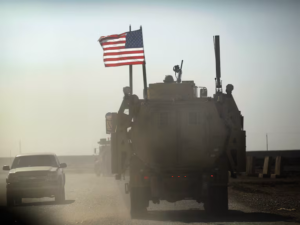
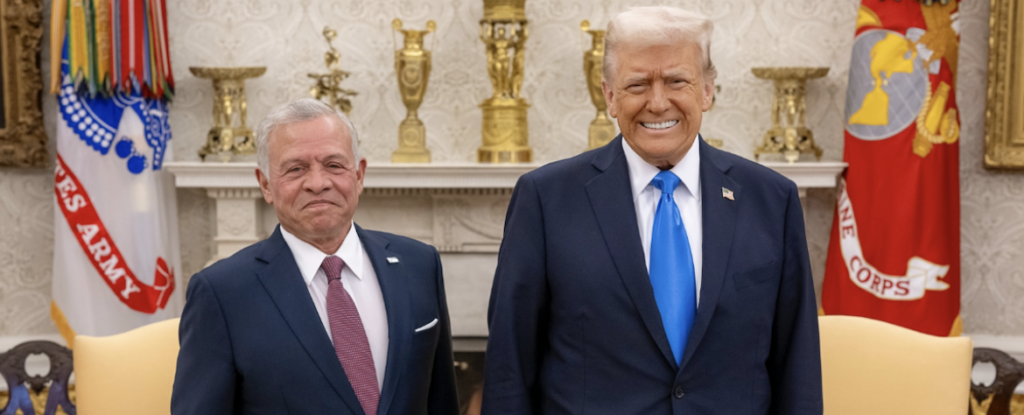
He indeed maintains strong relations with the United Kingdom. He studied at Oxford and served in the British Army, which is unusual for an Arab leader. However, the title does not refer solely to his personal relationship with the United States, but also to the political and strategic dimension. Relations with Washington are essential for Jordan. He has met Presidents Obama, Trump, and Biden successively at the White House. Thousands of American soldiers are stationed in Jordan. Cooperation between the CIA and Jordanian intelligence services is close. The United States provides approximately $1.5 billion in annual aid to Jordan.
The United Kingdom does not provide a comparable level of aid or equivalent security cooperation. That is why I considered this title to best reflect the political reality.
[Lyna Ouandjeli x Héloïse Liebenberg]
Have you observed any evolution in relations between Jordan and the United States over the past two decades?
[Aaron Magid]
The most significant rupture occurred under his father’s reign. During the Gulf War in 1990–1991, King Hussein opposed the American invasion of Iraq, which led to a substantial reduction in U.S. aid. By contrast, in 2003, during the invasion of Iraq, King Abdullah II cooperated discreetly with Washington. Jordan authorized overflights, facilitated intelligence sharing, and allowed the deployment of defense systems such as Patriot missiles.
Even in cases of disagreement, for example during the relocation of the U.S. embassy to Jerusalem under the Trump administration, Jordan sought to preserve the strategic relationship. Despite Amman’s public opposition, U.S. aid continued and even increased.
[Lyna Ouandjeli x Héloïse Liebenberg]
In your book, you discuss King Abdullah II’s reform attempts. In your view, were these projects sincere?
[Aaron Magid]
King Abdullah launched several reform initiatives, notably after the Arab Spring in 2011 and after the 2021 sedition affair. He promised institutional changes, including strengthening the role of Parliament. However, Jordan remains classified as an authoritarian regime. The King had announced that Parliament might eventually choose the Prime Minister, but this has never materialized. Executive power remains dominant.
In 2024, the Islamic Action Front won a significant number of seats. A few months later, the movement was banned, its offices were closed, and some members were arrested. This demonstrates that the authorities do not allow electoral outcomes to fundamentally alter the balance of power.
[Lyna Ouandjeli x Héloïse Liebenberg]
What are Jordan’s main internal challenges today?
[Aaron Magid]
The primary challenge is economic. The unemployment rate exceeds 20 percent, and youth unemployment is close to 50 percent. Poverty remains high.
At the beginning of his reign, the King implemented economic reforms and privatizations that helped reduce unemployment. However, the 2008 financial crisis, the war in Syria, the influx of refugees, the fight against the Islamic State, and the Covid-19 pandemic have severely affected the economy. For most Jordanians, the priority is employment and the cost of living.
[Lyna Ouandjeli x Héloïse Liebenberg]
Can you tell us about the relationship between the Jordanian state and the Muslim Brotherhood?
[Aaron Magid]
Tensions are longstanding. In 2013, King Abdullah described the Muslim Brotherhood as a “messianic cult” in an interview with The Atlantic. As early as 1999, he expelled Hamas officials. During the Arab Spring, the Muslim Brotherhood was highly active in demonstrations against the government. After the war in Gaza in 2023, they organized new mobilizations. Following their electoral success in 2024, the government accused them of illegal and terrorist activities.
The movement was banned, and any affiliation is now illegal. The future of the Islamic Action Front remains uncertain.
[Lyna Ouandjeli x Héloïse Liebenberg]
To what extent does U.S. aid influence Jordanian politics?
[Aaron Magid]
The United States is Jordan’s primary strategic ally. During tensions between Iran and Israel, American forces stationed in Jordan cooperated with the Jordanian army to intercept missiles and drones. Dependence on U.S. aid limits the country’s room for maneuver. During the coalition against the Islamic State, Jordan joined operations despite certain internal reservations.
American aid contributes to regime stability, but it also creates strategic interdependence.
[Lyna Ouandjeli x Héloïse Liebenberg]
We have observed that Jordan is directly affected by the war in Gaza, yet it is not always the most discussed country in the media. Why is that?
[Aaron Magid]
Jordan plays a very important role, but it often acts behind the scenes. The United States and Europe should probably pay more attention to Jordan. It is stable, which means it attracts less media attention than countries in crisis.
[Lyna Ouandjeli x Héloïse Liebenberg]
We hope your book will shed light on this role. Where can it be purchased?
[Aaron Magid]
It is available on Amazon, in both paperback and Kindle formats. It can also be purchased via Google Play and on my publisher’s website, Universal Publishers.
[Lyna Ouandjeli x Héloïse Liebenberg]
Thank you very much for your time.
[Aaron Magid]
Thank you for these in-depth questions. I look forward to continuing our discussions about the Hashemite Kingdom.
[Lyna Ouandjeli x Héloïse Liebenberg]
Have an excellent day.