


[Lyna Ouandjeli] Thank you very much for your time and presence. My name is Lyna, and I work at EISMENA, the European Institute for Middle Eastern and North African Studies. We are developing Les dossiers de l’EISMENA, an initiative aimed at shedding light on the situation in various regions — Arab, Turkish, Kurdish, Iranian, Persian, and Israeli—in the aftermath of the events of October 7, 2023. We have observed a profound shift in the dynamics of the Middle East and have received many questions on this topic. Even in my own circles, these questions frequently arise. It is with this in mind that I wanted to embark on this initiative with Les dossiers de l’EISMENA.
[Zakaria Taha] That’s great. I see there are a lot of questions. How much time do we have?
[Lyna Ouandjeli] I won’t ask all the questions; they are mainly meant as a guideline. Ideally, we’d discuss for about 30 minutes. To stick to this format, I will significantly reduce the number of questions to stay within the time limit. My first question, to put the events of October 7, 2023, into perspective: Could you tell us about the reaction of Arab countries to this event and its impact on their diplomatic relations, particularly with Israel, the United States, and Iran?
[Zakaria Taha] The Hamas attacks against Israel on October 7, 2023, profoundly altered relations between the United States and Arab countries, as well as between these countries and Israel, redefining regional power dynamics. Notable shifts have been observed, particularly in Syria[1], as well as in the dynamics involving Hezbollah[2], Hamas, and Iran. It is essential to distinguish between the reactions of Arab populations and those of their governments. In most Arab countries, the absence of transparent democratic systems makes it difficult to accurately assess public opinion. However, the Palestinian issue remains a major point of convergence, both for the Arab street and for governments, with a broad consensus on the principle of a two-state solution and Palestinian rights. That said, Arab governments’ reactions vary. Egypt[3] and Jordan[4], both tied to Israel through peace agreements and historically wary of Hamas, have taken a more reserved stance. In contrast, Algeria has expressed clear support for the Palestinians, while Morocco, which normalized relations with Israel in 2020, has found itself in a more nuanced position due to its dispute with Algeria over Western Sahara. Gulf monarchies such as Saudi Arabia and the United Arab Emirates have also adopted a cautious approach. While supporting the Palestinian cause, they prioritize Mahmoud Abbas’s Palestinian Authority over Hamas, which they see as a more challenging actor to integrate into their regional strategies. Finally, Israel’s response to the October 7 attacks has been perceived as disproportionate by parts of both Arab public opinion and governments, further intensifying polarization and complicating prospects for mediation and conflict resolution.
[Lyna Ouandjeli] As you mentioned, civil society plays a crucial role in the Israeli-Palestinian issue, particularly in influencing government policies. A striking example is Saudi Arabia: although the kingdom seems to be moving toward rapprochement with Israel and may possibly join the Abraham Accords in the future, public opinion is largely opposed. Mohammed bin Salman thus finds himself caught between these two dynamics, which partly explains his current position as a regional mediator, a role we will explore in more detail later. We also observe this dynamic in the Maghreb, where civil society and the Algerian government show clear support for the Palestinian cause, while in Morocco, there is a divergence between part of the population, which rejects normalizing relations with Israel, and the official position of the king, who has committed the country to the Abraham Accords. As for Jordan, it is going through a period of political and social fragility. If Donald Trump’s plan were to be implemented, Jordan would be on the front lines, particularly with the fear of the forced displacement of Gaza’s population to its territory. This scenario would exacerbate internal tensions due to the already existing ethnic and social disparities in the country. In this context, could you discuss the direct repercussions of the events of October 7, 2023, on the political, diplomatic, economic, and social stability of the neighboring countries of Palestine, particularly Egypt, Jordan, Syria, and Lebanon?
[Zakaria Taha] Yes, of course. In fact, you are absolutely right to highlight the role of civil society and the diversity of aspirations within Arab societies. Whether in countries with official relations with Israel, such as Jordan and Egypt, or in those without direct diplomatic relations, such as Algeria or Syria, civil society plays a key role. Saudi Arabia illustrates this dynamic well. Initially, it was supposed to join the Abraham Accords, but the October 7 attacks and their consequences slowed down this move toward normalization with Israel. As a major player in economic, diplomatic, and military terms, Riyadh now has to balance its strategic position with internal and regional pressures. Politically, the involvement of Lebanese Hezbollah and Iran in the conflict has exacerbated regional tensions. In Lebanon, where the political system relies on a fragile sectarian balance between Sunnis and Shiites, Hezbollah’s role in the war and its Iranian support have intensified these internal divisions. This has had repercussions not only on Hezbollah itself, which has been weakened, but also on Lebanon’s political and social stability. As for Syria, the issue of the weakening of Bashar al-Assad’s regime is often interpreted in different ways. Israel has attempted to present this development as a consequence of its military operations, but it is important to remember that local Syrian actors have been working against the regime for years. The gradual collapse of Assad is thus part of a larger context where the Israeli factor may have played a role, but where internal dynamics remain decisive.
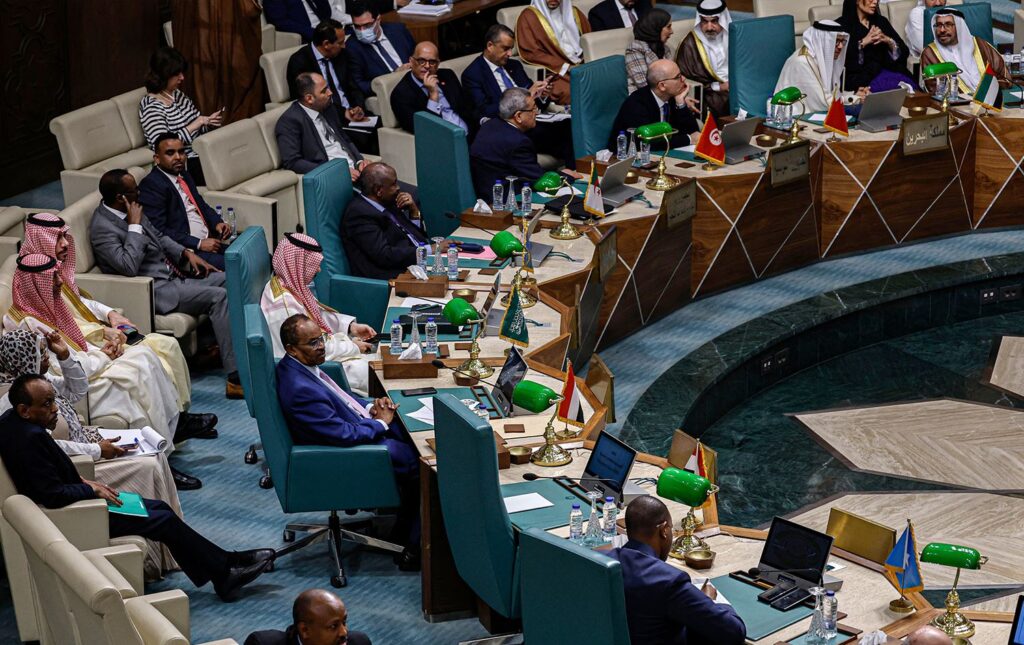
It can be considered that Iran, Hezbollah, and Hamas have suffered significant setbacks today. However, caution is warranted: although they have been severely weakened, the evolution of the situation remains uncertain. The history of the Middle East shows that alliances and power dynamics are in constant flux, with major repercussions on the political, economic, and diplomatic levels, but also on the internal balances of each country, whether Lebanon, Syria, or Jordan. In Amman, where the majority of the population is of Palestinian origin, the Palestinian issue is a particularly sensitive matter. The plan proposed by Donald Trump[5], which we can discuss in more detail, is seen as a threat not only to Palestinian rights but also to the stability of the regimes in place, in both Jordan and Egypt. This plan could fuel internal tensions and disrupt regional balances. It is within this context that an exceptional Arab League summit[6] was held yesterday, entirely dedicated to the Palestinian issue. The main objective was to seek an alternative to the American proposal and explore solutions for Gaza that would avoid destabilizing political and security consequences in both Jordan and Egypt.
[Lyna Ouandjeli] Yes, absolutely, and we will delve into this further. During the Arab League summit, Hamas notably urged the participating states to reject certain Israeli proposals that, according to them, could end their influence in the region. We will explore this point in more detail later, especially since Egypt now plays a central role, being directly affected by the situation in Gaza. If Donald Trump’s plans were to be implemented, the West Bank would also undergo significant transformations. But before that, Syria constitutes another key element of the regional landscape. The fall of the Assad family regime and the Ba’ath Party surprised the international community. Since Hafez al-Assad’s coup in 1971[7], the Ba’ath Party has maintained tight control over the country, with Bashar al-Assad continuing this dominance until December 8, 2024. To better understand the causes of this downfall, could you elaborate on the factors that led to the regime’s collapse? Some point to the weakening of military power, while others highlight the destructive impact of the informal economy, exacerbated by the civil war in 2011, which plunged Syria into an unprecedented crisis. The role of Ahmed al-Charaa, known by his war name Abu Mohammed al-Jolani, and his influence in Idlib is also mentioned. Can you shed more light on these dynamics?
[Zakaria Taha] You are absolutely right to highlight that Bashar al-Assad’s fall was a real surprise. It was not only unexpected for the international community and regional powers but also for Hayat Tahrir al-Sham (HTS), which launched the offensive. Initially, in late December, their main goal was to retake Aleppo, at best. They themselves admitted being surprised by the speed of the Assad regime’s military collapse and the weakening of its forces. In hindsight, it is easier to analyze the different elements that led to this sudden fall. It results from several factors, both internal and external. Internally, Syria has been marked by nearly 14 years of civil war, which has significantly weakened the regime and the powers supporting it. Iran and Hezbollah, which had long been engaged alongside Bashar al-Assad, were already struggling, especially since Hezbollah was involved in the conflict triggered by the October 7 events. This gradual exhaustion of local actors played a key role in the regime’s collapse.
Economically, while Bashar al-Assad succeeded in regaining most of the territories between 2017 and 2019 with the help of Russia, Iran, and Hezbollah, this reconquest did not translate into an improvement in economic conditions, even for the soldiers who supported him and the circles close to the regime. The economic situation in Syria remained extremely difficult, even for those who constituted the core of his support. Additionally, external factors also played a major role in the regime’s collapse. The weakening of Hezbollah, the fragility of Iran, and Russia’s prioritization of the Ukrainian conflict significantly reduced the international support Bashar al-Assad had. During discussions in Doha between Russia, Iran, and Turkey, Moscow hinted that it would not go beyond a certain level of support for Damascus. The key question is why Russia abandoned Bashar al-Assad so quickly. The war in Ukraine diverted its attention, leading Russia to prioritize its relations with Europe and the United States over maintaining a strong involvement in Syria. Although Russia maintains a naval military base in Syria, the Assad regime found itself without a real strategic lever. It is interesting to note that in 2023, before his fall, Bashar al-Assad had been reintegrated into the Arab League through Saudi mediation, beginning a process of diplomatic normalization. Even some European countries, like Italy, were considering re-establishing contacts with Damascus.
A process of normalizing relations with Bashar al-Assad was underway. Even Turkey, under Erdogan’s leadership, was considering a meeting with him. The Russians pressured Assad to meet with Erdogan, but the latter consistently set conditions, notably the withdrawal of Turkish forces from Syrian territory. This rigid stance showed that Assad was out of touch with the reality of regional and international power dynamics. He had no real leverage but continued to impose his demands. In this situation, the Russians gradually realized that Bashar al-Assad was no longer providing strategic benefits and that a change was necessary. Thus, his abandonment by Moscow was motivated by a pragmatic assessment of the situation, although late. However, Russia’s position in Syria remains ambiguous: Russia is neither completely losing nor completely winning. It maintains a presence in the country, and the ruling power does not actively seek to oust it. This dynamic is part of a broader balancing act, where the weakening of both Iran and Hezbollah has also played a role. The fall of Bashar al-Assad should therefore be analysed through the interplay of internal and external factors. What is crucial to remember is that Hayat Tahrir al-Sham seized the most opportune moment to launch its offensive, without anticipating such a rapid collapse of the regime.
[Lyna Ouandjeli] Thank you very much for this explanation. We now have a better understanding of the reasons behind Bashar al-Assad’s departure and the collapse of his regime. Moreover, your transition to the role of Hayat Tahrir al-Sham is particularly relevant, especially in the current context where a transitional government is in place under the leadership of Ahmed al-Charaa since January 2025, with an official mandate of four years. The question now is how this government will approach national reconciliation. It is not only about recreating cohesion between the different minorities but also about reunifying the Syrian population as a whole, including the diaspora and refugees still scattered across several countries. Additionally, it will have to deal with the country’s ethnic and religious diversity to carry out this process successfully. What levers and strategies will be adopted to address these major challenges?
[Zakaria Taha] Yes, you raise an essential point. The transitional government, under the presidency of Ahmed al-Charaa, seems very aware of the mistakes to avoid, particularly those made in Iraq after 2003 or those related to the Lebanese model of political confessionalism. One of the major challenges, therefore, lies in building national unity without ignoring the expectations of the various ethnic and religious communities, particularly the Kurds, Druze, and some military factions in the south, notably in Deraa. The strategy being adopted is based on the formation of a national army that is not a mere juxtaposition of blocs with their own interests, like what we saw in Iraq with the army and Shiite militias such as Hashd al-Shaabi. This approach aims to ensure lasting stability and avoid the emergence of rival armed groups that could destabilize the rebuilding state. In this context, the disarmament process has been initiated with some success: about sixty armed groups have agreed to integrate into the unified Syrian national army. However, there is still resistance, particularly from the Kurdish and Druze factions. For now, Ahmed al Charaa’s administration favors dialogue as the main lever for action, showing a desire for appeasement and negotiation rather than brutal imposition. It remains to be seen how these discussions will evolve and if this approach will prevent new cycles of violence while building lasting stability.
Yes, the Kurdish issue is one of the most sensitive points for the transitional government led by Ahmed al-Charaa. Unlike other armed groups that agreed to integrate into the Syrian national army, the Syrian Democratic Forces (SDF), dominated by the Kurds, pose a particular challenge due to their advanced military structure and the international support they receive, notably from the United States and, to a lesser extent, France. The balance of power changed with the fall of Bashar al-Assad. Turkey is now in a position of strength, which worries the Kurds, who fear a Turkish offensive against them if their status is not clarified in the new Syria being rebuilt. Meanwhile, the Americans, although less invested under the Trump administration, maintain a military presence of about 2,000 soldiers in northeastern Syria to prevent the resurgence of ISIS. Their priority is the stability of the region, which pushes them to encourage the integration of the SDF into the Syrian army under the authority of the transitional government. However, the integration of the SDF is a complex process. On the one hand, the Kurds want to maintain a certain degree of autonomy and a key role in the Syrian military structure, while the transitional government seeks a unified army without autonomous entities that could weaken the central state. This standoff clearly shows that the stabilization of the country involves delicate negotiations, where each actor tries to preserve their interests while avoiding a resurgence of hostilities. The key could be a compromise that guarantees the Kurds a specific status within the Syrian army, allowing them to maintain some autonomy while integrating into the national structure. But for now, this point remains a major sticking point[8].
Indeed, the situation is extremely complex and delicate for the transitional government led by Ahmed al-Charaa. The Kurdish proposal for a system between federalism and administrative decentralization represents a solution that, at first glance, seems to reconcile their aspirations for autonomy with integration within Syria. However, this model contradicts the current government’s vision, which seeks to maintain a strong political unity without resorting to a system that could encourage the fragmentation of the state. The integration of the Kurds into the Syrian army as a bloc, as requested by the Syrian Democratic Forces (SDF), represents a major obstacle. This would be seen by the government as a threat to the unity and cohesion of the Syrian national army, which is already a challenge in itself. Furthermore, Turkey, which views Kurdish autonomy as a threat to its own stability, is opposed to this integration, fearing that it could strengthen ties between Syrian Kurds and the Kurdistan Workers’ Party (PKK), which it considers a terrorist organization. Abdullah Öcalan’s call for the cessation of armed struggle is an interesting development, but its implications remain uncertain, particularly with the ongoing tensions between the various Kurdish factions and neighboring states. This raises questions about the viability of a Kurdish project integrated into a reconstructed Syria. The current government must also confront enormous internal challenges, as you mentioned: the economy, reconstruction, public services management, and the impact of international sanctions. Although some exceptions have been made, particularly regarding sanctions, the global context remains difficult for revitalizing the economy and ensuring sustainable recovery. In summary, the project for national reconciliation and integration of the different communities will only succeed if the current government finds the right balance between the aspirations of the Kurds, other ethnic and religious groups, and the necessities of stability and national unity. This process will be long and fraught with difficulties, especially if foreign powers like Turkey, the United States, and regional actors continue to interfere with their own interests.
[Lyna Ouandjeli] Thank you very much for your response; it helps me summarize the four final questions I would like to ask you. Before leaving Syria, there is a crucial issue to address: the remaining Daesh cells still present on the territory. We know that Hayat Tahrir al-Cham has a complex history with Ahmed al-Charaa, who was once linked to Jabhat al-Nusra, then Daesh, and finally to Al-Qaeda. His path is quite atypical for a current president. Moreover, some people within Hayat Tahrir al-Sham, having grown up in violence, are struggling to adapt to the ongoing transition system. In Syria, especially in regions like Rojava and Idlib, there are still active Daesh cells. In this context, how could Ahmed al-Charaa calm attempts at violence and the ideals of the caliphate in Syria?
[Zakaria Taha] Yes, indeed, this is a major challenge for the current government. The central question is how to prevent the reemergence of still-radicalized individuals. The transition from Jabhat al-Nusra to Hayat Tahrir al-Sham, although the group officially distanced itself from certain alliances, must be understood in the context of rivalry between various factions in the Idlib region. Ahmed al-Charaa succeeded in establishing his authority in a way that legitimized his position in this area. He integrated other Islamist factions, but without adhering to the international jihadist rhetoric of Daesh or Al-Qaeda. For instance, the integration of al-Cham, which is closer to the Muslim Brotherhood than to Al-Qaeda, helped maintain control over the region. This was an effort to detach from Al-Qaeda’s influence and to adopt a more nationalistic perspective, to strengthen his legitimacy on the territory. This will to deradicalize allowed Hayat Tahrir al Sham to position itself differently, particularly by fighting against some of its former allies. Several groups broke away from Hayat Tahrir al-Cham due to disagreements with Ahmed al-Sharaa’s position, which appeared to distance itself from both Al-Qaeda and Daesh.
This challenge is significant for the current government because if it fails in this political transition, it could be accused by former jihadists or those nostalgic for international jihad of not having managed to establish a viable political system. These individuals might criticize him for cooperating with various ethnic and confessional components while failing to eradicate jihadist ideas. This challenge is crucial, and it is imperative for the government to manage it successfully to avoid a portion of the dissatisfied population being tempted to return to violence, as illustrated by recent arrests made by Ahmed al-Charaa of individuals calling for a return to jihad. This remains a tangible risk, and in my opinion, it will depend largely on the role that regional and international actors play in stabilizing the region. The desire to stabilize this area is shared by powers such as the United States, Turkey, Russia, Iraq, Jordan, and Saudi Arabia. For example, before the fall of the regime, Syria was the world’s largest producer of Captagon, which had a significant impact on Jordanian and Saudi society. Furthermore, the refugee issue, whether for Jordan or Turkey, remained a major concern.
There are indeed many crucial factors pushing regional and international powers to work towards stabilizing the region. The fact that this group managed to bring down Bashar al-Assad and establish itself, albeit in a weakened state, remains a major issue. It does not control all of Syria’s territories, including strategic regions like the south. For example, just a few days ago, Benjamin Netanyahu stated that Israel would position itself as the protector of the Druze, which represents a threat to Syria’s stability and, consequently, regional stability. This is why the international community, along with regional and international powers, seems to converge towards the goal of stabilizing the region. They are trying to understand what the current government, Hayat Tahrir al Cham, or Ahmed al-Charaa, can do in this context. This explains the diplomatic dynamics that have been set in motion since the fall of Bashar al-Assad, to assess the possible actions of this current government and what it might offer.
[Lyna Ouandjeli] Speaking of diplomacy, this leads me to briefly mention Saudi Arabia with a question. We’ve seen that Saudi Arabia was the first country Ahmed al-Charaa visited. Recently, Saudi Arabia has played a major role in the Middle East, especially with the relative decline of Iran. It was the first country to organize conferences in an attempt to resolve the situation in Syria, while also seeking a solution for Palestine. Furthermore, it is trying to improve relations with both the United States and Russia over the Ukrainian issue, aiming to stabilize the region. Mohammed bin Salman seems to want to become the region’s key mediator. In your opinion, will Saudi Arabia manage to meet this mediation challenge by finding a solution for Palestine, given the quiet rapprochements, both official and informal, with Israel? And will it succeed in guiding Ahmed al-Charaa in the reconstruction of Syria? Not forgetting the situation in Yemen, which has been in a civil war since 2011, with Saudi Arabia and its coalition exerting control. Can Saudi Arabia become the mediator of the future, or is it just a public image to calm its civil society?
[Zakaria Taha] Indeed, this is the role Saudi Arabia seeks to play. You’re right to mention Yemen, which remains a failure for the kingdom. This clearly shows Saudi Arabia’s ambition to position itself as a mediator, not only regionally but also internationally. As you mentioned, it is in Riyadh that things are playing out between the Americans and the Russians. With Mohammed bin Salman’s Vision 2030, Saudi Arabia also aims to establish itself as a key power, not only economically but also diplomatically. This remains central to its strategy. As to whether it will succeed, that’s another question. It will depend on its ability to influence Syria, but Turkey remains a key player, and Saudi Arabia and Turkey are more rivals than allies. Nevertheless, Saudi Arabia has a role to play, which is why Ahmed al-Charaa visited Saudi Arabia. Indeed, for the Arab world, it was imperative to go through Riyadh due to its economic and political weight in the region. It also symbolizes a break from the Assad period and their proximity to Iran, especially during the civil war that began in 2011. At that time, Bashar al-Assad had increasingly drawn closer to Iran, and this relationship became almost subjugated. As for the question of whether he should visit Saudi Arabia or Turkey first, the choice was obvious: Riyadh. This underscores the strategic importance of Saudi Arabia, both within the Arab League and in its relations with the United States. Saudi Arabia has good relations with the Americans, especially with the Trump administration, making it a key player in the region. It aspires to play a growing role, both regionally and internationally. Whether it will succeed depends on its ability to offer concrete solutions, particularly regarding Gaza. The central question is to understand what Saudi Arabia can bring in return, especially regarding reconstruction and transition in the region, and its role against Hamas. The Americans also seem to be choosing Riyadh as the meeting point with the Russians, possibly in hopes of gaining financial support or other forms of leverage. The recent plan proposed by Egypt regarding Gaza is still not entirely clear, though it suggests Gaza’s attachment to the Palestinian National Authority, which the Americans desire. The Israelis rejected this idea, and it remains to be seen how the Americans will pressure them. In summary, many factors come into play, making Saudi Arabia’s role complex. While it may position itself as a mediator, the question of its success remains open.
[Lyna Ouandjeli] I will link my last two questions to discuss the situation in Jordan, Egypt, and Palestine. Palestine has experienced numerous ups and downs since 1948, and for over 70 years, the situation has been particularly difficult, especially in Gaza, a territory often described as an open-air prison. With significant events like the Nakba, the Intifadas, and more recently, October 7, 2023, caused by Hamas, the conflict seems endless. Among the various attempts at solutions, including those from the Arab League, Abdel Fattah al-Sissi proposed a two-state solution, supported by some within Israeli civil society. The United States, even though Donald Trump made controversial statements, also addressed the issue of deporting Gaza’s population to Jordan or Egypt, which would violate the Geneva Convention. Jordan and Egypt, opposed to such proposals, are seeking solutions to unify the Arab countries around the Israeli-Palestinian issue, aiming to allow both Israelis and Palestinians to live in peace. Do you think the United States, under Donald Trump, attempted to force Arab unity and untangle the Israeli-Palestinian issue by proposing controversial solutions, or was it just another of his many mistakes? And what is the impact of this situation on the Palestinians, especially with Hamas’ opposition to certain Israeli proposals and the current deadlock in the peace process? Meanwhile, is Abdel Fattah al-Sissi, through his proposed solution, trying to soften his image in a difficult economic, social, and political context in Egypt? Finally, with the rise of the Muslim Brotherhood in Jordan’s government, is Jordan also trying to reassure its population by taking the Palestinian issue into its hands and avoiding a new influx of refugees? What is your view on this?
[Zakaria Taha] You are absolutely right in recalling this, but I think Trump wasn’t entirely wrong. He’s someone we know better today than the “Trump 1”, so to speak. One can say he’s unpredictable, but in some ways, he’s also predictable. Personally, I think Trump’s willingness to propose almost unrealistic solutions, which did not respect Palestinian rights or international law, stemmed from his desire to say, “You, the Egyptians and Jordanians, allies of the Americans, you have a role to play.” Why the Jordanians and Egyptians? Not only because of their borders, but also because they receive significant aid from the Americans. So, these two countries are targets on which Trump, or the American administration, can exert pressure. He couldn’t do this with, for example, the Moroccans, as there’s no direct border, nor with the Algerians. Besides the geographical aspect, these countries have peace agreements with Israel, but what seems particularly crucial is that they also rely heavily on American financial aid. So, I believe that Trump’s proposal, which envisioned turning Gaza into a kind of country with hotels, fits into this logic.
[Lyna Ouandjeli] Yes, with his video on Gaza with Trump, we saw it on Instagram. He could have done that too.
[Zakaria Taha] Yes, but in my opinion, it was mostly aimed at putting pressure on the Arab countries to get something out of them, especially to tell them, “If you don’t follow this path, I have other solutions to propose.” He would have essentially said, “Here’s my solution, but what can you offer?” The Egyptian meeting and proposal from yesterday fit into this dynamic: “We have something to offer.” Whether it’s reliable or not remains to be seen. In my view, the major issue for both Israelis and Americans is the exclusion of Hamas. The Egyptians, will they be able to disarm Hamas? I’m skeptical about that. In any case, it seems difficult, and it’s likely to be complicated for the Egyptians. We’ll see how things evolve. The Arab League proposal from yesterday, which comes from Egypt, is to rebuild to the tune of 53 billion dollars. We still don’t know how it will be financed. The goal of this proposal is to show the Americans that Egypt, Jordan, and the Arab League can also propose solutions. Now, we need to see if it’s feasible or realistic. The Israelis rejected this proposal yesterday, and the Americans haven’t responded officially yet. It’s still very recent, but it’s clear that Egypt and Jordan are under pressure, both from the United States and their own populations. You mentioned that it’s contested, but there’s also a severe economic crisis in Egypt. I think Egypt and Jordan will not be able to accept Trump’s solution, namely, the population transfer. Not only does it seem impossible on a humanitarian level, but it could also provoke international opposition, as expressed by the UN, for example.
[Lyna Ouandjeli] I just saw that the United States rejected the Egyptian plan. Al Jazeera just reported it 37 minutes ago.
[Zakaria Taha] Alright. You see, this further complicates the situation. I think Trump’s plan is seeking something even clearer. It seems the Egyptian proposal doesn’t address the issue of disarming Hamas, and that’s probably the most important thing for the Americans, even before Gaza’s reconstruction, which is more of a priority for Israel and the United States. The central question for them is how to get rid of Hamas. Will they be able to do it? That seems difficult to me, unless Hamas agrees to work with the Egyptians and Jordanians to find a solution and perhaps leave Gaza to the Palestinian Authority. But once again, the Palestinian Authority itself is contested, including in the West Bank. The situation is very complex, and I don’t have a clear answer. There are too many factors at play, and not everything is defined yet regarding the Palestinian issue.
[Lyna Ouandjeli] Thank you for your comments. Indeed, the situation in the Middle East is extremely complex, and it’s hard to predict how the next steps will unfold. As you’ve pointed out, both the Palestinian and Israeli populations continue to suffer from the consequences of the disagreements between Hamas and Israel. The Israeli-Palestinian conflict remains a major obstacle to stability in the region, and it seems that any progress towards peace or stability in general will largely depend on how this conflict is resolved. The discussions in the coming weeks, as well as the decisions made by international actors, will play a crucial role in determining the evolution of the situation.
[Zakaria Taha] That’s true, indeed. However, from what I’ve read, a survey in Israel shows there is complete rejection of the two-state solution.
[Lyna Ouandjeli] Yes, there is indeed. A portion of the population totally rejects this solution. There is a desire, especially within the federation, to end this conflict. The two-state solution remains difficult to adopt, especially in Israel, where a religious dimension plays an important role, the idea being that they were chosen by God and that the land is promised to them. Finding an agreement with Israel on this solution is therefore complex. However, the young civil society in Israel seems to be calling for a total end to the conflict. This gives a glimmer of hope for ending the atrocities in Gaza and for the liberation of both Israeli and Palestinian hostages.
[Zakaria Taha]There is a significant civil society in Israel that advocates for peace, and of course, they have been deeply affected by the events of October 7. There are also historians, like the new Israeli historians, who are working on these issues. I think it’s crucial to highlight that the current Israeli government, under Benjamin Netanyahu, is going through an internal crisis. This government is pursuing objectives that may not necessarily serve the interests of either the Israelis or the Palestinians, particularly regarding the two-state solution. Personally, I support a one-state solution. I think it might perhaps be simpler to implement and could allow us to build something together, much like what was done in South Africa. Of course, it remains to be seen if all parties will accept it, but unfortunately, today, the two-state solution seems to be moving further and further away, and that’s really a shame.
[Lyna Ouandjeli] Thank you very much for your feedback. Thank you.
Notes
[1] Editor’s note: Here, reference is made to the fall of Bashar al-Assad’s regime and the capture of Damascus by the Hayat Tahrir al Sham (HTS) group, followed by the establishment of a transitional government led by Ahmed al-Sharaa.
[2] Editor’s Note: September 27, 2024, marked the weakening of Hezbollah with the destruction of its headquarters in the southern suburbs of Beirut and the assassination of its iconic leader, Hassan Nasrallah.
[3] Editor’s note: On March 26, 1979, Egypt and Israel signed a peace agreement in Washington following the Camp David Accords of 1978. The 1978 accords were signed by U.S. President Jimmy Carter, Egyptian President Anwar el-Sadat, and Israeli Prime Minister Menachem Begin in September of the same year. Their goal was to define the terms of the Israeli army’s evacuation from the Sinai Peninsula and address the issue of other occupied territories in the Middle East. Egypt became the first Arab country to recognize the Hebrew State.
[4] Editor’s note: The Israeli-Jordanian peace treaty, also known as the Wadi Araba Accords, was signed between Israel and Jordan on October 26, 1994. The points of contention included a zone of several hundred kilometers in the Araba, which Amman accused Tel Aviv of annexing, as well as the sharing of the Jordan River water. Thus, Jordan became the second Arab country to recognize the Hebrew State.
[5] Editor’s note: On Tuesday, February 4, 2025, U.S. President Donald Trump announced that the United States would “take control of the Gaza Strip” and also oversee the forced relocation of the Gaza population to create a “Middle East Riviera.”
[6] Editor’s note: On March 4, 2025, Egypt hosted an emergency Arab League summit to create a plan for the reconstruction of Gaza and the return of the Palestinian Authority to the territory.
[7] Editor’s note: On March 16, 1970, Hafez al-Assad took power following a coup. A few months later, on March 12, 1971, he consolidated his authority by being elected president through a referendum, becoming the first Syrian head of state from the Alawite minority. In 2000, his son Bashar al-Assad succeeded him in power.
[8] On March 6, 2025, al-Charaa and Mazloum Abdi signed an agreement on the Kurdish issue. This agreement provides for the integration of the autonomous Kurdish institutions of northeastern Syria into the Syrian state, including civil and military institutions, border crossings, the airport, as well as oil and gas fields.