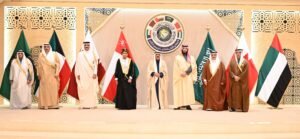



On September 15, 2025, an emergency Arab-Islamic summit convened in Doha in response to the Israeli airstrikes on Qatari territory that had taken place six days earlier. Gathering fifty-seven member states of the Arab League and the Organization of Islamic Cooperation (OIC), the meeting was marked by an unexpectedly fiery speech from Egyptian President Abdel Fattah al-Sisi. Casting himself as the guardian of regional order, Sisi urged to abandon UN-centered diplomacy and exert collective political pressure on Israel, which he denounced for its “heinous aggression” and “brutal, blind war.” He also accused the Jewish state of deliberately undermining every attempt to de-escalate tensions and to achieve a lasting ceasefire. Yet beyond these explicit condemnations, it was Sisi’s designation of Israel as an “enemy” that most captured attention – an expression that revived a deeply buried geopolitical memory shaped by decades of confrontation. No Egyptian leader had used that term since 1977, the year of Anwar al-Sadat’s historic visit to Jerusalem, which lends Sisi’s words a striking symbolic resonance. The president also referred to the Palestinian question as “the central cause” and therefore resurrected an emblematic formula of pan-Arab rhetoric that had long fallen out of use. Calling it “the key to regional stability,” he declared that the time had come to address it in earnest, by ending the occupation and working toward the creation of a sovereign Palestinian state. By adopting this combative tone, unheard of since the Camp David Accords of 1979, al-Sisi appears to be reviving a nationalist and solidarist language inherited from Nasserism. But what kind of diplomacy truly lies beneath this rhetorical turn? Is it merely a calculated political maneuver, or does Sisi’s Egypt genuinely possess the means to reclaim regional leadership?
From Pan-Arab Dreams to Revolutionary Disillusion: Egypt Before al-Sisi
Gamal Abdel Nasser rose to power in 1952 following the Free Officers’ coup d’état. Domestically, he established a one-party authoritarian regime centered on the militarization of the state, the nationalization of major industries, agrarian reform, and an extensive system of free public services designed to secure popular legitimacy. A fervent proponent of pan-Arabism, Nasser aspired to unite the Arab world under Egyptian leadership and came to embody the struggle against European imperial powers. Having fought in the 1948 Arab-Israeli war, he positioned himself as Israel’s chief adversary, employing a rhetoric of confrontation to rally Arab masses and repeatedly vowing the “destruction of Israel.” The Nasserist era was scarred by two major conflicts that ultimately sealed the defeat of pan-Arabism: the Suez Crisis of 1956 and the Six-Day War of 1967. In 1969, Nasser launched a war of attrition marked by near-daily clashes along the Suez Canal. Shortly after the American-mediated ceasefire of September 1970, Nasser died of a heart attack. He was succeeded by Anwar al-Sadat, who would gradually break away from Nasser’s legacy.
Initially, Sadat continued the confrontational stance by launching a surprise attack on Israel in 1973, triggering the Yom Kippur War. It was only after the conflict, halted under the threat of nuclear escalation by Washington and Moscow, that Sadat made a diplomatic shift and paved the way for direct negotiations. The symbol of this diplomatic turn was his historic visit to Jerusalem in 1977, where he addressed the Knesset. The following year saw the Camp David Accords, mediated by U.S. President Jimmy Carter, culminating in the 1979 Egypt-Israel Peace Treaty. The agreement, however, primarily benefited Israel, which gained a degree of security and access to Egyptian oil in exchange for returning only the Sinai Peninsula, while escaping any binding commitments regarding the occupied Palestinian territories. The Palestinians, by contrast, were the contract’s underdogs: excluded for pragmatic reasons, their fate left unresolved as Israeli settlement expansion continued unabated[1]. Though a diplomatic success in some respects, the accord also led to a rupture with the Arab world: in 1979, Egypt was suspended from the Arab League and found itself diplomatically isolated[2]. Hence, Sadat launched the infitah, or “open-door” policy, relying on U.S. support to stabilize the country. In doing so, he forfeited the regional leadership once held by Nasser and provoked the anger of nationalists and Islamists alike. His policy of liberalization would ultimately cost him his life: on October 6, 1981, Sadat was assassinated by Islamist militants during a military parade.
His successor, Hosni Mubarak, sought to maintain a precarious balance between Egypt’s peace treaty with Israel and its reintegration into the Arab world. Although his foreign policy was often criticized for being overly aligned with Israel[3], it was under his presidency that Egypt was readmitted to the Arab League in 1989. On the Palestinian issue, Mubarak positioned himself as a mediator, hosting numerous diplomatic summits, including the 2005 Sharm el-Sheikh meeting that marked the end of the Second Intifada. He maintained cordial relations with Israeli leaders, to the point that Benjamin Netanyahu referred to him as a “personal friend” upon his death. Hostile to Hamas, Mubarak contributed to Gaza’s isolation, by cooperating with Israel to close the Rafah border crossing and thereby exacerbating the humanitarian crisis in the enclave. Domestically, his regime rested on stable authoritarianism, sustained by a permanent state of emergency, systematic repression of opponents – particularly Islamists – and strict control of the media. Mubarak deepened the economic liberalization initiated under Sadat, favoring elites close to the regime at the expense of the popular classes, thus widening inequality and poverty. This social imbalance, combined with rampant corruption and a growing disconnect between regime and society, culminated in the Egyptian Revolution of 2011. Beginning in Cairo, the uprising unfolded over eighteen days of mass mobilization driven by a powerful democratic hope. Mubarak resigned on February 11, 2011, after having ruled the country for nearly 30 years.
Power was taken over by the Supreme Council of the Armed Forces, before Mohamed Morsi, candidate of the Freedom and Justice Party, was elected president on June 30, 2012, backed by the support from the country’s marginalized populations. Although a member of the Muslim Brotherhood, Morsi did not bring about any major ideological rupture. His foreign policy remained pragmatic, focused on preserving the status quo and relegating the Palestinian issue to the background. Nevertheless, a shift occurred with his participation in the Non-Aligned Movement summit in Tehran, symbolizing an opening towards Iran and a resumption of diplomatic relations that had been frozen since 1979, the year of Egypt’s recognition of Israel and of Iran’s Islamic revolution. Simultaneously, Egypt strengthened its ties with Hamas, fueling the perception of an Islamist turn. Inexperienced in international affairs, Morsi relied on diplomats close to the Muslim Brotherhood, such as Rifaa al-Tahtawi, his chief of staff, and Essam al-Haddad, his foreign affairs advisor. Diplomatic decisions were thus made in close coordination with members of the Freedom and Justice Party (FJP) and the Brotherhood’s leadership. Yet while these appointments bore an Islamist imprint, Morsi’s diplomacy was not driven by a religious agenda. Rather, it reflected a rare internal consensus around the goal of restoring Egypt’s regional role and asserting a degree of autonomy from the West. However, economic crisis, declining foreign reserves, and growing dependence on external financing prevented the implementation of a truly independent foreign policy. Morsi was well aware that relations with the European Union and the United States remained vital for exports and investment. Hence, the Brotherhood’s economic wing organized numerous meetings with Western companies, seeking to attract foreign capital. Lacking the means to mediate between competing interests, Morsi’s foreign policy largely followed the contours of the Mubarak era, particularly in maintaining security cooperation with Israel, manifested in joint efforts to combat criminal and terrorist networks in the Sinai. On Gaza, Morsi rejected the creation of a free-trade zone, kept the border partially closed, and intensified measures against smuggling through underground tunnels. While this initially cautious approach enhanced his international credibility, earning him financial support from Saudi Arabia, Qatar, and Turkey, it ultimately drew criticism from all sides. Domestically, nationalist and Salafist movements called for a complete diplomatic break with Israel and for emancipation from Western dependence, while Western partners criticized Cairo for its ambiguity and called for clearer alignment. Morsi thus found himself forced to navigate a narrow path between the pursuit of national legitimacy and the imperatives of economic survival.
The Army in Power, the Economy on Its Knees: The Egyptian Equation
In June 2013, Mohamed Morsi was overthrown by the military, which swiftly reclaimed control of the country and ended the Muslim Brotherhood’s experiment in power. The following year, in May 2014, near-plebiscitary elections brought Marshal Abdel Fattah al-Sisi to the presidency. After years of political and economic turmoil, he faced a population disillusioned by Morsi’s administration, hostile toward the Muslim Brotherhood’s infiltration of the state apparatus, and a demand for employment and security above all. Thus, the initial challenges for the new government lay in institutional reconstruction – initiated with the 2016 legislative elections – and in reviving an economy in unprecedented crisis. Politically, the drive to reassert control was quickly exercised at the expense of public and political liberties, justified by the government as necessary to stabilize a fragmented nation. Breaking with the Mubarak era, al-Sisi sought to embody a “new Egypt,” founded on the support of the military and a younger generation, yet offering little genuine engagement with civil society. The army, inherited from the Nasserist tradition and presented as the guarantor of national unity and sovereignty, became the regime’s central pillar. It controls a significant part of the national economy through an extensive network of public and private enterprises and plays a more central role than ever before. The Supreme Council of the Armed Forces even retains a formal right of political intervention, ensuring the durability of military power. For the same purpose, the president oversaw several constitutional amendments, notably the extension of the presidential term from four to six years. Elected with 96% approval in 2014 and re-elected in 2018 and 2023 with similar majorities, al-Sisi appears to enjoy strong popular support. Yet these figures mask extremely low voter turnout, never exceeding 50%, reflecting deep disillusionment with the political system across the population. Far from a regular electoral process, Egypt’s political structures are in fact closer to an electoral autocracy, in which democratic discourse and institutions coexist with authoritarian governance and surveillance. To obscure public disengagement, the regime relies on severe restrictions of civic and public spaces, coupled with drastic limits on freedom of expression, press, and peaceful assembly. Since 2016, Mutahida, an ostensibly private but government-controlled enterprise, has consolidated media messaging in favor of the regime by acquiring major outlets and imposing strict editorial directives. The government also manipulates public opinion through staged demonstrations of support, online campaigns to discredit opponents, and artificially inflated election results. Arbitrary detentions and other forms of intimidation have become routine, increasing around election periods, alongside reports of suspicious deaths, extrajudicial killings, and torture. Despite these conditions, on October 14, 2025, Egypt was elected to the United Nations Human Rights Council for the 2026–2028 term. Presented by the government as international recognition, this decision drew sharp criticism from NGOs, which highlighted the persistent gap between Egypt’s international commitments and its domestic reality. Repression under al-Sisi surpasses even that of Mubarak’s regime. The government justifies it by invoking national security, counterterrorism, and promises of development, modernization, and economic prosperity.
Although structurally weakened since the 1980s, the Egyptian economy now faces an unprecedented crisis, making the country one of the most vulnerable to a debt crisis[4]. Its main sources of foreign currency are tourism, revenues from the Suez Canal, and hydrocarbon exports, rendering it structurally dependent on external actors and highly vulnerable to international shocks. This dependance became particularly evident during the COVID-19 pandemic, which devastated tourism, and since the outbreak of the war in Ukraine. As the world’s largest wheat importer, Egypt relies heavily on Russian and Ukrainian supplies, which account for nearly 60% of its basic food needs. Hence, the war has had severe consequences for food security. Most economic sectors are dominated by the military to the detriment of private enterprise, and a structural trade deficit persists, stemming from a weak export apparatus and dependence on essential imports. Meanwhile, public spending has more than doubled in five years and cannot be offset by economic growth, despite its dynamism[5]. As a result, Egypt has turned to the International Monetary Fund (IMF) twice since 2016, resulting in significant devaluation of the Egyptian pound. Yet these international loans barely address the scale of national debt, forcing Cairo to seek additional aid from Gulf countries, which already play a major role in the economy[6]. Deposits from the Gulf Cooperation Council (GCC) at the Central Bank of Egypt have temporarily stabilized the currency and secured minimal import liquidity. However, representing nearly 85% of the country’s foreign currency reserves, these funds also increase Egypt’s financial dependence on the Gulf monarchies, potentially carrying major political implications, as these states gradually condition assistance on structural reforms, investment guarantees, or stakes in public enterprises. To mitigate such risks, Sisi’s government has pursued a multi-alignment strategy, trying to diversify economic partnerships with Russia, China, and the European Union. While providing short-term relief, this strategy deepens long-term external dependence. Despite economic imbalances, Sisi has launched a series of mega-projects requiring massive investment, including the construction of a new administrative capital near Cairo and the expansion of the Suez Canal. Authorities claim these projects are funded outside the public budget, yet the gradual withdrawal of foreign investors has forced the state to solicit citizen contributions. Moreover, these urban developments tend to erase Cairo’s historical heritage, restrict public access, and exacerbate socio-spatial inequalities. Far from addressing the population’s actual needs, the mega-projects increase debt and primarily benefit military-controlled enterprises. Al-Sisi’s own statements reveal this questionable prioritization: “If construction, development, and progress must come at the cost of hunger and deprivation, never say: ‘We prefer to eat.’”[7]
The Egyptian population bears the brunt of a fragile economy, facing persistent inequalities and structural imbalances. Regarding women, the government promotes gender equality rhetoric and enhanced female representation in political and administrative institutions. Yet formal advances contrast sharply with social reality: on average, women earn less than a quarter of men’s salaries, rarely hold leadership positions, and remain exposed to multiple forms of violence. Female genital mutilation, banned since 2008, is still practiced on 96% of girls and women[8], making Egypt one of the most affected countries worldwide. Corruption, particularly nepotism and clientelism, is another structural problem that pervades the administration and directly impacts daily life, especially in terms of access to public services. Exposed to successive external shocks, Egyptians are facing growing food insecurity, recurring shortages, electricity cuts, and restricted access to banking services. Nearly one-third of the population lives below the poverty line, and official unemployment stood at 6.4% in 2024. Considering that only about 40% of workers have social protection and roughly 60% of economic activity occurs in the informal sector, the real unemployment rate is likely much higher. This massive informalization generates widespread underemployment, low wages, and virtually no social coverage for most workers. Vulnerable populations are further affected by the underfunding of social aid programs and the healthcare system. Having nearly doubled over three decades, Egypt’s population now reaches approximately 116 million, half of whom are under 25 and nearly one-third under 15. This demographic structure puts immense pressure on education, public resources, and the labor market, which must absorb roughly 800,000 new entrants annually. Many children are compelled to contribute to family income, often in agriculture, construction, mining, or domestic work, under precarious conditions. Furthermore, the country is experiencing extreme demographic and economic concentration: nearly 95% of the population is spread across just 4 to 5% of the national territory along the Nile and its delta, intensifying pressure on arable land and scarce water resources, already limited and unevenly distributed. In metropolitan areas, living conditions are precarious due to air and water pollution, housing shortages, and the proliferation of informal settlements lacking adequate infrastructure. Urban renewal programs and new city construction often involve forced evictions or relocations, while many newly built districts remain financially inaccessible to the majority of the population. Despite a partial return to institutional order and external financial support, the economy has failed to recover under Sisi’s governance, with unemployment, inflation, and shortages worsening. Consequently, while the president enjoyed real popularity at the beginning of his term, a deep popular disenchantment has set in. The fervor of “Sissimania” has faded, giving way to growing social malaise and increasingly vocal criticism of the government[9].
Power in Search of Recognition: Egypt Between Ambition and Dependence
Upon assuming office, Sisi broke with Mubarak’s “reactive diplomacy” to adopt a more interventionist approach. Yet, lacking sufficient military, economic, and cultural resources, Egypt’s return to regional power has proven challenging. His strategy of economic multi-alignment extends into the security sphere, where Sisi seeks to diversify alliances, preserving a degree of autonomy vis-à-vis his Gulf backers. Nevertheless, the record of his diplomacy remains mixed, particularly in Africa, the Eastern Mediterranean, and the Middle East. After a prolonged period of withdrawal, Egypt has sought to reassert its influence in Africa through diplomatic, economic, and military engagement. Yet it faces rising competition from actors such as Ethiopia, Turkey, and China. The inauguration of Ethiopia’s Grand Renaissance Dam in 2025 exemplifies this decline in influence: a symbol of Ethiopian resurgence, the project directly threatens Egypt’s vital interests, given that 90% of its water originates from the Nile. Cairo fears serious repercussions for its agriculture and water security, even describing the situation as an “existential threat.” The dam challenges the former regional order, previously dominated by Egypt and reinforced by favorable treaties, now contested by upstream countries and revealing a new balance of African powers that Egypt struggles to navigate.
Tensions have also risen in the Eastern Mediterranean. In September, Egypt rejected a maritime agreement between the Libyan National Oil Corporation (NOC) and the Turkish Petroleum Corporation (TPAO), in a context already marked by increased cooperation between the two countries. Signed on June 25, the agreement poses a direct threat to Egypt’s energy interests and is considered a “violation of Egyptian sovereignty” and an infringement of its rights in the eastern Mediterranean. Yet, during a meeting in August 2025 between Marshal Khalifa Haftar, commander of the Libyan National Army (LNA), and General Hassan Rashad, head of Egyptian General Intelligence, Egypt reaffirmed its support for internal reforms within Libya’s eastern military structure. In the context of Libya’s ongoing political and military reconfiguration, Cairo continues to assert its central role, backing a “Libyan-Libyan” solution and reaffirming its proximity to eastern forces.
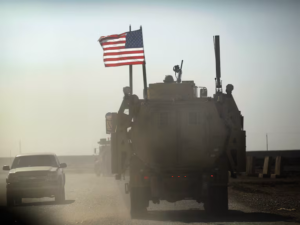
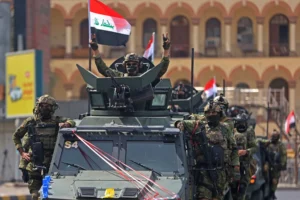
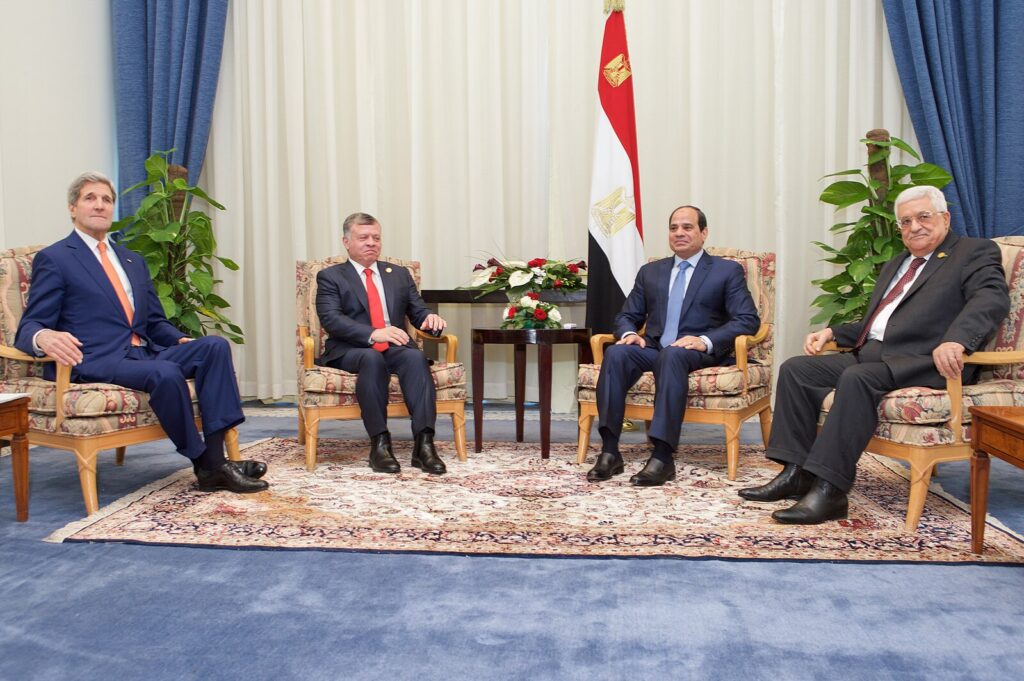
On the Israeli-Palestinian issue, Egypt continues to assert its traditional role as mediator, reinforced by recent developments in Gaza, including the Israeli strikes on Doha. Egypt aims to position itself as a stabilizing force in a region marked by tension. This was evident at the Gaza summit held in Sharm el-Sheikh on October 13, where the Egyptian president stated that his American counterpart was “the only one capable of establishing peace in this region,” while the U.S. president praised Sisi’s “very important” role. As host and one of the four signatories, Sisi emphasized that the meeting should mark the end of the war in Gaza. Yet urgent issues remain, including the humanitarian crisis in the enclave, the disarmament of Hamas, and Gaza’s future governance. A subsequent conference, co-organized by Egypt and Germany, is planned for November to address “rapid recovery, reconstruction, and development,” building on the Trump plan aimed at ending the conflict. Sisi called on European countries to support Egypt and Jordan in training and supervising Palestinian security forces. Bordering Israel and Gaza, Egypt hosts over 100,000 displaced Gazans and is compelled to play a central security and humanitarian role in managing the crisis. Following the withdrawal of Israeli troops, Cairo plans to deploy several dozen soldiers within a multinational contingent, including approximately 200 U.S. troops, to monitor the ceasefire. The country also claims credit for facilitating the largest humanitarian convoy into Gaza since the truce. In Cairo, Gazan refugees face major challenges to integration and access to rights due to unclear legal status and residency permits. Fearing that the refugees will settle permanently, the Egyptian government is concerned for national security, wary that Hamas or other armed groups might use its territory to provoke Israel. Citing both security considerations and a longstanding position against relocating Gaza’s population to Sinai, al-Sisi has maintained the border closure, asserting that “from the perspective of Egyptian foreign policy, accepting the forced displacement of Gaza’s population would mean abandoning the solution Egypt defends, which is the two-state solution, and thus undermining the inalienable rights of the Palestinians.” Egyptian public opinion, for its part, remains largely supportive of the Palestinian people, widely perceiving the war as genocidal. This perception has manifested in pro-Palestinian demonstrations and boycott campaigns against products linked to Israeli colonization, though the regime has quickly repressed such mobilizations. Egypt thus navigates a delicate path, balancing its strategic interests with its expressed solidarity with Gaza’s population. According to Amr Abdelrahim, Egypt’s initiatives in the Middle East follow a performative logic: the staging of pro-Palestinian engagement serves both to reinforce the regime’s domestic legitimacy and to assert Cairo’s role in the regional security architecture. Having pursued rapprochement with Israel since 1979, the Egyptian government’s rhetoric has hardened in recent months, especially following the strikes on Qatar. This rhetorical shift comes ahead of the November 10 legislative elections, which are expected to feature a modest reopening of the political scene after years of opposition exclusion, highlighting internal rivalries and political tensions within Egyptian society.
On the surface, post-2013 Egyptian foreign policy seems less concerned with regional redeployment than with maintaining the country’s status at minimal cost. Built on multi-alignment and symbolic initiatives, it allows Egypt to preserve some autonomy while maximizing external rents and support. Partnerships with Russia, China, and the European Union enhance maneuverability, yet growing dependence on Gulf monarchies significantly constrains the country’s autonomy. Egypt thus occupies a paradoxical position: striving to project the image of a renewed regional power while its actual influence remains limited and heavily constrained by internal economic and structural pressures.
Notes
[1] Mahmood, Zahid. „Sadat and Camp David Reappraised“. Journal of Palestine Studies, o. J., 63–88.
[2] William B. Quandt, “Camp David and Peacemaking in the Middle East,” Political Science Quarterly 101, no. 3 (June 1, 1986): 357–377.
[3] Amr Abdelrahim, “Le retour de l’Égypte comme puissance régionale ?”, Études de l’Ifri, Ifri, December 2022.
[4] According to an analysis from Bloomberg, Egypt ranks second worldwide.
[5] (Ibid.) French Ministry for Europe and Foreign Affairs, Présentation de l’Égypte
[6] Amr Abdelrahim, “Le retour de l’Égypte comme puissance régionale ?”, Études de l’Ifri, Ifri, December 2022.
[7] (Ibid.) Le Grand Continent, “Élections en Égypte : 10 points sur le verrouillage du pouvoir par al-Sissi,” December 19, 2023
[8] UNICEF, Carte mondiale de l’excision – Pratique et fréquence de l’excision | UNICEF, [online], accessed October 10, 2025.
[9] Denis Bauchard, “Égypte 2017 : vers de nouvelles turbulences ?”, Notes de l’Ifri, Ifri, February 2017.