


“I pray to God that I never come to know the economy,” a statement attributed to Mahmoud Ahmadinejad in 2007, President of Iran (2005–2009).
“Those who view the economy as the foundation of everything consider Man as an animal. […] The foundation of an animal is its economy. […] The foundation of a donkey is also its economy,” remarks attributed to Ayatollah Ruhollah Khomeini, Leader of the 1979 Islamic Revolution.
Introduction
To place in perspective the reimposition of international sanctions introduced from 2006 onward against the Islamic Republic of Iran over its clandestine nuclear program – sanctions whose restoration became effective on September 28, 2025, one month after the Europeans of the so-called “E3” group (France, the United Kingdom, and Germany) activated the snapback mechanism – it is necessary to recall, first, the specific nature of this mechanism that enabled their reinstatement; second, which sanctions are concerned; and third, the potentially devastating consequences expected in economic, social, and possibly political terms.
The “French” Origins of the July 2015 Snapback
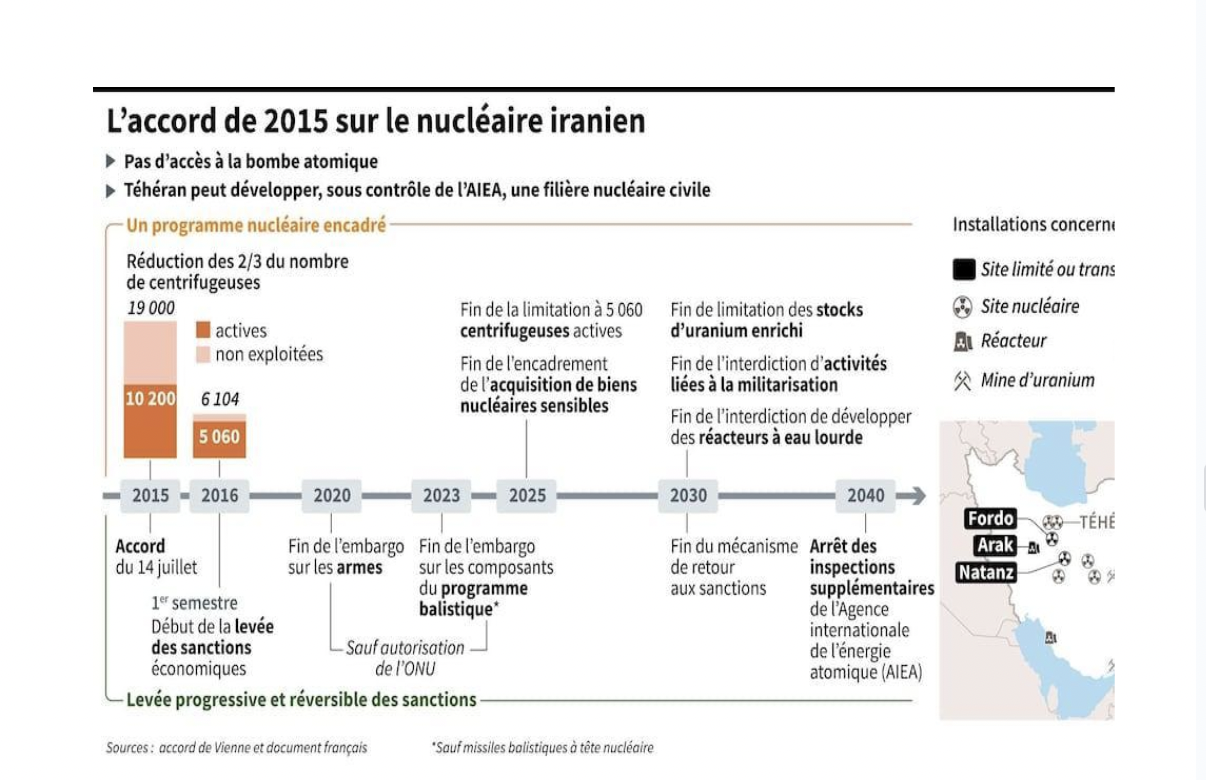
It is worth recalling beforehand what the snapback (“return to the previous situation”) mechanism consists of. This mechanism enables the automatic restoration of international sanctions that had been lifted following the signature, on July 14, 2015, of the JCPOA (Joint Comprehensive Plan of Action) by the P5+1 (the five permanent members of the UN Security Council plus Germany, as a member of the European troika with Paris, London, and Berlin). The agreement was intended to regulate the Iranian nuclear issue. This agreement was given legal force by UN Security Council Resolution 2231, adopted unanimously by the Council’s five permanent members on July 20, 2015. Resolution 2231 notably defined the timeline and the commitments required from all parties in order to lift the international sanctions against Iran on January 16, 2016 (the date of their effective implementation). These sanctions had been established through half a dozen UN resolutions between 2006 and 2010.
Chronology of International Sanctions Against the Islamic Republic of Iran
Resolution 1696 (July 31, 2006): Required Iran to suspend its uranium enrichment and reprocessing activities; urged States to block transfers related to nuclear or missile activities.
Resolution 1737 (December 23, 2006): Prohibited the supply of nuclear and missile technologies, froze the assets of designated entities, and imposed monitoring of the movements of individuals linked to sensitive proliferation-related activities.
Resolution 1747 (March 24, 2007): Established an arms embargo on exports to Iran, expanded asset freezes, and urged States and IFIs (International Financial Institutions) not to grant loans or financial assistance beyond humanitarian needs.
Resolution 1803 (March 3, 2008): Authorized inspections of cargo on Iranian ships and aircraft, strengthened monitoring of activities conducted by Iranian banks, added new designations of individuals involved in the nuclear program, and restricted access to dual-use nuclear technologies.
Resolution 1835 (September 27, 2008): Reaffirmed previous measures without adding new ones.
Resolution 1929 (June 9, 2010): The most far-reaching pre-JCPOA resolution:
- Extended the arms embargo to heavy conventional weapons.
- Further restricted maritime transport, insurance, and financial services linked to nuclear and missile activities.
- Prohibited Iran from investing abroad in sensitive sectors.
- Required the cessation of new foreign investments in Iran’s oil and gas fields.
- Created a panel of experts to monitor compliance with the implemented measures.
However, Resolution 2231 included, at its very end, a highly specific mechanism intended to secure the implementation of the agreement itself. In effect, it sought to circumvent, in a “preventive” manner, the potential paralysis of the Security Council, since any permanent member of the “P5 club” can statutorily exercise its veto to block sanctions. At the time, the snapback mechanism was the result of a specifically French initiative pushed by Laurent Fabius, then Minister of Foreign Affairs, who believed the Obama administration was not being sufficiently demanding toward Tehran. He therefore deemed it necessary to provide for the possibility of automatically reinstating sanctions in the event of a clear violation by Iran of its commitments under the agreement. Under the terms of Resolution 2231, the snapback could thus be activated if any of the states party to the JCPOA considered that Iran had committed a significant breach of its obligations and that Tehran had “failed to provide a credible explanation,” in Laurent Fabius’ words. In such a case, the state in question – or several, if applicable – would be entitled to request a vote in the UN Security Council on whether or not to maintain the continuation of the sanctions relief granted after the signing of the 2015 agreement.
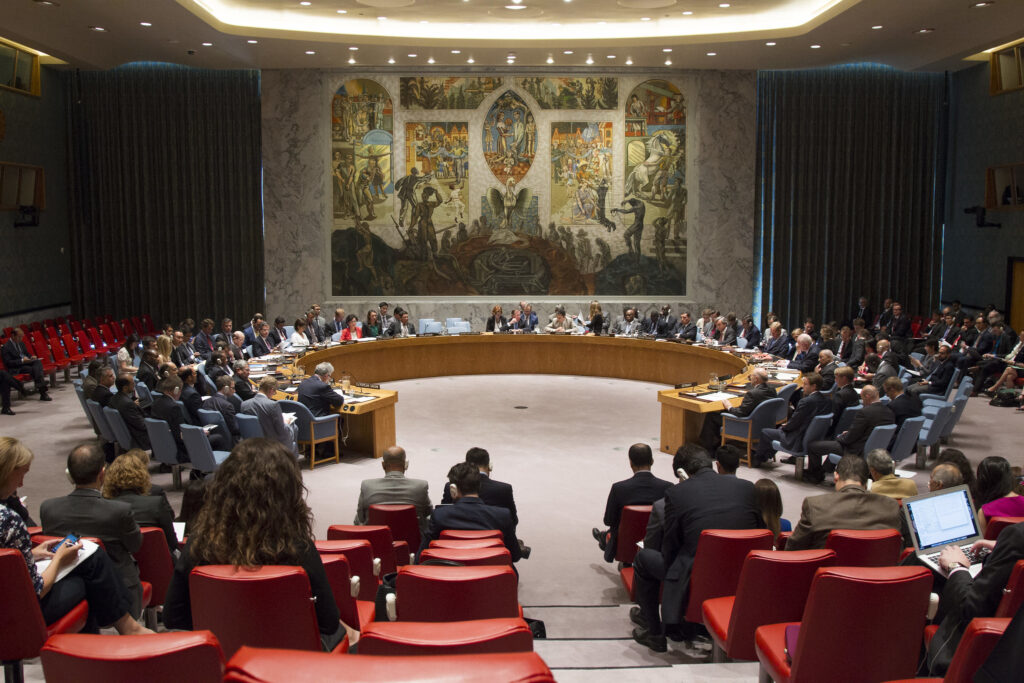
The vote would not concern the reimposition of sanctions per se, but more subtly the extension or non-extension of the sanctions’ relief after a detailed assessment of the situation. Any concerned state could oppose this extension, and a permanent member could exercise its veto. This has sometimes been referred to as a “reverse veto,” though the term “proactive veto” is arguably more appropriate, as it enables the automatic restoration of sanctions predating the July 2015 agreement, even at the initiative of a single signatory state. The potential implementation modalities were detailed in the JCPOA, explicitly providing for the creation of a Joint Commission for dispute resolution composed of eight members: the P5 (the five permanent members of the UN Security Council), Germany, the European Union as a constituted entity, and the Islamic Republic of Iran. A discussion period of up to 35 days would then commence. If the situation remained unsatisfactory, any of the six non-Iran members would be authorized to refer the matter to the Security Council, followed by a 30-day period during which sanctions could be reinstated. At this stage, the right of veto would not yet apply. However, if a majority of five members agreed that Iran was not upholding its commitments, the matter could then be referred back to the Security Council: “Upon receipt of the notification from the complaining participant, including a description of the good-faith efforts undertaken to resolve the dispute, the United Nations Security Council, in accordance with its procedures, shall vote on a resolution to continue the sanctions relief. If the resolution has not been adopted within thirty days following the notification, the provisions of the previous Council resolutions shall be reinstated, unless the Council decides otherwise.”
It is precisely this scenario that unfolded at the end of the summer. “If Iran (…) refuses to negotiate a strict and lasting framework for its nuclear programme, then France, together with its European partners, can, with a simple letter sent by post, reapply the global embargo on arms, nuclear-related equipment, and on banks and insurance companies, which was lifted ten years ago,” explained the French Foreign Minister on June 28, as a warning and in the hope that Tehran would engage in a constructive logic. But due to Iran’s intransigence regarding the relaunch of nuclear negotiations, the “E3” group then informed the UN Security Council, by letter on August 28, 2025, that it considered Iran to be manifestly failing to comply with its commitments under the JCPOA. France, the United Kingdom, and Germany indicated to the Security Council that “on the basis of factual evidence,” they believe that Iran – since it progressively freed itself from its obligations on May 8, 2019, in response to President Donald Trump’s unilateral and ill-advised withdrawal of May 8, 2018 – is effectively in a situation of “significant non-compliance with its commitments”[1] under the 2015 nuclear agreement, and are “thus invoking the mechanism known as the snapback,” thereby opening the thirty-day process allowing the reimposition of a series of sanctions suspended ten years earlier. “In July 2025, the ‘E3’ put on the table a proposal to extend UN Resolution 2231,” which governs the JCPOA “and its snapback mechanism. The requirements set by the ‘E3’ in exchange for this extension – namely, the resumption of nuclear negotiations, Iran’s compliance with its obligations toward the IAEA, and measures addressing our concerns regarding the stockpile of highly enriched uranium (at 60%) – have not yet been satisfactorily met by Iran,” wrote the three Foreign Ministers in a separate joint statement. Denouncing a “major risk of proliferation,” they explained that they had made “every possible effort to break the deadlock” over the past several years, that is, since May 2019. The formidable snapback mechanism was therefore formally triggered, providing for the restoration of UN sanctions after the thirty-day period explicitly stipulated in Resolution 2231 of July 20, 2015. Two members of the group – France and the United Kingdom – are also permanent members of the UN Security Council. The objective of the procedure was threefold. This “notification” launched a final countdown and opened a thirty-day window set to close after the end of the UN General Assembly on September 23, 2025 and before Russia, an ally of Tehran, assumed the presidency of the Security Council in October 2025. In the absence of a new UN Security Council resolution blocking the reimposition of UN sanctions against Iran by September 17, 2025, the sanctions regime was to be automatically restored. The Iranian Ministry of Foreign Affairs immediately denounced an “unjustified and illegal” decision by the European “E3,” as did Russia’s Deputy Ambassador to the UN, Dmitry Chumakov, who judged it to have “absolutely no legal basis.”
During the thirty days following this “notification,” there were coordinated obstruction attempts by Russia and China, two anti-Western “allies” of Iran. After a first attempt to secure, through a Security Council resolution, the continuation of the suspension of UN sanctions against Iran was rejected on September 19, 2025 (9 votes against, 4 in favour – including Russia, China, and Pakistan – and 2 abstentions), Moscow and Beijing made one last attempt, in vain, to push a new draft resolution delaying the reimposition of international sanctions on Iran by six months, until April 18, 2026. Western states maintained that Russia sought this extra six-month delay for the sole purpose of surpassing the expiration date of Resolution 2231 on October 18 – thereby rendering any future snapback activation legally void. This final attempt was once again rejected by 9 votes against (including the United States, Denmark, France, Greece, Panama, the United Kingdom, Sierra Leone, Slovenia, and Somalia), 4 votes in favour (Algeria, China, the Russian Federation, and Pakistan), and 2 abstentions (Guyana and the Republic of Korea). The result of this vote confirmed the decision of the “E3” – the three European parties to the JCPOA – to activate the mechanism for returning to sanctions, as provided for under Resolution 2231 (2015), due to Iran’s non-compliance with its obligations under the JCPOA, thus initiating the automatic return to the sanctions imposed on Tehran prior to the JCPOA’s ratification in 2015. The date remained set for September 28, 2025. The mechanism was, in fact, conceived as a last resort guarantee against the presumed bad faith of certain Security Council members. It aims to bypass the usual deadlocks within the Security Council and prevents any attempt by Moscow or Beijing to exert leverage. It constitutes a form of diplomatic “short-circuit”: once activated, no one is able to stop it. Hence its nickname as a “veto-proof” instrument. It is this mechanism that led to the automatic reinstatement of the sanctions regime on September 28, 2025, just fifteen days before the critical date of October 18, when Resolution 2231 would have expired and rendered any activation of the snapback mechanism impossible – after which the sanctions regime entered into full force on October 18, 2025.
The Potentially Devastating Economic Consequences Ahead
The return of UN sanctions is expected to hit Iran hard, even though the country is already facing a severe sanctions regime imposed by the United States, whose President Donald Trump signed, on February 5, 2025, a “National Security Presidential Memorandum” (NSPM) aimed at reapplying – as during his first term (January 2017 – January 2021) – “maximum pressure” on Iran by targeting entities violating existing restrictions. In addition, Treasury Secretary Scott Bessent was tasked with issuing guidance to affected sectors such as maritime transport, insurance, and port operations, emphasizing the risks associated with violating U.S. sanctions linked to Iran or to Iran-backed terrorist groups – thus relying on a questionable “extraterritoriality” of U.S. law through the formidable logic of “secondary sanctions,” which, in this case, are anything but secondary.
The distinction introduced by the consequences of activating the snapback lies in the fact that UN sanctions enjoy international legitimacy, theoretically obliging governments, insurers, and banks worldwide to comply more strictly. As Adel Bakawan notes: “The effect will be devastating. For while it was still possible to trade with Iran or invest there, even if the Trump Administration’s secondary sanctions were punitive, now nothing will be possible except humanitarian transactions. The Iranian economy will be sealed off, without windows, with entire sectors threatened with collapse.”
In theory, Beijing and Moscow will therefore be required to apply sanctions against their Iranian “ally.” But nothing is less certain. Russia’s ambassador to the United Nations declared that his country did not recognize the legitimacy of the reinstated international sanctions: “We do not recognize the entry into force of the snapback,” stated Vasily Nebenzia at a press conference on October 1, 2025, marking the beginning of Russia’s presidency of the UN Security Council for the month of October. He added: “We will therefore live in two parallel realities, because for some, the snapback has occurred. For us, it has not. This creates a problem. How will we get out of it? We shall see.” China, which also opposed the activation of the mechanism, has not explicitly stated whether it will comply with the reinstated sanctions or refuse to do so, in order to avoid being accused – like Moscow – of disregarding international law. Yet China appears to have discreetly adopted new measures against “ghost ships,” establishing, from 1 November 2025, new port regulations that will make the illicit flow of sanctioned Iranian and Russian oil significantly more difficult. These regulations will bar entry to tankers whose International Maritime Organization (IMO) registration is falsified, to vessels older than 31 years, and to ships targeted by international agencies. Likewise, vessels recently involved in accidents or pollution cases will no longer be allowed into the major port of Qingdao in Shandong Province, which handles roughly one-sixth of China’s crude oil imports. Ships with expired or invalid certificates issued by international bodies will also be banned. These new Chinese measures come as the United States had recently singled out China – and this port in particular – for failing to comply with international sanctions. The new regulation would thus be, to some degree, a way for China to align itself with Western sanctions concerning both Iran and Russia, suggesting that international pressure and restrictions are progressively narrowing the room for manoeuvre in circumventing sanctions. The fact remains that the impact of restoring international sanctions will add to ongoing Western sanctions – both American and European – since on September 29, the European Council decided to reinstate, simultaneously with the international sanctions, a set of restrictive measures related to Iran’s nuclear proliferation activities that had been suspended when the JCPOA entered into force in 2015. This decision was taken in parallel with the reimposition of UN sanctions. The European measures reinstated include both those adopted by the UN Security Council since 2006 through successive resolutions – automatically transposed into the legal order of the European Union – as well as autonomous measures of the European Union.
The reinstatement of sanctions will directly undermine Iran’s capacity to export crude oil, attract investment, and finance its energy sector. Resolution 1929 is particularly damaging to the Iranian economy, as it restricts maritime insurance and financial services essential to oil exports while deterring foreign energy companies. The impact will extend beyond oil and finance, increasing trade financing costs, maritime insurance premiums, and currency volatility. Banking restrictions under Resolutions 1737, 1747, and 1803 will complicate oil sales and payments, thereby reducing revenues. Declining public revenue will limit Tehran’s fiscal capacity, straining subsidies, salaries, and social programmes. Beyond oil, sanctions will intensify inflationary pressures, weaken the rial, and increase transaction costs across supply chains.
The Iranian rial collapsed, beginning on September 25, 2025, to around 1,180,000 per U.S. dollar on Tehran’s unofficial market (compared with 920,000 rials in August), roughly one week after the United Nations reinstated sanctions. The UN sanctions have heightened pressure on an economy already grappling with high inflation and repeated supply tensions. Official data show that point-to-point inflation surged to 45.3% in September 2025, with food prices rising sharply. Experts also warn of record-level inflation in the months ahead and the possibility of stagflation. The collapse of the rial, however, had begun even before the reinstatement of international sanctions.
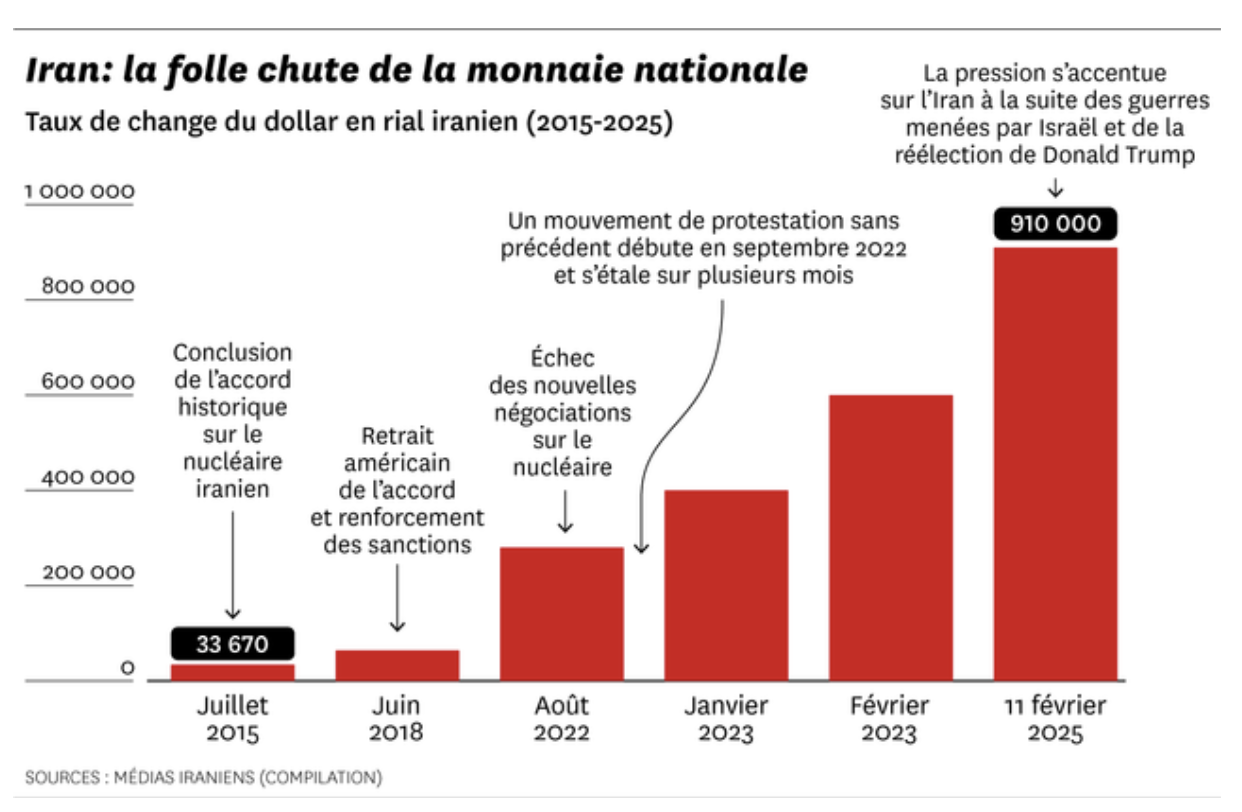
The Iranian Chamber of Commerce projected, in early September 2025, the worst-case scenario for Iran: namely, a potential 60% collapse of the currency, 75% inflation, and 14% unemployment in the coming months following the reinstatement of sanctions. According to the Iranian Statistical Center, year-on-year inflation reached 45.3% in September 2025. The Consumer Price Index (CPI) rose to 384.6, a monthly increase of 3.8%. Compared with September 2024, prices rose by 45.3%, and in some cases by up to 50%. Meanwhile, annual inflation reached 37.5%, reflecting sustained pressure on household finances. The sharpest increases were recorded in essential goods. The category of miscellaneous goods and services topped the list with inflation at 58.5%, closely followed by food and beverages (57.9%). Within the food sector, bread and cereals saw a staggering 94.3% year-on-year increase, becoming the main drivers of inflation alongside dairy and meat products – so much so that, as Adel Bakawan notes, middle-class households now “eat meat once a month instead of once a week.” The price of red meat has reached nearly 12 dollars per kilogram, a price unaffordable for many families given that the real minimum wage has fallen to 120 dollars. This situation has raised concerns about caloric poverty and worsening food insecurity for millions of Iranian households. A quarter of Iranians now reportedly live on less than 2 dollars per day.
Adding to the pressure, the Iranian economy contracted by -1% in the first quarter of 2025, dropping to -4% when oil revenues are excluded. This contraction signals the onset of stagflation – a combination of high inflation and economic stagnation. The World Bank predicted that Iran’s economic growth would decline by roughly 1.7% to 2% in 2025 and that this contractionary trend would continue into 2026, with an estimated –2.8% growth rate, an even worse figure than the 0.7% growth initially projected in the April 2025 report.
Iran is now facing the risk of economic collapse. The country may simultaneously enter a period of hyperinflation and severe recession – stagflation – posing a crisis that threatens not only the population’s livelihoods but also political stability, if not the very survival of the Islamic Republic. Several senior officials of the Islamic Republic, speaking anonymously to Reuters, stated that Tehran believes Western states are seeking to stoke internal unrest and endanger the regime’s existence by tightening sanctions. “The nezam (the ‘system’, meaning the Iranian regime) knows that protests are inevitable; it is only a matter of time. The situation is worsening, while our options are shrinking,” one official reportedly told Reuters. While the leadership of the Islamic Republic continues to rely on a policy of “resistance economy” (eghtesad-e moghavemat), experts warn that depending on China, Russia, and a handful of regional countries for trade and regime survival cannot prevent the economic collapse of a country of nearly 90 million inhabitants.
Conclusion
The impact of the UN Security Council sanctions will be severe and multifaceted, deepening Iran’s pre-existing structural and financial damage, with social and economic pressures that can only intensify. The question now arises regarding the stability – or even the survival – of the Iranian regime, which no longer appears capable of averting the bleak prospects implied by the comprehensive reinstatement of sanctions.
Notes
[1] An additional IAEA (International Atomic Energy Agency) report dated May 31, 2025 – according to which Iran had accelerated its rate of production of highly enriched uranium – was likely a tipping point with regard to the Iranian nuclear issue. The IAEA noted a marked increase in uranium enriched to 60%, a new threshold close to the 90% required for manufacturing a nuclear weapon. The total reached 408.6 kilograms as of May 17, an increase of 133.8 kilograms in just three months. As for the total quantity of enriched uranium, it now exceeded by a factor of 45 the 3.67% limit specifically authorized by the 2015 agreement concluded with major powers, amounting to 9,247.6 kilograms. This finding had been established one week before a meeting of the Board of Governors in Vienna, held from June 9 to 13, 2025, which was expected to condemn Tehran’s lack of cooperation. On June 12, the IAEA Board of Governors adopted a resolution censuring Iran for its “non-compliance” with its nuclear obligations, a final warning before a possible referral of the file to the United Nations. The text, drafted by London, Paris, and Berlin (“E3”) in association with Washington, was approved by 19 out of 35 member states. Russia and China, unsurprisingly, voted against it.