


Reinventing a Relationship in a Transformed Middle East
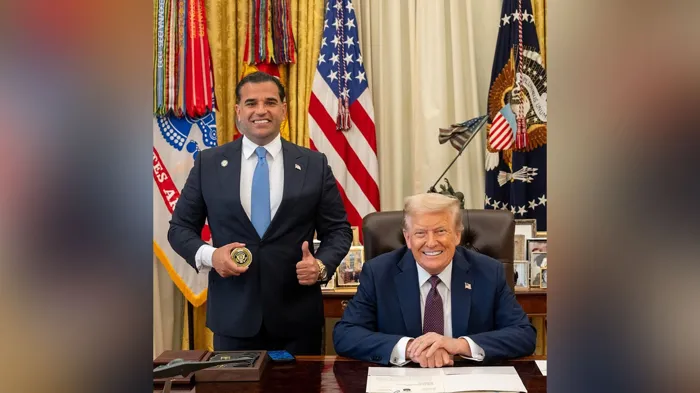
Let us first return to the immediate context of this analysis: the circumstances surrounding Mark Savaya’s appointment and its implications in the present local and regional environment. Born in Iraq in 1985 in the town of Tel Kaif to an Assyrian-Chaldean-Syriac family originally from the Nineveh Plains, Savaya emigrated to the United States with his relatives in the 1990s, like many members of this community, due to the violence and instability that followed the First Gulf War[1]. Until his designation by the Trump administration as special envoy to his country of birth, he had been an influential businessman in Michigan. Active within the Middle Eastern diaspora, Savaya became known as an assertive entrepreneur and one of the president’s most fervent supporters, having rallied a significant portion of the Muslim vote during the 2024 election campaign. With these biographical elements in mind, how should we interpret his appointment to Baghdad, and what exactly is at stake?
To answer this question, we must first recontextualize Savaya’s arrival in this strategic post by highlighting the American vision of post-2024 Iraq – more specifically, the “Trumpian” logic underpinning it. In broad terms, the new U.S. special envoy has identified as priorities the facilitation of unified governance in Iraq and the consolidation of its security forces under a single command, which he deems essential to the stability, sovereignty, and prosperity of a state undergoing reconstruction. Given the enduring tensions dividing Iraqi communities, Savaya also seeks to support rapprochement between the federal authorities and the Kurdistan Region with a view to strengthening national cohesion across various dimensions of the recovery process[2]. In this regard, his objectives reflect the core tenets of current U.S. strategy in a Middle East undergoing rapid transformation.
On the one hand, in aspiring to reinvent the Iraqi-American relationship, Savaya is fully aligned with the “transactional” approach implemented more broadly by Donald Trump in the Middle East. This approach is characterized by a pragmatic, deal-driven diplomacy centered on bilateral economic and military agreements designed to safeguard U.S. security interests, favoring short-term strategic gains and superficial stabilization rather than durable political conflict resolution. Beyond longstanding alliances with Gulf petro-monarchies and a harder line toward Iran, Washington seeks to reinforce “profitable” partnerships with other states in the region – such as Iraq – toward normalized diplomatic relations. On the other hand, and as a direct consequence of this approach, the United States intends to orchestrate a relative disengagement from prolonged conflict zones of which Iraq long constituted the epicenter. The American president holds little intrinsic interest in Iraq, where the United States became mired militarily, but views it primarily through the prism of its immense oil wealth and its strategic position in the regional rivalry with Iran. In other words, the United States aims to tactically refocus on Iraq’s major economic and energy dossiers, conditioning dialogue and cooperation with Baghdad on a genuine distancing from Iranian influence.
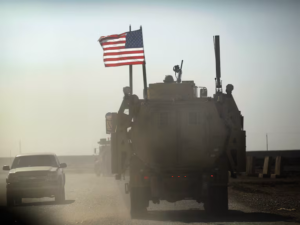
For now, Mark Savaya’s arrival has been broadly welcomed by those who favor a renewed relationship with Washington, far removed from the disastrous military interventions of the past. It clearly signals a reorientation of U.S. policy in Iraq, born of a desire to “turn the page” and combining institutional support with financial investment[3]. Savaya’s profile as a businessman aligns with the deals Trump has sought to conclude across the region and with his determination to rebuild influence previously undermined by erratic actions, of which the Iraqi quagmire remains the tragic emblem. In the background, the United States is also continuing the gradual withdrawal of its troops still stationed on Iraqi soil – with a now-limited presence, such as at Al-Asad Air Base. This flexible military footprint is intended to serve as leverage in ongoing regional negotiations; it is thus merely a secondary component of the broader deal Trump envisions, one for which Mark Savaya will be the principal architect in Iraq. During his first term, Trump had already emphasized the pragmatic need to reduce military expenditures and avoid involvement in conflicts that offer no clear benefits to the United States. In this sense, major American investors have been encouraged to engage more seriously in upgrading Iraq’s infrastructure, securing the independence of its energy sector, and strengthening its banking system. This diplomatic renewal is expected to foster improved relations with the Iraqi government and contribute to greater regional stability.
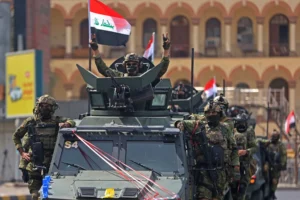
At the geopolitical level, Iraqi elites seeking to free themselves from the grip of the neighboring Islamic Republic have welcomed Savaya’s arrival. The events of October 7, 2023, and the ensuing war in Gaza indeed shifted the balance of power between Washington and Tehran, contributing to a lasting weakening of the “Axis of Resistance” – a structured concept that emerged in opposition to the United States and Israel following the overthrow of Saddam Hussein in spring 2003. From that point onward, Iraq has experienced an irresistible rise in militia influence until certain Shiite groups formed a “state within the state,” particularly as a result of their fierce fight against the Islamic State between 2014 and 2017. Today, the situation has fundamentally changed. Aware of the major risks that a direct confrontation with Israel would pose to them and to Baghdad’s political class – especially in the wake of the “12-day war,” which revealed the Iranian regime’s intrinsic weaknesses – the Iraqi Shiite armed militias have largely kept their distance from confrontation, beyond their incendiary rhetoric. Former Foreign Minister Hoshyar Zebari (2003-2014), a senior figure in the Kurdistan Democratic Party (KDP), praised the American president’s decision to appoint Savaya as an acknowledgment of an “abnormal situation” in Iraq and as a bold step that could counterbalance militia dominance and pave the way for internal political rebalancing with tangible results[4].
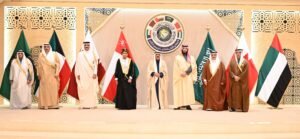
This optimism has been echoed by other groups and factions – primarily Kurdish and Sunni – that have long denounced the dominance of predominantly Shiite militias over the post-Ba’thist state apparatus, as well as by nationalist elements within Iraq’s “Shiite house” seeking comprehensive political reform and a realignment of Iraqi diplomacy. To counterbalance Iran’s weight, some Iraqi political actors have also actively moved closer to the Gulf petro-monarchies, especially Saudi Arabia, which Baghdad now regards as a key economic and security partner. Since 2017 and the creation of the “Iraqi-Saudi Coordination Council,” the two countries have gradually restored ties after decades of diplomatic rupture dating back to Saddam Hussein’s invasion of Kuwait in 1990. This dynamic strengthened in 2024 during the meeting between outgoing Prime Minister Mohammed Shia al-Sudani – victorious in the November 2025 legislative elections but without a guaranteed majority to form a government – and Crown Prince Mohammed bin Salman. Since then, Riyadh has come to assume the role of guarantor of Iraq’s sovereignty and stability, in clear alignment with American interests as articulated by Trump and his emissary Savaya.
Yet Middle Eastern geopolitical dynamics are fluid and uncertain, and it is far from guaranteed that Savaya and his partners will be able to overcome the militia phenomenon and Iran’s entrenched influence. Indeed, these militias – whom Washington and its allies hope to dissolve – view Savaya’s arrival and declared ambitions with distrust and suspicion. To them, he is merely the latest “agent” of an American interventionism fundamentally opposed to their interests and strategy in Iraq[5]. Despite the significant weakening of their Iranian patron on the regional stage, it is likely that these militias have not said their last word and will make Savaya’s mission extremely difficult, if not impossible. Other critics point to the aggressive personality of this “diplomat” – who is not quite one[6] – his controversial involvement in the U.S. cannabis industry, and his flashy marketing tactics combined with a lack of tact, all of which could complicate his mission in a country where sensitivities remain raw.
Complex Relations Between Confrontation and Cooperation
What are the long-term prospects of this approach to Iraq now favored by the United States? To better assess them, it is necessary to introduce a second temporal dimension – complementary to the first – namely the longer trajectory within which Savaya’s appointment is situated, that is, the historical timeframe of relations that have united Washington and Baghdad for decades. The hope for a reinvented relationship invites us to revisit a rich and complex bilateral diplomatic legacy, marked at times by cooperation – such as the period currently unfolding – and at other moments by intense confrontation that need no introduction. This fraught Iraqi-American relationship has always been shaped by eminently strategic factors, beginning with the earliest encounters between Americans and Iraqis in the early nineteenth century. Present-day Iraq was still under Ottoman rule when David Porter (1780-1843) became the first American diplomat to settle in Constantinople, then the Empire’s capital, in 1831[7]. Builders, missionaries, and archaeologists from across the United States each contributed in their own way to developing commercial, religious, and cultural ties between Washington and Baghdad. One cannot help but think of the famed Jon Van Ess and his educational and religious work in the Basra region in the early twentieth century. A learned itinerant preacher, he explored the territories of local tribes – particularly those of the Arab marshes – and mapped their spectacular reed islands along the banks of the Tigris and Euphrates. During the First World War, he also served briefly as the interim U.S. consul for southern Mesopotamia, supporting the British against the Ottomans.
By the 1920s, as Iraq’s oil industry began to flourish, major American companies sought to establish a deeper presence in the country. Although far behind the United Kingdom, which had obtained an official mandate to administer the former Ottoman territories at the San Remo Conference in April 1920, the United States nonetheless secured a 23.75% share in the Iraq Petroleum Company following the 1928 Red Line Agreement in Ostend[8], through which British, American, and French oil majors divided Middle Eastern petroleum resources to their benefit. These developments underscore that Washington sought to impose its international leadership over oil well before the Second World War, notably over Iraqi fields whose control was deemed essential to secure reliable energy supplies. Two years later, in January 1930, the United States recognized Iraq’s independence in London through the signing of an Anglo-American-Iraqi Convention. Yet the aim was to align this recognition with U.S. strategic interests and objectives, particularly by consolidating access to the country’s hydrocarbons – access that effectively came at the expense of Iraqi sovereignty as well as European positions. Diplomatic relations were established the following year, in March 1931, with the appointment of Alexander K. Sloan as chargé d’affaires. In 1946, the “United States Legation in Baghdad” finally became a fully-fledged embassy.
During the regional alliances that characterized the Cold War from the 1950s onwards, U.S.-Iraqi relations took another turn. While the British-installed monarchy of King Faisal was pro-Western, its overthrow in 1958 and the establishment of a republic under Abd al-Karim Qasim shifted Washington’s priorities toward containing communist influence – especially since Iraq had been a founding member of the 1955 Baghdad Pact, intended to counter Soviet ascendancy in the Middle East. Under President John F. Kennedy, the CIA multiplied efforts to limit Soviet influence, which contributed, at least in part, to the overthrow of Qasim’s regime during the Ba’thist coup of February 1963[9]. Four years later, in June 1967, bilateral relations were severed in the aftermath of the Six-Day War amid a surge of anti-American sentiment across the region. Relations were only restored in 1984 under Ronald Reagan, even though the United States had in fact been covertly supporting Iraq since 1979 and the Islamic Revolution in Iran. During the eight-year war between these two neighbors (1980-1988), Washington provided intelligence, military aid, and economic assistance to Iraq – then still perceived as the only credible counterweight to the Islamic Republic – yet Saddam Hussein would eventually become America’s sworn enemy. In 1990, Iraq’s invasion of Kuwait and the First Gulf War, including Operation Desert Storm to expel Iraqi forces, marked a fatal turning point for Baghdad. By February 1991, diplomatic relations were fully severed, inaugurating a decade of devastating sanctions that isolated and internally destroyed Iraq[10].
On the pretext of the Ba’thist regime’s alleged possession of weapons of mass destruction and an unverified supposed “connection” between Saddam Hussein and al-Qaeda (arguments that were never substantiated), the United States invaded Iraq in March 2003, two years after the 9/11 attacks. Until summer 2004, a Coalition Provisional Authority under the civil administration of Paul Bremer was responsible for overseeing the country’s transition to democracy and its reconstruction. Once sovereignty was transferred to an interim government, the U.S. embassy reopened. But years of armed insurgency and sectarian strife severely undermined any normalization. Having withdrawn once in late 2011, the United States found itself dragged back into a second Iraq war less than three years later, when in June 2014 the Islamic State under Abu Bakr al-Baghdadi seized Mosul and vast swathes of Iraqi territory. It is unclear whether this devastating episode reconciled Washington and Baghdad, though they fought a common foe. Notably, in 2008, as U.S. troops began their first withdrawal from Iraqi cities, a “Strategic Framework Agreement” and a “Status of Forces Agreement” were signed in Baghdad to define the contours of long-term political, economic, and security cooperation. Their bilateral framework subsequently translated into major oil contracts, infrastructure investments, expanded commercial relations under Trump’s first term, and sustained collaboration in counterterrorism through regular intelligence exchanges.
Today, the Iraqi-American relationship continues to oscillate among these three dimensions, although U.S. economic and financial interests have clearly taken precedence over bygone military ventures. Whether Mark Savaya – America’s first special envoy to Iraq in twenty years – and his slogan “Make Iraq Great Again”[11] will contribute to restoring stability and reducing Iraq’s dependence on the surrounding states, especially Iran, remains to be seen.
Notes
[1] Françoise Brié, « Migrations et déplacements des Assyro-Chaldéens d’Irak ». Outre-Terre, n° 17, 2006, pp. 455-467.
[2] Bryar S. Baban, « La région du Kurdistan-Irak entre fédération et indépendance », Civitas Europa, n° 34, 2015, pp. 21-53.
[3] Dany Moudallal, « Qui est Mark Savaya, le nouvel envoyé spécial de Trump en Irak ? », L’Orient-Le Jour, 21 octobre 2025.
[4] « “Bold Recognition of Crisis”: KDP figure Hails Trump’s Iraq Envoy Pick », Shafaq News, 20 octobre 2025.
[5] C. Anthony Pfaff, « Balancing Acts and Breaking Points: Iraq’s US-Iran Dilemma », Atlantic Council, 30 juin 2025.
[6] « Moyen-Orient. “Du cannabis à la diplomatie”, le profil atypique du nouvel envoyé de Trump en Irak », Courrier international, 21 octobre 2025.
[7] Frédéric Hitzel, « Les ambassades occidentales à Constantinople et la diffusion d’une certaine image de l’Orient », Comptes rendus des séances de l’Académie des Inscriptions et Belles-Lettres, vol. 154, n° 1, 2010, pp. 277-292.
[8] Philippe Tristani, « L’Iraq Petroleum Company, les États-Unis et la lutte pour le leadership pétrolier au Moyen-Orient de 1945 à 1973 », Histoire, économie & société, 2010, pp. 81-107.
[9] Weldon C. Matthews, « The Kennedy Administration, Counterinsurgency, and Iraq’s First Ba‘thist Regime », International Journal of Middle East Studies, vol. 43, n° 4, 2011, pp. 635-53.
[10] « Bagdad a rompu ses relations diplomatiques avec six pays de la coalition », Le Monde, 8 février 1991.
[11] Hamza Mustafa, « New US Envoy Wants to “Make Iraq Great Again” », Asharq al-Awsat, 26 octobre 2025.