

Is ISIS Really Defeated? Why Syria & Iraq Still Drive the Jihadist Threat, with Brigitte Boucher from Franceinfo

Author

Rebroadcast from Franceinfo 29/12/2025

ISIS was territorially defeated in 2017 — but the threat didn’t disappear. In this interview, we unpack how jihadist networks adapt (Syria, Iraq, Sahel), why “deterritorialized” terrorism is harder to contain, and what the situation in Rojava/SDF-controlled areas means for regional security.

Chapters

0:00 Who’s speaking + context

0:14 U.S. strikes in Nigeria: what was targeted, what’s the real threat?

0:28 Why the “heart” of the threat remains Syria & Iraq

0:41 2017 “victory” vs today’s reality: from territory to networks

1:26 “Deterritorialized” terrorism: diffuse, mobile, global

2:21 Sahel security vacuums + politics of counterterrorism narratives

3:20 Syria: attacks, desert networks, and infiltration risks

4:55 Veteran/foreign fighter cells and fragmentation on the ground

5:15 New Syrian authorities: break with jihadism vs militant base dynamics

6:46 Can ISIS rebuild territory? Numbers on fighters + detainee challenge (SDF/Rojava)

7:28 ISIS vs al-Qaeda: rivalry, shared ideology, shared targets

8:20 Rojava: governance limits, infiltration, and why it complicates stabilization

9:00 Wrap-up
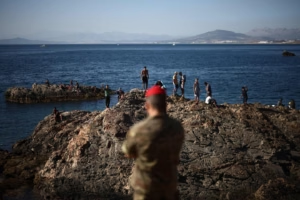
Rewarded Either Way: Morocco, the EU and the Paradox of Border Externalisation after Ceuta

The July 2026 Ceuta crisis, during which an estimated 72,000 people crossed the border from Morocco, exposed a paradox in the EU’s externalisation of migration management. Relying on transit states to limit crossings also gives those states bargaining power. This article examines EU–Morocco cooperation and competing explanations for the crisis, from structural pressures and failures of anticipation to the possible instrumentalisation of migration flows. Both interpretations point to the same vulnerability: the EU’s dependence on Moroccan cooperation. The article situates Ceuta within a broader policy model by examining the European response and comparing Morocco with Tunisia. It concludes that externalisation does not guarantee containment and that the pursuit of greater control may deepen the EU’s reliance on transit states.

Read More »

Related Articles

Rewarded Either Way: Morocco, the EU and the Paradox of Border Externalisation after Ceuta

Amelia Aguirrezabal Ortega

Jurf al-Sakhar: Ali al-Zaidi faces the military and economic power of Kata’ib Hezbollah

Adel Bakawan

From the Algiers Doctrine to the Madama Forward Operating Position: Anatomy of a Strategic Realignment in the Sahel

Imen Chaanbi

In Lebanon, the End of a Sense of Superiority? The Shiite Community Facing Hezbollah’s Decline

Lyna Ouandjeli

Could Coalition Withdrawal Increase or Reduce Threats to Iraqi Kurdistan?

Wladimir van Wilgenburg

Lebanon’s rejection of “resilience” qualification

Lyna Ouandjeli