

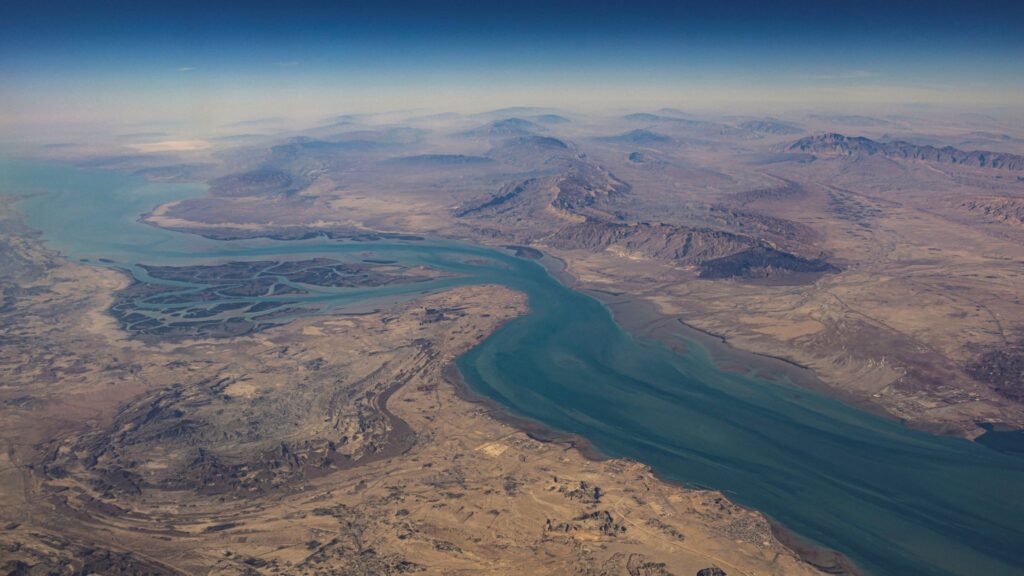

On the fourth day of the Israeli and American offensive against Iran, ships are no longer passing through the Strait of Hormuz, a chokepoint on which a large share of the world’s oil and liquefied natural gas supply depends. On Monday, a Revolutionary Guards official threatened to “burn any vessel” attempting to cross this narrow maritime corridor that links the oil-producing Gulf states to the Indian Ocean. Any disruption in this area is immediately critical for the global economy, and gas and oil prices continued to soar on Tuesday. Does the regime have the means to block this strategic passage for several days — or even several weeks — triggering global chaos?
“A terrifying threat” preventing ships from sailing
On the ground, the closure does not take the form of a naval blockade in this roughly 30-kilometer-wide passage. “No, there is not a line of Iranian ships cutting off shipping lanes, because such a formation would be easily sunk by U.S. forces,” recalls a French military expert stationed in the region. Instead, the disruption amounts to a “freeze” in traffic, because “the threat of drone or missile attacks is so terrifying that ships have come to a halt, and tanker insurance premiums have become exorbitant,” he explains. Since Saturday, two oil tankers and one chemical tanker have been attacked, causing at least one death. On Monday, the vast majority of major maritime insurers canceled “war risk” coverage for the Persian Gulf area. Around 150 oil and gas tankers are reportedly at a standstill, waiting for safe passage through the strait.
After hundreds of military sites have been struck since February 28, does Iran still have enough weapons to keep the strait blocked? “Iran still possesses maritime infrastructure capable of blocking the passage and could also lay thousands of mines there, which it has not done,” says Adel Bakawan, associate researcher at the French Institute of International Relations (Ifri) and director of the European Institute for Studies on the Middle East and North Africa (EISMENA). “However, the United States and Israel have sufficient means to destroy these Iranian infrastructures and to clear mines from the area,” he adds. A closure lasting several weeks therefore appears unlikely given Israeli-American air and naval superiority. Not to mention oil-dependent countries that, the researcher notes, could be tempted to intervene to reopen this strategic chokepoint.
A “Tanker War” Iran knows well
However, Adel Bakawan stresses that Iran has no interest in completely and durably blocking this passage, since the country itself uses the same strait for its hydrocarbon exports. “This closure is therefore more a tool of pressure than a sustainable long-term option,” he believes. An intermittent blockage scenario seems more likely, involving isolated attacks or mines with global strategic impact. Such attacks could continue for some time, the military expert adds, as Iran’s stockpiles of its most powerful missiles and drones diminish, meaning that the weapons it deploys will have an increasingly limited range. “The regime could increasingly target ships stationed along its coastline and wage a ‘tanker war’ that could last,” the regional specialist estimates.
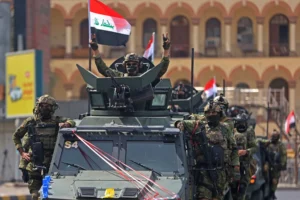
This type of close-proximity maritime warfare is familiar to Iran. During the “Tanker War” with Iraq (1984–1988), both countries systematically attacked commercial vessels in the Persian Gulf to damage the opponent’s economy and influence foreign backers. Iran ultimately accepted the 1988 ceasefire with Iraq.
Link of the article: https://www.20minutes.fr/monde/etats-unis/4204347-20260304-guerre-iran-regime-iranien-vraiment-moyens-bloquer-detroit-ormuz-durablement