


For a Modern Citizenship
Article 1 of the Constitution of October 15, 2005, defines the Iraqi state as a single federal state with a republican, representative, parliamentary, and democratic government. All of these terms are borrowed from the classical constitutional vocabulary of liberal democracies, without any further specific references. However, one word is notably absent: Nation. In contrast, the Constitution mentions Iraqi nationality and the adjective “national” many times.
The absence of the word Nation, combined with an observation of the Iraqi reality, has led commentators to claim that the Iraqi state is a state without a nation. While this view is widely shared, it deserves nuance. First, there is no universally accepted definition of “Nation.” There is also no single model for the relationship between the state and the nation. World history presents cases where the state created the nation, and conversely, cases where the nation preceded and shaped the state. International law is not mistaken when it affirms the right of peoples to self-determination.
A State Impeded
While there is indeed no proclaimed Iraqi nation, the country has given birth to and recognised Iraqi nationalists. Perhaps they are nationalists simply because of their attachment to Iraq. Nationalism can also precede the nation and be focused on constructing it. This was even the original purpose of the principle of nationalities. It is through distortion that another form of nationalism emerged later—one centered on territorial defense or expansion, which all too often descends into racism, xenophobia, and hatred of others. Over the past century, Iraqi nationalism has been expressed repeatedly, starting in 1918 against the Ottoman Empire and during the Great Revolt of 1920 against the British Empire. The Hashemite monarchy made a timid attempt to support a form of nationalism, but it was foreign and neither credible nor capable of achieving it. In 1958, Abdel Karim Qassem tried to establish his own form of Iraqi nationalism, which linked being Iraqi to religious affiliation. However, his initiative lasted only five years before succumbing to opposing currents.
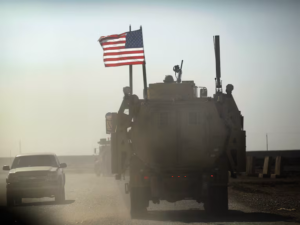
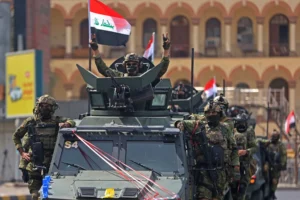
More recently, there have been other manifestations of the same nationalist engagement, such as during the 2004 siege of Fallujah by the US Marines [1] or during the October 2019 Tishreen Revolt (“October Movement”). Iraq has even had some theorists of nationalism in the past, and it is not excluded that there are still some today. Each time it appears, Iraqi nationalism bases its demands on rejecting the current government and deplorable social conditions. Therefore, it is possible that such a reality exists in Iraq, even though it is often harshly repressed. This violence from the authorities proves that the national aspiration in Iraq worries its opponents. All of this makes sense in favor of another type of state and another type of political regime. The principle of the nation-state itself deserves to be questioned. It is strictly of European origin, primarily French. It quickly revealed its limits in its lands of origin. In this regard, one should read the Manifesto of Ventotene, written in 1941 by Altiero Spinelli, in collaboration with Ernesto Rossi and Eugenio Colorni, three Italian antifascists under house arrest on the eponymous island. “The absolute sovereignty of nation-states has led to each of them seeking domination. Each feels threatened by the power of the others and regards ever-expanding territories as its vital space.” Everything is said, and the Manifesto advocates for the abolition of nation-states in Europe itself.
Elsewhere, the nation-state is often unsuitable, out of sync, or even anachronistic. A different bond must be created between the state and its people. This is the role assigned to the country’s constitution. Such a bond must be capable of fostering a new relationship, which the German philosopher Jürgen Habermas proposes to call “constitutional patriotism[2],” detached from the nation-state, in order to generate a new type of post-national identity. Speaking of what she calls “citizen patriotism,” Canadian political scientist Geneviève Nootens adds that, because it develops without regard to ethnic origin or religious affiliation, such patriotism remains the most secure foundation for equality and loyalty among citizens in multicultural states. This foundation could give rise to a form of “Asabiyya[3]” distinct from and complementary to the one theorised by Ibn Khaldun over six hundred years ago. The 2005 Iraqi constitution, however, does not operate within the context of creating a post-national citizenship link suitable for a multicultural state. It merely implements the principles and techniques of classical constitutional law, without even fully utilising its potential. An alternative modern solution remains to be written. In the land of Islam, where the Qur’an is sometimes viewed as one of the oldest legal foundations, it is necessary to consider the development of a law that takes constitutional otherness into account.
Another issue concerns the form of the state and the role to be given to federalism that is adapted to Iraq’s religious and ethnic diversity[4]. Initially, only the autonomous region of Iraqi Kurdistan is endowed with a federal regime of internal autonomy. This regime is, in fact, guaranteed by the constitution, and it is well known that the Kurdistan Regional Government (KRG) extensively exercises this autonomy, even organising, in 2017, a referendum on independence that ultimately did not succeed[5]. Iran, Turkey, and Syria, for their part, refuse any form of federalism for their respective Kurdish populations. In Iraq, as in some other countries, two opposing logics regarding federalism are at play. For some, this model is seen as inevitable, being intrinsically linked to the country’s ethnic and religious diversity. For others, it would only be appropriate under certain political and territorial conditions, thus limited to certain regions or governorates. The government does not appear to have much desire to expand federalism beyond Kurdistan, and the other provinces do not seem particularly enthusiastic either, according to some authors[6].
A Fragmented Democracy
In their analysis of Iraqi federalism, they emphasise the fear of the unknown and of the future that overwhelms Iraqis when faced with the option of widespread federalism. Given the country’s social and security situation, this fear is understandable. However, it is not a sufficient reason to abandon all attempts at change. One must always keep in mind the aphorism preceding any reform: if the people fear change more than injustice, how can one fight against injustice? Another crucial question seems to be whether Iraq can sustainably remain a country divided between federalism for some and a merely decentralised unitary state for others. The answer is yes, according to Article 116 of the Constitution[7]. Many countries, even in Europe, rely on this type of diversified system due to local circumstances. While federalism is not foreign to the institutional expression of ethnic or confessional diversity, it is not a primary prospect.
Iraq stands out as one of the few countries in the region that claims to embrace a democratic system, but it faces the challenge of a weakened state, whose dynamics are still largely shaped by ethnic and religious considerations. Such a state is unable to simultaneously address the urgent need to challenge the ethno-sectarian political system that hinders it, to support the necessary societal changes mentioned in the first part[8], and to manage an expansion of federalism. All of this would require a strong state—strong enough to be effective without being dictatorial, a state in which all citizens of the country could finally recognise themselves, a more responsive state, better equipped to confront external interference, and capable of addressing various internal urgencies. A single democratic election could initiate such a change, provided it avoids the current system. As long as the country remains trapped by the constraints of the “Muhasasa Ta’ifia [9],” progress will only occur on the margins. This system has poisoned political life since 2003, but was conceived much earlier, abroad, by the opposition to Saddam Hussein in exile[10]. Imposed by the United States, supported by Iran and Saudi Arabia, and based on a pseudo-virtual census, it involved distributing positions, privileges, and benefits to ethnically and religiously based groups and clans in a Lebanese-style system[11], whose failure is now evident.
Exiting this situation does not even require a constitutional revision. A truly democratic election would suffice. However, the privileged elites are not inclined to relinquish their advantages, and each monitors the others. The less things change, the more it benefits them. Any advancement must be painstakingly negotiated and accepted with the understanding of future concessions. Thus, it is the inaction and systematic exploitation of the state that turn the Iraqi state into an imperfect and collateral democracy, one that favors militias and foreign interventions. This is far from the constitutional and civic patriotism mentioned earlier. Article 2 of the Iraqi Constitution[12] declares Islam as the official religion of the state and a fundamental source of legislation. The same article specifies that no law shall contradict either the principles of Islam, the principles of democracy, or the fundamental rights and freedoms recognised by the Constitution. When read by a Western constitutionalist, the provisions of Article 2 contain potential conflicts and contradictions that make them difficult to apply. Other articles are similarly problematic from this perspective. However, when viewed with a different lens, these provisions may be intended to complement and balance each other through a subtle and contextualised interpretation of their effects. One can see an example of this in the legal and political realms of the “complicated Orient” praised by Antoine Sfeir in his 2006 book, published after the invasion of Iraq. This means that many changes are possible without needing to modify the constitution. Some may not even require a law or regulation but simply challenge existing practices or customs that contradict these principles. Alternative modernities, such as those concerning the multicultural project or the new citizenship, share a common foundation in no longer making the Western liberal model the sole source of inspiration.
The usual methods of political reform, as practiced in established democracies, may also prove ineffective or illusory. A recent example illustrates this clearly. Prior to the last legislative elections in Iraq, scheduled for 2022, a law passed by parliament on December 24, 2019, altered the electoral system. Hotly debated, the law decided to shift from a multi-member list system to a single-member district system, with individual candidacies in constituencies of around 100,000 inhabitants, in accordance with Article 49-1[13]. This legislative reform was a consequence of the October 2019 uprising. The sitting president at the time stated that it laid out a new electoral framework designed to increase the participation of young people in political life. Meanwhile, the prominent Shiite cleric, Grand Ayatollah Ali al-Sistani, believed that this law represented the quickest means of restoring trust and emerging from the current crisis[14].
The elections, brought forward by a year, were held on October 10, 2021. Here is a summary of the results: first, a voter turnout rate of 60%, indicating a decline in participation. Only forty out of 329 elected representatives were classified as independents. The largest group of elected representatives, with 73 seats, approximately 22%, was from the Shiite Sadrist movement, considered to be Iraqi nationalist. The other Shiite, Sunni, and Kurdish parties, divided among themselves, each garnered between 10% and 15% of the votes. As anticipated, the lines remained largely unchanged[15]. These results still reflect ethnic and sectarian influences, and the comments on them predominantly focus on the persistence of these traditional factors. The aftermath of the election, both for the composition of the government in theory parliamentary and for political life in general, was scarcely affected, except for a change in the Prime Minister, but without altering the political direction—just replacing the outgoing leader. A year later, facing a deadlock, the 73 elected members of the majority group ultimately resigned after several unsuccessful attempts[16]. And the political deadlock persists. Thus, it remains a game of illusions for a republic whose true mechanisms lie elsewhere. It is this urgent quest for alternative modernities that should be the priority.
Conclusion
The moral of all this is that a legislative reform, even if welcome, but not consensual, is not enough to produce or create the conditions for change in Iraq. The ethnic and sectarian division of power opposes any reform that threatens its current balance, and it is this appropriation that must be challenged. An alternative modernity reform will require the Iraqi people, in its diversity, to embrace it, and for the beneficiaries of the current system to resign themselves to it. Adhering to Iraqi multiculturalism and patriotism, easing conflicts, and overcoming the fear of change is a matter of will and education. This will require a gradual learning process of individual freedom, the ability to project oneself into the future, and to make personal choices that are not solely dictated by a clan leader, as well as an appreciation for dialogue and considering everyone’s perspective. Every country is capable of questioning its current organisation and replacing it with another. The unique case of South Africa has been the subject of an interesting report on this topic, which clearly illustrates the tensions involved in its difficult recovery[17].
Each society has its own modernity, and no one has an exclusive claim to it, no matter what they may think, nor can anyone claim to possess a superior model. This would be an arrogant and perverted idea of universalism. In the case of Iraq, it is not about denying or questioning the religious, tribal, or familial affiliations to which many Iraqis remain and will remain attached. Rather, it is about transcending them by learning to live, think, and act together when it is necessary or useful for the common good. The challenge is significant, the gap is deep, but the bet is winnable. In a developed society, the practice of citizenship cannot be limited to ethnic or religious belonging. No reform will require individuals to renounce these affiliations; each person belongs to themselves and to God if they are a believer. However, active citizenship requires multiple affiliations—such as professional, philosophical, ideological, social, territorial, or simply relational. It is the sum of one’s own affiliations that shapes a person’s personality, identity, and expression of citizenship.
One example illustrates this. On the highly sensitive topic of feminism[18], the clear-sighted, courageous, and persuasive book by Franco-Iraqi sociologist Zahra Ali shows that the cause of feminism in the Islamic world is not necessarily doomed from the start. This is, of course, conditional on stepping away from the contemporary feminist orthodoxy as defined in the West. She even seeks to root this alternative feminism in the sacred texts of Islam[19]. Although some recent initiatives concerning the status and condition of women in Iraq lean more toward regression than progress[20], these reflections serve as an example of what alternative modernities might look like, inspired by a certain conception of Muslim humanism[21].
Notes
[1] Juan Cole , « Chiites et Sunnites unis par le nationalisme », Le Monde diplomatique, mai 2004 p.11
[2] Jürgen Habermas, L’intégration républicaine, Fayard, 1998
[3] Editor’s note: Asabiyya is an Arabic word that signifies social cohesion, solidarity, and also resilience.
[4] Muhammad Saïd Salab, « Fédéralismes irakiens », Outre-Terre, 2006, 1 / n°14
[5] Adel Bakawan, « L’échec du nationalisme kurde », Confluences méditerranéennes, 2017.1 / n°14
[6] Sardar Aziz, « Le fédéralisme irakien, la deuxième meilleure option pour tout le monde », Centre français de recherche sur l’Irak, octobre 2023.
[7] Editor’s note: Article 116 of the Iraqi Constitution states: “The federal system in Iraq is composed of a decentralized capital, regions, and governorates, as well as local administrations.”
[8] Editor’s note: For more information on this topic, see Jérôme Chapuisat, “Change in Iraq in Search of Alternative Modernities (Part One),” CFRI, published on November 27, 2024.
[9] Editor’s note: Muhasasa Ta’ifia refers to the confessional power-sharing system.
[10] Toby Dodge, « The external imposition of sectarian politics », Foreign Policy Center, 12 novembre 2018.
[11] Estelle Baudoux, « La libanisation de l’Irak : deux systèmes communautaires parallèles », Centre français de recherche sur l’Irak, mai 2022
[12] Editor’s note: This refers to Article 2.1 of the 2005 Iraqi Constitution: “1) Islam is the official religion of the State and a fundamental source of legislation: a) It is prohibited to enact laws that contradict the established precepts of Islam. b) It is prohibited to enact laws that contradict the principles of democracy. c) It is prohibited to enact laws that contradict the rights and fundamental freedoms outlined in this Constitution.”
[13] Editor’s note: Article 49 of the Iraqi Constitution states: “The Council of Representatives shall consist of one representative for every 100,000 inhabitants, and it shall represent the entire Iraqi people. Members are elected through direct and secret universal suffrage. It must ensure the representation of all components of the Iraqi people.”
[14] La Croix, 27 décembre 2021
[15] Adel Bakawan, « L’impasse d’un système politique », Centre français de recherche sur l’Irak, 9 novembre 2021. Adel Bakawan, « L’Irak post-électoral, un pays face à ses démons » , Centre français de recherche sur l’Irak, 11 novembre 2021.
[16] Sardar Aziz, « Vers où Moqtada al-Sadr dirige-t-il l’Irak », Centre français de recherche sur l’Irak, juillet 2022.
[17] On this topic and the example of modernization in South Africa Ran Greestein, « Penser le développement de l’Afrique du sud post apartheid », Revue internationale des sciences sociales, 2010.1 /n°195
[18] Anna Cristina Marques, « L’émancipation économique des femmes en Irak : arme à double tranchant », Centre français de recherche sur l’Irak, novembre 2023
[19] Zahra Ali, Féminismes islamiques, La Fabrique, Éditions 2020. One may also revisit the Call by Eight Arab Women for Dignity and Equality, published in Le Monde on March 8, 2012, which outlines the desired reforms in a precise and tailored manner.
[20] Margaux Seigneur, « En Irak un projet de réforme pourrait légaliser le mariage des enfants », Le Monde, 14 août 2024 Also Sardar Aziz, « Confessionnalisation des affaires personnelles » , Centre français de recherche sur l’Irak, 16 août 2024
[21] Leila Benhadjoudja, « L’Islam Une contribution à l’Humanisme », Relations, n° 775 nov/décembre 2014