

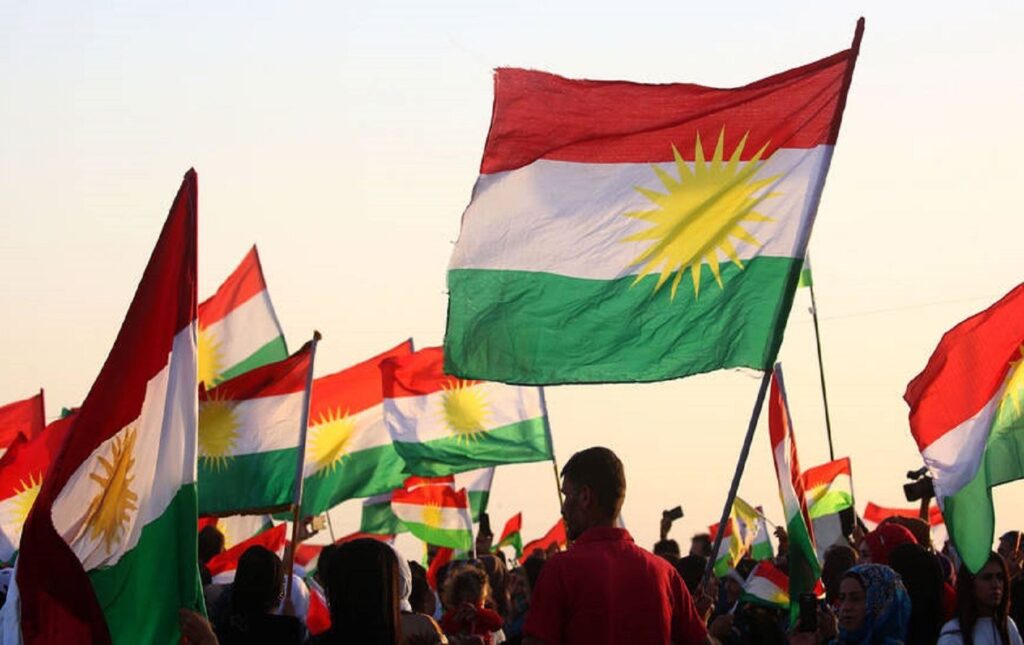

The political entity that the Kurds in Syria developed in the aftermath of the Syrian popular uprising of 2011 was the result of years of struggle and resistance by the Kurdish people in Syria. However, it is not possible to overlook two fundamental factors that led to its emergence, expansion and consolidation. First, the weakening and erosion of the central government in Damascus under the increasingly isolated leadership of Bashar al-Assad. Second, American and Western support for the Kurdish forces when they were confronted with the assaults of the terrorist organisation Islamic State in Iraq and Syria (ISIS). The resilience and sustained mobilization of Kurdish women and men constitute a significant factor in the trajectory of the movement and warrant careful analytical attention, particularly at a time when the Americans, following the wars in Iraq and Afghanistan, adopted the decision of “no boots on the ground”. American hesitations on the one hand, and the strengthening of Iran together with the increasing role of Russia in Syria on the other, further drew the United States closer to the Kurds of Syria. In short, this experience was shaped and sustained by patterns of collective resistance that have characterized Kurdish political engagement in the region, the sacrifice of more than 11,000 martyrs, and American support from the air in the form of intelligence, communications, and logistics over a period exceeding 17 years (2013–2026)—enabled tangible Kurdish advances. These advances culminated in the establishment of a Kurdish-centred political entity, albeit one completed through the inclusion of other religious and ethnic components. Even more significant was the role of women, not only in governance but also in defence.
However, the gains achieved by the Kurds during the anti-ISIS war were reversed in late 2025–early 2026, following Assad’s collapse. Furthermore, international acquiescence, U.S. and Israeli silence, Turkish pressure, and militia attacks by the new Damascus authorities curtailed Rojava’s autonomy, fragmented its territory, and weakened the Kurds’ political standing. I characterise this situation as a “setback” rather than a “defeat” or “collapse” because, despite the significant advances made in Rojava over the past decade, the Kurds in Syria have faced a recent reversal rather than the failure of the movement or the experiment itself. A setback results primarily from intense external pressure, whereas defeat or collapse is more closely associated with internal shortcomings.
At the outset, it must be stated that identifying all factors in their entirety requires more time and deeper analysis. Therefore, what is discussed and presented here represents a preliminary framework, derived from years of observation of the situation in Rojava, alongside the events and changes of recent days.
External and Imposed Factors
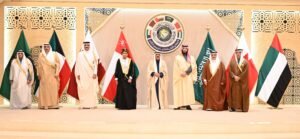
First, an international plot. For some time now, a major international plot has been underway to undermine the autonomous experiment in Rojava (northern and north-eastern Syria). Turkey, Qatar, and the Syria of Ahmad al-Sharaa are the principal actors in this plot, which is supported by Saudi Arabia and implemented in recent days amid the silence of the US and Israel. Turkey is firmly opposed to any repetition of the Kurdistan Region of Iraq experience and has declared this repeatedly, particularly when the core actor of such an experiment is a group closely affiliated with the Kurdistan Workers Party (PKK), its most entrenched adversary. Qatar has mobilised all its capacities to ensure that the last Islamist experiment in the region, following the Arab Spring—namely in Syria—does not fail. This is in addition to the fact that Qatar currently represents a form of Arab nationalism infused with political Islam and opposes any kind of division of Arab states, even in the form of federalism or decentralisation. Saudi Arabia does not wish Iran, or any actor close to Iran, now or in the future, to have a foothold in Syria or to establish one that could become a source of threat to Saudi interests or lead to the revival of Hezbollah, which was a central actor in the so-called “Axis of Resistance”, the Shiʿa Crescent. In other words, Saudi Arabia does not want the regime that contributed to the fragmentation of the Shiʿa Crescent to become weakened or marginalised. For this reason, it has stood firmly behind the Sunni-oriented authority of al-Sharaa, despite its concerns about its Islamist orientation.
Second, al-Sharaa, Sunnism, and the dismantling of the Shiʿa Crescent. Following the collapse of Saddam Hussein’s regime, the marginalisation of Sunnis from power, and the ascent of Shiʿa forces to governance in Iraq, a corridor was formed from Tehran to Baghdad, from there to Bashar al-Assad’s Alawite–Shiʿa Damascus, and subsequently to southern Lebanon under the control of Shiʿa-oriented Hezbollah. This corridor was first described as the “Shiʿa Crescent” by King Abdullah of Jordan. The interconnectedness and interdependence of these regions and capitals constituted a major threat to Israel and the Sunni Gulf states, such as Saudi Arabia, and for a long time deeply alarmed Israel. Despite repeated strikes, attacks, and efforts to weaken Hezbollah, it would re-emerge within a short period as an even stronger force on the battlefield, benefiting from this corridor, the “Shiʿa Crescent”.
One year ago, when al-Sharaa and Islamist forces came to power in Damascus, one of the most significant consequences of this transformation was the dismantling of the Shiʿa Crescent. Al-Sharaa and his allies took concrete steps to curtail Hezbollah and Iran, in addition to changing the Assad regime, something that could not be achieved through the Kurds. This shift transformed the American and Israeli outlook towards al-Sharaa and the new Syria, particularly following the Paris agreement between Israel and Syria and al-Sharaa’s acquiescence to all Israeli demands, ranging from relinquishing claims over the Golan Heights to agreeing to normalise Syria’s relations with Israel, and even consenting to silence regarding Israel’s occupation of a substantial part of southern Syria near the Jordanian and Lebanese borders.
For Syria and al-Sharaa, northern and north-eastern Syria, the wheat and barley of Rojava; the oil of Deir ez-Zor and the Euphrates basin; and the Tishrin Dam were far more important than the Golan Heights. Prior to the collapse of the Assad regime, several academics and writers, myself included, called on the Syrian Democratic Forces (SDF) to recognise its potential role in dismantling the Shiʿa Crescent by controlling al-Bukamal and extending its territorial reach towards areas under Druze control near the Israeli border. However, our calls went unanswered. As to why, history may perhaps provide an answer in due course.
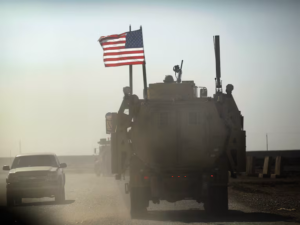
Third, Donald Trump and Tom Barrack: the role of individuals. With Donald Trump’s second term candidacy, Kurds in general feared that his return to power would once again render Rojava a victim of transactional deals, as occurred during his first term in 2018–2019 in Serekaniye (Ras al-Ayn) and Gre Spi (Tal Abyad), when he effectively gave Turkey the green light to occupy these areas, or that he would abandon the Kurds out of indifference and moral recklessness. When Trump appointed a businessman, Tom Barrack, as his envoy, these fears intensified further, since Barrack was not only anti-Kurdish but also overtly pro-Turkish. At the same time, his entire outlook was shaped by a rigid centralist state perspective, one that was hostile to Kurdish aspirations and objectives and aligned with al-Sharaa and the Syrian state. With regard to recent developments, definitive conclusions remain premature. However, it may be argued that the policy decisions undertaken during the presidency of Donald Trump represented a particularly abrupt shift in U.S. engagement with Kurdish actors. A counterfactual assessment suggests that a different administration—whether Republican or Democratic—might have pursued a recalibration of support through more gradual or institutionally mediated mechanisms, potentially mitigating the scale and immediacy of the withdrawal.
Fourth, a misunderstanding of the role of state and non-state actors. Historically, there has been a misconception among Kurds that the U.S. is a partner or ally. In this regard, the Kurdish public needs to understand that over the past decade the U.S. supported the Kurds in the war against ISIS, not for the creation of an autonomous entity or an independent state. It must also be recognised that American support for the Kurds was directed against a non-state actor—namely ISIS—rather than a state actor, namely Syria. When the non-state actor transformed into a state-level actor, the balances and perceptions shifted accordingly. This was equally true in the Kurdistan Region of Iraq during the referendum and the events of 16 October, when Iraqi troops recaptured large swaths of land from the Kurds.
This misunderstanding, both in the Kurdistan Region in Iraq and Rojava in Syria, led Kurds to a form of overconfidence that failed to take into account many other factors, such as the roles of Turkey and Saudi Arabia in shaping the balance of power. At the very least, Kurds assumed American support to be permanent, an assumption that proved to be unfounded.
Fifth, the order of geography. Alongside external factors, geography itself worked against the Kurds. I am uncertain whether to categorise this as an internal or external factor; however, given that it is largely imposed, I do not consider it an internal one. Geography has betrayed Kurds and their experiment in two fundamental ways. First, Rojava is a closed or landlocked region, lacking access to the sea, and is surrounded by particularly hostile adversaries. This reality applies to all parts of Kurdistan and represents a geographical condition beyond Kurdish agency. At the same time, the geography of Rojava consists of five disconnected fragments: Afrin (which Turkey destroyed), Kobane (which ISIS and Turkey devastated and, after reconstruction, is now once again under siege), Qamishli, the Kurdish neighbourhoods of Aleppo (Sheikh Maqsoud and Ashrafieh), and the Kurdish neighbourhoods of Damascus (Hayy al-Akrad). This fragmentation, combined with Turkey’s efforts to deepen and widen it—particularly through the occupation of Afrin, Sere Kani, and Gre Spi, extending towards Azaz, Tel Rifaat, and Manbij—has severely undermined Kurdish strategic depth, defensive capacity, and internal coordination. This, in turn, has significantly weakened the human and logistical capacities of the Kurds and the SDF vis-à-vis the Syrian state.
Internal Factors
First, illusion versus realism. Abdullah Öcalan, the thinker and founder of the PKK, following his arrest and imprisonment by the Turkish state, developed a set of theses, interpretations, and analyses. The very context in which these theses were produced is itself open to serious debate; however, let us set this aside. In reality, Öcalan’s conceptualisations lean more towards illusion and abstraction than towards a concrete project for a subjugated and disenfranchised nation, Kurds. The notion of a “democratic society” and the “coexistence of peoples” in the Middle East—where fascism, chauvinism, occupation, hatred, and resentment are systematically directed against the Kurds—does not constitute a viable framework of thought, particularly for a force/entity operating outside the structures of power and governance. Were the Kurds in control of state power and administering their own state, such an argument might be conceivable. One of the most damaging consequences of this conception in the Rojava context was the belief within the SDF that it could build a force on this basis; yet it transpired that the Arab components within the SDF ultimately sought an exit that would turn against the Kurds—and this is precisely what occurred.
Second, pragmatism versus ideological rigidity. Politicians, especially during phases of administering entities, experiments, or states, must prioritise pragmatism over ideological commitment. Ideology constrains analysis and understanding of contexts and power balances. The ideologue prioritises and advances the interests of doctrine and party, whereas the pragmatist and statesman prioritise the higher national interest, formulate long-term strategy, and deploy daily tactics to achieve it. It appears that Ahmad al-Sharaa, an Islamist and jihadist, advised by Turkey, acted more pragmatically than the Kurdish leadership. Al-Sharaa was prepared, in opposition to the Kurds and in order to control Rojava, to cooperate even with the “devil”, whereas the Kurds were restrained not only by ideology but also by political embarrassment, which prevented them from openly seeking assistance from Israel in the manner of the Druze. The Kurds not only refrained from requesting support; rather, Öcalan’s statements and interpretations were read as expressing opposition to the project and plans Israel had devised for the Middle East. Moreover, ideology turned Rojava into a closed zone for investment and international companies. While Rojava achieved a degree of success in fostering a resilient and self-reliant individual, this was insufficient for securing external support. States and entities are not built on the basis of socialism and cooperative labour alone; rather, economic openness to investment is essential. Economic closure weakened Rojava’s position within political bargaining processes.
Third, relations between the Kurds and others. Prior to the Second World War, all Kurdish uprisings, parties, and movements—from Sheikh Ubeydullah Nehri to Qazi Muhammad—understood Kurdish relations with others as those between occupier and occupied, and acted accordingly; hence, Kurdish independence was their ultimate objective. After the collapse of the Republic of Kurdistan, Öcalan and the PKK became the first major force to attempt—at least at the level of theory, interpretation, and discourse—to dissolve the slogan of autonomy for Kurdistan and democracy for Turkey, Iran, Iraq, and Syria, and to replace independence and a Kurdish state with alternative frameworks, effectively denying Kurdistan’s status as an occupied country and nation. Over recent decades, however, Öcalan and organisations operating under the umbrella of his ideas, as well as forces close to this line, have opposed in every possible way the characterisation of Kurdish relations with others as those of occupier and occupied. Alongside this, the Kurdish struggle against occupiers has been reduced to a mere balance-of-power contest. Without understanding this fundamental relationship, the Kurds cannot take correct strategic steps.
In the Rojava context, the Kurds there failed to grasp that an occupier never accepts being ruled by the occupied. Thus, despite the fact that fighters from Rojava sacrificed thousands of martyrs in Raqqa, Manbij, Deir ez-Zor, and across northern Syria to liberate and protect Arab populations, when the balance of power shifted, these populations were neither willing nor prepared to live on equal terms with the Kurds. The core issue is that the occupier not only rejects the authority of the occupied but also refuses equality with them. The Kurds must comprehend this reality. Furthermore, had the Kurds in Rojava believed in statehood, they might have declared the establishment of a state during certain moments of opportunity—for example, during the period of the Syrian state’s effective collapse under Bashar al-Assad, or at the moment of Assad’s downfall before al-Sharaa consolidated power—or at the very least proclaimed themselves a federal or confederal region.
In sum, the developments in Rojava are more accurately understood not as outright defeat or systemic collapse, but as a strategic setback resulting from the convergence of multiple regional and international pressures. The actors opposing the Rojava project demonstrated greater coordination and capacity within prevailing power structures, thereby constraining its viability. At the same time, Kurdish political leadership appears to have misjudged regional power balances and the risks inherent in expanding territorial control into predominantly Arab areas. Alternative strategic pathways might have included either limiting expansion beyond Kurdish-majority regions or pursuing a more explicitly regional realignment strategy. Such a strategy could have involved positioning themselves in opposition to the so-called Shiʿa Crescent, cultivating alliances with minority groups such as the Druze, and strengthening ties with Israel. More broadly, these developments underscore the need for critical reassessment of prevailing ideological frameworks and political theses within Kurdish movements, particularly regarding the relationship between transnational leftist paradigms and Kurdish national aspirations.