


[Vali Nasr]
I am Vali Nasr, Majid Khaddouri Professor of International Affairs and Middle East Studies at Johns Hopkins University School of Advanced International Studies (SAIS) in Washington, D.C. My research focuses primarily on the politics, societies, and dynamics of the Middle East.
[Lyna Ouandjeli]
To frame our discussion, I would like to focus on Shi‘ism in the 21st century, particularly in light of developments following the events of October 7, 2023, and their implications for Iran and the broader region. However, it is important not to limit our analysis to this recent period alone. The transformations we are witnessing today are the culmination of earlier shifts and tensions that have been building over the past two decades. October 2023 merely accelerated certain underlying dynamics, especially those within Iran, where the government appears increasingly fragile. In Iraq, the ongoing electoral process highlights the enduring influence that Iran has exerted over the country’s political sphere since the fall of Saddam Hussein’s regime in 2003. Shi‘ism, as one of the dominant religious traditions in Iraq, remains central to its political identity and social organization. Meanwhile, Hezbollah in Lebanon appears to be facing signs of weakening, yet it continues to maintain its arms and refuses to relinquish its military role.
In Syria, the decline of Alawite dominance has diminished the sectarian power structure that once ensured a significant Shi‘ite influence within the regime. In Yemen, the Houthis remain a major actor, controlling large parts of the country’s north despite the ongoing conflict and their increasingly complex positioning. Although Pakistan and Afghanistan are less frequently discussed within the same framework, their Shi‘ite populations and movements — including groups such as Hezbollah affiliates and local militias — contribute to the broader picture of Shi‘ism’s regional evolution. Given these diverse developments, it seems relevant to reconsider the notion of the “Shi‘ite Crescent,” once used to describe a coherent arc of Iranian-aligned influence across the Middle East. Today, this concept appears increasingly fragmented or weakened. In your work, you have argued that the U.S. invasion of Iraq in 2003 triggered a “Shia awakening” across the region. Nearly two decades later, how would you assess the trajectory of Shi‘ite empowerment in Iraq, Lebanon, Yemen, Pakistan, and Afghanistan?
[Vali Nasr]
The American invasion of Iraq did two things. First, it opened the door to a social and cultural expression of Shi‘ism in the Arab world. In other words, the populations had long been present — in Lebanon, Iraq, Yemen, across the Gulf region, and in Syria — but they were largely hidden. They were not only out of power but also deprived of political expression, and there was little connection between these communities. The opening of Iraq changed that. At the social and political levels, it became evident in the Arab world that there were Sunni Arabs and Shia Arabs. This was not only a matter of politics but also of culture. For instance, millions of Shias from across the Arab world, as well as from Pakistan and Afghanistan, began traveling to Najaf and Karbala or participating in the commemoration of Arbaeen on an annual basis. Arbaeen has now become a major cultural and religious event, whereas under Saddam it was banned for decades. The city of Najaf and its religious leadership under Ayatollah Sistani — along with the entire Marjaiya in Iraq — became visibly connected to Lebanon, Syria, Kuwait, Pakistan, and Iran. Beneath the surface of regional politics, there was also a cultural awakening, a growing awareness that a “Shia world” existed. That has not disappeared. Unless borders close in the Middle East, it will persist.
For example, even if we discuss the weakening of Hezbollah, that does not change the fact that the plurality — or the largest population — in Lebanon is Shia. Much like the Shia population in Iraq and across the Gulf, since 2003 these communities have developed a different kind of cultural and religious consciousness about who they are. This is important, because it represents a political metric that is not easy to measure or to gauge in terms of its long-term impact. The second important dimension was political. Iraq became, de facto, the first Shia Arab state — not because of its population, which had always been majority Shia, but because the Shias took power. This triggered a negative reaction from Sunni powers in the region. King Abdullah of Jordan described this as a “Shia Crescent,” not in neutral terms but as a warning. Saudi Arabia took nearly a decade before it appointed an ambassador to Baghdad. Sunni radicals affiliated with Salafism, al-Qaeda, and later ISIS viewed the empowerment of the Shia as something deeply negative. Behind this reaction was a fear of what a Shia awakening and a Shia assumption of power might mean for Iran’s influence. Politically, Saudi Arabia, Jordan, Salafis, and Egypt all concluded that under Saddam, Iraq had belonged to the Sunni camp — even though its population was Shia — whereas now it had shifted into Iran’s camp. Their behavior and reactions toward Iraq only reinforced this perception. For a period of time, the only country Iraq could count as a friend was Iran, because the rest of the Arab world was hostile. Iraq was not treated as an equal member of the Arab world, as could be seen in the way its leaders were received and how other states reacted to them. This marked a geopolitical shift: what the United States achieved in Iraq was not democracy or the lofty ideals it proclaimed, but rather the creation of a Shia axis in the region that connected Syria, Lebanon, Iraq, and Iran.
Syria, of course, was ruled by a secular Alawite regime, which was not self-consciously Shia, but it was an ally of Iran. This was also how Hamas fit into the picture. This dynamic benefited Iran and contributed to its growing perception as a rising and threatening power among Arab states. This became particularly evident in Syria after 2014. Many believed that the fall of Assad would not simply represent a democratic transition but would empower Sunnis and deal a major defeat to Iran. For this reason, many Sunni powers in the region supported the uprising against Assad. When it failed, Iran’s involvement in Syria became essential to defend this crescent and preserve what it had gained with the transfer of power in Iraq. In 2014, Iran entered the Syrian conflict with the assumption that the challenge to Assad was directed against them — that it was not about helping the Syrian people or changing a brutal regime, but about defeating Iran, weakening Hezbollah, and breaking the so-called crescent. Iran reacted accordingly and ultimately prevailed. Between 2014 and 2023, what had begun in 2003 was consolidated. Since then, three important developments have taken place. The first, particularly following October 7th and the Gaza war, is that the notion of a Shia Crescent under Iran and Hezbollah was transformed into an “Axis of Resistance.” The framework shifted away from sectarianism and toward the concept of resistance (muqawama). The participation of Hamas — a Sunni movement — and the Palestinians in this framework essentially transformed it. This shift can be seen in the language used by Israel, by Iran, and by Hezbollah. In the speeches of Ayatollah Khamenei and Hassan Nasrallah, there were almost no references to Islam, jihad, or Shi‘ism during the war — only to muqawama, a more anti-imperialist construct. In this sense, the Shia Crescent became synonymous with the idea of resistance. This transformation has increased its popularity within the Sunni Arab world. Whereas the war in Syria to defend Assad had created bitterness among Sunnis toward Shias, this perception has changed. Although this shift is not yet fully visible at the political level, at the social level the Shia Crescent is no longer viewed as a threat but as a symbol of the Arab world’s broader sentiment — resistance on behalf of the Palestinians. This is an important development, and its implications are not yet entirely clear.
The second major development was the rapprochement between Iran and Saudi Arabia. The geopolitical dimension that emerged in 2003 — the empowerment of the Shia and the Sunni resistance to it — converged with a great power rivalry between Iran and Saudi Arabia. Both sides acted, deliberately or otherwise, in sectarian terms. The Iranians did not explicitly frame their actions in terms of Shi‘ism, but their behavior was widely perceived as a Shia power play. Conversely, Saudi Arabia sought to rally the Sunni world against what it saw as Iranian expansionism, referring to the Houthis as “Iranian-backed Shias” to emphasize the sectarian dimension and signal to the broader Muslim world that Sunnis should align with Riyadh. In the discourse of ISIS and Salafist movements, anti-Shi‘ism was explicit. ISIS’s actions in Syria and Iraq, including the beheading of Shias, intensified sectarian polarization and led to the emergence of the Hashd al-Shaabi (Popular Mobilization Forces) in Iraq. Thus, sectarianism was inseparable from the Iran–Saudi rivalry. Around 2022, after Iran’s attacks on Saudi oil facilities, Saudi Arabia — following the UAE’s lead — decided that open conflict with Iran was not in its interest. It was detrimental to Vision 2030, and Riyadh could not rely indefinitely on U.S. military support. Both countries sought de-escalation. After several rounds of talks in Iraq, and with China’s mediation, they normalized relations. This normalization signaled a desire for at least a cold peace, and ideally, a coexistence. While not allies, Iran and Saudi Arabia sought détente and the reduction of tensions. This had the effect of discouraging sectarian policies on both sides and reducing polarization among regional populations. For Iran, this shift was also beneficial. During its military successes in Syria, the region had begun to perceive a polarization between an “Israeli–Sunni Arab alliance” and a “Shia Crescent.” Western discourse adopted this framing as well, seeing the Middle East through sectarian divisions between Iran and Saudi Arabia, with Israel aligned against the Shia bloc.
Today, that picture is less sharp. Saudi Arabia no longer sees an alliance with Israel against Shia Iran as necessary. Instead, it seeks to balance relations with both sides — pursuing a Shia–Sunni détente and de-escalation while also maintaining engagement with other regional actors. This de-escalation has reduced tensions, particularly in Yemen, where a ceasefire between the Houthis and the Saudis has opened the door to political settlement. It also benefited Iraq, which had facilitated the talks in Baghdad. The third major dynamic is everything that has happened since October 7th, which has dramatically altered Middle Eastern geopolitics. Beyond the immediate narrative of Hamas’s attack and Israel’s military response, the war’s progression has had several implications. For Sunni Arab states, it has created a dilemma — particularly for Saudi Arabia, Egypt, and Jordan. The old view that Iran and the Shias constituted the primary threat is no longer as convincing. As Iran has weakened, concerns about Israel have intensified. If one were to ask King Abdullah of Jordan today what his greatest concern is, it would likely not be the Shia Crescent, but the future of the West Bank, Gaza, and the evolving dynamics of the Arab–Israeli conflict. The same is true for Egypt. These changing priorities explain the recent increase in diplomatic interaction with Iran — the Iranian foreign minister’s visits to Amman and Cairo, and meetings with King Abdullah and President Sisi.
In short, the Gaza war has reshaped the relative importance of sectarian rivalry. For both Shia and Sunni powers — for Iran, Saudi Arabia, and other Arab states — the main problem is no longer “the other side,” but rather Israel’s actions and their broader regional consequences. While Israel presents different challenges for each country, it has replaced sectarian tension as the central issue. During the first phase of the war, the Axis of Resistance’s relative strength may have caused concern among Arab states. However, as the war continued, Hezbollah and Iran were both weakened, diminishing the threat perception. This development has ironically opened the door to greater Shia–Sunni cooperation. In fact, Saudi Arabia arguably needs Iran not to collapse; a weakened but stable Iran serves as a counterweight to Israeli dominance. The Gulf states’ current approach to Iran differs greatly from their stance in 2015. They are not seeking confrontation. The UAE even delivered a letter to Tehran inviting Iran to join nuclear talks — a remarkable shift. Iran remains a Shia power, with influence in Iraq, ties to Hezbollah, and involvement in Yemen, yet the Gulf’s attitude has changed completely. The most significant issue in the Middle East today is not sectarianism but the Israeli–Palestinian conflict and the Israeli–Iranian confrontation. The key dynamics are concentrated in the Levant rather than Iraq. Another important factor is the fall of Assad and the rise of Ahmad al-Sharra. Although he has moderated his image — trimming his beard, wearing a suit, and adopting a more pragmatic stance — he still represents, in the eyes of many Shias and of Iran, the resurgence of radical Sunni currents. His background is rooted in al-Qaeda, ISIS, and Salafist networks. Even if he has transformed, many of his militias remain far from moderate in sectarian terms. This is why Hezbollah refuses to disarm — not only because of Israel, but also because of fears surrounding Ahmad al-Sharra, especially as Israel engages with him diplomatically. His rise evokes the same fears that the Shias had in 2014 about the collapse of the crescent. Even if he presents himself as moderate, his ascent raises the question of what a renewed Sunni dominance in Syria would mean for the region. Iraqis worry that a Sunni-led Damascus could embolden Iraqi Sunnis to demand new power-sharing arrangements. Similarly, Sunnis in Lebanon might act differently under this new dynamic.
Although Ahmad al-Sharra does not yet control all of Syria, his rise alarms minorities such as the Druze and Alawites, who fear persecution. The Druze have even sought Israel’s protection, believing that the Sunnis associated with al-Sharra’s movement view them as heretics — the same concern shared by Alawites. The recent killings in Latakia, often described as acts of revenge, are in fact sectarian in nature, echoing the post-2003 violence in Iraq, where collective retribution became sectarian conflict. Thus, even though Ahmad al-Sharra projects moderation, his rise has reopened sectarian wounds in the Levant that could spread to the Gulf. He is supported by Turkey, Saudi Arabia, and possibly the UAE — all Sunni powers — yet the situation is far more complex than it was in 2003. These same powers now maintain relations with Iran and wish to avoid regional destabilization, even as they back the Sunni resurgence in Syria The balance of power in Syria remains uncertain. The Damascus government is weak; Turkey effectively controls the north from Aleppo to the Turkish border; and Israel has expanded its influence, limiting Syria’s military capacity and positioning itself as a protector of minorities, particularly the Druze — and possibly the Alawites or Kurds in the future. It remains unclear how strong Sunni Arab control under Ahmad al-Sharra will become. His rise, even if not explicitly labeled as such in Western discourse, is a sectarian phenomenon with significant implications for Lebanon and Iraq. How this dynamic unfolds will be crucial. Ultimately, the most important question is what will happen to Iran — how strong it will remain as a state in its confrontation with Israel, and to what extent it will retain influence in Lebanon and Iraq.
[Lyna Ouandjeli]
I completely see and agree with your point of view regarding how the Shi‘ite awakening is now more of a Shi‘ite resistance. As you said, the dialogue has shifted. Previously, in 1979, during the Islamic Revolution, the discourse was more about gaining an Islamic legitimation of Shi‘ite actions and of Sunni responses. Saudi Arabia and Iran were polarizing Islam to justify certain actions, referencing the Velayat al-Faqih ideology, and so on. We have also seen how this competition has affected some neighboring countries. In Lebanon, for instance, with Hariri coming and going, the process was largely controlled by Saudi Arabia. In Iraq, after 2003, the war also used Shi‘ite terminology to justify martyrdom, protection, and retaliation for what the Sunni southern militias had done to the Shi‘ites. Today, the discourse increasingly emphasizes nationalism. In Saudi Arabia, we see a focus on protecting national interests; the Emirates also reflect this; Qatar has increasingly acted as a mediator, along with Oman. Iran now appears more focused on domestic affairs, rather than projecting influence externally, especially following its confrontations with Israel.
Given the period of détente between Saudi Arabia and Iran, we can also expect somewhat cooler relations in countries that were previously under Iranian influence. For instance, you mentioned the Houthis in Yemen. The conflict between Saudi Arabia and the Houthis has historical roots in border disputes — dating back to the 1934 treaty — which the Yemenis contested. The Houthis also used this dispute as justification to fight Saudi Arabia in 2015. Thus, the conflict was not only religious but also historical. This is why it is important to note that sectarianism has somewhat receded since October 7th. However, it is still occasionally invoked to justify actions, though not as prominently as before. For example, in Iraq, I was there not long ago and studied the situation. After the Israeli attack on Iran and Iran’s response, Mokhtar al-Sadra stated, “We condemn or will not fight with Iran to protect this.” Iran interpreted this as a betrayal because they expected Shia solidarity to protect the Shia community. So some sectarian dialogue remains, but it is not used as extensively as before.
[Vali Nasr]
I agree with you, except that I would say sectarianism at a political level has never truly been about religion. The Saudi-Houthi conflict has always been political. The Saudis found it beneficial, for secular reasons, to characterize the Houthis as Iranian-backed Shias because it garnered international support.
[Lyna Ouandjeli]
Yes, it was also a way for Mohammed bin Salman to assert himself as a leader of the Muslim world: “I am here; I will not fail you Sunni Muslims.” This is also why Zaydism is considered Shia and thus protected by Iran, which has accepted the Houthis as a Shia branch.
[Vali Nasr]
However, the religious connection between Iran and the Houthis is very weak. When we talk about how Iran and Saudi Arabia weaponized sectarianism, it was a tool for power against one another. At the societal level, it is primarily about identity — who you are. For instance, in Lebanon, even secular Shias born in Beirut who go to nightclubs are still considered Shia. It is similar to Judaism in Europe: you may not practice religion, but historically, the Gentiles define who is Jewish. When I was in Iraq, I was often told that one was overemphasizing these issues. Many Iraqis explained that under Saddam, Shias could only succeed if they hid their identity — if they acted Sunni, avoided Najaf, and concealed their faith. In this region, particularly in the Arab world, there is a layer of shared identity: everyone is Arab, speaks Arabic, and identifies as Arab. But one level below, communal and sectarian identities are significant. Maronites, Sunnis in Lebanon, Alawites, and Druze are Arabs, but this Arab identity only matters externally. Internally, it quickly becomes about who gets what in the country. Politics is ultimately about resource and power distribution. People are not always treated as equal citizens for various reasons, and communal identity matters, regardless of religious practice.
In Saudi Arabia, this is less of an issue. Mohammed bin Salman has integrated Shias more than previous rulers, who were constrained by Wahhabi orthodoxy. But until identity ceases to matter — until individuals are treated like Germans, for example, where whether one is Bavarian or Protestant does not affect political inclusion — this will remain a political issue. Even before the Iranian Revolution, from the 1960s onward, Islamism became increasingly influential in the Muslim world. Religious practice gained prominence, and adherence to Islamism defined proper behavior and community membership. Figures such as Sayyid Qutb, Hassan al-Banna, Maulana Maududi, and extending to Bin Laden and al-Baghdadi, delineated who is a good Muslim and who is not — including among Sunnis. Sayyid Qutb, for instance, advocated takfir, a concept establishing that only a narrow group of the Muslim Brotherhood was legitimate, while others could be considered targets of jihad. Even Sunnis could be labeled illegitimate. Thus, Islamism, while not explicitly sectarian, inherently produced sectarian outcomes. From the 1960s to today, Islamism transformed the Muslim world into a less tolerant environment, even compared to the 19th century, when distinctions within Sunnism were more flexible.
[Lyna Ouandjeli]
This also applies to Afghanistan and Pakistan. For example, in Afghanistan, I know a bit more about the Taliban than what is happening in Pakistan. Since 2021, the Taliban have issued numerous fatwas and decrees defining what a “proper Muslim” should do. They have also persecuted the Hazara, who are primarily Shia. The Taliban follow a Sunni branch of Islam, along with a distinct ideology. They have used fatwas to discriminate against women, dictating their behavior based on their interpretation of Islam.
[Vali Nasr]
You are correct. If you look at Pakistan and India a generation ago, people were aware of who was Shia and who was Sunni. Pakistan is particularly interesting because it is the second-largest Shia country in the world by percentage — 20–25% — within a population of approximately 120 million. That is larger than almost all Shias in the Arab world. Initially, Shias were Shias, Sunnis were Sunnis, and each observed their own religious practices, such as visiting for Ashura.
Over time, particularly during the 1970s, 1980s, and 1990s, Pakistan became increasingly Islamist. Hardline Sunni groups emerged, and sectarianism grew. Islamism, which does not label itself as Sunnism, defines a narrow interpretation of Islam, and Shias were immediately regarded as heretics. Sectarianism was promoted, consciously or unconsciously, as Islamism spread across the Muslim world. There are even examples in countries like Malaysia, where being Shia was criminalized — despite the near absence of Shias there. These changes were influenced by broader developments in the Muslim world from the 1960s and 1970s, particularly the Iranian Revolution. While Khomeini sought to speak for the entire Muslim world, he was not accepted within the Sunni sphere. Sunni Islamists, such as members of the Muslim Brotherhood, could not recognize Shias as legitimate Muslims and could not accept Khomeini as a legitimate Islamic leader. Today, the appeal of Islamism is declining. Even Hamas does not use Islamist rhetoric. Since October 7, their language has focused on Mughabama and resistance rather than Islamic jihad. This represents a shift from Islamic law driving sectarianism to nationalistic and resistance-oriented discourse, which is significant for Shia-Sunni dynamics.
[Lyna Ouandjeli]
Returning to our discussion, I want to ask another question related to your point about Khomeini trying to position himself as the leader of the Muslim world, akin to a Pope. In The Shia Revival, you describe the Marjaiya as a central source of legitimacy and authority in Shiism. This is connected to the concept of Velayat al-Faqih, which establishes a kind of religious Papacy. Considering today’s fragmented religious and political landscape, does this analogy still hold? Is it applicable to the current situation?
[Vali Nasr]
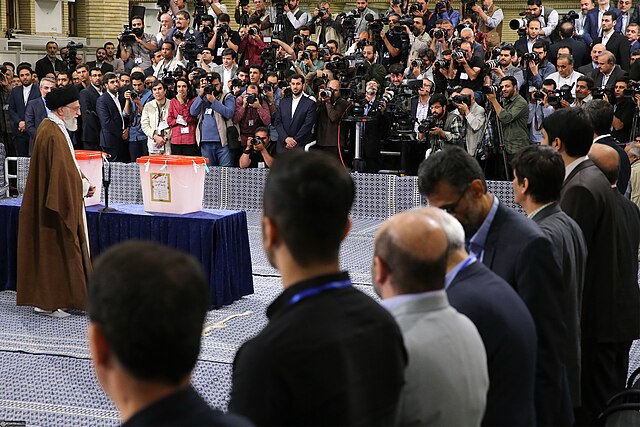
The context today is very different. Even in Iran, since the Israeli attack, the government has adopted more nationalist language. The Supreme Leader does not present himself as Khomeini did, as a leader of the Islamic world. However, the period when sectarianism dominated the region — roughly from the 1970s to the mid-2010s — remains historically significant. It cannot be erased and forms the foundation for the next phase in a new context. Actors themselves are changing. Mohammed bin Salman, for example, is disavowing Wahhabism, creating space to engage more openly with Shias in Saudi Arabia and in neighboring countries, such as Iraq and Kuwait. In Iran, Islamism has also declined. While the country is formally an Islamic Republic, its rhetoric increasingly emphasizes national security and strategic interests. Iran’s relationships with Hezbollah and Iraq are now largely strategic, focusing on confronting Israel, rather than driven by purely religious objectives. Even if Shiaism is invoked, it serves Iran’s strategic interests. At the same time, Shia-Sunni divisions are grounded in real power contestations. Sunnis in Iraq once held power; now Shias do. The Iraqi constitution itself emphasizes sectarian power-sharing. Similar dynamics exist in Lebanon. Political settlements in Lebanon, Syria, and Iraq will continue to shape the future, so while the context has changed since the 2000s, past sectarian dynamics remain relevant.
[Lyna Ouandjeli]
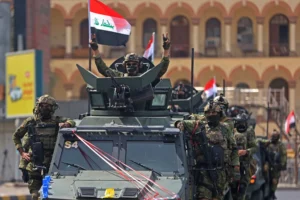
Regarding the future, we have seen the Iraqi parliament institutionalize Hashd al-Shaabi as part of the army. This has raised concerns in the U.S. and the West, who fear Iran’s influence. Hashd al-Shaabi is one of the most powerful militias in Iraq, with a large budget, and much of its armament comes from Iran. The West’s alarm is largely about Iran, but internally, the concern is whether the Iraqi state can control Hashd al-Shaabi — whether the militia will control the state, or vice versa. It is also about the empowerment of Shias in Iraq, independent of Iran.
[Vali Nasr]
Indeed, Hashd al-Shaabi and Hezbollah have been instruments of Iran, but the local communities in Iraq and Lebanon also use them for their own interests. Hashd al-Shaabi was created by a fatwa from Ayatollah Sistani, who is not overtly sectarian. After ISIS’s rise, when the Iraqi army proved incapable of defending Shias in Baghdad, Najaf, and Karbala, Hashd al-Shaabi was formed. Hashd al-Shaabi has become a problem, like a “Frankenstein” entity — corrupt and difficult to control. Many Iraqi Shias and government officials oppose its actions. However, Ayatollah Sistani does not issue a fatwa to dismantle it because Hashd al-Shaabi, with General Soleimani’s assistance, defeated ISIS and secured Sunni-majority areas. Removing it risks the resurgence of ISIS.
The same logic applies to Lebanon. Iran’s agenda aside, the concern is the protection of Shias. Hezbollah defends southern Lebanon from Israel. Israel occupies Shia territories, not Maronite or Sunni areas. Disarming Hezbollah may sound ideal, but history shows that conventional armies, like Iraq’s in 2014, failed to provide security. Lebanese and Iraqi populations may distrust Hashd al-Shaabi and Hezbollah in governance and corruption matters, but for protection against existential threats, these militias remain essential. Similarly, questions about the Lebanese army’s ability to defend against Israel, or confront Ahmad al-Sharra and HTS in Syria, are unresolved. The rise of Ahmad al-Sharra affects the regional balance of power and has implications for Hezbollah and Hashd al-Shaabi. Western observers often overlook the need for effective, sectarian-sensitive security forces. In Iraq, the 2014 experience demonstrated the consequences of failing to do so.
[Lyna Ouandjeli]
Yes, that is something I have observed frequently: many scholars tend to blame Iran whenever militias are discussed. However, if one looks at the historical context and the reasons these militias were created, the motivation is often more nationalistic. Their mission was primarily to protect their own communities, which the central government had failed to safeguard. Framing the discourse as entirely anti-Iran ignores the real reasons for the emergence of these militias. They were created to protect vulnerable populations, as seen in 2006, during the rise of ISIS and Al-Qaeda in Iraq, when ISIS rapidly gained control over large parts of the country.
[Vali Nasr]
Exactly. In their eyes, ISIS has effectively returned to power in Syria. In other words, it has adopted a more acceptable outward image, but the threat remains. Ahmad al-Sharra’s current credibility among Sunni Arab states and Western observers is higher than among Shias in the region, which is a fascinating dynamic.
[Lyna Ouandjeli]
I noticed this during conversations with Iraqis. Many were unsure how to interpret Ahmad al-Sharra, as his rise recalls the period when ISIS gained strength in Iraq in 2006, and the broader world largely ignored it. Shias were targeted as kuffar, and militias emerged as a necessary form of protection for their communities. My next question concerns your work on U.S. disengagement from the Middle East. We see that the U.S. is not as involved as it claims, often prioritizing support for Israel over other regional actors. Do you think this “disengagement engagement” will have lasting effects, particularly in countries often labeled as being under Iran’s influence?
[Vali Nasr]
I am not convinced that the U.S. is actively “engaging.” Disengagement has never meant the complete absence of Americans in the region; rather, it reflects a reluctance to enter new conflicts. The Saudis realized this in 2022, when Iran attacked their oil facilities: the U.S. provided weapons but was unwilling to intervene directly. This realization altered Saudi strategic calculations vis-à-vis Iran. Even now, during the conflict in Gaza, the lesson for regional actors seems to be that while the U.S. supports Israel, it is not willing to fight on behalf of Arab states. In the Israel conflict, the U.S. conducted limited strikes but immediately called for a ceasefire.
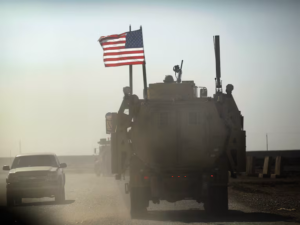
Historically, there was a period when the U.S. treated Middle Eastern conflicts as vital. For instance, when Saddam invaded Kuwait, Secretary of Defense Dick Cheney persuaded King Fahd to invite U.S. troops, without which Saudi Arabia would not have gone to war. That level of automatic U.S. intervention has passed. The U.S. today does not consider any regional issue worth entering a full-scale war over. Even Israel has recognized the limits of U.S. willingness to act militarily. The broader implication is that Middle Eastern countries, particularly smaller ones that have relied on U.S. protection, must reconsider their security strategies. They can no longer assume that the U.S. will intervene on their behalf. The U.S. has bases and troops in the region, but whether they will be actively used or remain largely symbolic is uncertain.
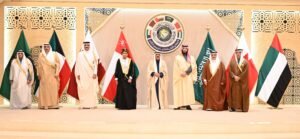
Consequently, countries like Saudi Arabia, the UAE, Qatar, and Kuwait must hedge their strategies. They are pursuing normalization with Iran, advancing the Abraham Accords with Israel, and improving relations with Turkey — reflecting a more sophisticated, diversified approach to regional security. This shift is necessary precisely because the U.S. commitment to the Middle East is no longer guaranteed.
[Lyna Ouandjeli]
Anyways, it was really good speaking with you. Thank you very much.