

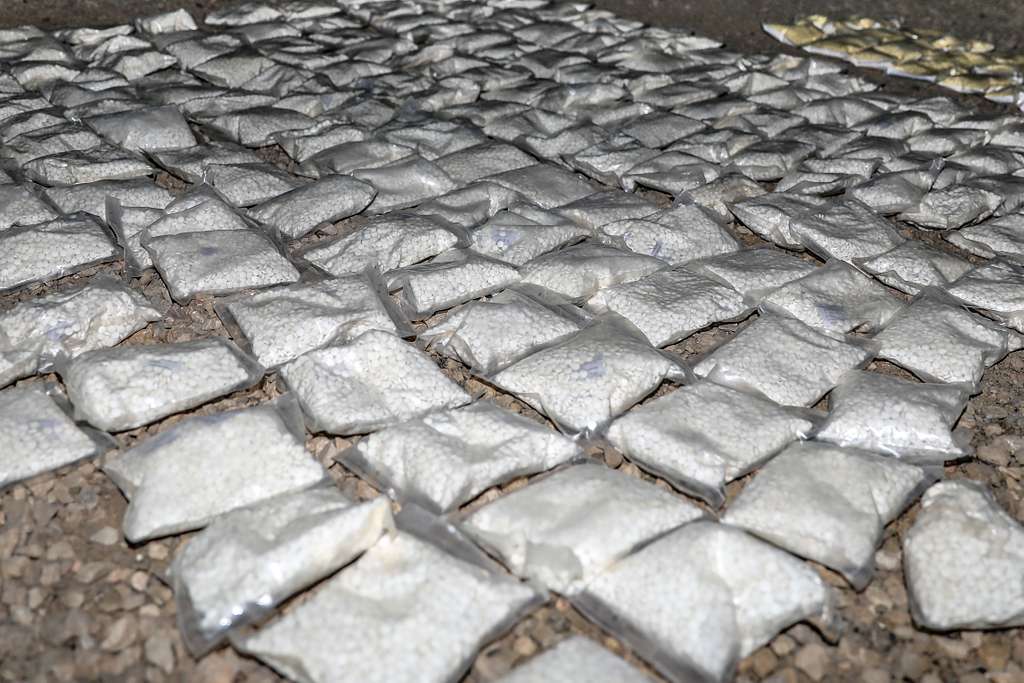

In its 2024 annual report on global drug issues, the United Nations (UN) sounded the alarm on the situation in Iraq, which is on the verge of becoming a major drug trafficking corridor in the Middle East. In its report, the UN notes that, despite consumption levels far lower than most of its neighbors, Iraq has also experienced a surge in drug use over the past five years, particularly of Captagon and methamphetamine. These two synthetic drugs are the most widely consumed in Iraq and have seen a constant and exponential increase since 2019. Both substances have similar chemical structures and effects, including disruption of heart rhythm, increased self-confidence, heightened sociability, and greater energy. The consumption of these types of drugs marks a turning point in the region’s history. Since the 12th century, cannabis had spread throughout Iraq and the broader Middle East, remaining the most widely consumed narcotic ever since. As recently as 2014, a report by the Iraqi Community Epidemiological Workgroup explained that hashish (a drug derived from cannabis resin) was the most common drug in Iraq[1]. The same report also described the emergence of new synthetic drugs gaining popularity: Captagon, crystal methamphetamine, and tramadol.
Furthermore, until the early 21st century, Iraq appeared relatively insulated from widespread drug use compared to other countries in the region, which sometimes had well-documented dependencies on certain substances, as in the case of Egypt with hashish or Iran with opium[2]. In 1993, for instance, the amount of drugs seized in Iraq was the lowest in the Arab world. Iraqi legislation, however, is not fundamentally different from that of other countries in the region, which equally strictly criminalize possession and sale. Indeed, Iraq’s drug law, adopted in 1965, makes participation in drug trafficking or its promotion a criminal offense punishable by life imprisonment or even the death penalty. This severity reflects a regional trend, as most Middle Eastern countries impose particularly harsh penalties for drug possession and trafficking. Saudi Arabia and Iran even provide for the death penalty for such offenses.
However, despite Iraq’s historical relative distance from drug trafficking and consumption, its geographic position places it among countries that produce and/or consume far more drugs than it does. Iraq lies between drug-exporting countries such as Afghanistan, Syria, and Lebanon, and major consumer countries such as the Gulf States, which has made it one of the crossroads of drug trafficking in the Middle East. Now that Bashar al-Assad’s regime fell on December 8, 2024, and given that drug consumption in Iraq has only increased in recent years, will Baghdad continue to serve merely as a transit zone in this regional trade, or could it become much more? Could Iraq become a producer of these new synthetic drugs, which are expanding not only across the Middle East but worldwide? Or is it on the verge of becoming a growing market for these narcotics beyond its current status as a transit hub?
This article demonstrates how drug trafficking has taken root in Iraq and why the country could, in the coming years, become a central player in this trade in the Middle East. We will first examine the Iraqi population’s increasing access to substantial quantities of drugs over the past decade. Next, we will see how consumption has gradually spread across all segments of society. Finally, we will highlight the absence of genuine institutional or other barriers that might prevent Iraq from establishing itself as a key actor in this regional trafficking network.
I) The Exponential Growth of Narcotics Supply in Iraq
Iraq’s Position at the Heart of Regional Trafficking Routes Has Created Domestic Distribution Networks
In reality, Iraq’s position on the regional drug trafficking routes has already created distribution networks within its territory, since, according to the UN, Iraq consumes approximately 10% of the drugs that transit through its land. As previously mentioned, Baghdad lies at the crossroads of Afghanistan, Syria, and the Gulf countries. Afghanistan, traditionally an exporter of opium whose cultivation employed a large part of the country’s farmers, has begun exporting synthetic drugs. Indeed, after the Taliban banned opium cultivation, these farmers had to turn to new sources of income and began producing methamphetamine (in the form of crystal meth), which they transport to Iran. Iran also benefits from the organization of this trade, which provides it with new revenues allowing it to circumvent financial sanctions imposed by the United States. For similar reasons, Bashar al-Assad’s regime, targeted by international sanctions, turned to the production and export of Captagon[3]. While the consumption of these new products is growing across the region, it is by far the highest in the Gulf countries, notably in Saudi Arabia and the United Arab Emirates. Iraq thus found itself at the center of new routes transporting drugs from Syria, Lebanon, and Afghanistan to the Gulf countries. This passage of various drugs through Iraqi territory has created distribution networks within the country.
For example, the port of Basra is particularly involved in drug trafficking, as it is Iraq’s main international port and is located very close to the Iranian border, through which shipments of crystal meth from Afghanistan arrive. While this port is only one stage in methamphetamine trafficking, the city itself is seeing a growing number of drug users (authorities estimate 30,000 users). The transit of this trafficking through Iraq has therefore established patterns of consumption and drug distribution networks in its regions.
The Ease of Producing Synthetic Drugs Enables New Producers
Moreover, beyond the presence of drugs in Iraq exported and imported by other countries, new Iraqi producers of synthetic drugs could easily emerge. Indeed, the transition from traditional, culturally-rooted drugs to synthetic drugs has made the production of narcotics increasingly easy, which contributes to the development and diversification of drug producers. The production process of Captagon, for example, is fairly simple: one only needs amphetamine powder and a pill-making machine. This machine is relatively easy to obtain, as it is freely sold for pharmaceutical purposes. Thus, anyone in possession of this machine can produce Captagon indefinitely in their own home. Furthermore, this transition to synthetic drugs has allowed the decoupling of drug production from the cycles of seasons, farmers, and the entire plant-processing process. It has also made drugs increasingly cheap while becoming more addictive. While the majority of laboratories are still located in Syria, nothing prevents new Captagon producers (and producers of other synthetic drugs) from emerging in other countries in the region, including Iraq. Additionally, following the fall of Bashar al-Assad’s regime, it is still unclear whether the new regime will support Captagon production to the same extent as its predecessor. If production were to decline in Syria, new actors could see a commercial opportunity.
According to the testimony of a former Jordanian trafficker, “people become dealers due to a lack of job opportunities.” According to figures from the International Labour Organization (ILO), Iraq reached a unemployment rate of over 16% in 2021, and its labor force participation rate among working-age Iraqis is among the lowest in the North Africa–Middle East region (39.5% compared to 52% across the region). Due to a lack of opportunities, Iraqis could therefore turn to drug trafficking and then to drug production, which has become much more accessible and could yield even higher profits.
The Role of Militias in the Spread of Narcotics
In addition to technical factors related to the production of new synthetic drugs, elements more closely tied to Iraq’s political sociology may also facilitate its integration into drug trafficking. The central role played by militias in the country’s political organization thus appears to act as an accelerator of Iraq’s involvement in this trade, although the role of militias in drug trafficking in Iraq remains difficult to prove due to limited documentation. However, we do know that Iraqi militias finance themselves through various means, including participation in smuggling operations. Furthermore, certain militias, such as the Popular Mobilization Forces (Hachd al-Chaabi), have been indirectly affected by U.S. sanctions targeting Iran. The reduction in financial aid from Tehran has pushed them to compensate for this shortfall by intensifying their illicit activities. Additionally, the weakening of the “Axis of Resistance” in its confrontation with Israel, intensified since October 7, has undermined the overall support for pro-Iranian Iraqi militias. These militias could see their financial assistance reduced and be, once again, pushed toward other sources of funding linked to smuggling and drug trafficking.
Present at the border between Syria and Iraq, they occupy an ideal position to facilitate drug trafficking between the two countries. Similarly, the solidarity link that exists between these pro-Iranian militias and the Islamic Republic regime makes it easy to imagine that a drug trafficking network could exist among these various actors, although this is extremely difficult to prove.
II) The Generalization of Drug Use Beyond Society’s Margins
The Impact of Successive Wars: The 2003 U.S. Invasion and the Fight Against ISIS
Some studies identify the U.S. invasion of Iraq in 2003 as a turning point in drug consumption among Iraqis[4]. This is what Haider Dawood Salman and Prof. Amal Wahab Abdullah attempt to demonstrate in an article published in the Russian Law Journal. However, the figures they use to support their argument remain incomplete, as they do not allow for a comparison with data from before 2003. Despite these incomplete attempts, various studies have shown that periods of armed conflict generally lead to an increase in drug consumption among affected populations. Different mechanisms explain this. For example, fighters and former combatants are particularly likely to develop drug addictions, using these substances to manage post-traumatic stress when returning from war. Other highly affected populations include displaced persons and, more generally, those who no longer have access to their medical treatments and turn to certain drugs as substitutes. Iraq has experienced numerous displacements following the 2003 conflict as well as the war against ISIS that began in 2014. By 2017, the country already had 2.6 million displaced persons, rising to 6 million during the caliphate period. Today, while most of these individuals have been able to return home, Iraq still has 1 million displaced persons, thousands of former combatants, and millions of traumatized individuals[5].
Other Iraq-specific factors have been highlighted to explain the direct effects of conflicts on the increase in drug trafficking and consumption. First, according to authorities, efforts to combat drug trafficking were diverted by counter-terrorism operations, leaving traffickers freer to expand. Second, Captagon consumption may have spread within the country through ISIS fighters themselves. Indeed, this drug was even nicknamed the “ISIS drug” because jihadists used it to feel both alert and invincible during combat[6]. Finally, even though long-term data on drug consumption in Iraq are lacking, it is easy to assert that successive wars—particularly the U.S. invasion in 2003 and the war against ISIS between 2014 and 2017—have had an impact on Iraqis’ mental health. Yet mental health issues are not addressed by either the state or civil society, which often associates mental illnesses with “madness and the devil.”
Synthetic Drugs Accessible Across All Social Strata
Despite this, Iraq’s specific political situation is not the sole cause of the surge in drug consumption on its soil. Synthetic drugs have also become very easily accessible to all layers of society, which is equally evident in other countries in the region (notably the Gulf countries). These drugs can indeed be very cheap, but are not confined to the most disadvantaged segments of the population. Captagon tablets, for example, come in different qualities, with varying effects, available at different prices, and therefore reach very diverse populations. For reasons of productivity, students use them to work longer and stay more focused, as do precarious workers who also need to remain awake during difficult or long work hours. But these drugs can also be consumed for weight loss purposes (since Captagon is also an appetite suppressant) and are sometimes even sold in women’s hair salons. Finally, as previously explained, they are also used in the context of war: by soldiers to experience a sense of superpower, and by civilians to escape a harsh daily reality. Thus, Captagon consumption is not limited to the poorest or most marginalized segments of society; it has also entered the middle class and the more affluent layers, which explains the explosion of trafficking.
III) The Absence of Effective Countermeasures Against the Proliferation of Trafficking
The Proven Ineffectiveness of Repression in Iraq and Beyond
Yet, faced with these breakthroughs in drug trafficking, Middle Eastern states often choose the option of repression, which has never produced any real results. Indeed, historical cases seem to show that the more intense the repression regarding the sale and consumption of drugs, the more users turn to increasingly potent substances[7]. In the region, countries that prohibit alcohol are also those whose populations most readily turn to even more addictive and powerful narcotics. This is notably the case for Gulf countries, all of which ban alcohol consumption and are among the countries with the highest Captagon use. Similarly, both Saudi Arabia and Iran impose very severe penalties for drug possession and consumption, yet both face serious problems of mass addiction[8]. Iran continues to grapple with this issue despite 40 years of an Islamic republic and repression. In 1957, Iran even had to implement amnesty measures because prisons were overcrowded due to the high number of convictions for opium possession.
Moreover, harsh punishment not only failed to curb opium consumption but also increased heroin use, as Iranians turned to even stronger drugs. According to Jean-Pierre Filiu, the only regimes that have managed to reduce or even eliminate drug consumption are the Maoist regime[9] and the Taliban, whose success in enforcing prohibition was possible solely because of their totalitarian nature, which allowed them to intervene even in the private sphere of citizens. For example, the Taliban’s anti-narcotics unit is tasked with eradicating drugs by pursuing addicts, and searches are conducted even in private Afghan properties. In contrast, the Iraqi government’s only responses to the surge in drug consumption have been to punish trafficking and possession with imprisonment or even execution. Choosing repression in a context where the Iraqi state is not a totalitarian regime is therefore destined to fail in combating this trafficking.
Minimal State Efforts Against Drug Trafficking
The UN has already sounded the alarm and called for efforts to combat drug trafficking at both the national level in Iraq and at the regional and international levels. However, the efforts of the Iraqi state remain minimal. Only a few initiatives have emerged: the first law and commission on drugs were established in 2017, and a “National Strategy on Narcotic and Psychotropic Substances” was launched in 2023, alongside the organization of the first regional event on the subject in the same year, aimed at encouraging collaboration and coordination among Middle Eastern states to fight drug trafficking[10]. However, it seems legitimate to question whether there is a genuine will on the part of the Iraqi state to combat this trafficking, given the influence of militias within its apparatus. It is indeed likely that militias and certain public officials benefit from or manage to exploit the drug trade, and therefore prefer to capitalize on this informal market rather than actively fight against it. Iraq is one of the most corrupt countries in the world, ranked 157th out of 180 countries in the Corruption Perceptions Index by the non-governmental organization Transparency International. This pervasive corruption probably prevents or slows down any action taken to combat drug trafficking. This would explain why, despite the spread of the problem in recent years, policies to fight this trafficking remain very timid.
The Ineffectiveness of Social and Religious Sanctions Amid Shifting Norms
Beyond the absence of public policies that could be implemented against this trafficking, the surge in drug consumption in Iraq and the change in the types of drugs consumed also reflect the inability of social and religious sanctions to exert pressure on potential drug users. This shift reflects an evolution in the social norms that are valued. With traditional, culturally-rooted drugs, there also existed a certain tradition specific to some Middle Eastern countries, emphasizing contemplation and relaxation. Today, synthetic drugs like Captagon are associated with other values such as productivity and sociability: we have moved from drugs of passivity to drugs of activity. This shift in societal values may explain why social and religious sanctions are no longer sufficient to deter potential drug users. These new values are gradually supplanting more traditional values that condemn drug consumption. This would also explain why these new synthetic drugs are spreading rapidly throughout the region and are no longer confined to the margins of society.
Conclusion
In Iraq, conditions are ripe for the expansion of narcotics trafficking—both in production and consumption. First, the supply of drugs has grown exponentially, with Iraq’s position making it a hub for regional flows. The market itself is shifting toward synthetic substances like captagon and crystal meth: cheaper, stronger, more addictive, and easier to produce. Militias, especially pro-Iranian groups, appear to have accelerated this process through smuggling operations that finance their activities. Second, Iraqi society has proven highly receptive to these substances. Weakened by two decades of war and trauma, Iraqis have also found synthetic drugs particularly accessible across all social classes. Yet despite warnings from the UN and NGOs, the state has shown little effectiveness—or perhaps willpower—in addressing this public health crisis.
Today, the fall of Bashar al-Assad’s regime—the region’s main captagon supplier—adds uncertainty to the future of the drug trade. Although Hayat Tahrir al-Sham (HTS) has pledged to end captagon trafficking, it is too soon to know what Syria’s narcotics landscape will look like in coming years. What is certain, however, is that consumption habits are already entrenched in Iraq. Should Syrian production decline, Iraqi consumers may turn to substitutes—often more addictive and dangerous—further anchoring the country’s place in the regional drug economy.
Notes
[1] “Drug and Alcohol Use in Iraq: Findings of the Inaugural Iraqi Community Epidemiological Workgroup”, Nesif J. Al-Hemiary,Jawad K. Al-Diwan,Albert L. Hasson &Richard A. Rawson, 2014
[2] Jean-Pierre Filiu, “Stupéfiant Moyen-Orient. Une histoire de drogue, de pouvoir et de société”, Edition du Seuil (2023)
[3] Syria is the main exporter of Captagon (82% of Captagon seized in the region between 2019 and 2023 is believed to come from Syria, and 17% from Lebanon), while Saudi Arabia is the largest market, according to the UNODC.
[4] Haider Dawood Salman, Pr. Amal Wahab Abdullah, “Transformations of the drug phenomenon in Iraq”, Russian Law Journal Volume XI (2023) Issue 9s
[5] UNHCR Iraq
[6] The Emergence of the Old Drug Captagon as a New Illicit Drug: A Narrative Review Pergolizzi Jr Joseph; LeQuang Jo Ann K; Vorstman Eugène; Magnusson, Peter; EL-Tallawy, Salah N ; et al. Cureus; Palo Alto Vol. 16, N° 2, (2024). DOI:10.7759/cureus.55053
[7] Jean-Pierre Filiu, “Stupéfiant Moyen-Orient. Une histoire de drogue, de pouvoir et de société”, Edition du Seuil (2023)
[8] Ibid.
[9] The Chinese government launched a national anti-drug campaign between 1949 and 1952, primarily aimed at reducing opium consumption. This initiative employed propaganda, public gatherings, rehabilitation centers, and waves of mass arrests, although executions were rare.
[10] “Drug Trafficking Dynamics Across Iraq and the Middle East: Trends and Responses Executive Summary” March 2024, UNODC