ANALYSIS

Read Our Latest Article

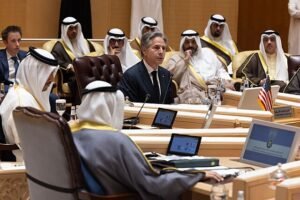
The Houthi Presence in Iraq: From a Support Network to Operational Depth

Firas Elias

The Houthi Presence in Iraq: From a Support Network to Operational Depth

Dr Firas Elias conducted a particularly in-depth investigation into the presence of Yemen’s Houthis in Iraq, focusing notably on their presence and activities, networks, modes of operation, missions, as well as their training arrangements and military cooperation mechanisms. Originally written in Arabic, this article provides a synthesis of this unique investigation, based largely on first-hand information gathered in the field. It thus offers unprecedented insight into how the Houthi presence in Iraq has been structured and how it has evolved.

Read More

CATEGORIES

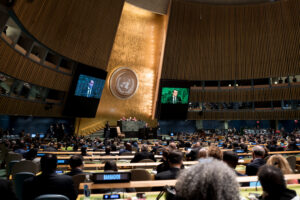
The ‘Twelve-Day War’: Initial repercussions on the Gulf

August 29, 2025

Chloé Berger, Didier Leroy

The Possible Impact of France’s Recognition of the State of Palestine: A Geopolitical and Legal Analysis

August 21, 2025

Lyna Ouandjeli

The announced recognition of the State of Palestine by France in September 2025 marks a major diplomatic turning point, at the intersection of international law and geopolitical balances. It responds to an unprecedented collective initiative and could revive the debate on the two-state solution, weakened by the war in Gaza and the expansion of Israeli settlements. Legally, Palestine partially meets the criteria of statehood but remains weakened by its internal divisions. International reactions are divided: categorical rejection by Israel and the United States, but enthusiastic support from the Palestinian side as well as several European and Arab countries. Between symbolic significance and strategic uncertainty, this French decision could reshape diplomatic dynamics without guaranteeing concrete progress on the ground.

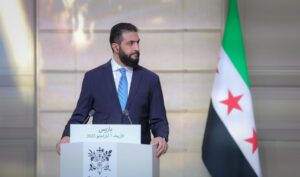
The New Syrian Government: Balancing Stabilisation and Democratic Transition

August 8, 2025

Manoug Antaby

After the fall of the Assad dictatorship, Syria faces a power vacuum marked by sectarian violence and governance challenges, especially in Alawite and Druze regions. President Ahmad Al-Sharaa is pursuing a democratic transition through reforms and dialogue with various factions but struggles with internal conflicts and increasing foreign interference, notably from Israel. The transitional government’s limited inclusivity raises doubts about its true commitment to democratization. Despite these challenges, international support from countries like Qatar and France encourages progress toward stability and reconstruction. To succeed, Al-Sharaa must strengthen inclusive governance and implement economic and social reforms to prevent the country’s fragmentation.

MOST VIEWED

Syria: The Disarmament of the Kurds, or the End of Rojava Era 

This article examines the content of the compromise reached between Damascus and the Syrian Kurds, its implication for the regional balance – Turkey, the United-States, Israel, and the peace process with the PKK – and places it within the long-term context of the Kurdish question, comparing it to the far more institutionalised but as fragile trajectory of  Iraqi Kurdistan, whose structural vulnerability, despite thirty years of constitutional autonomy, has been highlighted by Adel Bakawan. Finally, this article considers what the end of the Rojava era might mean for the future of the Kurdish national movement as a whole. 

Read More